
Reviewed · WALKING TOURS
Bangkok Walking Tour: Original Bangkok Riverside Walk of Thonburi
Riverside Bangkok has real stories. This Original Bangkok Riverside Walk of Thonburi strings together Portuguese-era communities and lived-in Chao Phraya River life on a 3 to 4 hour small-group route with a boat crossing and lots of backstreet walking. You’ll cover about 2 miles (3.5 km), but it never feels like a speed march because the pace is built around short stops and neighborhood time.
I especially like two parts. First, you get small-group attention with a maximum of 8 people, and I’ve found this type of setup matters when you’re trying to make sense of places that look simple from the outside. Second, the itinerary mixes faiths and cultures on one walk, from Thai temples to a Portuguese church and mosque stops, plus time to snack and hunt for local food.
One consideration: the tour includes walking through alleys and along the river, so it’s not ideal if you want a fully seated, fully air-conditioned plan. Also, plan for conservative dress at places of worship, meaning shoulders and knees should be covered.
In This Review
- Key things I think you’ll enjoy most
- Why Thonburi’s riverside walk feels different
- Start point, boat ride, and the pacing that makes it workable
- Stop 1: Soi Kudeejeen and the Portuguese community story
- Stop 2: Wat Kalayanamit Varamahavihara and Bangkok’s largest seating Buddha
- The Portuguese church stop and the Ayutthaya connection
- Princess Mother Memorial Park: why her childhood matters on this route
- Along the Chao Phraya: local communities and the mosque with Gothic influence
- Stop 4: Khlong San’s Kuan U shrine, salt factory, and market streets
- Small group limits and guides like Geng and Pem
- Price and what you actually get for $30.63
- What to bring so the day stays comfortable
- Should you book this Thonburi riverside walk?
- FAQ
- How long is the Bangkok Walking Tour: Original Bangkok Riverside Walk of Thonburi?
- How far do we walk?
- How many people are in the group?
- What does the tour include for transportation?
- Where does the tour start and what time does it begin?
- Where does the tour end?
- Is food included?
- What about hotel pickup and drop-off?
- Is there a dress code for visiting places of worship?
- What is the cancellation policy?
Key things I think you’ll enjoy most
- Soi Kudeejeen Portuguese roots: a Portuguese community established around the mid 18th century, with history that predates Bangkok
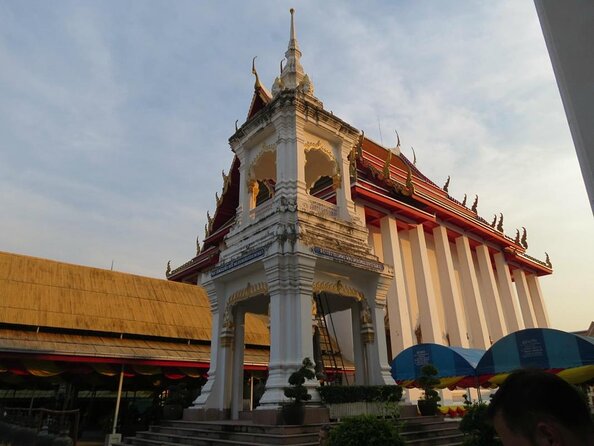
- Wat Kalayanamit’s standout Buddha: a major stop for seeing the largest seating Buddha statue in Bangkok
- A Portuguese church with Ayutthaya connections: made by Portuguese immigrants who arrived from the Ayutthaya Kingdom in the mid 18th century
- Princess Mother Memorial Park context: learn about her childhood before she became royalty, not just the monument photo-op
- Khlong San’s real-work streets: old operating warehouses, a fresh market, and street food areas in one neighborhood block
- The Kuan U Shrine interior influence: a shrine dedicated to the God of Fighting, with clear Chinese cultural impact inside
Old Bangkok, block by block
Why Thonburi’s riverside walk feels different
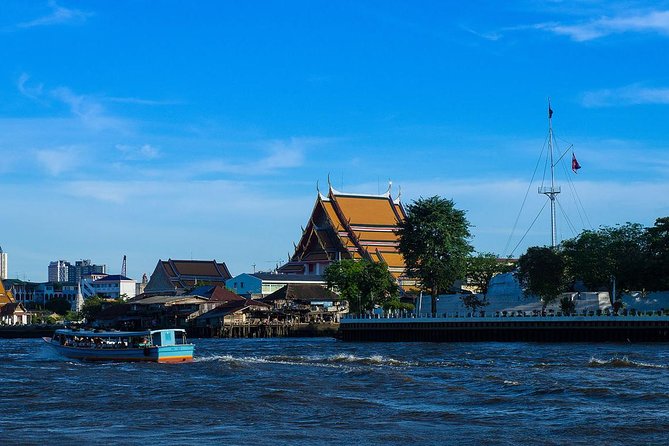
Most Bangkok sightseeing rushes you from one landmark to the next. This one is built around the river, and around the communities that grew up along it. You’ll start in the Bangkok riverside area, take a boat ride to Thonburi, then keep moving on foot through back lanes that show how people actually live.
The biggest value here is the mix of cultures you can see without needing a museum ticket. You’ll pass Thai temples, Portuguese religious buildings, and a Gothic-influenced mosque created by an Indian Muslim in the mid 19th century. Instead of treating these as separate trivia, the route helps connect them through the same geography, the same river economy, and the same neighborhood patterns.
And yes, you’ll also stop for food and snacks during the walk. That matters because street food is where daily life becomes edible.
Start point, boat ride, and the pacing that makes it workable
You begin at Yodpiman Riverwalk at 9:00 am. The tour ends at Ratchawong Express Boat Pier, which is close to Bangkok Chinatown and other sights, so you can keep exploring right after.
The plan is about 3 to 4 hours, with roughly 2 miles (3.5 km) of walking. That is a realistic amount for most people, especially if you’re okay with some uneven surfaces and quick transitions between riverfront and side streets.
A big practical detail: the tour uses some transportation, including the boat ride from Bangkok to Thonburi. That’s part of the fun because you’re literally getting a different angle on the river, not just watching it from one spot.
Stop 1: Soi Kudeejeen and the Portuguese community story
Your first neighborhood stop is Soi Kudeejeen, tied to a Portuguese community founded around the mid 18th century. The interesting point is that this community is older than Bangkok as we know it today, which flips the usual timeline you might have in your head.
When you’re walking this kind of area with a guide, you learn to look past the surfaces. The small streets, the religious buildings, and even the way the community formed around the river all help explain how trade and migration shaped local life. You’ll spend about 30 minutes here, which is enough time to absorb the story and still feel like you’re outdoors, not stuck in a lecture.
Dress note for this part: even if the stop isn’t a temple, you’ll still be moving through active local areas. Comfortable clothes and shoes are your best travel insurance.
Keep scrolling, there's usually one more worth booking.
Stop 2: Wat Kalayanamit Varamahavihara and Bangkok’s largest seating Buddha
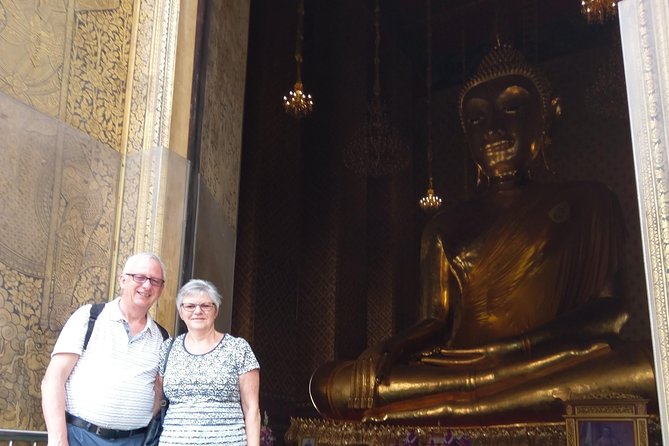
Next up is Wat Kalayanamit Varamahavihara, where the headline is the largest seating Buddha statue in Bangkok. A huge statue is one thing, but I like this stop because it gives you a clear, visual anchor. It’s easier to understand the Thai religious landscape once you’ve seen a major example like this.
You’ll have about 15 minutes at this site. That’s a short window, so go in with the right mindset: focus on the main Buddha figure and nearby details, then let the guide connect what you’re seeing to the broader community context.
Also, since this is a temple visit area, follow the tour’s conservative dress guideline: shoulders and knees covered. If you’re unsure, bring something light you can add or adjust quickly.
The Portuguese church stop and the Ayutthaya connection
Between the temple and the river strolling, you’ll visit a Portuguese church connected to immigration from the Ayutthaya Kingdom in the mid 18th century. The church is described as the second oldest in Bangkok, built by Portuguese who settled in the area.
This is the kind of stop that can feel “just another building” if you’re moving too fast. The key is what the guide helps you notice: how faith traveled with people, and how older kingdoms and later city life were connected by migration routes.
If you’re someone who likes architecture, this stop is a nice palate cleanser from temple ornament and shrine color. If you prefer history through people, it’s equally useful, because it’s about a community that actually lived here.
Princess Mother Memorial Park: why her childhood matters on this route
After the church, you’ll move to Princess Mother Memorial Park for about 15 minutes. The focus here is not only the memory of her later role in royal life. You’ll learn about her childhood as an ordinary person before she became royalty.
I like this stop because it keeps the trip grounded in everyday human scale. When you’re walking through multicultural religious spaces, it’s easy for your brain to treat everything like “heritage.” Learning about her youth reminds you that history is made by real lives, not just monuments.
The park also creates a natural pace break. You’re still outdoors, still in the same area, but you’re given a moment to slow down before the riverfront walking ramps up again.
Along the Chao Phraya: local communities and the mosque with Gothic influence
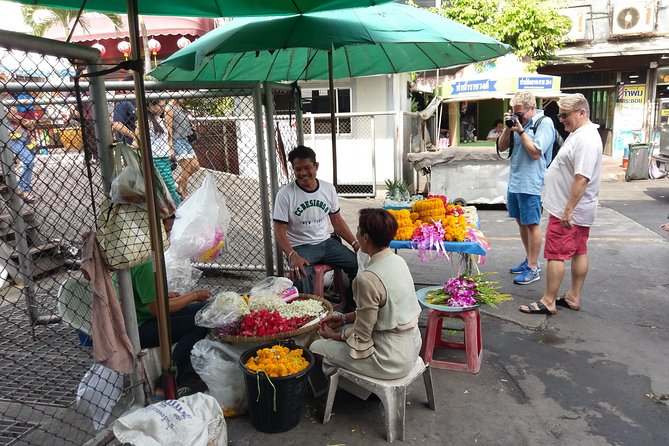
From here, the walk shifts into the riverside rhythm. You’ll walk along the Chao Phraya River, sometimes described as the River of King, while you explore local communities and daily life.
This part is where you start noticing the “not-for-photos” texture of Bangkok. People living nearby. Small routines. Views that look different from the busy city centers. The tour’s structure makes time for that, instead of treating the river as a scenic corridor.
You’ll also pass by a mosque with Gothic influence, built in the mid 19th century by an Indian Muslim. It’s a fascinating detail because Gothic elements are not what many people expect to see in this part of Thailand, so it sticks in your mind even if you only glance at it while walking by.
And yes, this is also a good moment for the tour’s food angle. You’ll be guided through areas where local eating is part of ordinary life, and the plan includes food, snacks, and beverages during the experience. If you have dietary needs, you should flag them when booking so the guide can steer you accordingly.
Stop 4: Khlong San’s Kuan U shrine, salt factory, and market streets
The final neighborhood stop is Khlong San, lasting about 1 hour. This is the longest stop, and it’s where the trip feels most grounded in everyday neighborhood momentum.
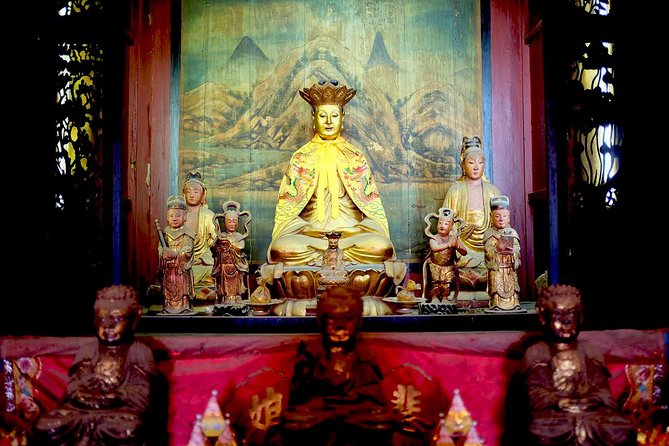
You’ll visit one of the oldest Kuan U Shrines in Thailand, dedicated to the God of Fighting. The interior influence is described as Chinese cultural impact, which makes sense given the Chinatown-adjacent cultural history you’ll keep encountering along this river route. Even if you’re not religious, shrine spaces are excellent for understanding how communities express identity through art and symbolism.
Then comes a fun, unexpected link: an old salt factory that was used to shoot the movie Good Morning Vietnam. This is the kind of historical thread that helps you see why the neighborhood architecture matters. It’s not just old buildings, it’s old economic systems and even old production history.
As you walk through back alleys, the goal is to show the Bangkok most people miss: the working side of the city rather than the polished center. You’ll pass by older operating warehouses where people still work in traditional ways. That detail is important because it keeps the story from becoming purely decorative or postcard-based.
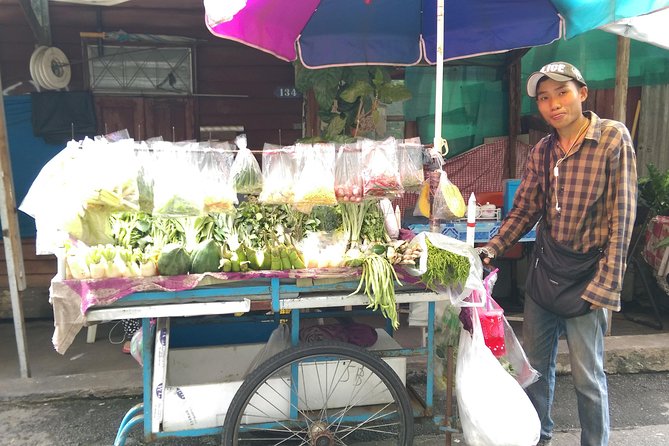
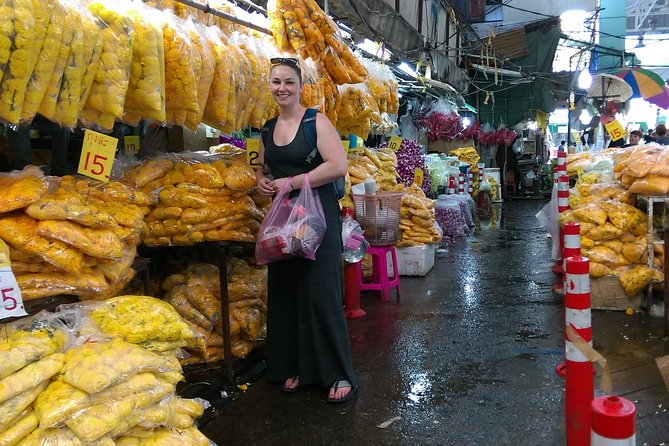
You’ll also hit a fresh market and street food stalls in the neighborhood. This is where you can eat, snack, and follow your guide’s cues rather than guessing. I like these market stops because they’re social. Even if you don’t eat something adventurous, watching what’s popular and what’s being prepared helps you understand local tastes fast.
Small group limits and guides like Geng and Pem
The experience is limited to a maximum of 8 participants, and that’s not a throwaway detail. On walking tours, small-group size changes everything: you can ask questions without feeling rushed, and your guide can adapt pacing to what you’re noticing.
In this case, the guides are known for clear communication, including Geng and Pem, with perfect English mentioned in the feedback you might hear when people talk about the day. That matters because a multicultural itinerary is only as good as the explanation behind it.
Also, since the route includes religious sites, cultural storytelling, and neighborhood food time, a good guide acts like the translator between what you see and what it means. This is exactly the kind of day where that pays off.
Price and what you actually get for $30.63
At $30.63 per person, you’re not paying for a museum admission ticket. You’re paying for a guided neighborhood route that includes professional guiding, transportation used during the tour (including the boat ride), and food, snacks, and beverages.
That combination usually beats the DIY option if you value time and context. Going it alone can be cheaper on paper, but you’d still need to figure out the best side streets, which places are worth stopping at, and how to read the cultural layers without turning your day into a scavenger hunt.
The main cost consideration is that hotel pickup and drop-off are not included. So factor in getting yourself to the start point at Yodpiman Riverwalk by 9:00 am and planning how you’ll continue after the endpoint at Ratchawong Express Boat Pier.
If you like walking, you like history explained in plain language, and you want food included, this price looks sensible for a half-day riverside immersion.
What to bring so the day stays comfortable
This walk is short enough to feel doable, but long enough to make comfort count. I’d plan for basic Bangkok walking conditions and temple etiquette.
Bring:
- Comfortable walking shoes for alleys and riverside paths
- A light layer, plus something that helps you meet the shoulders and knees covered guideline when needed
- Water or plan to drink what the tour provides (the tour includes beverages)
- Any dietary needs you might have should be shared when booking, so the guide can work with the group’s food stops
If you’re heat-sensitive, you’ll still be outside, so choose sunscreen and a hat strategy before you meet the group.
Should you book this Thonburi riverside walk?
Book it if you want a Bangkok day that feels like a neighborhood story, not a photo checklist. This is a strong pick if you enjoy multicultural sites, like Portuguese connections, and want temples and churches explained in a way that connects to daily riverside living. The small group size, the included boat ride, and the fact that you get food and snacks all point to good value for your time.
Skip it only if you want minimal walking or you strongly prefer landmarks over working neighborhoods. The route does include back alleys and market streets, which is the point, but it’s not the most relaxing format for everyone.
If you’re planning a first or second visit to Bangkok and you want to see Thonburi as more than a side-trip, this is one of the better ways to do it.
FAQ
How long is the Bangkok Walking Tour: Original Bangkok Riverside Walk of Thonburi?
It runs for about 3 to 4 hours.
How far do we walk?
The walk is approximately 2 miles (3.5 km).
How many people are in the group?
This is a small-group experience with a maximum of 8 travelers.
What does the tour include for transportation?
The tour includes transportation used during the experience, including a boat ride from Bangkok to Thonburi.
Where does the tour start and what time does it begin?
The meeting point is Yodpiman Riverwalk, and the start time is 9:00 am.
Where does the tour end?
The tour ends at Ratchawong Express Boat Pier, near Bangkok Chinatown.
Is food included?
Yes. The tour includes food, snacks, and beverages.
What about hotel pickup and drop-off?
Hotel pickup and drop-off are not included.
Is there a dress code for visiting places of worship?
Yes. Dress should be conservative, with clothing that covers the shoulders and knees recommended.
What is the cancellation policy?
Free cancellation is available, and you can cancel up to 24 hours in advance for a full refund.
The newest additions around Bangkok
- Central Thailand Walking Tour and visit Temple at Bangkok
★ 5.0 · 1 review - Private 2-Day Bangkok City Tour and Ayutthaya Tour from Bangkok
★ 5.0 · 1 review - Train Market, Floating Market, and Salt Lake Tour by driver
★ 5.0 · 1 review - Fullday Private Tour Bangkok Temple & City Tour with lunch+Amazing Bangkok Tour
★ 5.0 · 1 review - Bangkok: One Day Thai Costume Rental (Gentleman)
★ 2.0 · 1 review - Laem Chabang Shore Excursion : Shopping, Massage & Food Tasting
★ 5.0 · 1 review - Bangkok Dream World & Snow Town Theme Park Admission Ticket
★ 3.0 · 1 review - Bangkok 4 Hour Cultural & Temples Tour Private with Guide
★ 5.0 · 1 review
Walking Tours, compared.
City Highlights Temple and Market Walking Tour
Read our review →
Grand Palace and Wat Phra Kaew Guided Walking Tour
Read our review →
Bangkok Authentic Tasting Thai-Chinatown Walking Food Tour
Read our review →
Discover a Taste of Chinatown – 2 Hr Walking Tour
Read our review →
City Highlights and Landmarks Private Walking Tour
Read our review →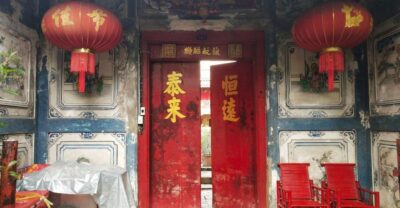
Local Life, Culture & Food Walking Tour at Chinatown
Read our review →Browse the lists this tour appears in