
Reviewed · BANGKOK STREET FOOD TOURS
Bangkok: Chinatown by Night Walking Tour
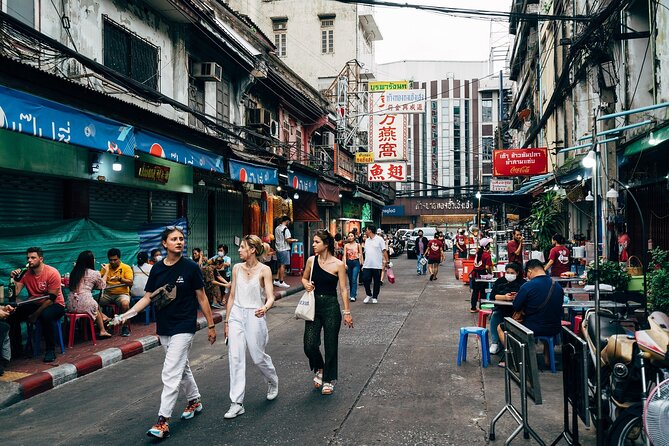
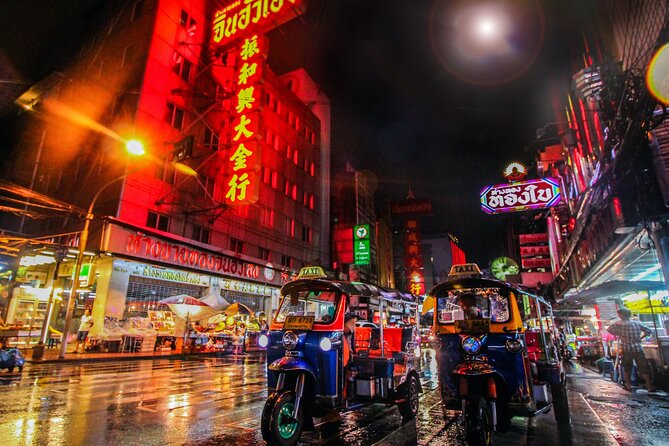
Chinatown feels different after sunset, in a good way. I like how this 90-minute walk mixes neon streets with real local context, guided by people who know the neighborhood, not just the highlights. English storytelling and practical photo and route help from guides like Nam and Fern can turn a busy area into something you actually understand.
What I love most is the way the guide threads Chinatown’s commerce and culture together, from the Chinatown Gate to gold shops and the food lanes. You also get extra value in the Vox City app with three self-guided walking tours to keep going at your own pace. One thing to consider: headphones and any food you want beyond the brief tasting stops are not included, so you’ll need a little cash and a working phone.
In This Review
- Key points before you go
- Entering Chinatown by Night at Hua Lamphong
- The Chinatown Gate and the trade story you’ll remember
- Shopfront stops: gold, buns, and the rhythm of Yaowarat
- Wat Mangkon Kamalawat: where daily faith meets street commerce
- Charoen Krung Road and Plaeng Nam Road: the main-road view
- Bird’s nest and shark fin signage, Nam Sing, and what to ask
- Side streets like Nana Tai Alley: the part you’ll want to re-walk
- Berlin Pharmaceutical Museum and old-style commercial history
- Tang Toh Kang 陳焯剛: the human details behind the map
- The Vox City app: three self-guided walks after the guided portion
- Price and value: $18 for a guided night sampler
- Who this Chinatown by Night walk is best for
- Should you book Chinatown by Night with Vox City Walks?
- FAQ
- How long is the Bangkok Chinatown by Night Walking Tour?
- Where is the meeting point in Bangkok?
- Is there a live guide or is it only an app experience?
- Do I need to download an app before the tour?
- Are food and drinks included?
- Are headphones provided?
- Can I combine this tour with self-guided walking tours?
- Can I cancel for a full refund?
Key points before you go
- Hua Lamphong MRT is your launch point, right where you can feel the city’s energy start up at night.
- You’ll pass landmark stops tied to Chinatown trade, including the Chinatown Gate and a gold shop connected to the gold trade story.
- You get street food tastings opportunities during the walk, plus dish talk that helps you order later.
- Expect a route that uses both main roads and smaller lanes, so you see more than a single poster-route.
- The Vox City app adds 3 self-guided routes, so the tour acts like a fast orientation session.
- Guides can be very hands-on, including help with photos and practical fixes for getting around (one guide, Nam, even helped someone sort out the Bolt app).
Eat where the locals actually eat
Entering Chinatown by Night at Hua Lamphong
If you want Chinatown without feeling lost, this is a smart place to start. The meeting point is outside the main exit number 1 of MRT Hua Lamphong, which is convenient because you can get there quickly from a lot of areas.
Once you’re moving, the night experience clicks. The guide sets the pace, and you’re not stuck trying to read the street signs while cars, scooters, and crowds do their thing. This matters because Chinatown at night is not shy about activity. A guide helps you walk with confidence, and you spend your attention on what you’re seeing, not on figuring out where to stand.
Also, the timing is tight. At 90 minutes, you’re looking at a focused night sampler. That’s a plus if you have limited time in Bangkok, but it means you shouldn’t plan on long sit-down meals during the tour.
The Chinatown Gate and the trade story you’ll remember
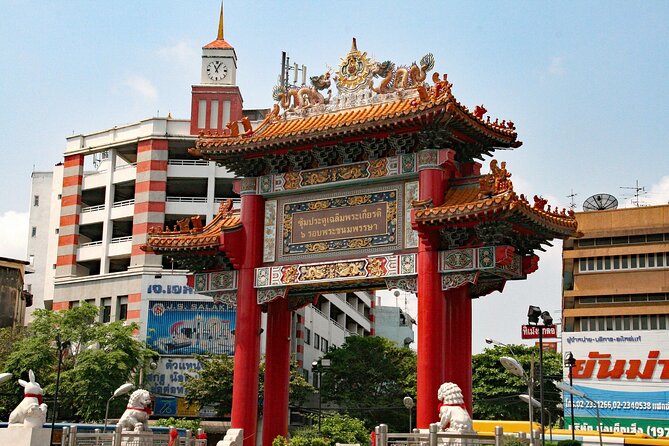
The tour’s centerpiece feeling is the shift from regular Bangkok street life into Chinatown’s identity. You’ll stop at the Chinatown Gate, one of the iconic visual anchors people photograph, but here it comes with context.
What makes this valuable is the way the guide connects architecture and street life to commerce. You’re not just looking at a gate. You’re getting the logic behind why Chinatown looks the way it does and how trade shaped daily life.
From there, you move into storefront territory, including traditional shopfronts and food spots that feel like they’ve been doing business for decades. Even if you don’t speak Chinese or Thai, you’ll start reading the neighborhood through names, signage styles, and what’s sold at street level.
Shopfront stops: gold, buns, and the rhythm of Yaowarat
After the Gate, the walk leans into specific categories of Chinatown life. You’ll pass places such as a gold shop tied to the gold trade story, plus a food stop featuring Yaowarat Toasted Buns. This is where the tour becomes practical, because you learn what to look for when you return on your own.
Here’s what I think you’ll get out of the gold-story portion:
- You see how money, migration, and long-running business networks can leave a visible mark on streets.
- You get a frame for why certain shop types cluster in particular areas.
- You learn enough background to make the neighborhood feel less random.
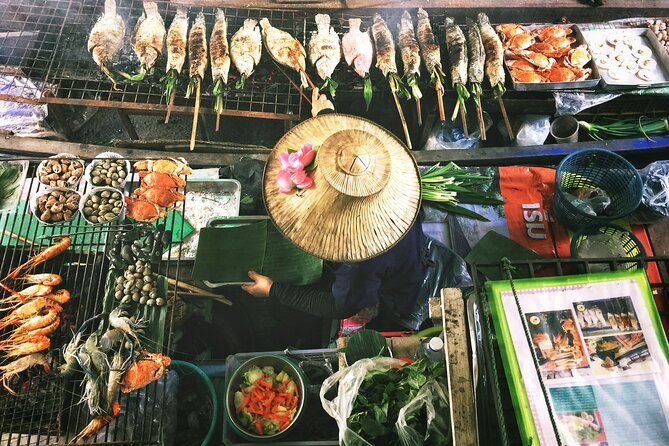
And on the food side, toasted buns are a good example of why this tour is worth doing early in your Chinatown exploration. The guide can explain how street food differs from restaurant food, including what to expect in texture, sweetness, and how quickly the best bites disappear.
One practical note: the tour includes tastings, but full meals are not included. If you’re hungry, plan to budget extra once the walk ends.
Old Bangkok, block by block

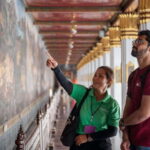

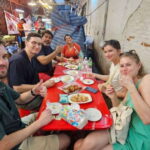
Wat Mangkon Kamalawat: where daily faith meets street commerce
At some point you’ll step into the temple area at Wat Mangkon Kamalawat. This stop adds balance. Chinatown isn’t only food and trade, it also has religious space woven into daily movement.
I like how the guide’s storytelling helps you notice the contrast. On one side you’ve got busy roads like Charoen Krung Road and Plaeng Nam Road, and on the other you’ve got the calmer gravity of temple life. Even if you’re short on time, this kind of stop stops you from turning Chinatown into only a snack run.
A drawback to mention: because the walk is time-limited, you may not get a long, slow visit. Treat this as a guided introduction point. If you want deeper temple time, plan a separate return when you have more minutes.
Charoen Krung Road and Plaeng Nam Road: the main-road view
These road segments matter because they show you how Chinatown connects outward. Charoen Krung Road is a reminder that Chinatown is not an isolated bubble. It links up with the rest of Bangkok through major arteries where traffic and commerce meet.
Plaeng Nam Road is another stretch that helps you orient later. Roads like this act like mental highways. When you understand where the big roads run, it becomes easier to navigate the smaller lanes that you’ll like even more.
If you’re hoping for a walking tour that teaches you how to move around on your own, these road pauses are key. They help you map the neighborhood in your head, not just in your phone.
Bird’s nest and shark fin signage, Nam Sing, and what to ask
You’ll pass a stop named Nam Sing Bird’s Nest-Shark Fin. This is one of those Chinatown categories that feels unfamiliar to many visitors, and that’s exactly why it’s included.
What you’ll likely get from the guide here is not only what the ingredients are, but how the demand and the product story fit into Chinatown’s wider food culture. This is also where you can ask simple questions without feeling awkward. A good guide can help you understand what’s common, what’s expensive, and how locals think about the dish names.
Practical consideration: if you’re sensitive about food origins or animal-based ingredients, you’ll want to mentally prepare for signage and product talk. The tour is educational and sight-focused, but it is still a neighborhood walk where these businesses are part of the environment.
Side streets like Nana Tai Alley: the part you’ll want to re-walk
One of the strongest themes in the experience is that you don’t only stick to the obvious routes. You’ll move through lanes like Nana Tai Alley and pass places such as The Mustang Blu and other street-level storefront points along the way.
These side streets are where Chinatown feels most personal. You see smaller storefronts, tighter rhythm, and street life at a scale that’s hard to catch from a main road.
A bonus, based on how guides handle the walk: you might get photography help and extra attention while crossing busy areas. Many guides in this format do their best to keep the group moving safely, and at least one guide has been specifically described as careful with street crossings and helpful with practical tech like navigation apps.
Berlin Pharmaceutical Museum and old-style commercial history
Another stop on your path is Berlin Pharmaceutical Museum. Even if you don’t know what you’re looking at before you arrive, the name alone signals the kind of story this tour wants you to notice: old trade links, storefront culture, and how Chinatown preserves layers of business identity.
I like stops like this because they slow the tour down just a bit. Instead of only tasting and taking photos, you also pause to notice how commerce history can live in a single branded building or storefront name.
Again, the tour is short. You’re not doing museum-style reading for hours. But a guided pass like this can help you decide whether you want to come back later for more time.
Tang Toh Kang 陳焯剛: the human details behind the map
You’ll also pass Tang Toh Kang 陳焯剛. This is a name-based stop, and that matters because it reminds you that Chinatown history isn’t only about “things.” It’s also about people, business founders, and families who built reputations that lasted.
For a visitor, the easiest way to make sense of Chinatown is to connect the dots between:
- a name on a storefront,
- a category like gold, food, or trade,
- and the surrounding street layout.
That’s how you start walking with understanding.
And from a practical standpoint, name-based stops give you better search terms if you want to research after the tour. A gate or a temple is easy to find. But a business-name stop can help you discover something more specific later.
The Vox City app: three self-guided walks after the guided portion
This tour isn’t only a one-and-done 90 minutes. You also get three self-guided walking tours inside the Vox City app.
What I like about this add-on is the flexibility. After a guided orientation, you can choose what you care about next, instead of guessing. You’ll log into the app, download the suggested routes, and use headphones to follow along.
Two practical items you should plan for:
- Scan the QR code on your voucher and download the map in your preferred language.
- Bring a mobile device with working audio. Headphones are not included, so pack your own if you have them.
This is a real value add because it turns a short guided walk into a longer night exploration plan. You can even use the app routes on future days, not only tonight.
Price and value: $18 for a guided night sampler
At $18 per person for 90 minutes, this is priced like a budget-friendly guided experience, and that matches the time commitment.
You’re paying for:
- a live English guide,
- expert storytelling that connects street sights to Chinatown’s trade and food culture,
- and app access to three self-guided routes.
You’re not paying for:
- headphones,
- entry fees (if any stops require tickets),
- and food and drinks as full meals.
So, the value depends on how you travel. If you like having someone help you decode what you see and where to go next, you’ll feel good about the price quickly. If you only want self-guided walking with no narration and no stops tied to history, then it might feel like you could do it cheaper on your own. But if you want confidence in a crowded area, a guide is often the better spend.
Who this Chinatown by Night walk is best for
This tour fits best if you:
- Want a quick Chinatown orientation so you can return later without feeling turned around.
- Like street food, but want a guide to explain dishes so you can order smarter.
- Prefer guided history that’s connected to real storefronts and daily life, not only big monuments.
- Are traveling solo or as a couple and want a flexible route that can adjust to interest (some people have experienced very small group or even one-on-one pacing).
It may be less ideal if you want long museum-style stops or a slow, sit-down dinner experience. The timing is built for walking, tasting opportunities, and moving on.
Should you book Chinatown by Night with Vox City Walks?
I think you should book this if you want Chinatown to make sense fast. The mix of Chinatown Gate context, trade and gold-story focus, temple balance, and food stops with dish explanations is exactly the kind of short guided night plan that pays off later when you explore on your own.
Skip it only if your priorities are mostly self-guided and you dislike spending money on a guide when you already feel comfortable navigating busy streets. Otherwise, for the price and the added app routes, this is a solid way to get your bearings fast and enjoy Chinatown at night without guessing the whole way.
FAQ
How long is the Bangkok Chinatown by Night Walking Tour?
The tour lasts 90 minutes.
Where is the meeting point in Bangkok?
Meet your local expert outside the main exit number 1 of MRT Lua Lamphong.
Is there a live guide or is it only an app experience?
It includes a live tour guide, and the language is English.
Do I need to download an app before the tour?
Yes. Download the Vox City App from the Play Store or Apple Store, then scan the QR code on your voucher and download the map in your preferred language.
Are food and drinks included?
Food and drinks are not included. The tour may include tasting opportunities, but full meals are on you.
Are headphones provided?
No. Headphones are not included, and the app requires headphones for the audio routes.
Can I combine this tour with self-guided walking tours?
Yes. You can combine the Chinatown by Night pass with three self-guided walking tours in the app.
Can I cancel for a full refund?
Yes. You can cancel up to 24 hours in advance for a full refund.
Bangkok Comes Alive at Night
- Bangkok by Night: Temples, Markets and Food Tuk-Tuk Tour★ 5.0 · 3,752 reviews
- Bangkok: Markets, Temples and Food Night Tour by Tuk Tuk★ 4.9 · 2,371 reviews
- Bangkok:The Planet Sunset&Dinner Cruise on Chao Phraya River★ 4.3 · 812 reviews
- Bangkok: Night Bike Tour with Temples & Flower Market Visit★ 4.8 · 751 reviews
The newest additions around Bangkok
- Dream World & Snow Town in Bangkok with Return Transfer & Lunch
★ 4.5 · 3 reviews - Bangkok: Nong Nooch Garden
★ 5.0 · 3 reviews - Private tour to Ayutthaya and Lopburi Monkey Temple (from Bangkok)
★ 5.0 · 3 reviews - HD-01 Koh Rattanakosin old town cycling with The Giant Swing, and more
★ 5.0 · 3 reviews - Guided Tour of Grand Palace & Emerald Buddha Temple in Bangkok
★ 5.0 · 3 reviews - Half Day DIY Grand Palace and Emerald Buddha Temple
★ 4.5 · 3 reviews - Glittering Ayutthaya Tour to Famous Sights, Market & Sunset Boat
★ 4.5 · 3 reviews - Private Tour: The Best of Bangkok Temples – Half Day
★ 4.0 · 3 reviews
Bangkok Street Food Tours, compared.
Bangkok Backstreets Food Tour with 15+ Tastings
Read our review →
Bangkok Authentic Tasting Thai-Chinatown Walking Food Tour
Read our review →
Bangkok Tuk-Tuk Tour by Night with Chinatown Street Food Meal
Read our review →
Browse the lists this tour appears in