
Reviewed · RIVER KWAI & KANCHANABURI TOURS
River Kwai Bridge and Death Railway World War II Tour in Thailand
Cemetery, museum, train, cave bridges, all in one grueling day. What makes this tour compelling is the mix of World War II memorial sites and the Death Railway train ride tied to the same corridor of history. One thing to consider up front, the subject matter is heavy and the day runs about 10 hours, with some uneven walking near the bridges and cave area.
I like that the pace is organized and guide-led, with pickup offered and a private group going from your start point in Bangkok to Kanchanaburi and back. Guides are described as TAT-trained and you also get practical comforts like mineral water included and a proper Thai lunch, not just a snack-and-go.
One more note before you book: this is a moderate physical fitness day. You’re not doing a hike, but you are moving between sites, including stops at bridges and a cave.
In This Review
- Key highlights to pay attention to
- River Kwai Bridge and the Death Railway in one structured day
- Private, guide-led, and built for not thinking too hard
- Stop 1: Kanchanaburi War Cemetery and 6,892 POW graves
- Stop 2: JEATH War Museum, the POW story in one place
- Stop 3: River Khwae Bridge, built by POWs, rebuilt as memory
- Stop 4: The Death Railway train ride toward Krasae cave
- Lunch in Kanchanaburi plus Tham Krasae break time
- Stop 6: Tham Kra Sae Bridge, curves near river and cliff edges
- Stop 7: Tham Krasae cave, Buddhist retreat atmosphere
- Price and what $179.49 covers on this day trip
- Logistics that matter: timing, mobile ticket, and weather
- Who this tour is for, and who should think twice
- Should you book this Death Railway and River Kwai tour?
- FAQ
- How long is the River Kwai Bridge and Death Railway World War II tour?
- Where does the tour start in Bangkok?
- Is this a private tour?
- What is included in the tour price?
- What are the main stops on the itinerary?
- Is the train ride included, or do I buy tickets separately?
- What is not included?
- Is there a mobile ticket?
- What is the cancellation policy?
Key highlights to pay attention to
- POW memorial numbers at Kanchanaburi War Cemetery: 6,892 graves, with time set aside for a respectful visit
- JEATH War Museum storytelling: built to explain the POW experience connected to the Thai-Burmese railway
- River Kwai Bridge as a WWII memory site: the reconstructed bridge is treated as a public remembrance
- Death Railway train ride tied to Krasae cave: about 1 hour along the old railway corridor
- Tham Krasae Bridge viewing plus cave time: sharp curves and a Buddhist cave stop on the same trail
Cross the bridge, hear the history
River Kwai Bridge and the Death Railway in one structured day
This is a full-day push out of Bangkok into Kanchanaburi, focused on one theme: what happened during World War II along the Thai-Burmese railway corridor. Instead of doing “a few photos and leave,” the schedule gives you dedicated time at key memorial points, a museum, the River Kwai Bridge area, the train ride, and then the Tham Krasae bridges and cave.
The value here is the way the stops connect. You see the POW cemetery, then you get museum context, then you go to the bridge, then you literally ride part of the old railway alignment toward Krasae. That cause-and-effect flow is what makes the day stick.
Private, guide-led, and built for not thinking too hard
You’ll be with professional guides who have TAT training. The tour is private, meaning it’s just your group, and it operates with a minimum of 2 people, so it’s meant for small-party travelers who want a smoother day than a big group bus.
There’s also a built-in convenience factor: you get a mobile ticket, and lunch plus key entrances and train-related items are listed as included. In practical terms, you spend less time figuring out what costs extra once you’re already out there.
If you’re the type who hates logistical surprises, this is a good match. You show up, you ride, you follow a set order of sites, and you get guide interpretation to tie the stops together.
Stop 1: Kanchanaburi War Cemetery and 6,892 POW graves
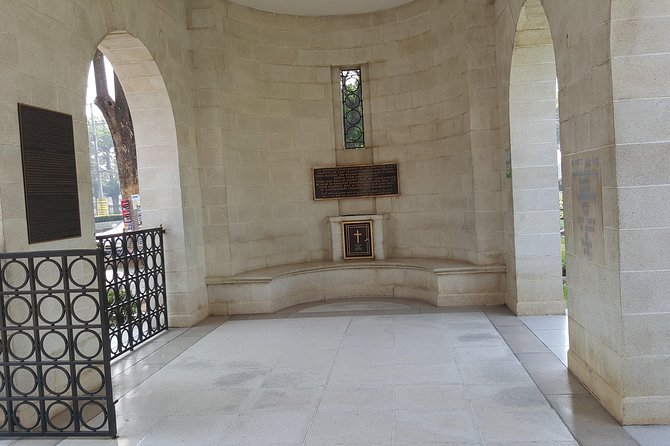
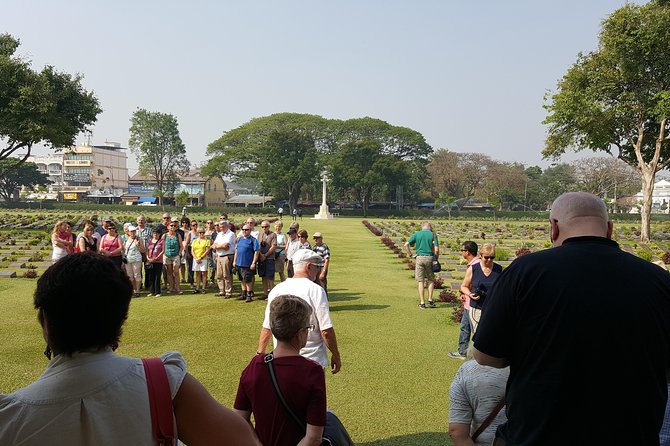
The day starts at Kanchanaburi War Cemetery, with admission free and about 30 minutes on the schedule. This cemetery contains 6,892 graves connected to prisoners of war during World War II.
I like starting here, because it sets the emotional and historical baseline. Before you look at bridges or catch the train, you understand what the railway labor meant for the men who were buried there. It’s not a “quick photo stop.” The timing is short enough to keep the day moving, but long enough to slow down and read.
Practical tip: if you’re sensitive to memorial spaces, plan to go in calm and unhurried. Also, bring something for sun and heat. Kanchanaburi can feel intense, and cemetery time is mostly outdoors.
Ride the rails out of town
Stop 2: JEATH War Museum, the POW story in one place
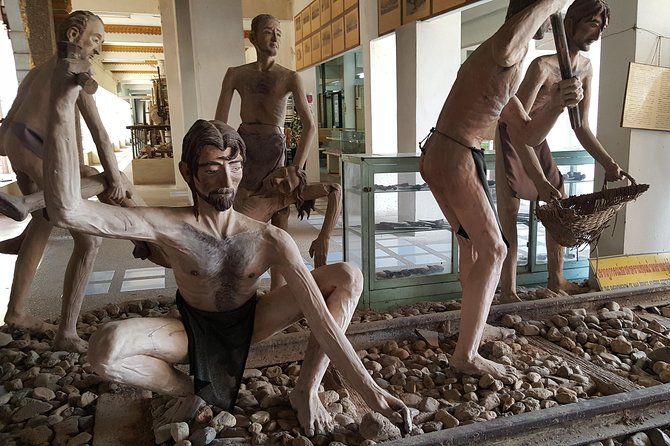
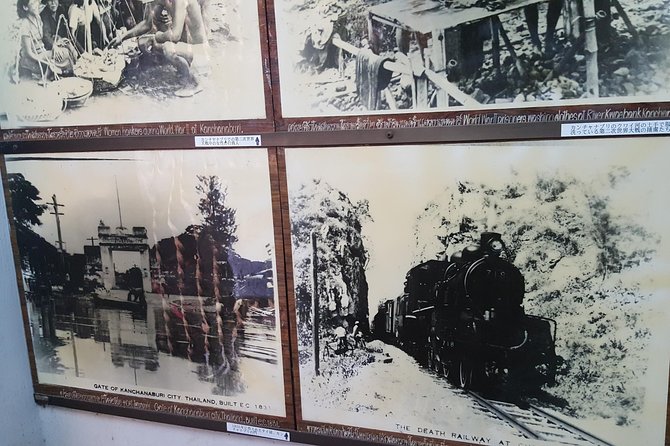
Next up is JEATH War Museum, with about 40 minutes and admission included. The museum is presented as part of the storytelling around the Thai-Burmese railway and the POW experience in World War II.
The museum helps you turn background facts into something you can visualize. You’re not only seeing “what exists today,” you’re getting the narrative that explains why these sites are where they are. That matters because the rest of the day includes rebuilt structures and a reconstructed bridge, and you’ll want the context behind the reconstruction.
If you’re tight on attention span, you can still make the museum useful by focusing on the parts that connect to forced labor and the railway route. The guide can steer you toward what to prioritize in the time you have.
Stop 3: River Khwae Bridge, built by POWs, rebuilt as memory
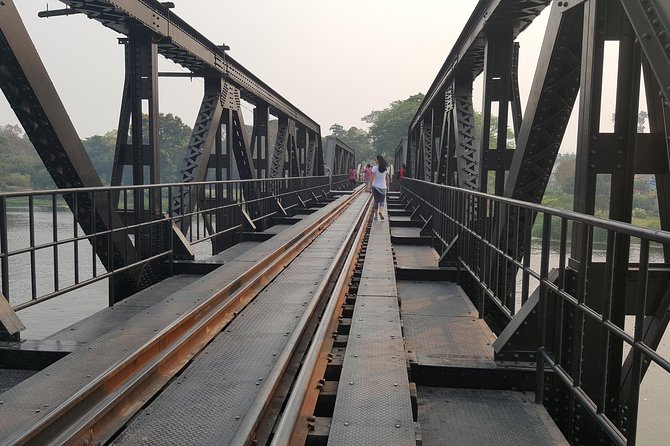
Then it’s River Khwae Bridge, about 30 minutes, with free admission listed. The tour description explains that the bridge was built by POWs during 1942, with massive civilian and prisoner labor involved, connecting Kanchanaburi to the Burmese side.
What you see now is the reconstructed bridge by the Thai government, framed as a memory of World War II in Thailand. This is an important shift: the structure you’re standing on is not only a transport artifact, it’s a public remembrance.
I find that helpful because it changes how you look at it. You’re not just checking a famous landmark. You’re seeing a rebuilt monument that anchors the story of the original bridge, plus the human cost tied to the surrounding railway system.
Photo tip: the bridge area can be busy depending on the day. If you want calmer photos, you’ll appreciate having a guide to help you position the group and keep your timing tight.
Stop 4: The Death Railway train ride toward Krasae cave
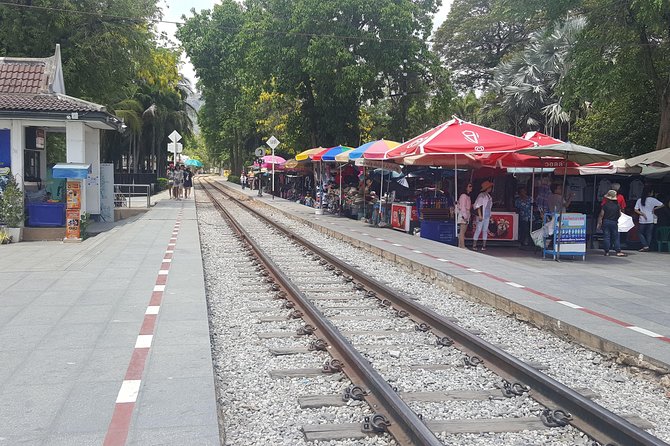
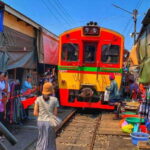
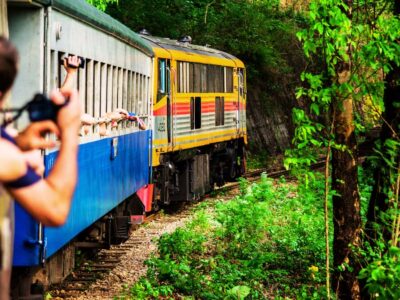
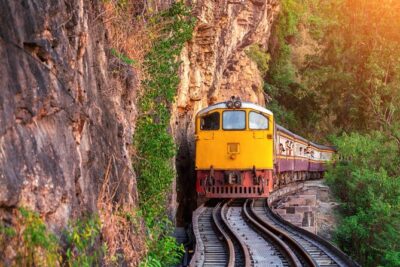
This is the star timing on the schedule: a train ride in Kanchanaburi city from the main station by the River Kwai Bridge area, traveling along the old railway line toward Death Railway at Krasae cave. The ride is listed as about 1 hour, and the tour describes it as hard work to build the railway along riversides and mountains.
The key here is that the train ride is not presented as a generic countryside excursion. It’s tied to the old route concept, so you’re not only watching scenery, you’re moving through part of the corridor that carried labor and supplies during the war era.
I’d plan for the train itself to be a “sit and watch” moment rather than a thrilling ride. The payoff is the feeling of distance and direction, plus the ability to see Thailand’s countryside along a route shaped by mountain and river constraints.
One more helpful detail: this stop is listed as free with the tour package, so you’re not surprised later by another ticket cost for the ride.
Lunch in Kanchanaburi plus Tham Krasae break time
After the train, there’s lunch time, about 1 hour, with admission included. You get local Thai food at a restaurant, plus mineral water, listed as two bottles per person.
This is where the day gets to recharge you, because you still have more bridge and cave stops after lunch. I like that it’s a real sit-down meal with included water, not a token snack. One earlier guide-led experience also highlighted how much better a proper restaurant lunch felt compared to basic options.
If you have dietary restrictions, you’ll want to double-check at booking, because the itinerary only specifies Thai food at a restaurant and doesn’t list customization details. Still, the schedule gives you a full hour, so you should have time to eat comfortably.
Stop 6: Tham Kra Sae Bridge, curves near river and cliff edges
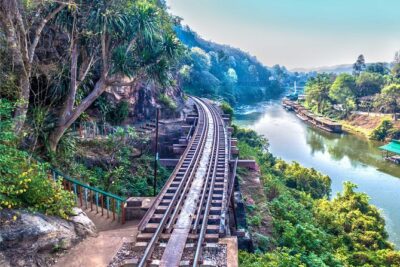
Then comes Tham Kra Sae Bridge (sometimes written as Tham Krasae Bridge), with about 30 minutes and free admission listed. The tour description calls it a dangerous bridge on a clip of mountain and riverside, with a sharp curve.
I’d treat this as a viewpoint stop with extra care. Even if it feels like a quick photo moment, the terrain and the curve are part of the impression the guide wants you to get. Wear shoes with good grip and keep an eye on where the group is walking.
It’s also a good reminder that the railway story was shaped by geology. Bridges like this are the “how” behind the railway, not just the “where.”
Stop 7: Tham Krasae cave, Buddhist retreat atmosphere
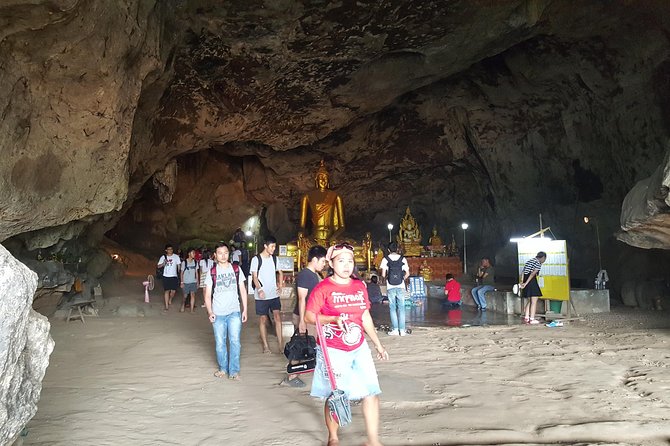
Finally, you head to Tham Kra Sae Cave, about 30 minutes and free admission listed. The description says it’s a Buddhist cave where monks stay away from the village and find themselves for meditation, with a big Buddha inside.
This stop is a change of pace from the WWII-focused sites. It gives you quiet time after the emotional intensity of cemetery and POW museums. Even if you’re not religious, you can appreciate the way the cave functions as a place of retreat, which contrasts with the forced labor story that brought the railway here.
Practical note: caves and temple areas can involve stairs or uneven ground. Keep your footing sure, and if you plan to go deeper into the cave area, dress respectfully. The tour doesn’t spell out clothing rules, but Buddhist sites commonly expect modest behavior.
Price and what $179.49 covers on this day trip
The price is listed at $179.49 per person, and the tour duration is about 10 hours. That sounds steep until you break down what’s included.
Included items are the important part: lunch with Thai food, mineral water (two bottles per person), and entrances or tickets for the train ride, museum, snacks, and food and drinks tied to the package. The tour also includes the key paid experiences that often become “add-ons” on cheaper day trips.
What’s not included is soft drinks and personal expenses. So if you’re the kind of person who always buys soda or extra drinks, you’ll want to budget a bit.
Value angle: you’re paying for a guided, private day with multiple admissions plus a full meal and water. If you were doing this alone, you’d still spend time and money on transport and ticketing, and you’d need to stitch the itinerary together yourself.
Logistics that matter: timing, mobile ticket, and weather
This is set up as a full day trip from Bangkok to Kanchanaburi, with the return ending back at the meeting point. Pickup is offered, and the operator lists a meeting location at Terminal 21 Asok, Soi Sukhumvit 19 area. The tour uses a mobile ticket.
The schedule says it runs Monday through Sunday. Also, it notes that the experience requires good weather. That’s not unusual for a day that includes bridges and outdoor memorial sites, but it’s a real factor for planning.
Group size is your big advantage. It’s private, only your group participates, so you’re not fighting for space at each stop.
Who this tour is for, and who should think twice
This is a strong fit if you want a structured WWII-themed day with a guide who can connect the dots between cemetery, museum context, bridge remembrance, and the train route toward Krasae cave.
You’ll also like it if you prefer a private pace and hate hunting down tickets between far-flung sites. The included lunch and water reduce the decision fatigue that can ruin a long day.
Consider thinking twice if:
- You’re not comfortable with heavy subject matter tied to POW history.
- You have limited mobility and can’t manage moving between bridges and a cave area.
- You’re hoping for a light, fun day in Thailand. This day is reflective and serious.
For some people, this won’t feel like a vacation day. For others, it’s exactly the kind of travel that makes the geography meaningful.
Should you book this Death Railway and River Kwai tour?
I’d book if you want one day that connects the main memorial stops plus the train ride, without the stress of planning it all yourself. The money-to-experience ratio is strongest when you value guided interpretation, a proper lunch, and included entrances.
Also, there’s clear evidence that the guide experience can make a big difference. One earlier day highlighted Mike as an exceptional guide with strong English and great area knowledge, moving the story from the memorial to the train ride in a way that felt like you were following the route, not just visiting it.
I’d hold off if you want a purely sightseeing itinerary or you’re traveling with someone who can’t handle the combination of long day timing and reflective content.
If you book, do yourself a favor and go in prepared: comfortable shoes, sun protection, a mindset for WWII history, and enough water beyond the included bottles to get you through the day.
FAQ
How long is the River Kwai Bridge and Death Railway World War II tour?
It runs for about 10 hours.
Where does the tour start in Bangkok?
The meeting point listed is Terminal 21 Asok, Soi Sukhumvit 19, Thailand. Pickup is also offered.
Is this a private tour?
Yes. It’s private, and only your group participates. The tour operates with a minimum of 2 people.
What is included in the tour price?
The package includes lunch with Thai food, mineral water (2 bottles per person), and entrances or tickets for the train ride, museum, snacks, and food and drinks.
What are the main stops on the itinerary?
You visit Kanchanaburi War Cemetery, JEATH War Museum, the River Khwae Bridge area, a Death Railway train ride, Tham Krasae bridges viewing stops, and Tham Krasae Cave.
Is the train ride included, or do I buy tickets separately?
The train ride is listed as included in the tour package.
What is not included?
Soft drinks and personal expenses are not included.
Is there a mobile ticket?
Yes, mobile ticket is listed as a feature of the tour.
What is the cancellation policy?
You can cancel for a full refund if you cancel at least 24 hours in advance. It also notes that the experience requires good weather, and if canceled due to poor weather, you’ll be offered a different date or a full refund.
The newest additions around Bangkok
- Central Thailand Walking Tour and visit Temple at Bangkok
★ 5.0 · 1 review - Private 2-Day Bangkok City Tour and Ayutthaya Tour from Bangkok
★ 5.0 · 1 review - Train Market, Floating Market, and Salt Lake Tour by driver
★ 5.0 · 1 review - Fullday Private Tour Bangkok Temple & City Tour with lunch+Amazing Bangkok Tour
★ 5.0 · 1 review - Bangkok: One Day Thai Costume Rental (Gentleman)
★ 2.0 · 1 review - Laem Chabang Shore Excursion : Shopping, Massage & Food Tasting
★ 5.0 · 1 review - Bangkok Dream World & Snow Town Theme Park Admission Ticket
★ 3.0 · 1 review - Bangkok 4 Hour Cultural & Temples Tour Private with Guide
★ 5.0 · 1 review
River Kwai & Kanchanaburi Tours, compared.


Erawan Waterfalls and Bridge Over River Kwai Tour from Bangkok
Read our review →
Bridge on the River Kwai and Thailand-Burma Railway Guided Tour
Read our review →
Erawan Waterfall and Elephant Care: Private Tour to Kanchanabur
Read our review →Browse the lists this tour appears in