

Reviewed · RIVER KWAI & KANCHANABURI TOURS
From Bangkok: Erawan Park & Kanchanaburi Small-Group Tour
Three centuries in one day. This Bangkok to Kanchanaburi outing is an unusual mix of WWII remembrance and time in the jungle at Erawan Waterfall, with small group pacing that keeps it from feeling rushed. I like how the day flows from heavy history to cooling off in clear pools. One heads-up: it is a long stretch of time on the road, and you will need to choose your waterfall levels.
I’m also drawn to the way the stops connect. The JEATH Museum sets the WWII context behind the Thai-Burma Railway story, and the Bridge over the River Kwai turns that context into a real, walkable landmark with dramatic river views and limestone hills. Still, the museum stop is short, so if you want hours of reading and film time, plan for a quick hit.
For the human factor, I like that the tour is run with an English-speaking guide in a small group, and you may get a guide who makes the drive feel shorter with humor and story. People have mentioned guides like Nancy, Jack, Ohm, Eddy, Surina, and Tank in their trip feedback, and that variety matters. The drawback is that the day is very schedule-driven, so your energy needs to stay high from pickup to the final drop-off.
In This Review
- Key highlights at a glance
- A long travel day, but the structure helps
- JEATH War Museum: short stop, big emotional context
- Walking the Bridge Over the River Kwai in real time
- Kanchanaburi lunch on your own: keep it easy and local
- Erawan National Park: seven tiers, swimming, and a smart route
- The “go to 7 then go down” strategy
- Bring footwear that works in water
- Expect wildlife and little pool surprises
- Guides, humor, and timing you can actually rely on
- Comfort and logistics that make a day trip workable
- Sustainability choices that are more than a label
- Price and value: what $59 buys you
- Who this tour fits best, and who should skip it
- Should you book this tour?
- FAQ
- Where is the meeting point for the tour?
- Is pickup from my Bangkok hotel available?
- What is the total duration of the tour?
- What are the main stops during the day?
- Is there an English-speaking guide?
- How many people are in the group?
- What is included in the price?
- Are meals included?
- What should I bring?
- Is the tour suitable for people with mobility or health limitations?
- Can I book last minute?
Key highlights at a glance
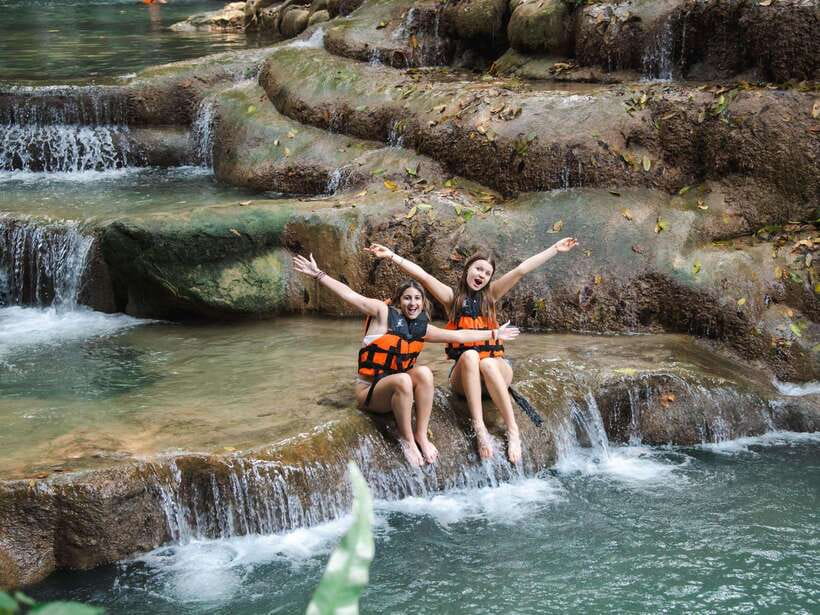
- Erawan Waterfall swimming and level-hopping in a seven-tier setting where the pools feel cool and refreshing
- JEATH Museum context for the Thai-Burma Railway and the WWII prisoner-of-war story
- Bridge Over the River Kwai photo time with river views and chances to spot the train passing
- Air-conditioned van with small-group comfort limited to 9 participants
- Low-impact touches including glass bottle water and carbon offsetting on every tour
- Guides that keep the day lively with explanations plus practical meet-up timing
Cross the bridge, hear the history
A long travel day, but the structure helps
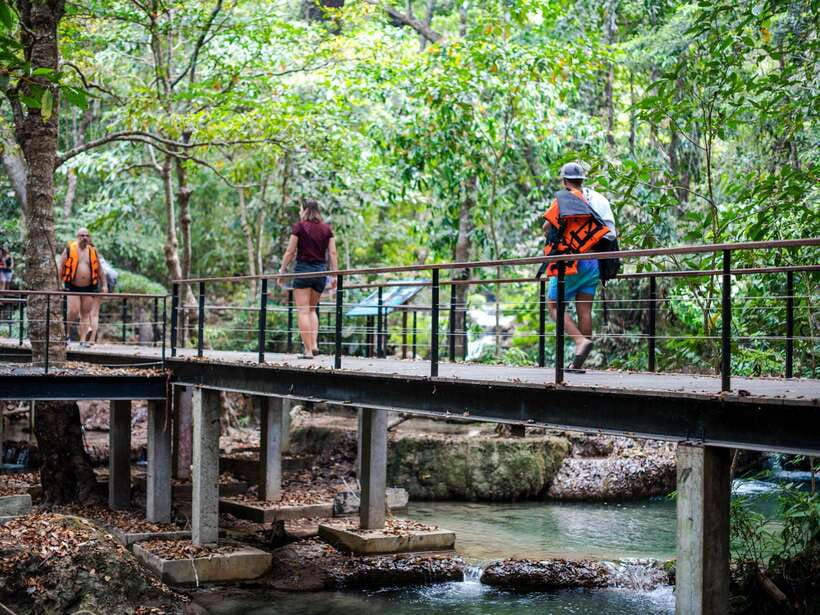
This is a full-day circuit that runs roughly 12 to 14 hours, moving you out of Bangkok and back again in one go. That length can sound brutal on paper, but the tour is built around frequent reset points: one history stop, one landmark, one lunch break, then a main natural area with time to walk and swim.
The upside of traveling in a small group is simple: you spend less time herding people and more time actually doing things. The van is air-conditioned, and most people care about that on Thailand summer days, especially with a long outbound drive and a longer return.
If you are sensitive to long sitting time, consider this a real part of your planning. The tour is not a quick half-day loop where you can pop out and still feel fresh.
JEATH War Museum: short stop, big emotional context
At the JEATH War Museum, you get a concentrated look at the POW experience connected to the Thai-Burma Railway during World War II. The museum is the first place on the day where the pace slows and the stories carry weight.
What I like about this stop for a one-day format is that it gives you a framework before you ever walk the bridge. Without that context, the Death Railway landmark can feel like just another scenic photo spot. With the context, you understand what you are looking at and why the bridge still matters.
One practical consideration: the museum time is about an hour. That means you will not see everything in depth, and you might feel like you should have been given more time if you are the type who reads every caption. That said, for most visitors it works well as a mental setup for the bridge and the next leg of the story.
Walking the Bridge Over the River Kwai in real time
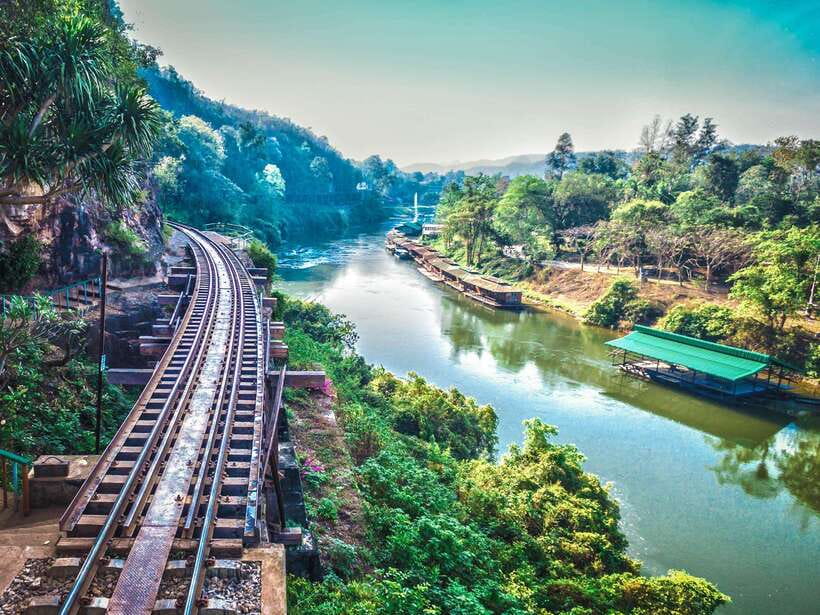
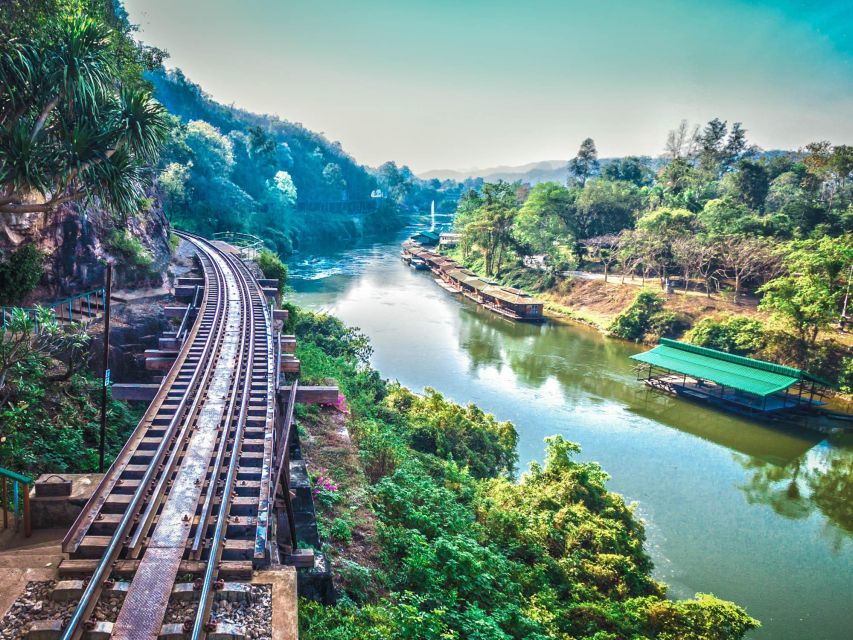
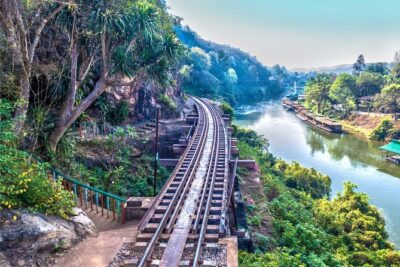
Then comes the Bridge Over the River Kwai, one of Thailand’s best-known WWII-era landmarks. You get about an hour for sightseeing, which is enough time to cross, stop for photos, and absorb the setting.
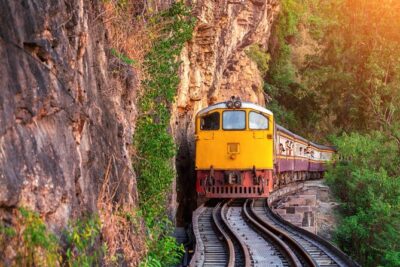
I like that the bridge is surrounded by dramatic limestone scenery. It also has a moving quality: several people have pointed out the thrill of seeing the train pass while they are on the bridge. If you catch it, that moment turns the history into something immediate.
The one drawback is that bridge time is shared time. You will be moving with a group and a schedule, so if you want long, quiet contemplation and zero photo competition, you may find it harder than you hoped. Still, the chance to walk the bridge yourself is the value point of this day trip.
Keep scrolling, there's usually one more worth booking.


Kanchanaburi lunch on your own: keep it easy and local
Between the bridge and Erawan National Park, you get a lunch pause in Kanchanaburi. The tour allows about an hour here, and lunch is at your own expense.
This is a good moment to keep your expectations realistic. You will have enough time to eat without turning lunch into a second tour, but not enough time to chase a complicated restaurant plan. I’d treat this as a chance to refuel, grab water, and use the restroom before heading to the falls.
If you want an easy strategy, pick a simple Thai meal that will sit well in your stomach for swimming later. It sounds obvious, but it helps. You do not want to spend the waterfall section thinking about what you ordered.
Erawan National Park: seven tiers, swimming, and a smart route
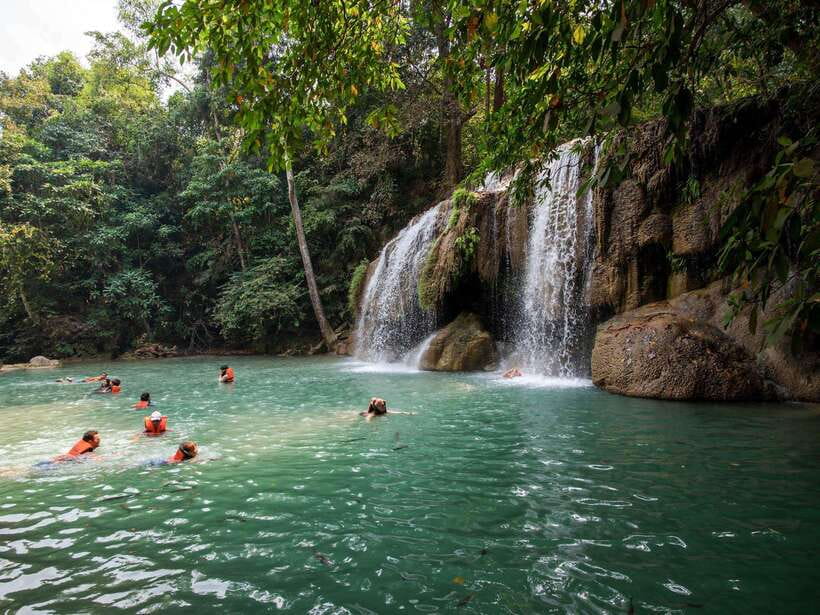
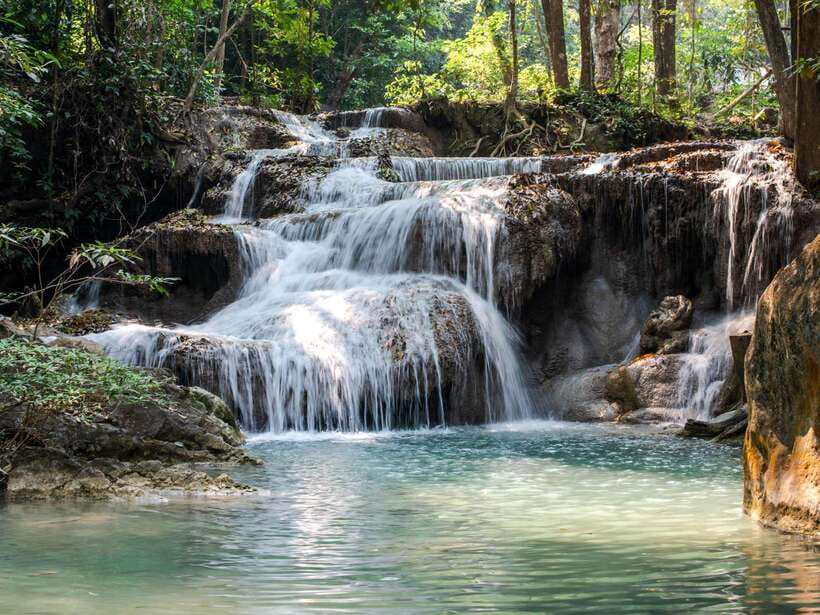
Erawan National Park is the reason many people book this trip. The highlight is the Erawan Waterfall, a seven-tier cascade inside a jungle setting where the pools invite a dip.
You get time both to explore and to hike or swim. In practice, people describe the falls portion as having a generous feel, with some mentioning extra freedom to wander levels and swim, and others saying it is a tight schedule for getting all the way to the top. Either way, you will want to show up ready to move.
The “go to 7 then go down” strategy
Many visitors recommend a simple move: if Level 7 is your goal, go there sooner rather than later. The logic is time management. By reaching the higher level first, you reduce the risk of running out of energy before the climb. Then you can come down more leisurely, stopping at pools along the way.
If you prefer the opposite, you can still do it. You can spend more time lower down and treat the upper levels as a bonus only if you have enough time and stamina. Just know you are making a trade: fewer levels means more relaxing pool time.
Bring footwear that works in water
You are walking on uneven, wet surfaces. Several people have suggested water shoes as a practical upgrade beyond just comfortable shoes. If you have them, bring them. If you do not, plan to take extra care with your footing.
Also, bring the items listed for sun and bugs: sunscreen, insect repellent, hat, sunglasses, and a camera. The falls area can feel humid and bright, and you will be out in daylight.
Expect wildlife and little pool surprises
People often talk about friendly park staff and the overall care for the environment. The pools can feel alive too. One memorable detail from trip feedback is that fish may gather around your toes as you dip in the water. It’s weird at first and then kind of funny, like nature’s little foot massage.
If you want a life-jacket option, some visitors mention the chance to rent one on site. That is not guaranteed in every situation, but it is worth having in your mind if you plan to swim more confidently.
Guides, humor, and timing you can actually rely on
One of the best parts of this tour is how the guides shape the day. Several guides are mentioned by name across trip feedback, including Nancy, Mr Tecky, Chayada, Tank, Jack, Ohm, Eddy, Surina, Pop, and Cherry. While guide styles vary, the common thread is clear: people felt supported and kept on schedule.
What that means for you: you are not stuck figuring out timing on your own at each stop. Guides also helped with practical moments, like where to meet after free time at the falls. If your day includes any photo-obsession tendencies, having that clear “meet here, then go” guidance helps you keep your timing.
A small word of advice: ask questions during the drive. The history context from JEATH and the bridge experience become much more meaningful when you connect the story dots while you still have time to remember them.
Comfort and logistics that make a day trip workable
This is not a public-transit adventure. It is built around an air-conditioned vehicle, a set route, and pickup or meeting point options.
- If you choose hotel pickup, it is available from registered accommodations in Bangkok (not from random roadsides or malls). Your team confirms the pickup time by email the evening before.
- If you choose the meeting point option, you meet at National Stadium BTS Station, Exit 2, on the 2nd floor. Your guide holds a TripGuru sign, and you should show up about 10 minutes early.
For logistics, I’d plan for a day where you keep moving. Keep your daypack light, bring cash for lunch, and bring what you need for the falls in a way that you can access fast.
Also note the small group size, limited to 9 participants. That makes the day feel more personal and less like a cattle route, especially at the bridge and during the transitions.
Sustainability choices that are more than a label
This tour is described as GSTC-certified and low-impact. Two specific sustainability touches matter on a practical level.
First, you get water in glass bottles, which reduces plastic waste compared with single-use bottles. Second, the tour states it offsets carbon emissions for every tour, which is a small but real piece of reducing footprint for long-distance day travel.
Will these steps erase the environmental cost of a full-day road trip? No. But they are meaningful, and they signal that the operator is thinking about impact rather than treating it like an afterthought.
Price and value: what $59 buys you
At about $59 per person for a 12 to 14 hour guided day trip, the value comes from what is packaged together.
Included basics that usually cost time and coordination on your own:
- English-speaking tour guide (English and Spanish availability)
- Air-conditioned vehicle
- Entrance fees when the option is selected
- Walking tour
- Insurance
- A glass bottle of drinking water
- Hotel pickup and drop-off if you selected pickup
What is not included:
- Meals and other drinks
- Personal spending
So the trade is clear: you pay for convenience, transport, and a guided structure through three major destinations far from each other. If you try to DIY this, you will likely spend time figuring out intercity transport, entry tickets, and meeting timing for the falls. In other words, the price buys you a smooth day with handrails.
The one caution on value: this is not a slow, multi-day experience. You are paying for breadth, not deep time in each place. If you want long, unhurried museum study or hours at just one waterfall level, you might prefer a longer stay in the region.
Who this tour fits best, and who should skip it
This trip is ideal if you want one day in Central Thailand that mixes WWII history with nature and water time. It also fits well if you like having a guide who keeps you organized and explains what you are seeing.
You might want to skip it if you have back problems or heart problems, since the day includes walking and hiking, plus a long time on the road. Also, if you are not comfortable with swimming in natural water settings, you can still enjoy the park, but you should plan your energy around walking paths and pool areas.
If you travel with kids, check your group’s stamina. The schedule is long, and the falls area involves stairs and wet terrain depending on where you go.
Should you book this tour?
I’d book this trip if you want a single day that covers JEATH War Museum, the Bridge over the River Kwai, and Erawan Waterfall with guide support and small-group comfort. It is especially compelling if you like history but also want a clear payoff at the end of the day, like swimming in cool pools.
I would hesitate if you hate long travel days, dislike schedule-based touring, or know you will need lots more time at the museum or at the waterfall levels you care about. In that case, you may prefer a slower multi-day plan.
If you do book, pack like you mean it: comfortable footwear, sunscreen, insect repellent, hat, and a swim-ready mindset. Go into the bridge and museum with an open brain for context, then switch gears when you hit Erawan.
FAQ
Where is the meeting point for the tour?
You meet at National Stadium BTS Station, Exit 2 (2nd floor). The guide will be holding a TripGuru sign, and you should arrive about 10 minutes before pickup time.
Is pickup from my Bangkok hotel available?
Yes, pickup is available from accommodations in Bangkok, but only from hotels or registered accommodations. Pickup is not offered from roadsides or shopping malls.
What is the total duration of the tour?
The tour runs about 12 to 14 hours.
What are the main stops during the day?
You visit the JEATH War Museum, the Bridge Over the River Kwai, and Erawan National Park, including time for hiking and swimming at the waterfall area.
Is there an English-speaking guide?
Yes. The tour includes a live English-speaking guide. Spanish is also available based on the language option.
How many people are in the group?
The group is limited to 9 participants.
What is included in the price?
Included items are entrance fees (if that option is selected), hotel pickup and drop-off (if selected), an English-speaking tour guide, an air-conditioned vehicle, walking tour, one glass bottle of drinking water, and insurance.
Are meals included?
No. Lunch is not included in the tour price, and other drinks and meals are at your own expense.
What should I bring?
Bring comfortable shoes, sunglasses, a hat, a camera, sunscreen, insect repellent, and cash.
Is the tour suitable for people with mobility or health limitations?
The tour is noted as not suitable for people with back problems or heart problems.
Can I book last minute?
For the meeting point option, last-minute booking is available subject to availability. Same-day booking may also be possible for the meeting point option subject to availability.
The newest additions around Bangkok
- Dream World & Snow Town in Bangkok with Return Transfer & Lunch
★ 4.5 · 3 reviews - Bangkok: Nong Nooch Garden
★ 5.0 · 3 reviews - Private tour to Ayutthaya and Lopburi Monkey Temple (from Bangkok)
★ 5.0 · 3 reviews - Guided Tour of Grand Palace & Emerald Buddha Temple in Bangkok
★ 5.0 · 3 reviews - Half Day DIY Grand Palace and Emerald Buddha Temple
★ 4.5 · 3 reviews - HD-01 Koh Rattanakosin old town cycling with The Giant Swing, and more
★ 5.0 · 3 reviews - Glittering Ayutthaya Tour to Famous Sights, Market & Sunset Boat
★ 4.5 · 3 reviews - Private Tour: The Best of Bangkok Temples – Half Day
★ 4.0 · 3 reviews
River Kwai & Kanchanaburi Tours, compared.

Erawan Waterfalls and Bridge Over River Kwai Tour from Bangkok
Read our review →
Bridge on the River Kwai and Thailand-Burma Railway Guided Tour
Read our review →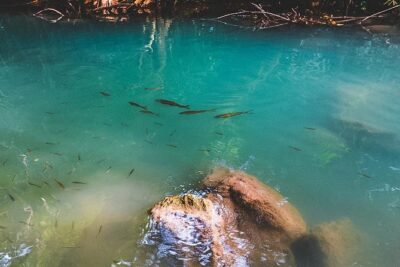
Erawan Waterfall and Elephant Care: Private Tour to Kanchanabur
Read our review →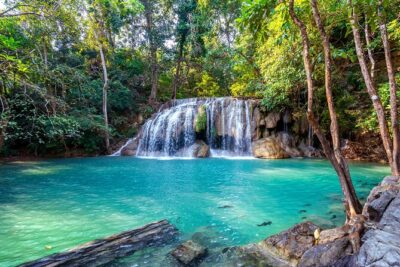
Kanchanaburi Full Day Tour: River Kwai and Erawan Falls
Read our review →Browse the lists this tour appears in