
Reviewed · BANGKOK THAI COOKING CLASSES
Mini Group: Uncle and Aunty Cooking House Afternoon Class
Thai cooking starts at the market. This afternoon class in Central Thailand mixes a real ingredient hunt with hands-on cooking, starting at MRT Huai Khwang and moving on to the Ganesha Shrine and Huai Khwang Market. I especially like the way you build flavor from scratch, including learning to make curry paste and coconut milk.
Two things I really appreciate: you get guided shopping for key Thai ingredients, and you cook enough food that you actually sit down to dinner you prepared, not just a few samples. One drawback to plan for is that the whole afternoon can feel long and a bit exhausting, with walking at the market and a concentrated cooking schedule, plus there is no hotel pickup.
If you want a Thai cooking class that feels local, practical, and focused on real tastes, this one fits. It also helps that the experience can run with very small groups, and guides such as Ann and Sunee are described as warm, hands-on teachers.
In This Review
- Key moments worth your attention
- MRT Huai Khwang and the Ganesha Shrine warm-up
- Huai Khwang Market shopping: learning ingredients, not just names
- Getting to the cooking studio, and why the setting matters
- The curry paste and coconut milk step that makes everything taste right
- Cooking your Thai meal: soup, salad, curry, and dessert
- Eating dinner you cooked, while everything is still hot
- Small-group feel, and guides who teach with warmth
- Dietary needs, vegetarian and vegan planning
- Price and value: is $68 fair for Bangkok cooking?
- Practical tips for this afternoon class near Huai Khwang
- Who should book this class?
- Should you book Uncle and Aunty Cooking House Afternoon Class?
- FAQ
- Where do I meet for the afternoon class?
- How long does the experience run?
- Is hotel pickup included?
- What will I cook during the class?
- Can I join if I need a vegetarian or vegan option?
- Are there any rules during the tour?
- Can I reserve and pay later, and what about cancellations?
Key moments worth your attention
- Ganesha Shrine start gives quick cultural context before you shop for food ingredients.
- Huai Khwang Market shopping turns ingredient questions into real-life answers on the spot.
- Curry paste and coconut milk from scratch changes how you understand Thai flavors.
- Four cooking sessions plus dessert structure your meal in clear steps.
- Fresh hot tasting at the end means you eat what you cook right away.
- Dietary options with notice includes vegetarian and vegan adjustments when you tell them ahead of time.
Still ordering off a menu?
MRT Huai Khwang and the Ganesha Shrine warm-up
You meet at 14:00 at MRT Huai Khwang, Exit 4, where your local guide is waiting. The first stop is the Ganesha Shrine, a sacred community landmark that locals show respect for, which sets a calmer, grounded tone before the food part gets loud and busy.
Right after that short walk, you reach Huai Khwang Market, and this is where the experience becomes practical. You are not just learning recipes, you are learning what people actually buy, what looks good, and what ingredients matter for Thai cooking.
A small but useful detail: the class environment has clear rules, including no pets (assistance dogs allowed), no feeding animals, and no making noise. That keeps the market leg and shrine leg from turning into an awkward disruption.
Huai Khwang Market shopping: learning ingredients, not just names
In Huai Khwang Market, you shop for the key ingredients used during the cooking class. This is the part I think most people will remember, because it makes Thai cooking feel doable after you get home.
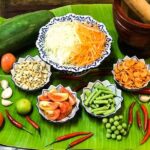
You can expect a sensory overload in the best way, with strong aromas and lots of produce and herbs. The shopping time also helps you connect the dish names to physical ingredients, like understanding how herbs and vegetables become part of curry, soups, and stir-fries.
A practical tip: wear shoes that can handle uneven areas, because you will be moving around. Also, think of this as an ingredient lesson. If you are vegetarian or vegan, make sure you tell the guide early, since the class can cater to those diets with prior notice.
Getting to the cooking studio, and why the setting matters
After the market, you travel to the cooking studio. The plan includes transfers connected to the MRT meeting point, and in at least some sessions you may move using local transport such as a tuk tuk, depending on the route and timing.
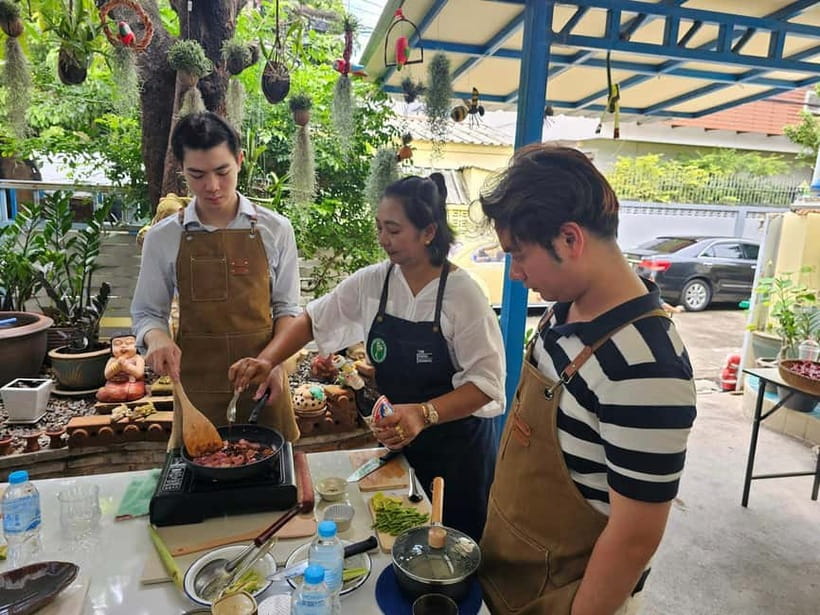
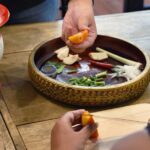
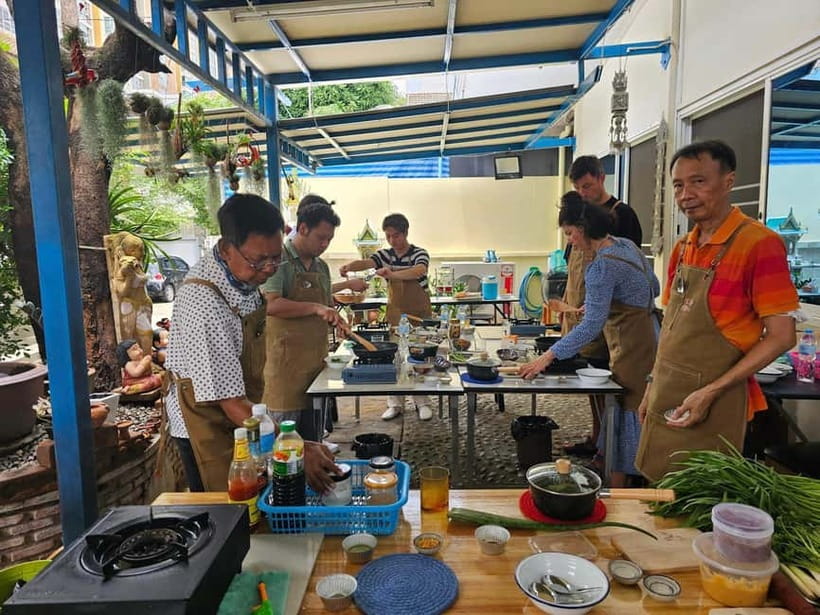
In one described experience, the cooking took place in an outdoor kitchen on a terrace. That matters more than you might think, because outdoor cooking often means better ventilation and a more relaxed pace, and it can make the whole thing feel less like a classroom and more like being invited into a real home-style setup.
Whatever the exact studio setup is on your day, you should expect an active kitchen where you do real work. The schedule builds toward hands-on cooking from the early afternoon.
Pick up a new skill here
The curry paste and coconut milk step that makes everything taste right
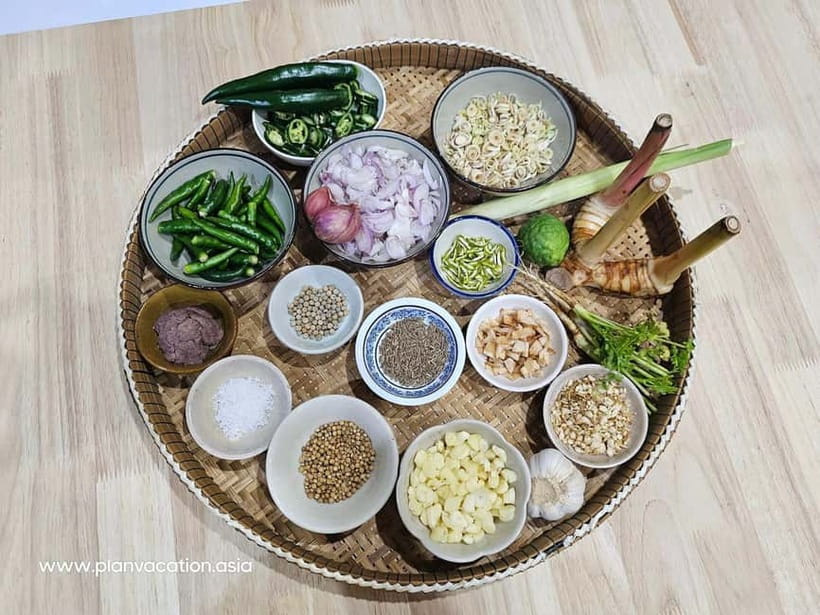
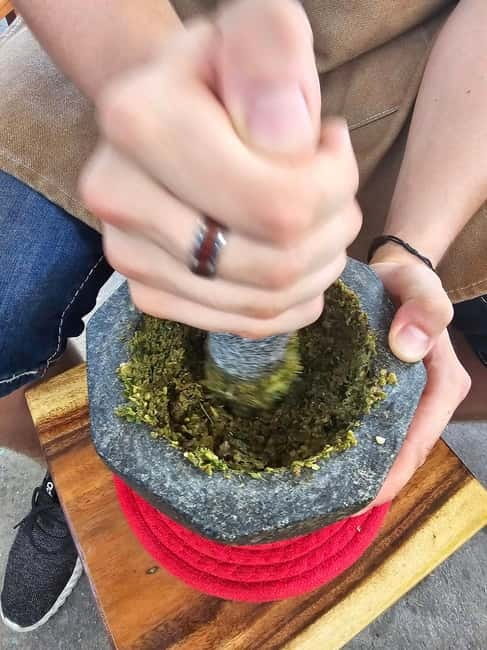
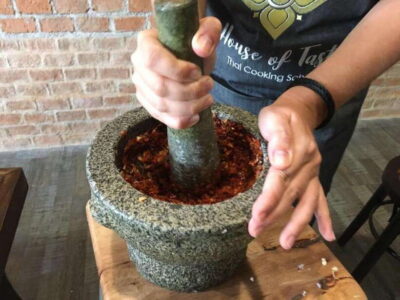
Around 15:00, you start with an introduction to vegetables, rice, and herbs. Then comes the core skill: you learn to make curry paste and coconut milk from scratch.
This is the part that turns a Thai cooking class from entertaining to actually useful. Curry paste and coconut milk are not just ingredients, they are flavor systems. When you make them yourself, you understand why certain curries taste deep and balanced instead of one-note.
If you have cooked with curry paste from a jar before, you will probably notice the difference in smell and texture. Even if you do not remember every step perfectly, you will leave with a mental map of how Thai flavors are built.
Cooking your Thai meal: soup, salad, curry, and dessert
The cooking schedule is arranged in clear blocks:
- 16:00 Session 1, soup or stir-fried dishes
- 16:30 Session 2, salad dishes
- 17:00 Session 3, curry dishes
- 17:30 Session 4, dessert, then you enjoy your food
The class wraps around 18:00, with transfers back afterward.
The exact menu depends on the day of the week, and the program provides a full rotation of dishes. Here is how to think about it: you are usually getting a mix of sour, spicy, savory, and sweet so your meal feels complete.
Common dish types you should expect include:
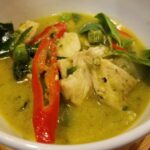
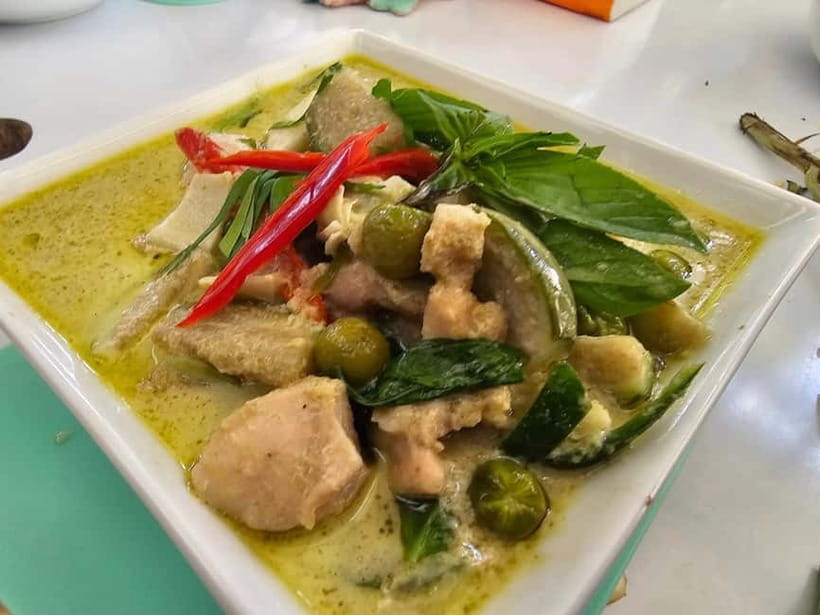
- A curry option, such as Panang curry or Green curry
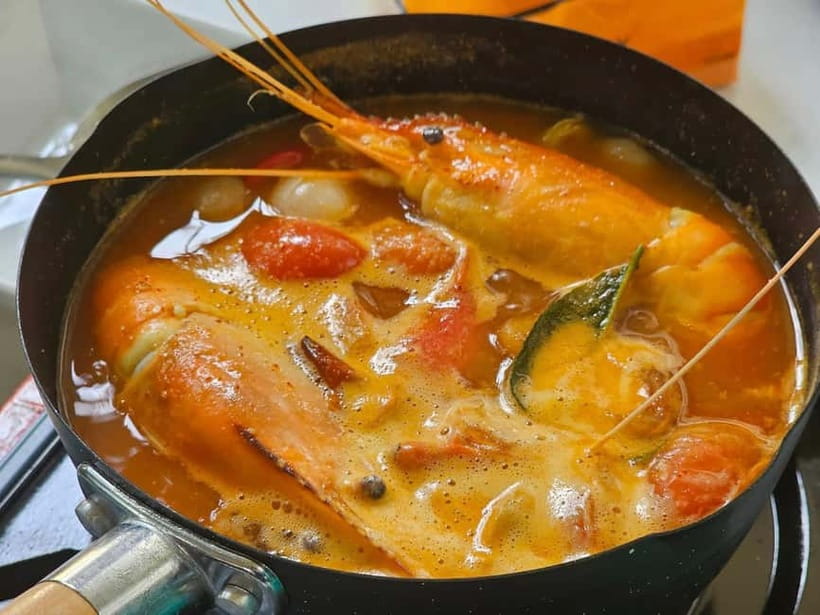
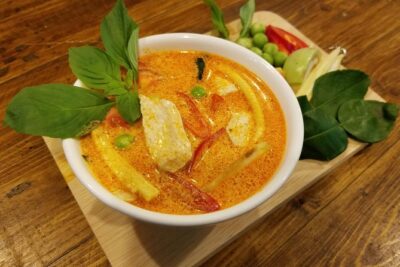
- A coconut-based soup, such as Tom Kha Gai
- A sour-spicy soup on some days, such as Tom Yum Gai
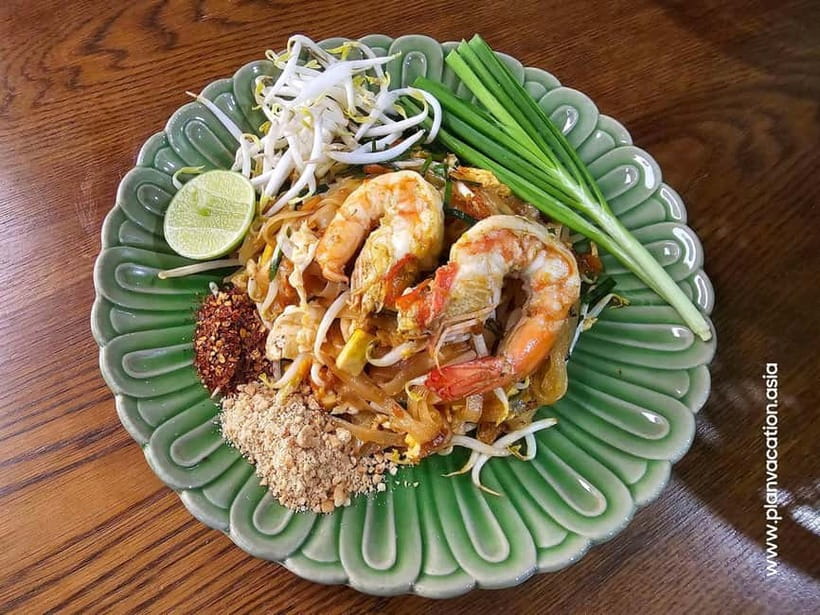
- Stir-fries with garlic, basil, or holy basil
- A salad course, such as Som Tum (papaya salad)
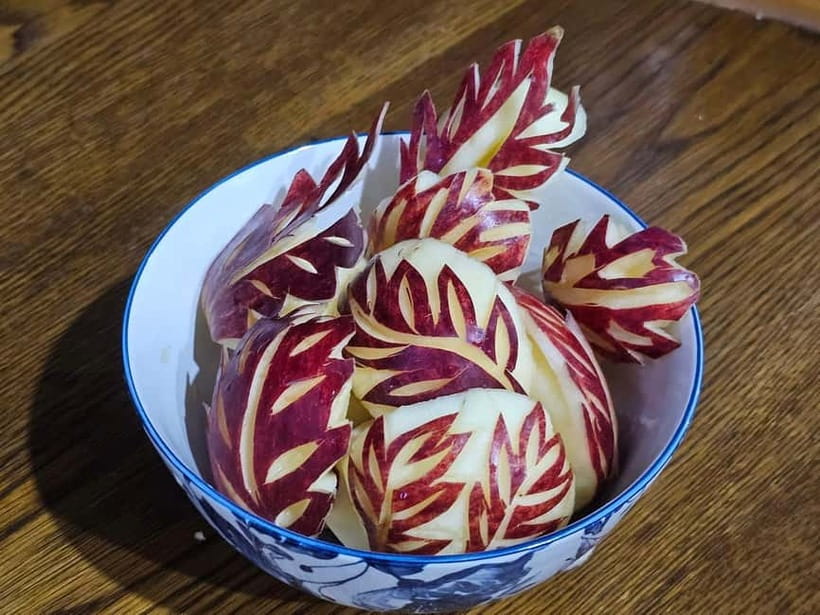
- A dessert course, with options like pandan layer cake, banana in coconut milk, or steamed coconut milk treats
To give you a concrete sense of the weekday variety, the program lists examples like:
- Monday: Pork Panang Curry, plus stir-fried morning glory with red fire, and poached eggs, with Thai snacks like Khanom Tom
- Tuesday: Tom Kha Gai, tofu or herb-based pork sides, and fried rice
- Friday: Chicken Green Curry and kale with crispy pork
- Sunday: Tom Yum Gai, rice noodles with chicken, and pumpkin in coconut milk
Even with that variety, the structure stays the same, which makes it easier to follow. If you are someone who likes order and step-by-step cooking, this format is a big plus.
Eating dinner you cooked, while everything is still hot
A key point: you eat the dishes you make during the class. The plan says you enjoy the food fresh and hot, and you get dinner that you cooked as part of the included experience.
In some sessions, the class felt like more than just a few plates, with people describing multiple dishes prepared during their time. Either way, the meal is designed to be substantial, so you can treat this as your dinner plan for the day.
Also, you do not always leave empty-handed in a cooking class. In one described experience, participants received recipes and a certificate. Even if your day’s certificate details vary, expect to leave with the recipes used in the lesson.
Small-group feel, and guides who teach with warmth
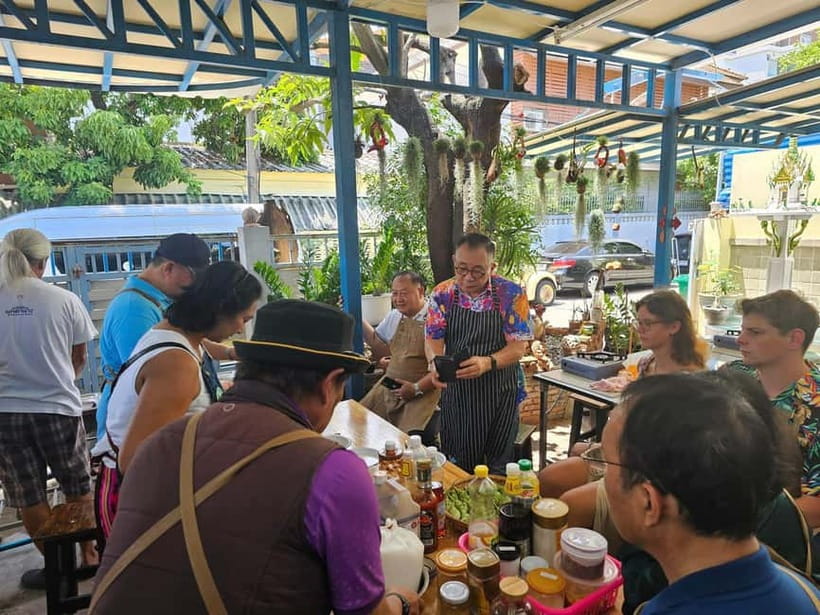
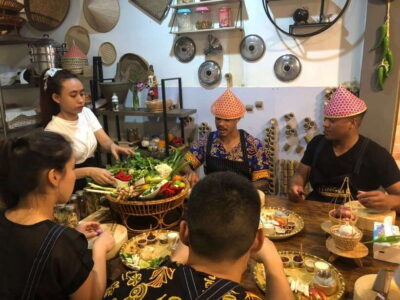
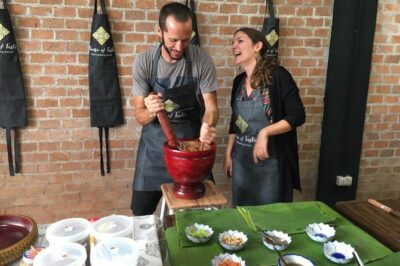
This is a mini-group class, and in past sessions the group size has been very small, sometimes just two people. That matters because it lets your guide give more specific attention, especially when you are learning curry paste and coconut milk.
Guides mentioned include Ann and Sunee, both described as friendly and skilled, with a teaching style that answers questions in detail. One useful practical detail from an described session is that guides help with when to go to the market and which spots to choose, so you learn a realistic strategy you can copy later.
Language is listed as English. Still, one described experience also mentions communication in German with Sunee. If you have a language need beyond English, it is worth checking with the provider when you reserve.
Dietary needs, vegetarian and vegan planning
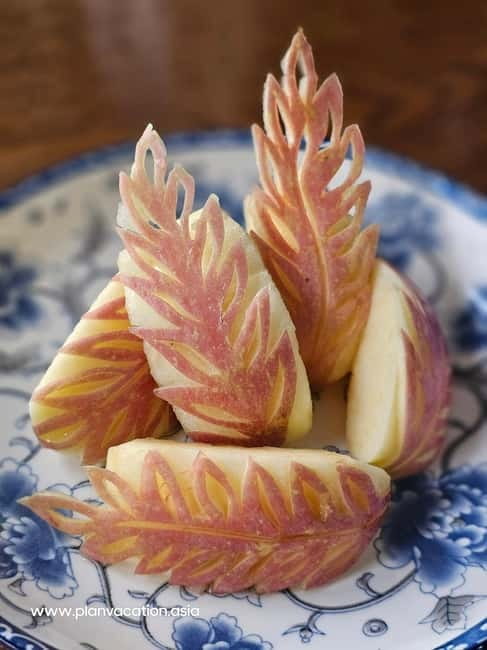
The class can cater to vegetarian and vegan options with prior notice. That is not a trivial promise. In Thai cooking, ingredients can hide in sauces, pastes, and garnishes, so it only works well if the planning happens before you arrive.
If you are vegetarian or vegan, send your requirement when you book, and then remind your guide at the start of the day. That helps the market shopping and ingredient prep match your dietary needs from the beginning.
The program also references learning how vegetables, rice, and herbs fit into the menu, which helps you understand what you can swap and what should stay.
Price and value: is $68 fair for Bangkok cooking?
At $68 per person, this sits in a mid-range price zone for a Bangkok cooking class. What makes it feel reasonable is what is included.
You get:
- Transfer from and to the MRT meeting area
- Dinner made from what you cook
- Drinking water
- All cooking ingredients
- Travel insurance
In other words, you are paying for the guided shopping, the structured cooking lesson, the ingredient base, and a full meal. If you tried to recreate this on your own, you would still need the shopping leg, the ingredients, and a teaching structure so your curry paste and coconut milk turn out correctly.
Is it perfect value for everyone? Not necessarily. If you want a ultra-short cooking demo with minimal walking, this is not that. But if you want a real ingredient-led lesson in Central Bangkok, it offers a strong mix of culture, skills, and food.
Practical tips for this afternoon class near Huai Khwang
Here is how to set yourself up for an easy day:
- Arrive at 14:00 at MRT Huai Khwang Exit 4, not early enough to wait forever, but early enough to settle in.
- Wear comfortable shoes. Market walking and outdoor cooking steps add up.
- Bring your dietary needs clearly. Vegetarian or vegan requires prior notice for the best results.
- Plan for an active schedule. The cooking blocks stack up from mid-afternoon to evening, and some people find it long and tiring in a good way.
- Follow the rules. No pets, no feeding animals, and keep noise down in shrine and market areas.
One more logistics note: the info provided mentions different MRT exits for return. Your start is Exit 4, and one part of the schedule says return near Exit 1. When you confirm, double-check the exact drop-off point for your day.
Who should book this class?
This class is a great fit if you want:
- A Thai cooking class that includes market shopping, not just cooking indoors
- Real skill-building around curry paste and coconut milk
- A small-group feel where your guide can answer questions
- A meal that covers multiple flavors and courses, plus dessert
It is also ideal for food lovers who like structure. The four cooking sessions and the weekday menu rotation make it easier to understand what you will cook even before you arrive.
Should you book Uncle and Aunty Cooking House Afternoon Class?
I would book it if you want a Thailand food experience that is practical and ingredient-led, and you are okay with an active afternoon. The biggest reasons to choose it are the market-first approach and the chance to make curry paste and coconut milk from scratch, plus a real dinner you cook and eat while it is hot.
Skip it if you want a minimal walking, low-energy activity, or you are expecting a hotel pickup convenience that is not part of the plan. If that sounds like you, look for a class with closer hotel logistics. If you are flexible and want skills you can use later, this one is a solid bet for Bangkok Thai cooking lessons around Huai Khwang.
FAQ
Where do I meet for the afternoon class?
You meet at MRT Huai Khwang, Exit 4 at 14:00, where your guide will be waiting.
How long does the experience run?
The schedule starts at 14:00 and the class ends around 18:00, with transfers back afterward, returning to the meeting area by about 19:00.
Is hotel pickup included?
No. Hotel pickup and drop-off are not included.
What will I cook during the class?
You cook according to the day’s menu. The program includes dishes such as pork Panang curry, Tom Kha Gai, Tom Yum Gai, Som tum (papaya salad), chicken green curry, and several stir-fries and desserts, with the cooking organized into four sessions plus dessert.
Can I join if I need a vegetarian or vegan option?
Yes. The class can cater to vegetarian and vegan diets with prior notice.
Are there any rules during the tour?
Pets are not allowed (assistance dogs are allowed), and you cannot feed animals or make noise.
Can I reserve and pay later, and what about cancellations?
The experience offers a reserve and pay later option. Cancellation is free up to 24 hours in advance for a full refund.
The newest additions around Bangkok
- Dream World & Snow Town in Bangkok with Return Transfer & Lunch
★ 4.5 · 3 reviews - Bangkok: Nong Nooch Garden
★ 5.0 · 3 reviews - Private tour to Ayutthaya and Lopburi Monkey Temple (from Bangkok)
★ 5.0 · 3 reviews - Guided Tour of Grand Palace & Emerald Buddha Temple in Bangkok
★ 5.0 · 3 reviews - Half Day DIY Grand Palace and Emerald Buddha Temple
★ 4.5 · 3 reviews - HD-01 Koh Rattanakosin old town cycling with The Giant Swing, and more
★ 5.0 · 3 reviews - Glittering Ayutthaya Tour to Famous Sights, Market & Sunset Boat
★ 4.5 · 3 reviews - Private Tour: The Best of Bangkok Temples – Half Day
★ 4.0 · 3 reviews
Bangkok Thai Cooking Classes, compared.
Tingly Thai Cooking School Half-Day Cooking Class
Read our review →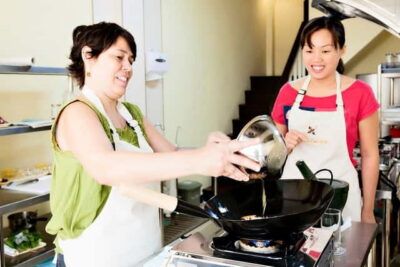
Tingly Thai Cooking Class with Morning Market Tour
Read our review →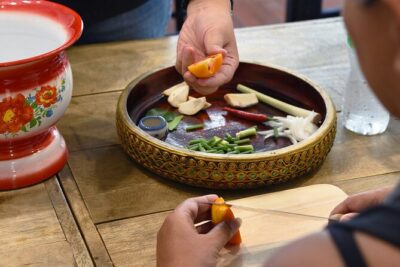
Hands-on Thai Cooking Class & Market Tour in Sukhumvit
Read our review →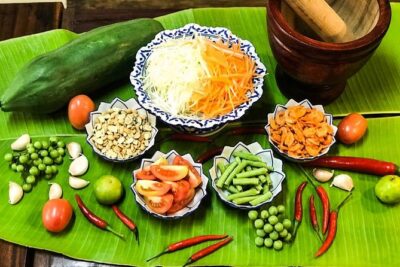
Pink Chili – Thai Cooking Class and Market Tour in Bangkok
Read our review →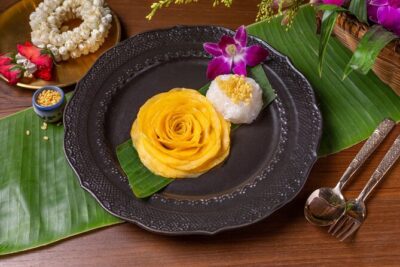
Authentic Thai Cooking with the Largest market visit &TukTuk ride
Read our review →Browse the lists this tour appears in