
Reviewed · BANGKOK THAI COOKING CLASSES
Bangkok: Tingly Thai Cooking School Half-Day Cooking Class
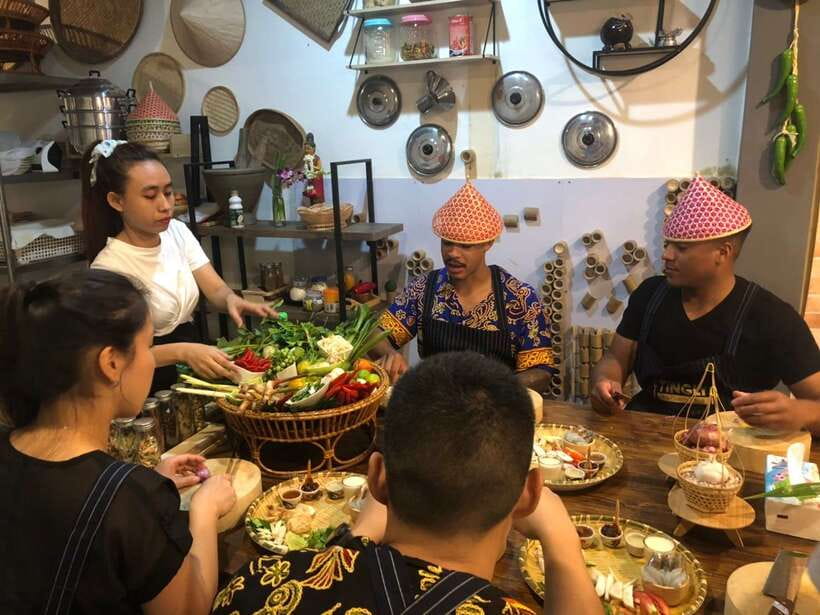
Your dinner plans just got hands-on. This Bangkok cooking class focuses on making Thai flavors from scratch, not just watching someone cook. I especially like the market tour option for picking fresh ingredients, and the way the lessons walk you through key steps like curry paste so the dishes taste right, not vaguely Thai.
You also end up with a full 4-course meal, which means you learn and then eat what you made. Expect classics like Tom Yum Kung and Pad Thai Kung, plus a chicken curry that changes by day and a sweet finish of mango sticky rice. One thing to consider: there is no hotel pickup, so you will need to get to the school yourself at the meeting point opposite the Marriott Hotel Surawong.
In This Review
- Key Things That Make This Class Worth Your Time
- Where Cooking Skills and Thai Food Culture Meet
- Meeting Point, Timing, and the Easiest Way to Plan Your Half Day
- The Morning Market Tour: Picking Ingredients Like a Thai Cook
- Back at the School: Prep That Teaches You the Flavor System
- Your 4-Course Lineup: What You Cook and Why It Matters
- Tom Yum Kung: Hot and Sour Prawn Soup
- Pad Thai Kung: Thai Fried Noodles with Prawns
- The Curry Course: Green, Red, Panang, or Massaman
- Mango Sticky Rice: Khao Neeaw Mamuang
- Eating Together: Turning Lessons into a Real Meal
- What You Get to Take Home (And How to Use It)
- Price and Value: Why $41 Actually Adds Up
- Who Should Book This Cooking Class (And Who Might Not)
- Should You Book Tingly Thai Cooking School in Bangkok?
- FAQ
- What is the duration of the Bangkok Tingly Thai Cooking School class?
- How much does it cost per person?
- What dishes are included in every class?
- Does the curry change by day?
- Is there a market tour?
- What is included in the price?
- Is hotel pickup included?
- Are alcoholic drinks included?
- Is the class offered in English?
- Is it suitable for young children?
Key Things That Make This Class Worth Your Time
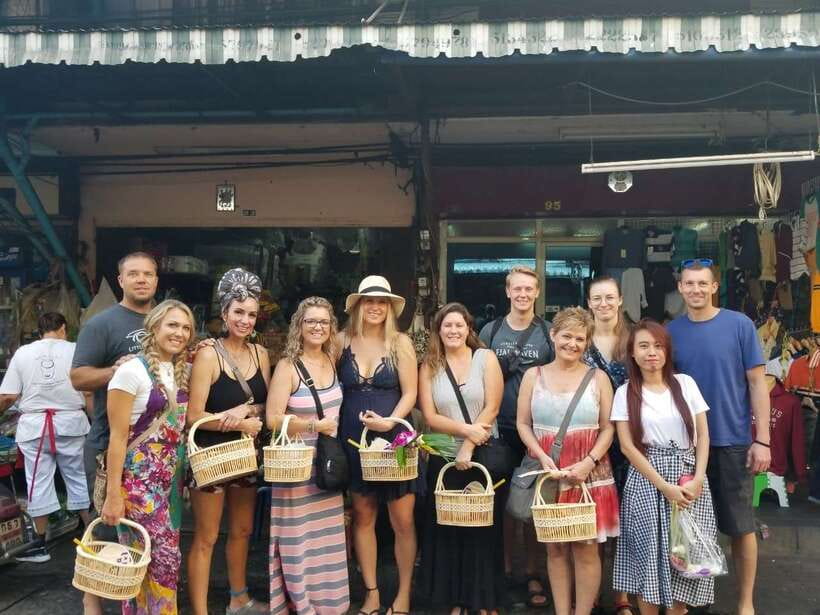
- Morning market tour with ingredient shopping so you understand what you are cooking with, not just how
- Curry paste from scratch as a real skills lesson, not a shortcut
- Four-course meal payoff (you eat what you make, not just samples)
- Day-of menu variety: green, red, Panang, or Massaman curry depending on the day
- Take-home recipes so you can remake the dishes later
- English instruction and accommodating options, including vegetarian options, with some reports of allergy help
Still ordering off a menu?
Where Cooking Skills and Thai Food Culture Meet
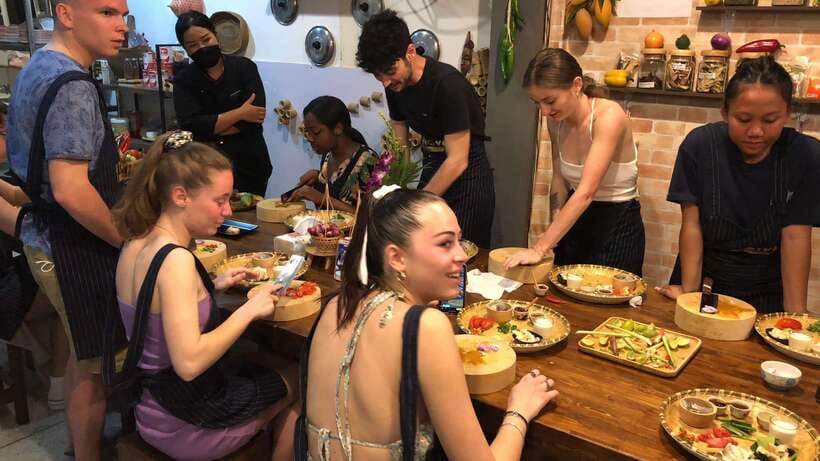
Bangkok can be sensory overload in the best way. This half-day class gives you a quieter, practical angle on Thai food, where you learn what makes dishes taste the way they do. You are not just following a recipe, you are learning the logic behind Thai cooking: balance, timing, and the way aromatic ingredients build flavor.
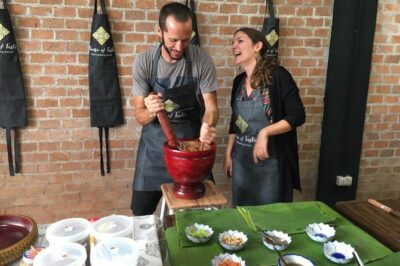
The setting is a dedicated cooking school, and that matters. It is clean and organized in a way that helps you stay focused while you chop, stir, pound, and taste. Multiple reviews also highlight the instructors as high-energy and funny, which turns a short class into something that feels faster and less intimidating. If you have never cooked before, that vibe is a big deal.
Price is $41 per person for a 3-hour experience, which is reasonable once you see what you are getting. You get the cooking equipment, all ingredients, the meal itself (four courses), and the recipes to take home. Morning sessions also include the market tour. In other words, you are paying for instruction plus a full meal, not just a small tasting.
Meeting Point, Timing, and the Easiest Way to Plan Your Half Day
You meet at the Tingly Thai Cooking School opposite the Marriott Hotel Surawong. There is no hotel pickup or drop-off included, so plan your own short ride or walk. For most people, that is simple, but it is still worth checking your route before the class.
Duration is 3 hours. That is short on purpose. The upside is you avoid a whole-day commitment. The downside is you will not have time to take huge detours or wander Bangkok for hours before class. If you are choosing the morning market option, you also want to show up hungry, because the schedule is built around cooking and then eating a full meal.
One small practical tip from the experience style: arrive with an empty stomach. Reviews consistently stress that you get fed well by the end. That is good news, but it also means you should not plan a heavy lunch immediately afterward.
The Morning Market Tour: Picking Ingredients Like a Thai Cook
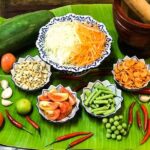
If you book the morning class, you start with a guided market visit. This is not a generic photo stop. Your guide shows you around and helps you pick fresh ingredients for the dishes you will cook later. You will see what is available, learn what different items do in Thai cooking, and get a sense of the flavors behind the menu.
One practical detail that came up: the market visit works on a clock, and the market closes by 10am. If you hate rushing, aim for calm earlier arrival so you can shop comfortably without feeling behind.
What I like about the market portion is that it changes how you cook afterward. When you understand which herbs, aromatics, or key ingredients to look for, you can actually reproduce the flavor at home. Without that, you might cook the dish, but it tastes flatter, because one crucial ingredient was substituted in your pantry.
Also, the class is taught in English, which makes ingredient education easier to follow. And since vegetarian options are included, your guide and instructor should be thinking about substitutions rather than simply removing items.
Pick up a new skill here

Back at the School: Prep That Teaches You the Flavor System
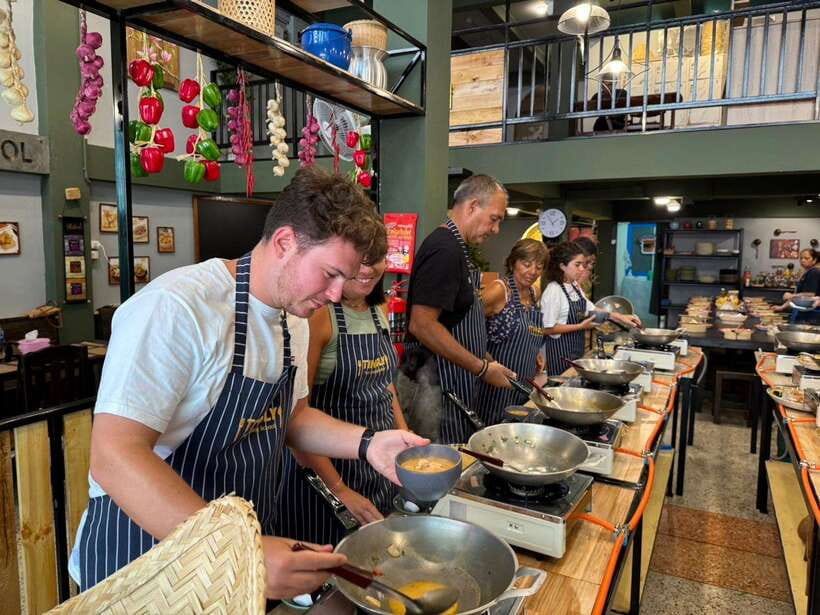
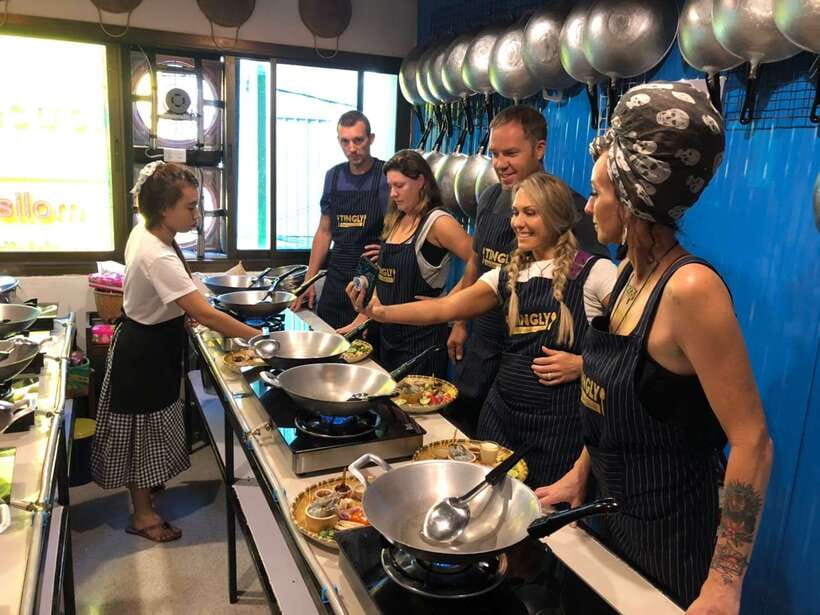
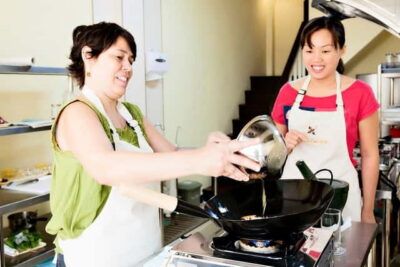
After the market, you head to the school and begin prepping ingredients for your 4-course meal. This is where the class becomes more than a cooking demo. You are cutting, measuring, and working through key steps with an instructor watching closely.
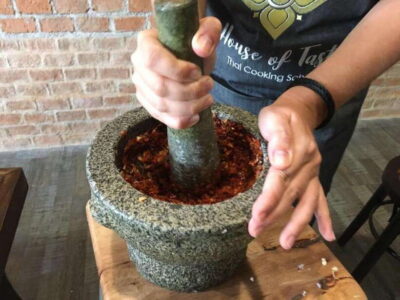
A highlight here is learning how to make curry paste from scratch. Curry paste is the heart of Thai curries. Store-bought paste can get you close, but the class step-by-step method helps you understand what the aromatics and spices are doing together. If you have ever tried to re-create Thai food at home and wondered why it tastes different, start here. This lesson makes your future cooking more reliable.
You also learn how to store Thai food. This is one of those “small but useful” lessons that gets ignored in many classes. Thai food is about freshness, and knowing how to handle leftovers or ingredient prep can save you from soggy noodles or tired flavors later.
Finally, expect the instructor to guide the kitchen flow so you do not feel lost. Reviews repeatedly mention clear explanations and good pacing. That matters because Thai cooking can involve multiple steps at once.
Your 4-Course Lineup: What You Cook and Why It Matters
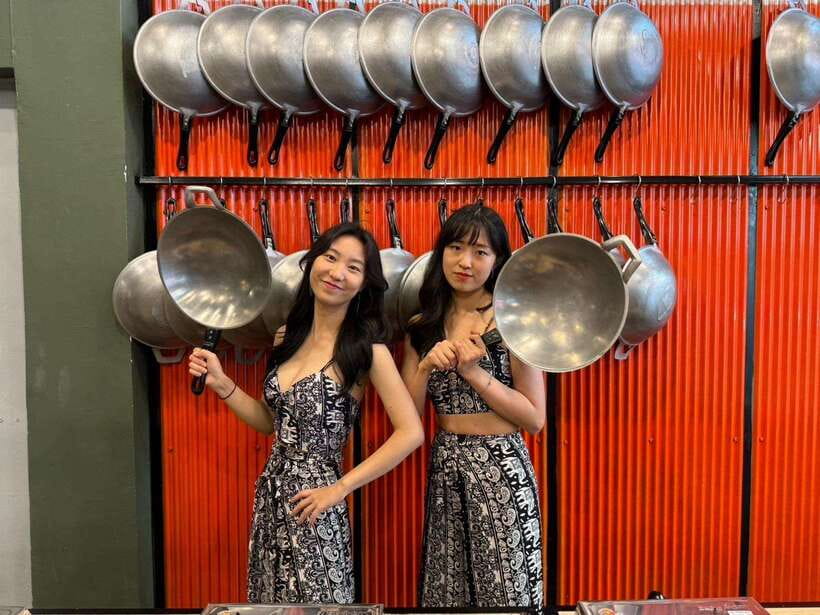
Every class includes Tom Yum Kung and Pad Thai Kung. The other two courses include a curry that changes by day and mango sticky rice for dessert. Even with the rotating curry, the structure is consistent: soup, noodles, curry, then sweet.
Tom Yum Kung: Hot and Sour Prawn Soup
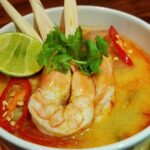
Tom Yum Kung is intense in the best way. It is about balancing heat, sourness, and aroma. Since it is included every time, you get repeated confidence building in the foundation flavors of Thai cooking. If you like Thai restaurants but struggle to replicate that punch at home, this is your practice dish.
The cooking approach you learn in class is less about secret tricks and more about getting the core components right. Once you understand the balance, you can adjust future versions more easily.
Pad Thai Kung: Thai Fried Noodles with Prawns
Pad Thai is popular, but it is also easy to mess up. In class, you do not just toss noodles. You learn the workflow: prepping ingredients, managing heat, and combining components so flavors coat properly.
This lesson is useful beyond Pad Thai. Stir-fry thinking, timing, and how sauces cling to noodles all translate to other Thai dishes. Many reviews call out how simple and straightforward the cooking feels, yet the results taste like more than a basic home meal.
The Curry Course: Green, Red, Panang, or Massaman
The remaining savory course is a curry, and the type depends on the day:
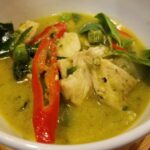
- Mondays and Fridays: Green curry with chicken
- Tuesdays and Saturdays: Red curry with chicken
- Wednesdays and Sundays: Panang curry with chicken
- Thursdays: Massaman curry with chicken
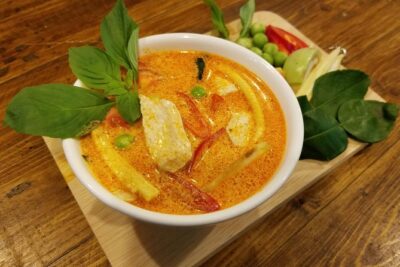
This variety is a smart way to keep the class interesting. It also helps you taste different Thai curry personalities. Green and red curries tend to feel sharper and more herb-forward. Panang often tastes richer and deeper. Massaman leans more into warming, cozy flavors. You still get core curry techniques, but the flavor direction teaches you how Thai curry styles differ.
Multiple reviews also mention the ability to adjust spice level. That is a big practical plus. Thai food is not one fixed heat setting, and the class seems set up to help you tailor it.
Mango Sticky Rice: Khao Neeaw Mamuang
Dessert is mango with sticky rice, called Khao Neeaw Mamuang. This sweet course matters because it gives you contrast. Thai meals often balance spicy, sour, salty, and sweet. You feel that full arc when you finish with something silky and comforting.
If you like dessert but usually skip cooking classes, this ending makes the whole experience feel complete. It also gives you a reliable “crowd-pleaser” dish to bring home and repeat.
Eating Together: Turning Lessons into a Real Meal
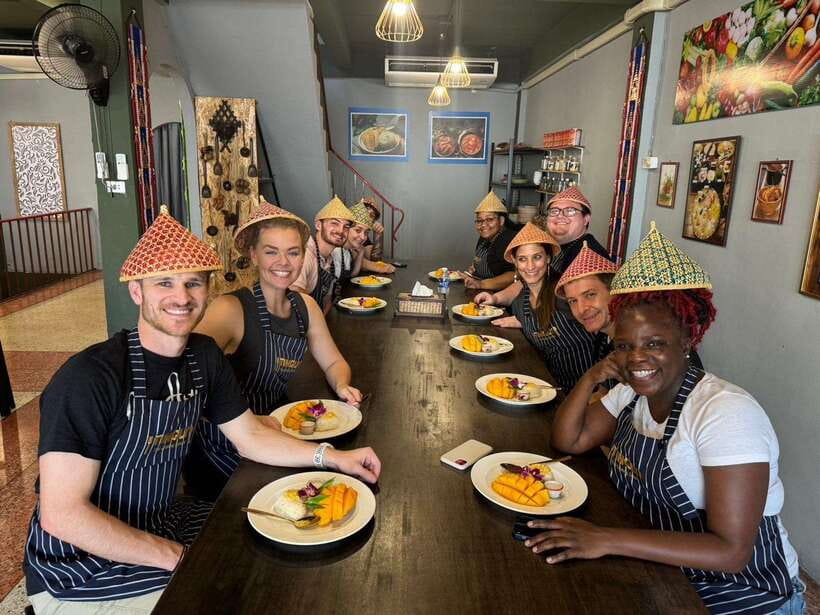
Once you finish cooking, you sit down and enjoy your creations. This part is more than a reward. It is where you taste the outcome while your instructor can clarify what you did, what you might tweak next time, and why one step matters.
Reviews mention friendly group energy and that the class never feels overly scripted. That is what you want from a cooking class. You should leave with food confidence, not just a stack of instructions.
You might also notice how well the group setup works for solo travelers. Several reviews describe meeting people through the shared prep and shared table, without it feeling forced. For couples and friends, it is a fun shared activity. For families, it can work too, with the caveat that the official minimum is children over 3 years, and babies under 1 year are not suitable.
If you have dietary needs, the class includes vegetarian options. Reviews also mention an instructor accommodating a food allergy by swapping ingredients. If this matters to you, tell the school ahead of time so they can plan substitutions.
What You Get to Take Home (And How to Use It)
You get recipes to take away with you, plus cooking equipment and all ingredients are provided during class. In practice, that means you are not leaving with vague memories. You leave with a repeatable plan.
One detail that pops up in reviews: people mention receiving a recipe book and even complementary chopsticks. The bigger takeaway is the recipes are meant for you to remake what you cooked, not just to satisfy a souvenir craving.
When you cook at home, you can use the class like a checklist:
- Start with the curry paste technique you learned, since that is where flavor often goes off track.
- Pay attention to ingredient balance and timing, especially for Tom Yum and Pad Thai.
- Use the recipes to match the dish style for the day, green, red, Panang, or Massaman.
Price and Value: Why $41 Actually Adds Up
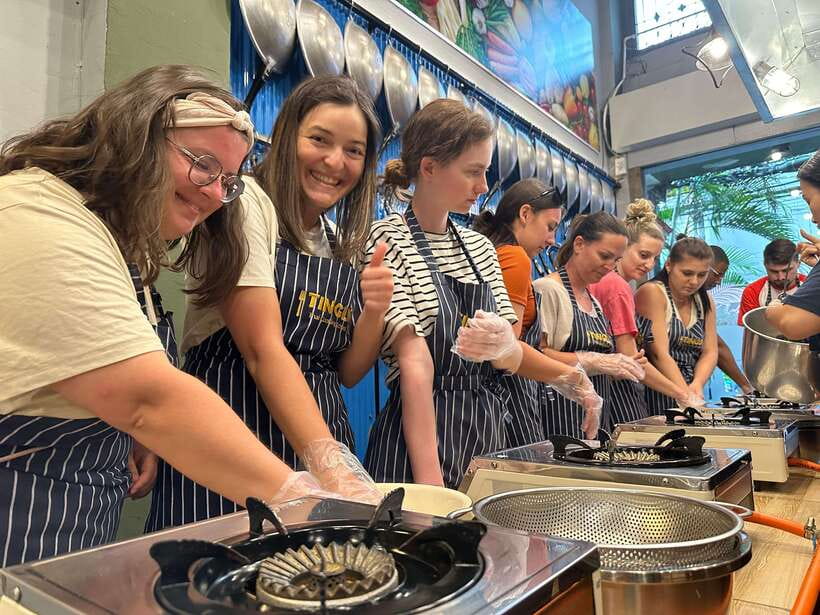
At $41 for 3 hours, this class can be good value if you think like this:
- You are paying for hands-on instruction
- You get all ingredients and equipment
- You eat a full 4-course meal
- Morning sessions add a market tour
Cooking classes with tastings often cost similar money but do not include the market component or a full meal you cook yourself. Here, the structure is built around you doing the work and then eating it. That is why people leave with both memories and food confidence.
Also, the day-to-day curry rotation means you are getting a curriculum, not one repeated dish. That increases the value if you plan to return to Thai cooking later.
Who Should Book This Cooking Class (And Who Might Not)
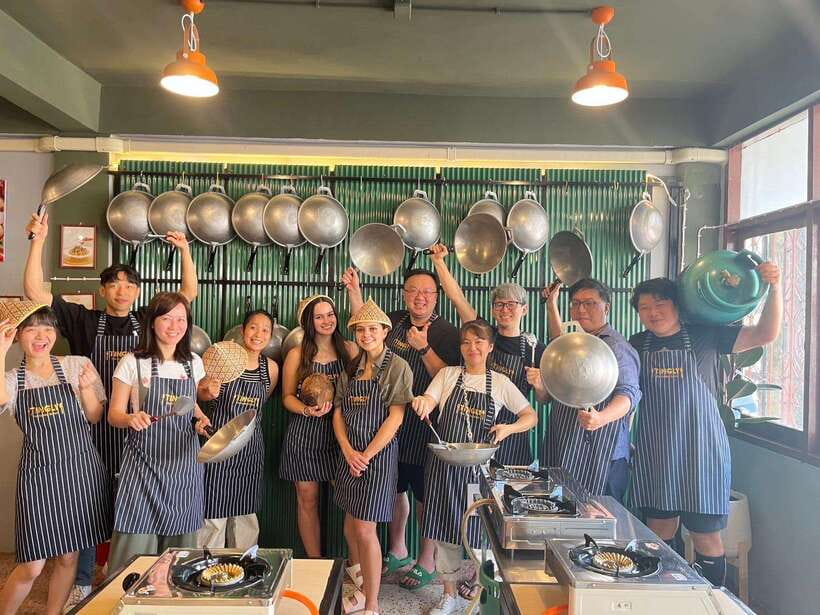
This is a great fit if you:
- Want Thai food you can recreate at home, not just eat once in Bangkok
- Like practical, hands-on learning
- Enjoy markets and want to understand ingredient choices
- Prefer a structured half-day instead of a vague food tour
It may be less ideal if you:
- Hate getting on and off rides and need hotel pickup
- Prefer very quiet, low-energy activities
- Want to spend a full day exploring beyond a single neighborhood area
Should You Book Tingly Thai Cooking School in Bangkok?
If you want a Bangkok activity that is fun, filling, and genuinely useful, I would book it. The combination of a guided market (morning option), curry paste technique, and a true 4-course meal gives you both culture and kitchen skills in one short session. Plus, the consistent feedback about instructors like Song and Cho, and about the engaging teaching style, suggests the class is set up to keep beginners comfortable.
Book the morning if you can. Market shopping adds context to every dish you cook. And whatever day you go, you still get Tom Yum Kung, Pad Thai Kung, and mango sticky rice, with the curry course giving you something different to learn.
If you do one cooking class in Bangkok, make it this one. You will leave with recipes, full stomach memories, and a better shot at cooking Thai food back home.
FAQ
What is the duration of the Bangkok Tingly Thai Cooking School class?
The class lasts about 3 hours.
How much does it cost per person?
The price listed is $41 per person.
What dishes are included in every class?
Every class includes Tom Yum Kung (hot and sour prawn soup) and Pad Thai Kung (Thai-style fried noodles with prawns), plus mango sticky rice for dessert.
Does the curry change by day?
Yes. The chicken curry depends on the day: green curry (Mondays and Fridays), red curry (Tuesdays and Saturdays), Panang curry (Wednesdays and Sundays), and Massaman curry (Thursdays).
Is there a market tour?
Yes, but only for the morning class. You go to local markets with a guide and pick ingredients for your cooking session.
What is included in the price?
The class includes the four-course meal, cooking equipment, all ingredients, drinking water, recipes to take home, and vegetarian options. The market tour is included for the morning class.
Is hotel pickup included?
No. Hotel pickup and drop-off are not included.
Are alcoholic drinks included?
No. Alcohol is not included, though it may be available for purchase.
Is the class offered in English?
Yes, the instructor teaches in English.
Is it suitable for young children?
It is not suitable for children under 3 years, and babies under 1 year.
The newest additions around Bangkok
- Dream World & Snow Town in Bangkok with Return Transfer & Lunch
★ 4.5 · 3 reviews - Bangkok: Nong Nooch Garden
★ 5.0 · 3 reviews - Private tour to Ayutthaya and Lopburi Monkey Temple (from Bangkok)
★ 5.0 · 3 reviews - HD-01 Koh Rattanakosin old town cycling with The Giant Swing, and more
★ 5.0 · 3 reviews - Guided Tour of Grand Palace & Emerald Buddha Temple in Bangkok
★ 5.0 · 3 reviews - Half Day DIY Grand Palace and Emerald Buddha Temple
★ 4.5 · 3 reviews - Glittering Ayutthaya Tour to Famous Sights, Market & Sunset Boat
★ 4.5 · 3 reviews - Private Tour: The Best of Bangkok Temples – Half Day
★ 4.0 · 3 reviews
Bangkok Thai Cooking Classes, compared.
Tingly Thai Cooking Class with Morning Market Tour
Read our review →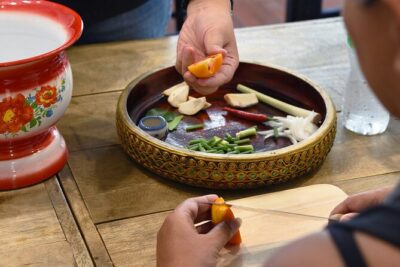
Hands-on Thai Cooking Class & Market Tour in Sukhumvit
Read our review →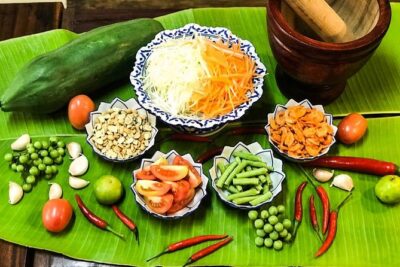
Pink Chili – Thai Cooking Class and Market Tour in Bangkok
Read our review →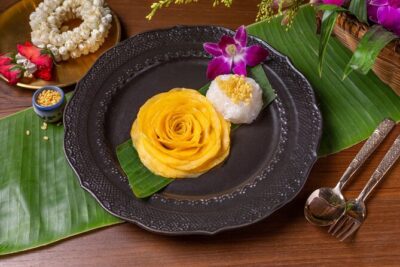
Authentic Thai Cooking with the Largest market visit &TukTuk ride
Read our review →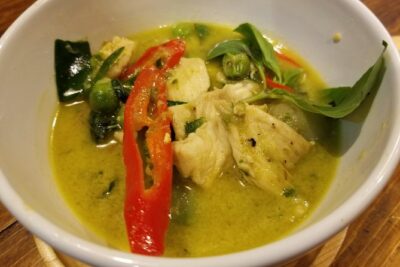
Browse the lists this tour appears in