
Reviewed · MAEKLONG TRAIN MARKET TOURS
Floating & Railway Markets and Erawan Waterfall [Optional Luxury]
Early starts, then wow moments. This long day links Western Thailand’s famous markets with real countryside food production and a proper nature break at Erawan Waterfall. You start around Bangkok, ride a train into the Hoop Rom style chaos of the Mae Klong Railway Market, float by motor boat through the Damnoen Saduak Floating Market, and finish with the River Kwai Bridge area for sunset photos.
Two things I really like about this tour are how it mixes icons with local processes, and how the day keeps moving without feeling rushed at the stops. You get a quick look at sea salt production in Samut Sakhon and coconut nectar work at a coconut sugar farm, then you’re out in green scenery hiking Erawan’s seven tiers and stopping at the Death Railway and River Kwai Bridge to end the day. One consideration: it’s a long day, with an early start at 6:30 am and substantial travel between regions, so plan for fatigue and bring comfort items you normally would not pack for a city day.
In This Review
- Key Highlights You Will Care About
- A 14-Hour Western Thailand Mix That Actually Makes Sense
- Samut Sakhon Salt Fields: Short Visit, Big Local Flavor
- Hoop Rom Market by Train: The Mae Klong Railway Market Moment
- Coconut Sugar Farm: Watching Coconut Nectar Become Something Useful
- Damnoen Saduak Floating Market: Motor Boat Time Is the Point
- Erawan Waterfall: Seven Tiers, Emerald Ponds, and a Real Stretch
- River Kwai Bridge and the Death Railway: Sunset-Friendly Ending
- Optional Luxury Vehicle: Comfort That Helps on a 14-Hour Day
- Price and Value: What You Are Really Paying For
- Getting the Most Out of the Stops (Without Overplanning)
- Who Should Book This Tour, and Who Might Not Love It
- Should You Book Floating and Railway Markets Plus Erawan?
- FAQ
- What time does the tour start?
- How long is the experience?
- Where does this tour take place?
- What vehicle options are available?
- Which stops are included during the day?
- Is there a boat ride and a train ride?
Key Highlights You Will Care About
![Floating & Railway Markets and Erawan Waterfall [Optional Luxury] - Key Highlights You Will Care About](https://s2.bangkokvisits.com/wp-content/uploads/floating-railway-markets-and-erawan-waterfall-optional-luxury-1.jpg)
- Mae Klong Railway Market by train: the fun part is not just seeing the market, it is riding the local train toward Mae Klong station.
- Damnoen Saduak by motor boat: you get time on the water to get that classic floating-market perspective, not just a quick walk-by.
- Salt fields in Samut Sakhon: you learn how sea salt is produced by Thai local wisdom at a whitish salt field.
- Coconut nectar and palm sugar steps: watch a demonstration, including cutting the coconut flower and pouring nectar into a bamboo container.
- Erawan Waterfall’s seven tiers and emerald ponds: a light, enjoyable hike plus the chance to cool off.
- Standard vs luxury vehicle options: same big stops, but you can choose a comfort level that matches your travel style.
Cross the bridge, hear the history
A 14-Hour Western Thailand Mix That Actually Makes Sense
This is a classic full-day “see it all” route, but with a smarter balance than a typical market-only day. The itinerary flows from water to rail, then land production, then rainforest and waterfalls, and finally back to history-film territory at the river.
You’ll be out for about 14 hours, starting at 6:30 am. That early start matters because you are covering several separate areas. If you like your travel days to be predictable, you’ll appreciate that this tour includes pickup, uses a mobile ticket, and runs as a private-group experience, meaning it is your group moving together rather than you constantly hunting for the right meeting point.
The timing also affects your mindset. By the time you reach Erawan, you will have already spent hours looking at motion, crowds, and activity, which makes the waterfall portion feel like a real reset instead of just another photo stop.
Samut Sakhon Salt Fields: Short Visit, Big Local Flavor
![Floating & Railway Markets and Erawan Waterfall [Optional Luxury] - Samut Sakhon Salt Fields: Short Visit, Big Local Flavor](https://s2.bangkokvisits.com/wp-content/uploads/floating-railway-markets-and-erawan-waterfall-optional-luxury-2.jpg)
Your day begins with a quick stop in Samut Sakhon, focused on salt production. This is not a rice field. You are looking at a whitish salt field, and the point is to see sea salt made through Thai local wisdom, explained by a salt farmer.
This part lasts about 15 minutes and it is easy to miss if you treat it like filler. But I like it because it anchors the day in something practical. Markets can feel like performance, and food demos can feel staged. Here, you are learning a basic livelihood product, and the visuals are clear even if you do not speak Thai.
Practical tip: salt areas can look intense in bright daylight. Bring sunglasses and sunscreen, even if the morning starts cooler.
Hoop Rom Market by Train: The Mae Klong Railway Market Moment
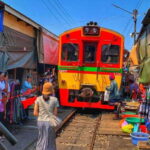
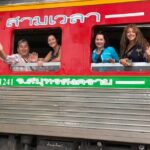
Next comes the Mae Klong Railway Market, also known as Hoop Rom Market. This is where the day earns its reputation. You ride a local train toward Mae Klong station, then you reach the market and see the lively chaos up close.
The reason this stop is so memorable is the contrast between slow travel and sudden motion. On a train, you watch the world slide by. At the railway market, you are suddenly inside the activity: people, stalls, and a layout that forces the market to respond to the tracks.
The duration here is about 1 hour 30 minutes, with admission included. The time is enough to soak in the spectacle without feeling like you only arrived for the loudest minute.
Consideration: this is an active, track-adjacent setting. If you do not like crowds or close-packed spaces, hold back on expecting a peaceful walkabout. Wear shoes that handle uneven ground and be ready to pause for train-related movement.
Umbrellas down when the train comes through
Coconut Sugar Farm: Watching Coconut Nectar Become Something Useful
![Floating & Railway Markets and Erawan Waterfall [Optional Luxury] - Coconut Sugar Farm: Watching Coconut Nectar Become Something Useful](https://s2.bangkokvisits.com/wp-content/uploads/floating-railway-markets-and-erawan-waterfall-optional-luxury-4.jpg)
After the railway stop energy, you shift to a calmer, very hands-on food production segment at a coconut sugar farm. You’ll observe how Thai farmers produce coconut nectar and palm sugar loaf.
Even if you have seen sugar-making demos before, this one has a clear process flow. There is a demonstration of coconut flower cutting, nectar poured into a bamboo container, and preservation steps using preservation woods. You are basically watching the steps that make the product possible in Thailand’s climate.
This stop is shorter at about 15 minutes, but the value comes from learning what each step is doing, not just watching hands move. It also gives you a palate for what you will see later, because both markets and waterfalls feel more meaningful when you understand how locals think about time, work, and food.
Practical tip: keep water handy. You will have already started your morning with a train and market walking, and this is another active stop even if it is brief.
Damnoen Saduak Floating Market: Motor Boat Time Is the Point
![Floating & Railway Markets and Erawan Waterfall [Optional Luxury] - Damnoen Saduak Floating Market: Motor Boat Time Is the Point](https://s2.bangkokvisits.com/wp-content/uploads/floating-railway-markets-and-erawan-waterfall-optional-luxury-5.jpg)
Then you go to the famous Damnoen Saduak Floating Market. This is one of Thailand’s most recognizable floating market names, and this tour builds in one of the best parts: a motor boat ride through the market.
You get about 1 hour 30 minutes for the experience itself, and the transportation time from hotel to market is part of the overall schedule, listed as total 3 hours 30 minutes roundtrip. That means you are not just stopping by on the way to something else. You are committing to the ride and the setting.
If you only view floating markets from the dock, you miss the main sensation. From the boat, you get a better sense of spacing, movement, and how vendors structure their stalls and routines on the water. You’ll see why people come for photos, but the better payoff is understanding the working rhythm.
Consideration: floating market time can be warm and sun-heavy. Bring a hat and sun protection. Also, be aware that getting on and off boats and moving around can be slippery, so take your time.
Erawan Waterfall: Seven Tiers, Emerald Ponds, and a Real Stretch
![Floating & Railway Markets and Erawan Waterfall [Optional Luxury] - Erawan Waterfall: Seven Tiers, Emerald Ponds, and a Real Stretch](https://s2.bangkokvisits.com/wp-content/uploads/floating-railway-markets-and-erawan-waterfall-optional-luxury-6.jpg)
After the morning and midday stops, the day pivots hard into nature. At Erawan Waterfalls, the main attraction is the 7-tiered waterfall system with emerald green ponds. You’ll do a hike that is described as light and enjoyable, and you’ll have time for water play, including swimming in the green ponds.
This is the longest single block on the water and nature side at about 3 hours. That matters because you can pace yourself. You can spend extra time enjoying one tier area, walk a bit further when you feel good, and still have enough time to return without feeling rushed.
You are also moving through a tropical rainforest setting, so expect humidity and the kind of green that makes sweat feel normal. The best way to enjoy Erawan is to treat it like a casual hike with a reward, not a stadium-style sprint to the top.
Practical tips that help here:
- Bring swimwear and a quick-dry layer if you plan to get in the ponds.
- Pack a small towel and basic water shoes if you have them.
- Bring a dry bag or waterproof pouch for your phone.
River Kwai Bridge and the Death Railway: Sunset-Friendly Ending
![Floating & Railway Markets and Erawan Waterfall [Optional Luxury] - River Kwai Bridge and the Death Railway: Sunset-Friendly Ending](https://s2.bangkokvisits.com/wp-content/uploads/floating-railway-markets-and-erawan-waterfall-optional-luxury-7.jpg)
To finish, you head to the River Khwae Bridge area. This bridge is famous because of films and books, and the site pulls in both Thai visitors and foreigners for a reason: it is photogenic and atmospheric.
The tour includes a walk along the Death Railway and the River Kwai Bridge, and it specifically sets you up for those late-day photos by the riverbank. This ending works well after Erawan because you switch from waterfall sounds to river light, and from jungle heat to open-air breeze.
Stop time here is short at about 20 minutes, so the strategy is simple. Decide where you want your photo angle early, then spend your time there. If you want the sunset look, arrive ready, not still tying shoes at golden hour.
Optional Luxury Vehicle: Comfort That Helps on a 14-Hour Day
![Floating & Railway Markets and Erawan Waterfall [Optional Luxury] - Optional Luxury Vehicle: Comfort That Helps on a 14-Hour Day](https://s2.bangkokvisits.com/wp-content/uploads/floating-railway-markets-and-erawan-waterfall-optional-luxury-8.jpg)
One of the most practical choices you can make is between a standard vehicle and a luxury vehicle. You’re still visiting the same key stops, but the long ride between regions is where comfort choices pay off.
A standard option can be totally fine if you pack smart and keep expectations realistic. But on a day that starts early, runs about 14 hours, and includes major transfer blocks like the Damnoen Saduak route, a luxury vehicle can reduce the mental drag. Think of it as paying for less hassle, more comfort, and a better “recovery zone” between activities.
If you tend to feel stiff or travel-stressed, choose the luxury option. If you prefer saving money and you are the type who sleeps in a car, standard is usually fine.
Price and Value: What You Are Really Paying For
The price is $245.95 per person, and the value is not just that you get to tick off famous names. You also get practical structure: pickup is offered, there are group discounts, you receive a mobile ticket, and admissions are included for some key stops while others are listed as free.
What that means for you:
- You are paying for transportation time and routing, not just entry fees.
- You are paying for guided flow across water, rail, and waterfall areas that are hard to string together efficiently alone.
- You are paying for a format that keeps you from getting stuck figuring out how to reach the next part of the day.
The itinerary includes admission for the railway market, the coconut sugar farm, and Erawan Waterfalls. The salt and floating market entries are listed as free, which helps keep the overall day balanced.
The only “value risk” is personal. If you hate early mornings and long sitting time, the price will feel higher than it is. If you enjoy variety and you want a single-day route that doesn’t require you to plan five separate mini trips, it feels like good use of money.
Getting the Most Out of the Stops (Without Overplanning)
To enjoy a day like this, you need the right mental gear. This is not a slow, museum-style outing. It is a sequence of active environments with different sounds and surfaces.
Here’s how I’d approach it if you want the best payoff:
- Start the day with water and a light breakfast. You’ll be moving fast early.
- Treat the salt and coconut stops as learning pauses, not snacks only.
- For the railway market, wear shoes you can stand in and plan to watch, not to wander endlessly.
- At Damnoen Saduak, your time on the boat is the highlight. Make space for that moment, even if you still want photos.
- At Erawan, pace the hike. The best swimming and photo spots are usually the ones you reach without rushing.
Also, pay attention to who leads your group. One guide name that shows up in strong feedback is Ice, described as considerate and knowledgeable. That kind of guiding matters because it can help you understand what you are seeing and where to focus your time.
Who Should Book This Tour, and Who Might Not Love It
I’d book this if you want a single day that mixes Thai market life, local food production, and a nature break at a major waterfall. It is a great fit if you like doing variety in one shot, and you are comfortable with early mornings and a long day.
I’d think twice if you prefer one place at a time, or if you need lots of downtime between stops. The itinerary is packed, and the scenery changes constantly, which can be a lot if you travel slowly.
Good news: the tour notes that most people can participate, and service animals are allowed. The bigger practical limitation is not attitude, it is energy and comfort for walking and standing.
Should You Book Floating and Railway Markets Plus Erawan?
If you want Western Thailand highlights without building a complicated self-planned route, this is a strong choice. The combination is unusual in a good way: railway chaos, floating market water views, two quick local production stops, then Erawan’s seven-tier waterfall with emerald ponds, and a final River Kwai Bridge photo walk.
My honest decision rule: book it if your ideal day includes at least one “wow spectacle,” one “learn something real” moment, and a nature reset. Skip it if you are looking for a relaxed half-day or you get cranky with early starts.
FAQ
What time does the tour start?
The start time is 6:30 am.
How long is the experience?
The duration is about 14 hours.
Where does this tour take place?
It is in Bangkok, Thailand, with stops across Western Thailand including Damnoen Saduak, Mae Klong, Samut Sakhon, and Erawan Waterfalls, plus the River Khwae Bridge area.
What vehicle options are available?
You can choose between a standard vehicle or an optional luxury vehicle for more comfort and amenities.
Which stops are included during the day?
The tour includes Samut Sakhon salt fields, Mae Klong Railway Market (Hoop Rom Market), a coconut sugar farm, Damnoen Saduak Floating Market, Erawan Waterfalls, and River Khwae Bridge with the Death Railway walk.
Is there a boat ride and a train ride?
Yes. You ride a local train toward Mae Klong station, and you also take a motor boat ride at Damnoen Saduak Floating Market.
Rail Trips out of Bangkok
- Bangkok: Damnoen Saduak, Train Market & Mahanakhon Day Trip★ 4.7 · 2,162 reviews
- Damnoen Saduak Floating Market and Maeklong Railway Market Tour★ 4.5 · 1,588 reviews
- Day Trip to Bangkok Floating Market & Maeklong Railway★ 5.0 · 1,528 reviews
- Bangkok: Railway and Floating Market Tour with Dragon Temple★ 4.6 · 1,225 reviews
The newest additions around Bangkok
- Dream World & Snow Town in Bangkok with Return Transfer & Lunch
★ 4.5 · 3 reviews - Bangkok: Nong Nooch Garden
★ 5.0 · 3 reviews - Private tour to Ayutthaya and Lopburi Monkey Temple (from Bangkok)
★ 5.0 · 3 reviews - Guided Tour of Grand Palace & Emerald Buddha Temple in Bangkok
★ 5.0 · 3 reviews - Half Day DIY Grand Palace and Emerald Buddha Temple
★ 4.5 · 3 reviews - HD-01 Koh Rattanakosin old town cycling with The Giant Swing, and more
★ 5.0 · 3 reviews - Glittering Ayutthaya Tour to Famous Sights, Market & Sunset Boat
★ 4.5 · 3 reviews - Private Tour: The Best of Bangkok Temples – Half Day
★ 4.0 · 3 reviews
Maeklong Train Market Tours, compared.
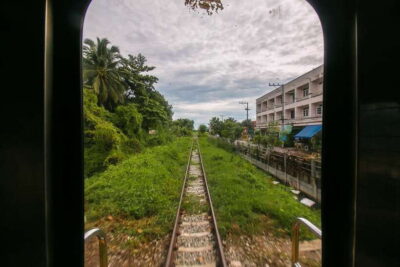
Damnoen Saduak Market and Maeklong Railway Market
Read our review →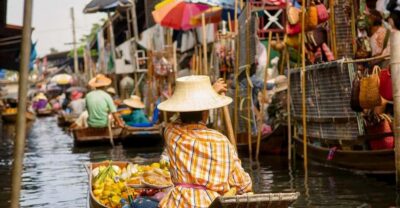
The Old Siam: Damnoen Saduak and Maeklong Railway Market
Read our review →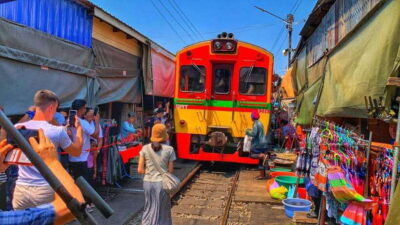
Train Market & Floating Market with Boat Ride
Read our review →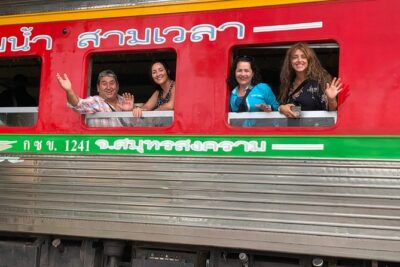
Half-Day Railway Market and Floating Market Tour in Thailand
Read our review →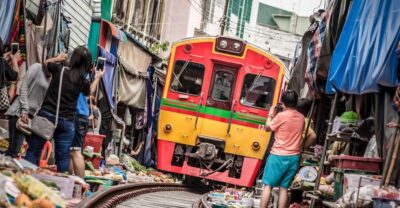
Damnoen Saduak, Train Market & Mahanakhon Day Trip
Read our review →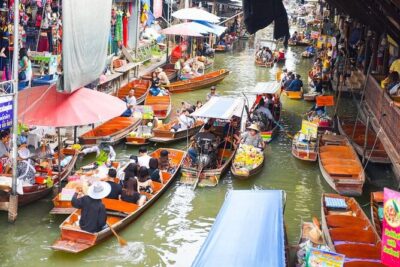
Damnoen Saduak Floating Market and Maeklong Railway Market Tour
Read our review →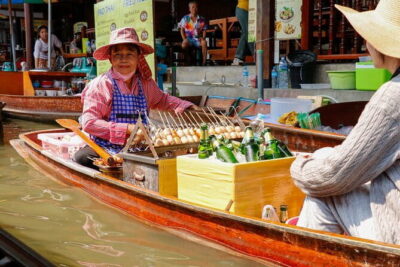
Day Trip to Bangkok Floating Market & Maeklong Railway
Read our review →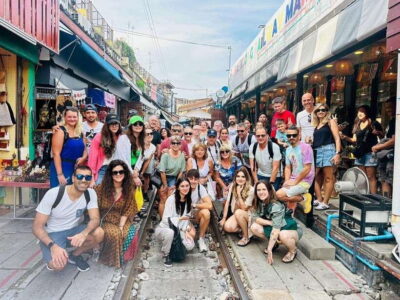
Browse the lists this tour appears in