
Reviewed · RIVER KWAI & KANCHANABURI TOURS
Erawan Waterfalls-Death Railway & River Kwai Tour
Erawan Waterfalls and the Death Railway in one long day. This tour strings together two of Thailand’s most memorable stops: the seven-tier Erawan Waterfall swim breaks and the World War II rail story around the River Kwai Bridge. It also runs as a small-group, with pickup offered and a mobile ticket, which helps when you want to escape Bangkok without the full hassle of transfers.
Two things I really like: you get real time at the Erawan falls, including a spot to swim and take photos in the national park setting. I also like that the afternoon includes an actual train ride on the Death Railway route, followed by a quick bridge visit, so the WWII theme isn’t just a bus stop photo.
The main drawback to plan for is the schedule pressure. It is a long day built around road time and tight windows, so if you hate being rushed, or you want deep guide-led explanations at every stop, you may feel the squeeze.
In This Review
- Key things to know before you go
- Erawan Waterfalls, the real reason to wake up early
- What to bring, and how the park time really feels
- Picnic lunch and the Tham Kra Sae stop
- The Death Railway train ride: the story you can feel
- River Kwai Bridge: fast photos, real emotion, and timing pressure
- Thailand-Burma Railway Centre: a short stop with useful context
- Price and logistics: is $123 good value
- Who this tour suits best, and who should skip it
- Should you book this Erawan and Death Railway tour?
- FAQ
- How long is the tour?
- Is hotel pickup included?
- How many people are in the group?
- What should I bring for Erawan Waterfalls?
- Is lunch included?
- Do I ride the Death Railway by train?
- How long do I have at the River Kwai Bridge?
- Are admission tickets included?
- Is the tour refundable if I cancel?
Key things to know before you go
- Seven tiers, real swim pools: The second tier is noted as having the biggest pool, so pack swim gear.
- 200 km from Bangkok: Expect a long drive, then a full afternoon of sights and transit.
- Small group limit: Maximum of 15 travelers helps keep waiting down, at least compared with big buses.
- Death Railway train ride: You ride on the historical Burma Railway line, partly parallel to the River Kwai and through dense jungle.
- Bridge photo window: You get about 10 to 15 minutes at the River Kwai Bridge, so plan your shots fast.
- Admission included for key parts: Tickets are included for Tham Kra Sae and the Thailand-Burma Railway Centre, while the River Kwai Bridge time is listed as admission free.
Cross the bridge, hear the history
Erawan Waterfalls, the real reason to wake up early
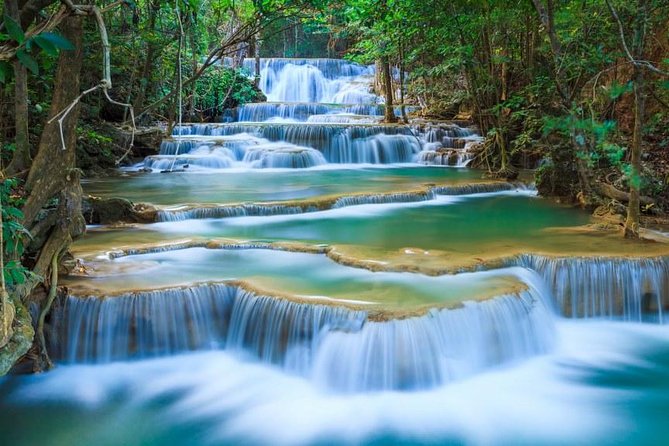
This is one of those Bangkok tours that only makes sense if you want an all-in-one day trip. You leave early, then trade city life for Erawan National Park, a huge protected area of 550 square kilometers. The falls are about 200 km from Bangkok, so you are buying time with an early start.
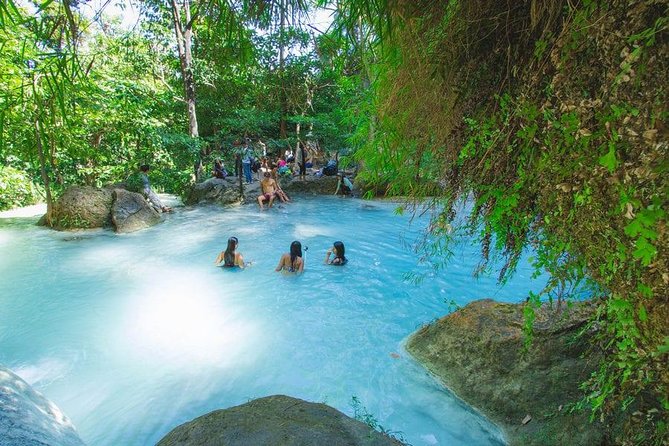
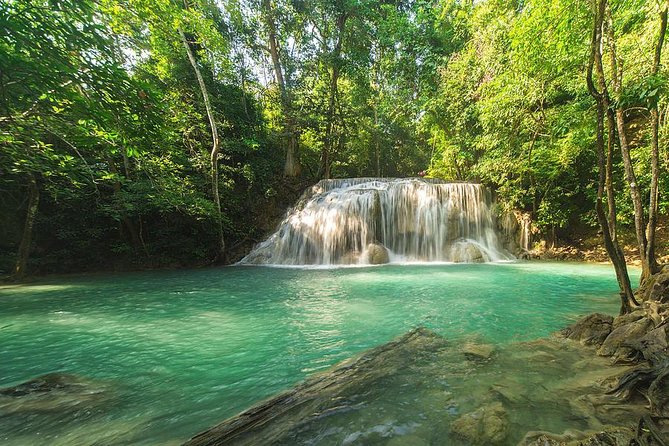
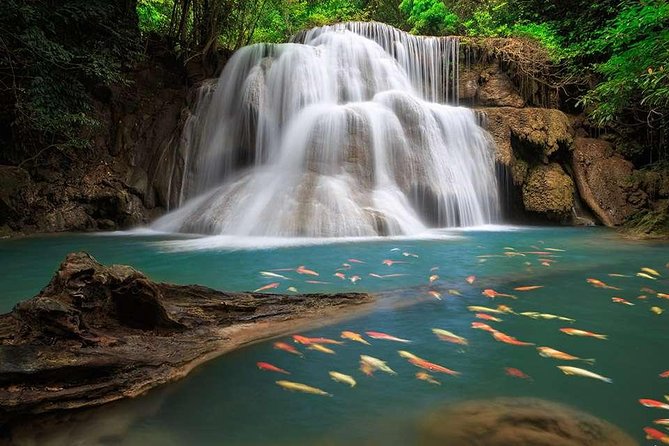
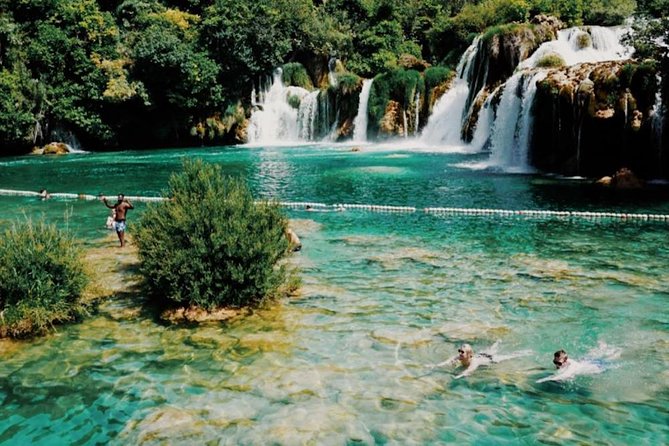
Erawan is famous for its seven tiers, and the tour is built around spending time at the main waterfall zone. The tour notes that the second tier has the biggest swimming pool, which matters if you are planning your route down the stairs. You do not just walk past a view here, you actually have a swim break.
I like that the tour tells you to prepare for water, not just sightseeing. Bring a swimming suit and towel, or plan spare clothes for the ride back. If you show up in street shoes and dry clothes only, you will end up doing the classic wet-and-sticky tour regret.
One more heads up: water flow can vary by season. If you go in drier months, you might find the falls less powerful than the loudest photos online, but it still tends to be worth the trip for the pools, scenery, and the chance to cool off.
What to bring, and how the park time really feels
You are given a clear expectation that there is walking, stairs, and active time in the waterfall area. The tour specifically mentions preparation for swimming and the need for appropriate gear, which is a good clue that you should dress and pack like you plan to get wet.
Think of this day as two phases: morning is mostly the falls, afternoon shifts into rail and bridge stops. That means your “best energy use” is early, when you arrive late morning and get your best chance at calmer water time and easier movement.
Comfort is the difference between enjoying the day and feeling like you survived it. Wear shoes you can handle on uneven ground. Bring something small and waterproof for your phone or camera if you plan to take photos while you swim. You will thank yourself when you are near water and not trying to balance dry bags and towels in a crowded van.
Picnic lunch and the Tham Kra Sae stop
Lunch is positioned as a picnic in the Erawan area, with water and fresh fruit included. A picnic is practical in a national park context, and it saves you from hunting down a restaurant while you are on a tight schedule. Still, if you strongly prefer a proper sit-down meal, you may want to set expectations.
After lunch, the route shifts toward Tham Kra Sae, with admission included. The schedule gives you time in the general area, but the key point for you is this, it keeps the day moving. This is not a slow nature day, it is a packed route where each stop gets a purposeful chunk of time.
I like that the tour includes admission for at least some of these park-side components, because it reduces “what costs extra” surprises. On a long day, knowing what is paid and what is not makes planning easier.
If you do not like rushed transitions, use the picnic time to refill your energy and reset mentally. The next stretch includes train, then bridge, then a brief museum stop, and by then you will want steady energy more than extra coffee stops.
Ride the rails out of town
The Death Railway train ride: the story you can feel
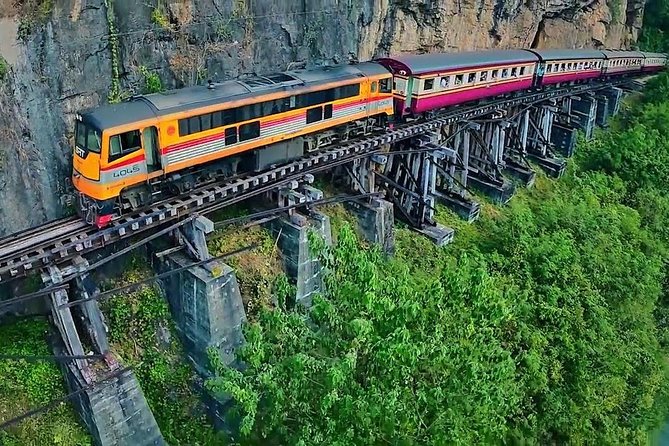
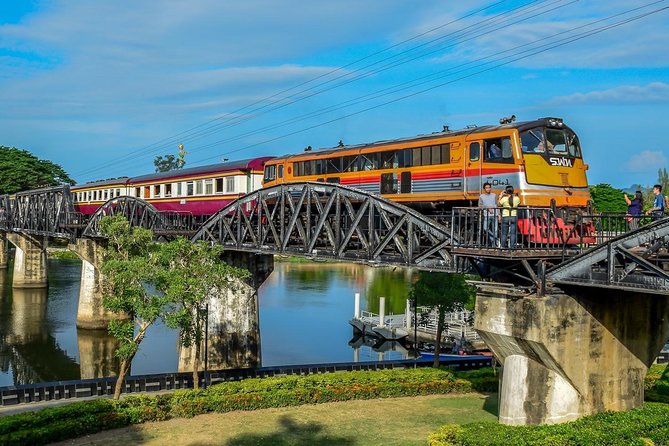
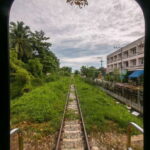
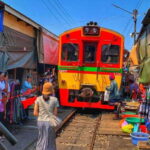
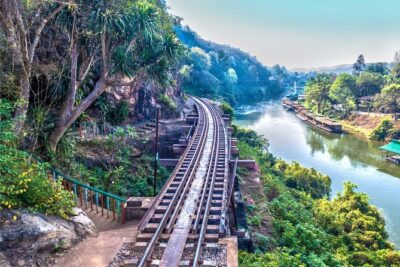
The afternoon centerpiece is the ride on the historical Death Railway, also connected to the Burma Railway name. The tour frames it clearly: built during World War II by Allied prisoners of war, and it runs partly parallel to the River Kwai and through dense jungle.
This is one of the rare tours where the transportation is the attraction. Sitting on the track is different from reading about the railway, because the scenery and the motion give you a sense of what “going through” the region might have meant for the people connected to the line.
Another practical detail: you take the train, then you get off at a stop such as Tha Kilen Railway station or Wang Sing Railway station. From there, you are collected by minivan to reach the famous River Kwai Bridge. That transfer is short, but it is still part of the day, so keep track of meeting points at the station.
If you care about the WWII context, this is the moment to focus. Even if your guide does not turn every minute into a lecture, the route itself makes the history feel present. Just keep your expectations realistic about how much narration you will get in a compressed day.
River Kwai Bridge: fast photos, real emotion, and timing pressure
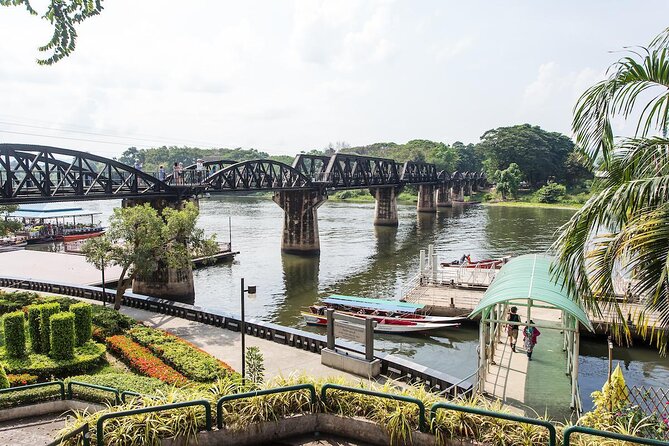
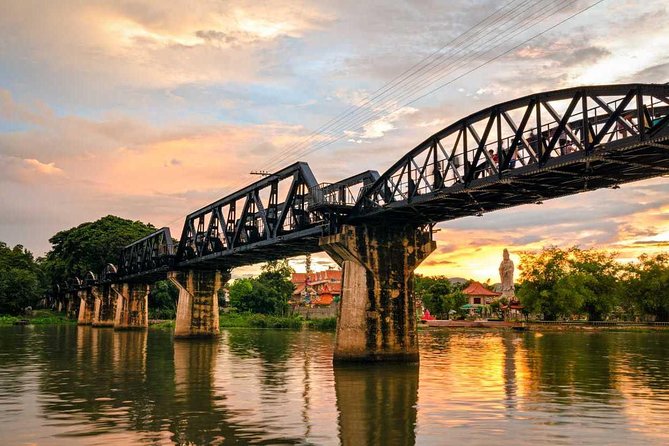
The River Kwai Bridge stop is timed tightly. You get about 10 to 15 minutes at the bridge area, which is enough for photos, quick walks, and a moment to take in the scale. It is not enough for a long linger, and that is the biggest “consideration” piece for this tour.
I love that the bridge visit is built right into the rail experience. The train ride sets up the theme, then the bridge puts a visual marker on it. That flow is part of why the itinerary works.
But if you want time to appreciate details slowly, or you dislike crowds at viewpoints, you might find the bridge stop too brief. I recommend choosing two or three photo angles before you arrive, then committing to them.
Also, be prepared for heat. The bridge visit is in the late afternoon, but it can still feel warm when you are standing still for photos. Bring water when you can, even if lunch comes with water earlier.
Thailand-Burma Railway Centre: a short stop with useful context
After the bridge, the tour includes a very brief visit to the Thailand-Burma Railway Centre. The stop is short, around 5 minutes, so this is not a museum day.
Instead, it functions like a quick anchoring point. You see a bit more of the railway story right after the train and bridge, so the day’s theme snaps into focus. If you want a deeper museum experience, you would need extra time on your own later, but this tour gives you a basic context boost without turning the day into a half-week project.
If you like doing “just enough culture” while still prioritizing nature and motion, this museum stop fits the day well. If museums are your main interest, you might feel it is too quick, but it keeps the tour moving to get you back to Bangkok.
Price and logistics: is $123 good value
At $123 for about 10 hours, this tour sits in a mid-range zone for Bangkok day trips. The value depends on what you want most: convenience, compact scheduling, and included parts of the route.
Here is what you are paying for beyond the attractions themselves:
- Hotel pickup offered to cut down transfers
- Small-group limit of 15 to reduce wait times
- Mobile ticket, so you do not spend time on paperwork
- Included admissions for key components like Tham Kra Sae and the Thailand-Burma Railway Centre
- The train ride as part of the experience, not just a viewpoint stop
If you tried to recreate this day on your own, you would likely spend extra time coordinating transport, timing, and tickets. In that sense, the price can feel fair because you are buying a working plan, not only entry fees.
That said, the negative reviews point to a common tension in tours like this. You spend a lot of time in a vehicle, sometimes in a crowded van setup, and the day can feel rushed at the bridge. If your priority is comfort in transit and more flexible sightseeing windows, you may find other options better value for your personal travel style.
A practical way to decide: if you are happy with “see it, photograph it, move on,” this is a good match. If you want a slower day with more breathing space, do a cost comparison against hiring a private driver, then build your own timing around the falls and the rail sites.
One last logistics note: it is non-refundable and cannot be changed if you cancel. So pick the date you can confidently commit to.
Who this tour suits best, and who should skip it
This tour suits you if you want a one-day combo of waterfalls plus a World War II rail experience, without wrestling with Bangkok logistics. It is also a good fit if you are reasonably fit, because you will be moving around stairs at Erawan and switching between multiple stops.
I would especially recommend it to:
- First-time visitors who want the highlights without planning a full itinerary
- People who enjoy active sightseeing, not just sitting on buses
- Travelers who like small groups and door-to-door pickup
I would think twice if you:
- Strongly dislike long road time, since the park is 200 km from Bangkok
- Need long stops at each site, because the bridge window is only 10 to 15 minutes
- Expect heavy, detailed guiding at every moment, because the day is timed and narration may stay brief
If your main goal is Erawan swimming and you want to relax longer, focusing only on Erawan Waterfalls can feel more satisfying. If your main goal is the rail and bridge story, you might prefer a route that gives more time around Kanchanaburi-area sites, but that would mean comparing other tour formats.
Should you book this Erawan and Death Railway tour?
Book it if you want a compact, small-group day that pairs Erawan Waterfalls swimming with the Death Railway train ride and the River Kwai Bridge visit, with pickup and key admissions included. At $123, the convenience and included transport parts can feel like solid value if you match the tour’s pace.
Don’t book it if your travel style is slow and you hate schedule pressure. The vehicle time and the tight timing at the bridge are real parts of the day. If you need more breathing room, consider building your own plan or comparing against less structured options.
Either way, go prepared. Bring swim gear, plan for a warm bridge stop, and keep your photo strategy simple. When you treat this as a “see the big moments” day, it delivers exactly that.
FAQ
How long is the tour?
It runs for about 10 hours.
Is hotel pickup included?
Pickup is offered, and the experience is set up for door-to-door convenience.
How many people are in the group?
The group size is capped at a maximum of 15 travelers.
What should I bring for Erawan Waterfalls?
You should prepare a swimming suit, a towel, or spare clothes.
Is lunch included?
Yes. There is a picnic lunch in the Erawan National Park area, with water and fresh fruit.
Do I ride the Death Railway by train?
Yes. The tour includes a train ride on the historical Death Railway.
How long do I have at the River Kwai Bridge?
You have about 10 to 15 minutes at the bridge.
Are admission tickets included?
Admission is included for Tham Kra Sae and the Thailand-Burma Railway Centre. The River Kwai Bridge time is listed as admission free.
Is the tour refundable if I cancel?
No. The experience is non-refundable and cannot be changed for any reason.
The newest additions around Bangkok
- Dream World & Snow Town in Bangkok with Return Transfer & Lunch
★ 4.5 · 3 reviews - Bangkok: Nong Nooch Garden
★ 5.0 · 3 reviews - Private tour to Ayutthaya and Lopburi Monkey Temple (from Bangkok)
★ 5.0 · 3 reviews - HD-01 Koh Rattanakosin old town cycling with The Giant Swing, and more
★ 5.0 · 3 reviews - Guided Tour of Grand Palace & Emerald Buddha Temple in Bangkok
★ 5.0 · 3 reviews - Half Day DIY Grand Palace and Emerald Buddha Temple
★ 4.5 · 3 reviews - Glittering Ayutthaya Tour to Famous Sights, Market & Sunset Boat
★ 4.5 · 3 reviews - Private Tour: The Best of Bangkok Temples – Half Day
★ 4.0 · 3 reviews
River Kwai & Kanchanaburi Tours, compared.


Erawan Waterfalls and Bridge Over River Kwai Tour from Bangkok
Read our review →
Bridge on the River Kwai and Thailand-Burma Railway Guided Tour
Read our review →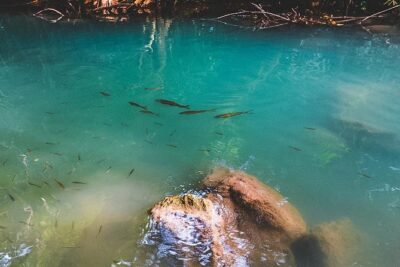
Erawan Waterfall and Elephant Care: Private Tour to Kanchanabur
Read our review →Browse the lists this tour appears in