
Reviewed · RIVER KWAI & KANCHANABURI TOURS
BKK-Kanchanaburi: Bridge Over The River Kwai, Death Raiway-Train
WWII in Thailand starts before sunrise. This small-group day trip packs Kanchanaburi into one focused route, with the Thai-Burma Death Railway train ride as the emotional core. I like how the guide links each stop to what prisoners faced, and I also like the practical flow, you see the Bridge over the River Kwai, then you actually ride the railway. The one catch: it is a long, tight schedule, so if you were hoping for extra detours, you should double-check your exact itinerary before you go.
You’ll be picked up from River City Bangkok between 6:00 and 6:30 AM, then you’ll return to the area of the meeting point around 6:00 PM. The group is capped at 12 travelers, and you get an English-speaking guide plus air-conditioned transfers.
One more consideration: this tour runs on good weather. If conditions are poor, you may be offered a different date or a full refund.
In This Review
- Key things that make this Kanchanaburi day trip work
- Start Early in Bangkok for a Full WWII Day in Kanchanaburi
- Don-Rak War Cemetery: What You See and Why It Matters
- JEATH Museum: Building the Story Behind the Acronym
- Bridge Over the River Kwai Walk: Film Memories Meet Reality
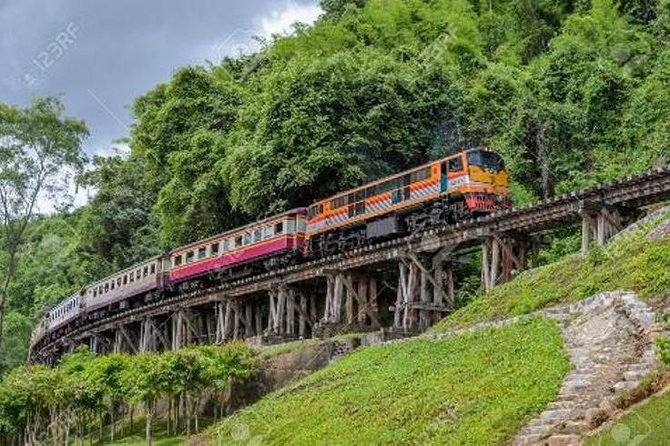
- Thai-Burma Death Railway Train Ride Through the Countryside
- Krasae Cave and Lunch, Then Back to Bangkok
- Price and Group Size: Where the $81.35 Adds Up
- Should You Book This Small-Group Tour?
- FAQ
- What time does the tour pick up in Bangkok?
- How long is the full-day tour?
- How many people are in the group?
- What is included in the tour price?
- Is lunch included?
- Do I ride a train on the Death Railway?
- What happens if the weather is bad?
Key things that make this Kanchanaburi day trip work
- Early pickup, real time on the railway, not just a quick photo stop
- Don-Rak War Cemetery gives you a grounding place to start your day
- JEATH Museum explains the railway in a way you can actually follow
- Bridge Over River Kwai walk connects movie fame to the historical location
- Lunch included, so you are not scrambling after a long morning
Cross the bridge, hear the history
Start Early in Bangkok for a Full WWII Day in Kanchanaburi
This is a “wake up and get moving” kind of tour. Pickup is scheduled from 6:00 to 6:30 AM from River City Bangkok (23 Soi Charoen Krung 24, Khwaeng Talat Noi, Khet Samphanthawong, Bangkok 10100), and the day is designed to keep you on the road for long stretches without wasting time at each stop.
The logistics matter here. Kanchanaburi is far enough from Bangkok that a guided day trip only feels good if the pacing is tight, and that is the point of the small-group setup. You also get an English tour guide, a comfortable air-conditioned vehicle, and a clear timetable that takes you from war graves to museum exhibits to river scenery to train time.
If you are the type of traveler who likes to linger, you might find the schedule packed. Still, it is hard to do this route well on your own in one day, especially when the train segment is a major part of the experience.
Don-Rak War Cemetery: What You See and Why It Matters
I appreciate how the day begins with respect, not sightseeing. The Kanchanaburi War Cemetery, known locally as Don-Rak War Cemetery, is the main POW cemetery connected to those who suffered during Japanese imprisonment while building the Burma Railway.
This is not a vague memorial. You walk through a space that contains 6,982 POWs, mostly Australian, British, and Dutch. The cemetery is designed by Colin St Clair Oakes and maintained by the Commonwealth War Graves Commission. It is also adjacent to an older Chinese cemetery, which adds a quietly human layer: this is a place of mourning that sits alongside other community histories in town.
Practical tip: this is the kind of stop where comfortable shoes and a calm pace help. You might be tempted to rush for photos, but the cemetery works better if you slow down and let the scale land. The guided commentary helps, because the route is emotionally heavy and you need context to understand what you are looking at.
The main drawback is also simple. Since this is a cemetery, you may want to take a moment before moving on. If you are sensitive to WWII stories, plan for that emotional shift rather than treating it like a checklist stop.
JEATH Museum: Building the Story Behind the Acronym
After paying respects, you shift into learning mode at the JEATH War Museum. This museum sits on temple grounds near the junction of the Khwae Yai and Khwae Noi rivers in Kanchanaburi. The museum is part of the broader Bridge over the River Kwai story, but it is also trying to explain the railway itself.
JEATH is an acronym for the main nationalities involved in construction: Japanese, English, Australian, American, Thai, and Holland. The Thai name is Phíphítháphan Songkhram Wát Tâi, which is a helpful detail if you ever try to find it on your own. The museum was founded in 1977 by the chief abbot of Wat Chaichumpol, Venerable Phra Theppanyasuthee.
What I like about museums like this on a guided tour is that you are not reading in isolation. You get a guided explanation while you see exhibits arranged around the story of the Death Railway. The museum is described as being divided into two sections, including parts that recreate quarters used during the railway era. Even if some displays are recreations, the value is in the way it translates a huge, grim system into something you can follow step by step.
A consideration: museum pacing can feel fast when you have a full day ahead. If the exhibits move quicker than you want, it helps to go in with one question in mind, like how the railway was built, who was involved, and what daily life looked like for prisoners. Your guide will likely weave those answers into the flow.
Ride the rails out of town
Bridge Over the River Kwai Walk: Film Memories Meet Reality
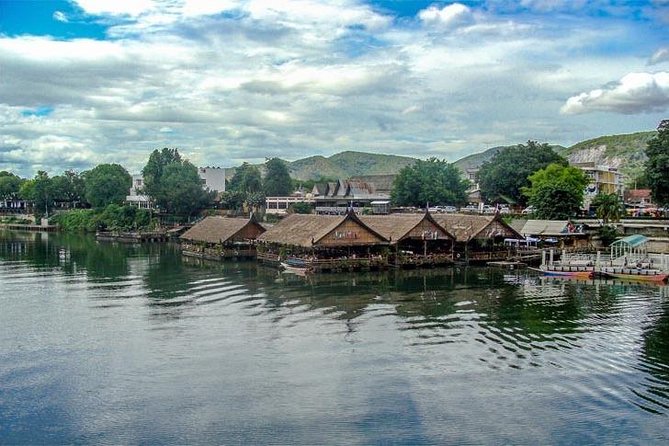
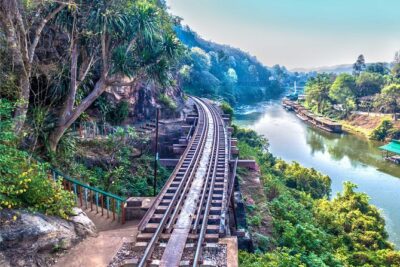
Next comes the iconic Bridge over the River Kwai. This is one of those rare places where pop culture and history collide, and the tour doesn’t ignore that. The Bridge is famous from the 1957 epic war film directed by David Lean, based on the 1952 novel by Pierre Boulle. The film connection is part of the reason so many visitors arrive here with expectations.
The tour still gives you the important link back to the real setting, the construction of the Burma Railway in 1942–1943. The story behind the movie also matters in a behind-the-scenes way, including how writers worked in secret due to Hollywood blacklist pressures and how credit ended up going to Pierre Boulle. That film context can help you understand why the bridge became a global symbol.
What you should take from the walk is the sense of scale. The Bridge is not just a scenic spot, it is a reminder that infrastructure in wartime is never neutral. Even when the atmosphere feels calm, the meaning stays heavy.
A practical note: the stop is listed as about one hour. That is enough time to walk, look, and take a few photos, but not enough to turn it into a long linger. If you want lots of photos, aim to move thoughtfully and early in the hour, so you are not rushing at the end.
Thai-Burma Death Railway Train Ride Through the Countryside
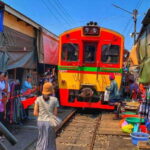
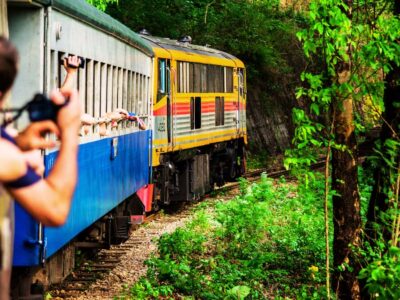
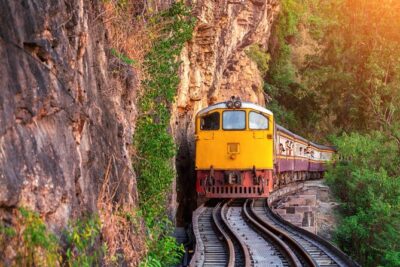
Here is the heart of the day: the train ride along the Thai-Burma Death Railway. You start by walking along the bridge, then you take a train trip along the railway with countryside sightseeing. Later in the schedule, there is also another ride along the original track before you head back toward Bangkok.
The value of this part is hard to fake. Watching bridges and reading about rail lines is one thing, but hearing how trains move through this corridor, seeing the line cut through land, and feeling the rhythm of the route gives the story physical form.
I also appreciate that the tour does not treat it as a thrill ride. The train segment is framed as part of the railway story, connected to the WWII context you learned earlier at the cemetery and museum. You are not just “doing a train,” you are doing the geography of the Burma Railway era.
What to expect: you are riding while passing through Thai countryside. The itinerary suggests you will get sightseeing views en route, and that can be a welcome change after the intensity of war-related sites. Still, the emotional tone remains present, and your guide likely keeps connecting what you see to the broader story.
If you are prone to motion sickness, plan accordingly. The tour includes multiple transfers and at least one longer train segment, so it is worth being prepared even if the ride time is not listed in detail.
Krasae Cave and Lunch, Then Back to Bangkok
After the railway and sightseeing time, you head to Krasae Cave, with lunch provided at a restaurant. This is a genuine reset in the schedule. It breaks up the intensity of the war sites with a more relaxed meal stop and a chance to breathe before the final push back to Bangkok.
Lunch is included, which is honestly one of the best “value” features on tours like this. When your day starts at 6:00 AM and runs close to 10 hours, skipping lunch would mean paying extra later or settling for something quick. Here, you can sit down, refuel, and then continue without losing time.
One note: the itinerary places the Krasae Cave arrival around 13:00, with the train ride on the original track listed around 14:00. So your day rhythm likely looks like this, museum and bridge in the morning, train and countryside in the first half, then cave and lunch, then another rail segment before heading home.
In other words, this tour gives you both the emotional anchors and a mid-day reset, but it still keeps you moving. If caves or cave areas are not your thing, you might want to view Krasae Cave as a short pause rather than the main attraction.
You depart back to Bangkok after the restaurant stop, with hotel transfers around 6:00 PM.
Price and Group Size: Where the $81.35 Adds Up
At $81.35 per person, this tour is not trying to be a luxury day. But for what it includes, the value is real, especially if you care about guided interpretation and you want to save planning time.
Here is what you get included, based on the tour details:
- Pickup and transfers in an air-conditioned vehicle
- English tour guide
- Lunch
- Entrance fees
- The train trip tied to the Death Railway
- Visits that match the WWII site focus, including the JEATH Museum
You also get a mobile ticket, which keeps things simple once you are on the ground. And because the group is limited to 12 travelers, you usually get better Q and A time and fewer delays than on larger bus tours.
There is one small caution on value, and it comes from how some online descriptions can drift. In my view, it is worth confirming your booking details if you thought you were getting extra Thailand experiences layered in, like floating market stops or long boat rides. This itinerary, as planned, is centered on the Kanchanaburi WWII sites, the bridge, and the railway plus the Krasae Cave stop.
If you want the most value, this is a tour for you if you:
- want one organized day to cover the key Kanchanaburi landmarks
- prefer guidance over reading and guessing
- like the idea of a real train segment instead of only photos
If you want total freedom, or you hate early starts, you may feel rushed.
Should You Book This Small-Group Tour?
Book it if you want a guided, meaningful WWII-focused day that goes beyond seeing names and plaques. The combination of War Cemetery, JEATH Museum, the Bridge over the River Kwai, and the Death Railway train ride is a rare mix that works well together. The small group size helps, and the lunch and transfers keep the day from turning into logistical stress.
Skip it or reconsider if you want a slower pace, lots of spare time, or a day that includes extra attractions outside the WWII route. This is designed to move. Also, if you are particularly sensitive to grim WWII content, start this day with the right mindset, because it is not a light itinerary.
If you do book, here is my practical advice: wear comfortable shoes, bring something for sun and heat, and go in ready to learn. This is one of those trips where you come away with more than photos, you come away with a clearer sense of how the railway corridor shaped lives, and how the memorial sites try to hold that truth in place.
FAQ
What time does the tour pick up in Bangkok?
Pickup is scheduled from 6:00 AM to 6:30 AM from River City Bangkok.
How long is the full-day tour?
The duration is listed as approximately 10 hours.
How many people are in the group?
The tour has a maximum group size of 12 travelers.
What is included in the tour price?
The tour includes air-conditioned vehicle, an English tour guide, lunch, train trip, and admission for the JEATH Museum and War Cemetery.
Is lunch included?
Yes, lunch is provided at a restaurant during the tour.
Do I ride a train on the Death Railway?
Yes. The itinerary includes a train ride on the Death Railway route, plus an additional train ride along the original Death Railway track later in the day.
What happens if the weather is bad?
The tour requires good weather. If it is canceled due to poor weather, you will be offered a different date or a full refund.
The newest additions around Bangkok
- Central Thailand Walking Tour and visit Temple at Bangkok
★ 5.0 · 1 review - Private 2-Day Bangkok City Tour and Ayutthaya Tour from Bangkok
★ 5.0 · 1 review - Train Market, Floating Market, and Salt Lake Tour by driver
★ 5.0 · 1 review - Fullday Private Tour Bangkok Temple & City Tour with lunch+Amazing Bangkok Tour
★ 5.0 · 1 review - Bangkok: One Day Thai Costume Rental (Gentleman)
★ 2.0 · 1 review - Laem Chabang Shore Excursion : Shopping, Massage & Food Tasting
★ 5.0 · 1 review - Bangkok Dream World & Snow Town Theme Park Admission Ticket
★ 3.0 · 1 review - Bangkok 4 Hour Cultural & Temples Tour Private with Guide
★ 5.0 · 1 review
River Kwai & Kanchanaburi Tours, compared.


Erawan Waterfalls and Bridge Over River Kwai Tour from Bangkok
Read our review →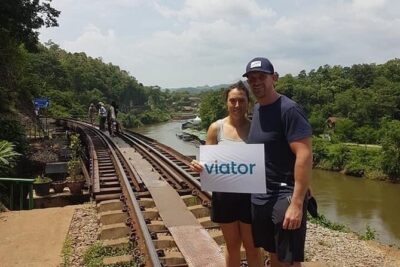
Bridge on the River Kwai and Thailand-Burma Railway Guided Tour
Read our review →
Erawan Waterfall and Elephant Care: Private Tour to Kanchanabur
Read our review →Browse the lists this tour appears in