
Reviewed · RIVER KWAI & KANCHANABURI TOURS
Bangkok: River Kwai Day Tour with Jeath War Museum & DeathRailway
A train ride through WWII memory sticks. This full-day Kanchanaburi trip ties the JEATH War Museum to a thrilling Death Railway train segment, with a walk across the River Kwai bridge as the emotional backbone of the day. You’re not just seeing landmarks, you’re following the story step by step, from recreated POW quarters to the places where the railway crews worked and died.
I like how the plan keeps you moving with round-trip transfers and a small group size, so the long ride doesn’t feel like dead time. One consideration, though, is that this is a long day and traffic can tighten the pacing, which can make a couple of stops feel rushed, especially if you rely heavily on clear English throughout.
In This Review
- Key things to know before you go
- From Bangkok pickup to Kanchanaburi, the early start is the deal
- JEATH War Museum: where the story becomes physical
- River Kwai bridge walk: the views are memorable, but so is the meaning
- Death Railway Museum and Tham Kra Sae Bridge: context without repeating the basics
- Kanchanaburi War Cemetery: the stop you should slow down for
- Wang Po station buffet lunch and the Death Railway train ride
- Guide and pacing: why the best part is often the person talking
- Price and value: what $83.68 really covers
- Who this tour suits, and who might want a different pace
- Should you book this River Kwai and Death Railway tour?
- FAQ
- What time does the tour start?
- How long is the tour?
- What is included in the price?
- Is lunch provided?
- How many people are in the group?
- Is there free cancellation?
Key things to know before you go
- 6:00 am pickup in Bangkok means you start early and get the full day’s sights.
- JEATH War Museum is split into Death Railway exhibits and reconstructed POW-style bamboo huts.
- Walk the River Kwai bridge for a close-up view of the work and the setting.
- Death Railway Museum and Tham Kra Sae Bridge add extra context beyond the bridge alone.
- Wang Po station buffet lunch comes in before or around the train portion, depending on timing.
- Small group cap of 15 helps keep the tour organized on the road.
Cross the bridge, hear the history
From Bangkok pickup to Kanchanaburi, the early start is the deal
This tour runs about 13 hours, and it begins early, with pickup around 6:00 am from the Bangkok meeting point near Central Bangrak. Expect an air-conditioned vehicle and an English-speaking guide, plus a schedule built around getting you far west into Kanchanaburi territory before the day gets complicated. The upside is simple: you’re using daylight for most of the key sights, not squeezing them into the last hours.
You’ll also appreciate the small-group feel, with a maximum of 15 travelers. That matters on a day like this, because you’re jumping between several stops and you’ll want a guide who can keep things organized without turning it into a chaotic rush.
One practical note: the route out of Bangkok can be sensitive to traffic. If you’re the kind of person who likes slow museum time, keep your expectations flexible. The itinerary is packed, and when the road runs long, the guide has to protect the overall flow.
JEATH War Museum: where the story becomes physical
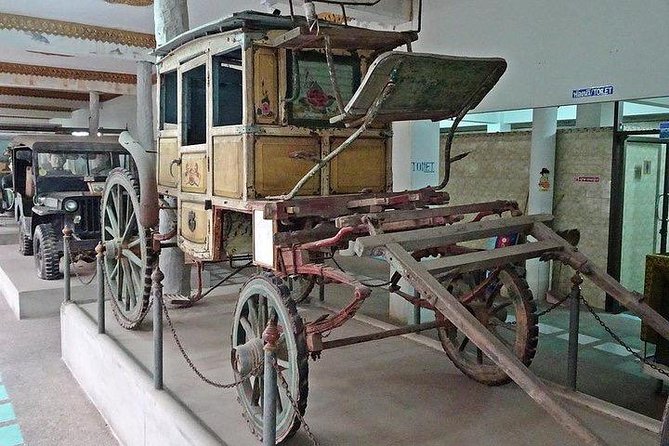
The JEATH War Museum is your first real “step into the era” moment. The museum is divided into two main sections: one focuses on the construction of the Death Railway with recreations meant to reflect POW quarters, and the other uses reconstructed bamboo huts to show daily camp life. Admission is included, and the visit is planned for about 1 hour.
What I like about this stop is the way it gives you context before you go looking at the bridge and railway areas. The museum doesn’t just tell you that prisoners worked on a railway, it tries to help you picture what the camp environment may have been like. Even if some exhibits feel like recreations rather than strict documentation, the emotional impact comes from the topic being treated seriously, not as a casual sightseeing stop.
There is one drawback to keep in mind. Some visitors have felt the museum facilities could use a bit more maintenance, and on a traffic-heavy day the timing can feel tight. If you want to read every label and absorb the details, you might want to pace yourself early in the day so you don’t feel hurried later.
River Kwai bridge walk: the views are memorable, but so is the meaning
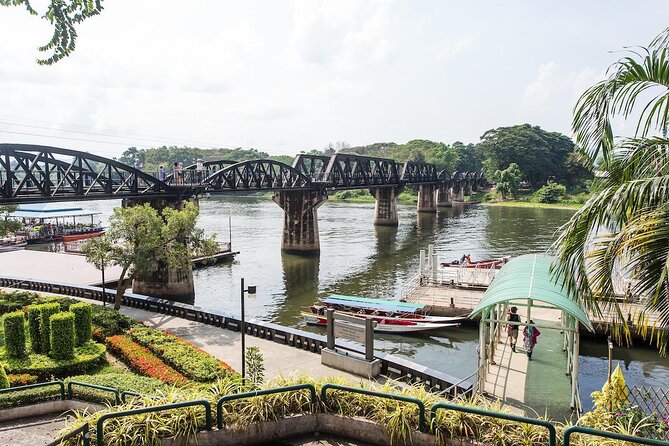
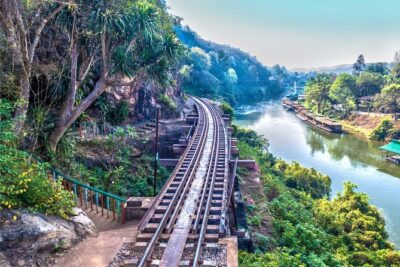
Walking across the River Kwai bridge is the tour’s most iconic visual moment, and it’s scheduled for about 1 hour. The admission ticket is included, and the point is not just to cross a bridge, but to see how the structure sits over the river that made the crossing possible.
Here’s the value for your trip: after seeing camp-style recreations in the JEATH Museum, the bridge walk shifts you from “what the prisoners endured” to “where the railway work connected to real geography.” You’ll get a close-up look at the bridge itself, and it’s easier to connect the historical story to something you can literally stand on.
If you’re sensitive to heavy WWII themes, treat this stop like it matters. Take your time on the walkway, look at the scale, and give yourself a minute of quiet. This is one of those places where you feel the significance even if you aren’t a hardcore history buff.
Plenty else to do around Bangkok


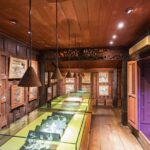
Death Railway Museum and Tham Kra Sae Bridge: context without repeating the basics
After the bridge, the tour moves to the Death Railway Museum and Research Centre, planned for about 1 hour with admission included. This is where the wider Burma Railway story gets framed, helping you connect the bridge moment to the longer rail line that stretched across the region.
Then you add the Tham Kra Sae Bridge, scheduled for about 1 hour, and it’s free. This bridge is also commonly connected with the Death Railway story and was built by war prisoners during WWII. The tour keeps this portion simple and direct: you’re getting another on-the-ground structure to look at, not sitting through another long lecture.
I like pairing these two stops because they prevent the day from becoming one long blur of bridge images. The museum gives you narrative context, and the second bridge gives you a second physical reference point. If you’re someone who learns best by seeing, then moving, then seeing again, this part works well.
Kanchanaburi War Cemetery: the stop you should slow down for
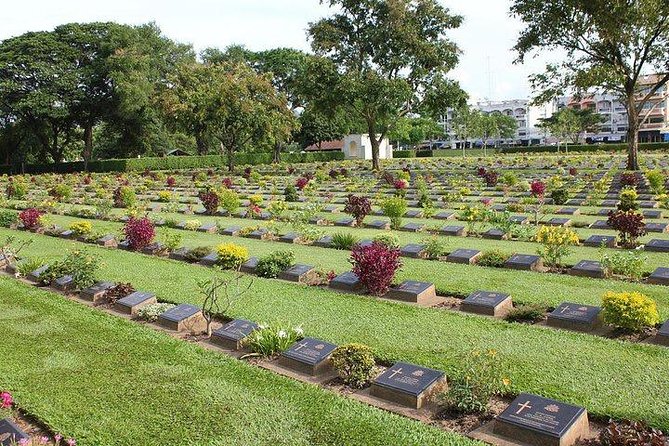
The Kanchanaburi War Cemetery (also known locally as Don-Rak War Cemetery) is scheduled for about 1 hour, and it’s free to visit. It’s the main POW cemetery for victims of Japanese imprisonment who died while building the Burma Railway. The setting is built around remembrance, including the burial of approximately 9,000 Allied soldiers tied to the bridge and Death Railway work.
This is the point in the day where the tour’s pace should feel less important. Even if you’re not a person who normally visits cemeteries, this place hits hard because the topic is specific and grounded in names and numbers. You’ll get a stronger grasp of what the railway meant in human terms, not just in machinery and routes.
Practical tip: keep your phone away for a moment longer than usual. The cemetery is one of the few stops where you’ll benefit from giving your attention to the space instead of capturing it.
Wang Po station buffet lunch and the Death Railway train ride
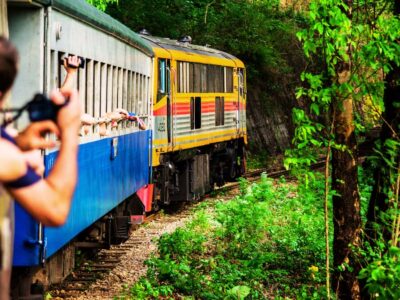
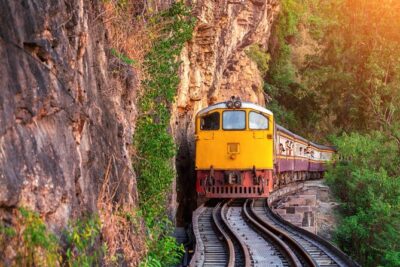
Your day includes lunch as a buffet, served at Wang Po station, near the Burmese border. This is a solid break point in a long schedule, and it helps you refuel before the final emotional and visual punch of the day: the train ride along a breathtaking section of the Death Railway.
The train part is often what people remember most, because it turns history into movement. You’re not just looking at the tracks in a static way. You’re riding along a railway segment tied to the same concept that made the Death Railway infamous. It’s the kind of experience that can be thrilling and uncomfortable at the same time, because the thrill is real while the context is not.
One thing to keep in mind is that timing can shift. In at least some cases, the day can come in shorter than the advertised schedule depending on traffic and how the route runs. If the day feels compressed, you might have slightly less time spent at a railway-centered viewpoint or center than you expected. The practical move is simple: when the day starts, think of the day as a guided highlights route, not a slow, free-form exploration.
Guide and pacing: why the best part is often the person talking
This tour lives or dies by the guide’s delivery. The tour includes an English-speaking guide, and in the strongest versions of the day, the guide uses clear explanations and even audio-visual material to help the story land. One guide name you may hear is Oom, who has been described as both knowledgeable and entertaining, with strong presentation using visuals.
Another name that comes up is Rach, praised for excellent guiding and for making sure everything felt timed well, with a good driver supporting the plan. That pairing matters, because on a day packed with stops, a driver who reads traffic and a guide who keeps the group moving can make the whole experience feel smoother.
Still, there’s a valid caution. One review noted that the guide’s English could be difficult to understand at times. If you’re traveling with someone who struggles with spoken English, you might want to position yourself closer to the front and keep your expectations realistic. Also, don’t count on long, detailed Q and A time at each stop. This is structured and scheduled.
Price and value: what $83.68 really covers
At $83.68 per person, this tour is priced like a full-day “get me out of the city and handled” package. You’re paying for the out-and-back transport from Bangkok, the air-conditioned vehicle, an English-speaking guide, lunch, and included admissions for multiple key stops.
Several admission tickets are included, including JEATH War Museum, the River Kwai bridge, and the Death Railway Museum and Research Centre. The Tham Kra Sae Bridge and the Kanchanaburi War Cemetery are free, which helps balance the day and ensures you get some un-ticketed time too.
Is it good value? For most people, yes, because doing this independently means stitching together long transport legs, finding reliable stops, and dealing with the uncertainty of timing. Here, the schedule is already built and the vehicle is ready. You also get the small-group handling that keeps the day from turning into a big bus shuffle.
Who this tour suits, and who might want a different pace
This is a good fit if you:
- Want a structured full-day overview of the River Kwai and Death Railway area from Bangkok.
- Appreciate guided explanations that connect the museum displays to real-world locations.
- Want the convenience of pickup and round-trip transfer rather than renting transport on your own.
- Like the mix of walking, quiet remembrance, and then a physically moving train ride.
It may be less ideal if you:
- Need long, unhurried time at museums. The schedule is tight, and traffic can squeeze the pace.
- Prefer tours where language is always crystal-clear. While it’s English-speaking, clarity can vary with the guide.
- Don’t want your day to focus heavily on wartime suffering. The bridge, museums, and cemetery are all tied to WWII POW and forced labor themes.
Should you book this River Kwai and Death Railway tour?
If you’re short on time in Bangkok and you want one well-organized day that hits the major WWII-related sites in the Kanchanaburi area, I’d book this. The combination of JEATH War Museum, the River Kwai bridge walk, the cemetery, and the Death Railway train ride gives you multiple ways to understand the story, not just one.
If you hate rushing, go in with a calmer mindset. Treat the early start as part of the deal, and when traffic makes the day move faster, use that as a cue to focus on what matters most to you, like the cemetery and the bridge rather than trying to absorb everything equally everywhere.
Overall, this is the kind of tour that feels heavy, but fair. You leave with a clearer picture of the places and the human cost behind them, not just photos of landmarks.
FAQ
What time does the tour start?
Pickup begins at 6:00 am. The meeting point is Central Bangrak, and the tour ends back at the meeting point.
How long is the tour?
The tour duration is approximately 13 hours.
What is included in the price?
The tour includes round-trip transfer, an English-speaking guide, lunch, and an air-conditioned vehicle. Admission is included for JEATH War Museum, River Kwai Bridge, and Death Railway Museum and Research Centre.
Is lunch provided?
Yes. You get a buffet lunch at Wang Po station.
How many people are in the group?
The maximum group size is 15 travelers.
Is there free cancellation?
Yes, you can cancel for free up to 24 hours before the experience start time for a full refund. The tour also requires good weather.
The newest additions around Bangkok
- Dream World & Snow Town in Bangkok with Return Transfer & Lunch
★ 4.5 · 3 reviews - Bangkok: Nong Nooch Garden
★ 5.0 · 3 reviews - Private tour to Ayutthaya and Lopburi Monkey Temple (from Bangkok)
★ 5.0 · 3 reviews - Guided Tour of Grand Palace & Emerald Buddha Temple in Bangkok
★ 5.0 · 3 reviews - Half Day DIY Grand Palace and Emerald Buddha Temple
★ 4.5 · 3 reviews - HD-01 Koh Rattanakosin old town cycling with The Giant Swing, and more
★ 5.0 · 3 reviews - Glittering Ayutthaya Tour to Famous Sights, Market & Sunset Boat
★ 4.5 · 3 reviews - Private Tour: The Best of Bangkok Temples – Half Day
★ 4.0 · 3 reviews
River Kwai & Kanchanaburi Tours, compared.


Erawan Waterfalls and Bridge Over River Kwai Tour from Bangkok
Read our review →
Bridge on the River Kwai and Thailand-Burma Railway Guided Tour
Read our review →
Erawan Waterfall and Elephant Care: Private Tour to Kanchanabur
Read our review →Browse the lists this tour appears in