
Reviewed · BANGKOK TUK-TUK TOURS
Bangkok Night Lights: Temple & City Tour by Tuk Tuk (SHA Plus)
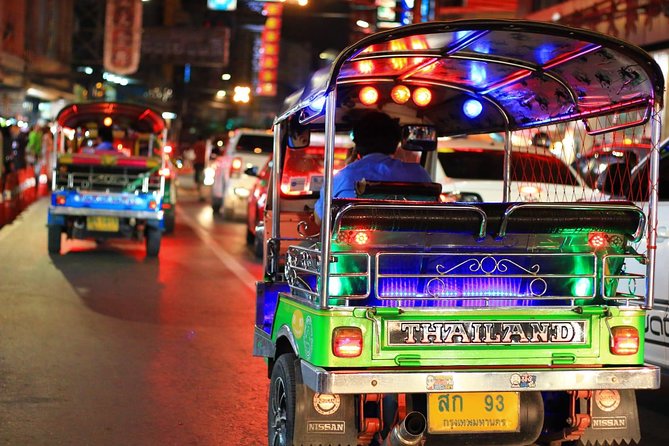
Bangkok looks different after dark, but you still need a plan. This Bangkok Night Lights tour strings together the big-name sights and the street-level scenes, with tuk-tuk driving you through areas most people skip. I like how it bundles short, focused temple stops with food tasting and a real after-dark feel, plus an English-speaking local guide who can keep the chaos readable.
The main thing to consider is that several major temple and palace sites are not included in the price, so you should be ready to pay entry fees on the ground. Also, the listed start time is early, so double-check the confirmation you get before you commit your evening (or your sleep schedule).
In a good way, this feels like a fast orientation to Bangkok at night. You’ll get the layout, the rhythms, and a sense of where locals actually go after dark, without spending the whole night stuck in traffic or lost down an alley you did not plan.
In This Review
- Key highlights worth your attention
- Night temples, street food, and why the timing actually matters
- Meeting at Saphan Taksin and using the fastest routes you can
- The Grand Palace after dark: what you should expect in a short visit
- Wat Pho, the Reclining Buddha, and the details that reward slower eyes
- Wat Suthat and the Giant Swing: the myth, the lightning, and the lesson
- Chinatown after dark: why food tasting is the smartest way to learn the area
- The river and Sathorn Pier at the end: a practical way to close the loop
- Price and value: what $91.63 really buys you
- Group size, guide quality, and the energy you’ll likely feel
- What to wear and how to prep, especially for temples
- Is this tour right for you?
- FAQ
- What is the duration of the Bangkok Night Lights tour?
- Where do I meet for the tour?
- Is hotel pickup and drop-off included?
- What is included in the price?
- Are temple and palace admission tickets included?
- Are alcoholic drinks included?
- Should you book this Bangkok Night Lights tour?
Key highlights worth your attention
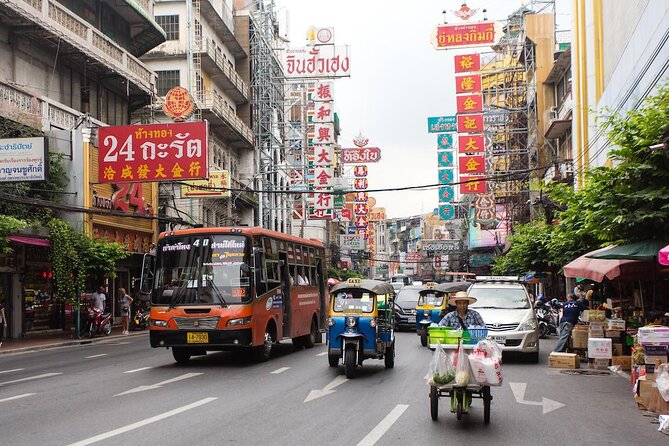
- Tuk-tuk plus skyline connections, so you get both spectacle and practical getting-around
- Food tasting included, which is the easiest way to understand Chinatown and night markets
- Temple stops kept short, useful if you want the photos and the atmosphere without a long slog
- Wat Suthat and the Giant Swing story, including lightning damage and accident history
- Small group size, max 15, which helps the guide manage timing and crowds
- Mobile ticket, so you should not waste time on paper check-in
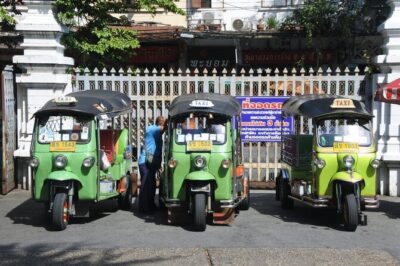
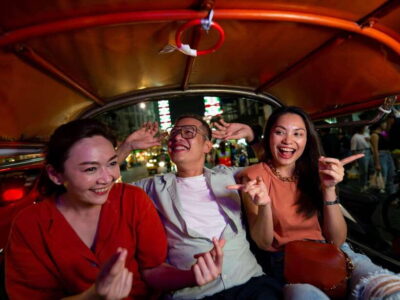
Three wheels, no seatbelt, plenty of horn
Night temples, street food, and why the timing actually matters
There’s a reason Bangkok night sights hit harder than daytime sightseeing. By evening, the heat eases, the streets feel more alive, and the temples look more mysterious, especially when lights catch the gold and carved wood details. This is the core idea behind a night-focused tour like this one: you do not just see places, you see them in their intended mood.
I especially like how the tour mixes two Bangkok worlds. You get royal-level architecture and classic temple courtyards, then you switch to the street-level feel of Chinatown and the kind of food you would normally only hunt for once you are already there. If you like cities where day feels official and night feels personal, this format fits.
One more subtle win: short stops. You spend about 30 minutes at each main temple site, plus about an hour for Chinatown. That means you do not have to choose between a proper night of photos and going deep on one neighborhood. You get a sampler that helps you decide where you want to go back for a longer visit.
Meeting at Saphan Taksin and using the fastest routes you can
You start at the BTS Saphan Taksin area, with the tour meeting at the BTS Tourist Information Center in that neighborhood. From there, the plan uses an express boat from Central Pier (Sathorn Pier), then you transition to ground transport and walking depending on the stop.
This matters for two reasons. First, the river route can save you time and reduces the amount of time you spend stuck in Bangkok road traffic. Second, mixing transport modes helps you understand the city’s structure. Bangkok is not one straight grid. It’s lanes, rivers, stations, and shortcuts, and this tour uses that logic.
The tour is also listed as SHA Plus certified. If that kind of health protocol matters to you, it’s good to know the operator has that certification and is using the relevant procedures. On the practical side, it can also mean the experience tends to be a bit more organized than the typical walk-in group tour.
One thing to watch: the start time listed is 5:30 am. The product name and theme are night lights, so treat that as a clue to confirm your exact departure time in your booking. You want your body to match the schedule, not the other way around.
The Grand Palace after dark: what you should expect in a short visit
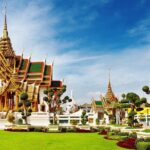
The Grand Palace is your first major land-based icon on the route, with the stop point by Maharaj Pier next to the Wat Phra Kaew complex. The visit time is about 30 minutes, and entry is not included in the tour price.
Here’s how to make the most of a short Grand Palace stop:
- Pick one or two key areas to focus on for photos, like the exterior lines and the temple complex edges you can see without rushing.
- Plan to keep your expectations realistic. In a 30-minute window, you are there for impressions and key views, not for a full, slow museum walk.
- Bring a little patience for queues and movement inside the complex, especially if your timing overlaps with other tour groups.
Why do this at night, when it is more common to see it in daylight? Light changes everything. Gold details and intricate surfaces look different under evening illumination, and the crowds often feel more manageable than a peak afternoon. Even if you still have to move with a crowd, the atmosphere is quieter and more cinematic.
More gold roofs than one day allows
Wat Pho, the Reclining Buddha, and the details that reward slower eyes
Next up is Wat Phra Chetuphon, better known as Wat Pho, the home of the Reclining Buddha. This stop is also about 30 minutes, and entry is not included.
Wat Pho is a place where the biggest photo moment is only half the story. You’ll see it fast if you rush, but it’s worth pausing for the carved work and the scale. Even in a quick visit, you can still catch:
- the temple layout and how the main Buddha anchors everything
- the surrounding decorative zones that make the complex feel lived-in and important
- the way visitors flow through the space, which is useful if you plan a return visit later
Practical note: Wat Pho is active and can be busy around key viewing points. If you tend to get overwhelmed, stick with your guide’s timing and keep your own escape plan simple, like knowing where the entrance path is so you can re-find your group without stress.
Wat Suthat and the Giant Swing: the myth, the lightning, and the lesson
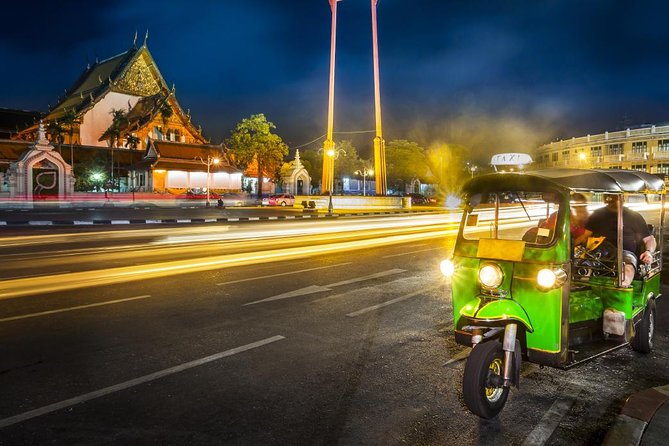
Wat Suthat is a big temple stop with a classic Bangkok landmark at its entrance: the Giant Swing. Your time here is about 30 minutes, with entry not included.
This is one of those spots where context makes the place feel more alive. The Giant Swing was constructed in 1784 in front of the Devasathan shrine by King Rama I. Later, during Rama II’s reign, the swing ceremony was discontinued because lightning had damaged the structure. In 1920, it was renovated and moved to its current location to make space for a gas plant. The ceremony was performed again until 1935, when it was discontinued after fatal accidents.
That timeline is not trivia. It turns the swing into a living example of how Bangkok changes with time, technology, and safety. You are not just looking at a landmark. You are looking at a piece of history shaped by weather and human choices.
If you are into architecture, this stop is also valuable because Wat Suthat is known for its elegant chapel, sweeping roof, wall murals, and hand-carved teakwood door panels. In a short visit, you can still appreciate the carving quality if you slow down for 2 or 3 stops.
Chinatown after dark: why food tasting is the smartest way to learn the area
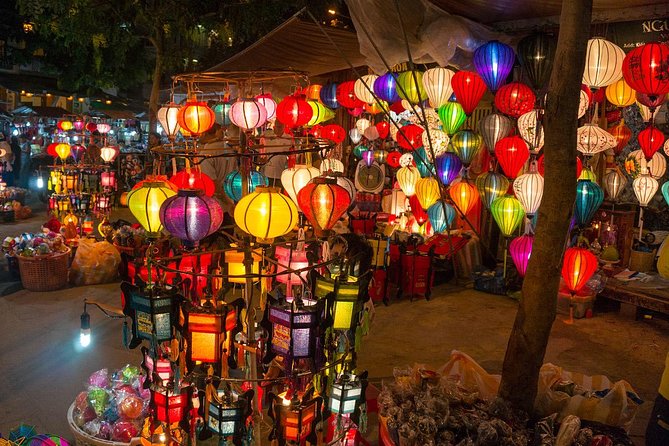
Then you switch gears to Chinatown in Bangkok. The Chinatown stop is about 1 hour, and the admission is listed as free.
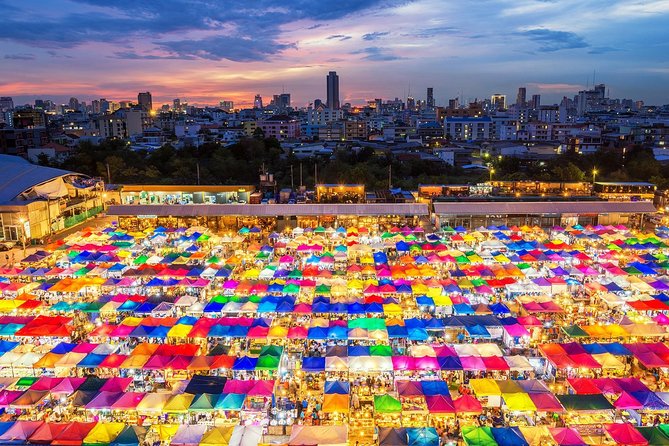
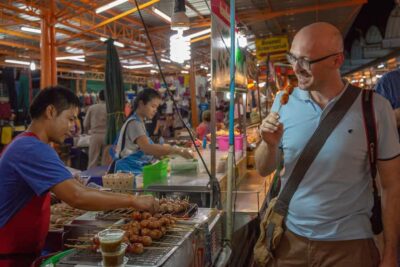
Chinatown at night can be a lot, in the best way. If you’ve only seen Chinatown in photos, it can feel like a blur. Food tasting is the tour’s best tool for making sense of the chaos. Instead of trying to guess what to eat based on Instagram photos, you get a curated taste that helps you understand what locals actually prioritize in the evening.
How I’d approach the hour:
- Follow the guide’s lead first, then decide what you want to come back for during your own time.
- Use the tasting as a map. Notice what flavors and textures you like, then treat that as a shopping list for later.
- Keep your expectations flexible. Street food can change by stall, timing, and supply.
One consideration: if you have strong food allergies, the provided info only says food tasting is included. It does not list specific accommodations. If you need dietary help, you should confirm that directly with the operator before you go.
The river and Sathorn Pier at the end: a practical way to close the loop
The final stop listed is Sathorn Pier, with about 30 minutes there. The tour ends in Bangkok, and you return to your city hotel by taxi at your own expense.
This kind of ending is practical in Bangkok. It gets you out of the hardest transit bottlenecks, and it helps you avoid getting stranded at a random point where you still need to find your way back. Still, it is not a free ride home in the way some tours include hotel pickup and drop-off, so budget a taxi for the last leg.
If you’re planning your night around this tour, think of it like a foundation layer. Use it to orient yourself, then decide whether to extend your evening with your own street exploration near Chinatown or temple areas.
Price and value: what $91.63 really buys you
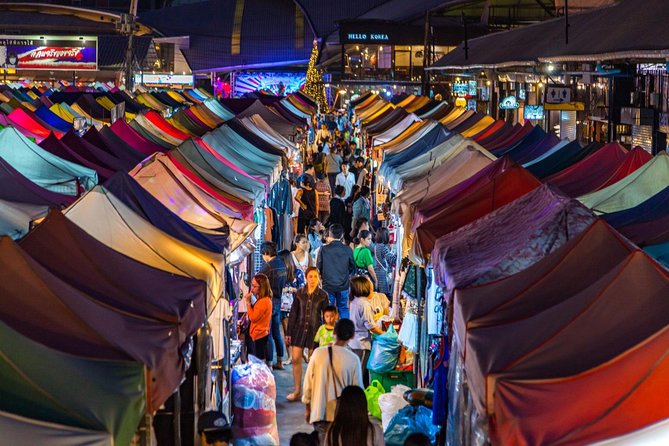
At $91.63 per person for about 3 to 4 hours, the value depends on how you handle what is included and what is not.
Included:
- Transportation by tuk-tuk
- Food tasting
- A professional English-speaking guide
Not included:
- Hotel pickup and drop-off
- Alcoholic drinks unless specified
- Admission tickets for the Grand Palace and the temples stops listed (Wat Pho and Wat Suthat)
So you are paying mainly for guided routing, transport logistics, and the curated food element. That’s a fair trade in Bangkok, where self-guided temple hopping plus Chinatown plus transit can eat time fast.
The key value driver here is the mix of experiences. If you tried to plan this solo, you’d spend extra time figuring out routes and timing, and you might still end up eating the wrong things at the wrong stalls. Here, you’re paying for someone to stitch it together into a workable night plan.
Group size, guide quality, and the energy you’ll likely feel
This tour caps at 15 travelers, which keeps it in the small-group zone. In Bangkok, that can be the difference between feeling like you’re part of a stampede versus feeling like a group that can actually move.
You also have the benefit of an English-speaking local guide. In one account connected to this experience, the guide name Pee stood out as amusing and highly aware of participants’ energy levels, including keeping the pace in mind when people were running on exhaustion after travel. That kind of attentiveness is exactly what you want on a short, packed night tour.
If you’re the type who likes structure but still wants flexibility, a small group with a guide usually hits the sweet spot.
What to wear and how to prep, especially for temples
Even with a night lights theme, this tour includes temple and palace areas. That means you’ll want to dress in a way that lets you move comfortably and respectfully.
Here are practical things to plan for:
- Bring something light but appropriate for temple visits. You will likely be in and out of different sections with sun-free but still warm evening conditions.
- Wear shoes you can walk in. The tour uses tuk-tuks and short walking segments, and temple areas require steady footing.
- Carry a basic bag you can keep secure, especially near markets and Chinatown.
Because admissions for the Grand Palace and certain temples are not included, it can also help to have some cash ready, in case ticket lines or payment methods are simpler on site than you expect.
Is this tour right for you?
This experience fits best if you want:
- a short, organized introduction to Bangkok’s night sights
- a guided blend of major landmarks and street-level Chinatown scenes
- included food tasting so you can eat confidently without overthinking
- the practical transport mix of tuk-tuk plus connections via skytrain and river route
You might want to skip it if you prefer:
- long, slow visits where you can linger 60 to 90 minutes in each major site
- a self-guided schedule where you control every stop and do not want additional entry fees
If your main goal is orientation plus atmosphere in a few hours, this tour makes a lot of sense.
FAQ
What is the duration of the Bangkok Night Lights tour?
It runs for about 3 to 4 hours.
Where do I meet for the tour?
You meet at the BTS Tourist Information Center at Saphan Taksin BTS Station.
Is hotel pickup and drop-off included?
No. Hotel pickup and drop-off are not included. You return to your hotel by taxi at your own expense.
What is included in the price?
Transportation by tuk-tuk, food tasting, and an English-speaking local guide are included.
Are temple and palace admission tickets included?
Admission tickets are not included for the Grand Palace, Wat Pho (Wat Phra Chetuphon), and Wat Suthat. Chinatown is listed as free, and the express boat ticket at the start is listed as free.
Are alcoholic drinks included?
Alcoholic drinks are not included unless specified.
Should you book this Bangkok Night Lights tour?
I’d book it if you want a guided, time-efficient night plan that mixes temples, Chinatown, and food tasting, with small-group pacing and multiple transport modes. It’s especially good value if you like structure but still want to experience Bangkok’s street energy, not just its monuments.
I would hesitate only if you hate paying on-site entry fees, or if the listed early start time will seriously mess with your plans. If you can confirm the exact start time in your booking message and you’re comfortable budgeting for tickets and a taxi back, this tour is a smart way to get your bearings fast and start enjoying Bangkok at night.
Bangkok Comes Alive at Night
- Bangkok:The Planet Sunset&Dinner Cruise on Chao Phraya River★ 4.3 · 812 reviews
- Bangkok: Night Bike Tour with Temples & Flower Market Visit★ 4.8 · 751 reviews
- Bangkok: Evening Tour with Wat Arun, Wat Pho & Tuk Tuk Ride★ 4.6 · 701 reviews
- Bangkok Tuk-Tuk Tour by Night with Chinatown Street Food Meal★ 5.0 · 635 reviews
The newest additions around Bangkok
- Private 2-Day Bangkok City Tour and Ayutthaya Tour from Bangkok
★ 5.0 · 1 review - Train Market, Floating Market, and Salt Lake Tour by driver
★ 5.0 · 1 review - Central Thailand Walking Tour and visit Temple at Bangkok
★ 5.0 · 1 review - Fullday Private Tour Bangkok Temple & City Tour with lunch+Amazing Bangkok Tour
★ 5.0 · 1 review - Bangkok: One Day Thai Costume Rental (Gentleman)
★ 2.0 · 1 review - Laem Chabang Shore Excursion : Shopping, Massage & Food Tasting
★ 5.0 · 1 review - Bangkok Dream World & Snow Town Theme Park Admission Ticket
★ 3.0 · 1 review - Bangkok 4 Hour Cultural & Temples Tour Private with Guide
★ 5.0 · 1 review
Bangkok Tuk-Tuk Tours, compared.
Bangkok by Night: Temples, Markets and Food Tuk-Tuk Tour
Read our review →
Markets, Temples and Food Night Tour by Tuk Tuk
Read our review →
Experience Bangkok with typical Thai tuk-tuk
Read our review →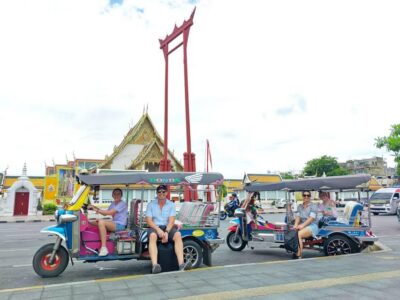
Evening Tour with Wat Arun, Wat Pho & Tuk Tuk Ride
Read our review →Browse the lists this tour appears in