
Reviewed · BANGKOK TUK-TUK TOURS
Bangkok Electric Tuk Tuk Tour with Local Guide
Temple tours are better by tuk-tuk.
This electric tuk-tuk circuit is a smart way to pack Bangkok’s key sights into about 3 hours, starting at Pak Khlong Talad and ending at Hua Lamphong. I like that you get a local English-speaking guide, and one past tour highlighted guide Kao Jao by name for keeping things clear and friendly. The other big win for me is the contrast: flowers and everyday Bangkok energy first, then the calm, geometric beauty of Wat Benchamabophit (the Marble Temple).
The only real catch is time. Some stops are quick, and you are mostly seeing sights from the right vantage point, not wandering for hours. Also, it runs outdoors, so if weather turns ugly, you might want a backup plan since this kind of tour needs good conditions.
In This Review
- Key things I’d bet you’ll notice
- Electric tuk-tuk power in Bangkok, and why it matters
- Pak Khlong Talad flower market, where the past still shows
- Grand Palace area, Sanam Luang, and the Bangkok founding story
- Wat Benchamabophit, the Marble Temple in real detail
- Loha Prasat (Metal Castle), and the royal reason it was built
- Wat Suthat and Sao Chingcha, the quick stop with big clues
- China Gate pass-by, Chinatown context without the chaos
- Hua Lamphong Railway Station, architectural finish and transit reality
- Price and value, $81.76 for a tight Bangkok schedule
- Who this tuk-tuk tour fits best
- Should you book this Bangkok electric tuk-tuk tour?
- FAQ
- What’s the duration of the tour?
- What does the tour include?
- Are meals included?
- Are tips included?
- Where does the tour start and end?
- Is hotel pick-up included?
- How much time is spent at the Marble Temple and Loha Prasat?
- Is admission included for all stops?
- How many people are on the tour?
- What if weather is bad?
- What’s the cancellation policy?
Key things I’d bet you’ll notice
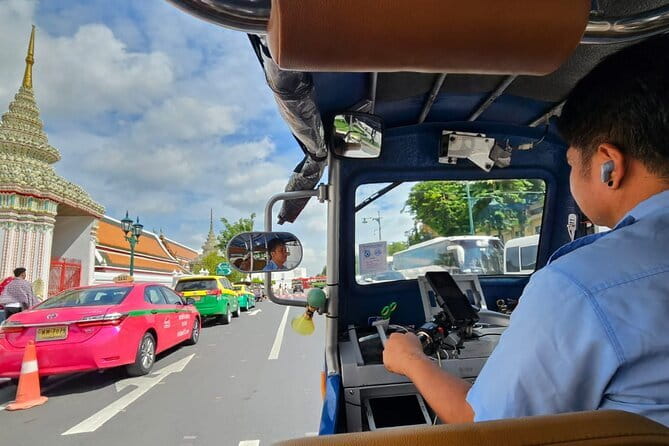
- Electric tuk-tuk comfort for short hops: you move fast, and you do not have to fight Bangkok traffic as much on your own
- Pak Khlong Talad is more than flowers: it has a market story that starts with fish, then shifts to fresh produce and blooms
- Wat Benchamabophit gets real architectural focus: Italy marble and crisp Thai design are the point here
- Loha Prasat has a royal origin story: built late in Rama III’s reign to honor a royal granddaughter
- Wat Suthat and Sao Chingcha are quick but meaningful: murals and the old swing ritual, briefly explained
- Hua Lamphong Station is a great finish: a photogenic rail landmark where the tour naturally ends near transit
Three wheels, no seatbelt, plenty of horn
Electric tuk-tuk power in Bangkok, and why it matters
In a city like Bangkok, logistics can steal your vacation. This tour’s format reduces that stress. You get an electric tuk-tuk ride with a guide, so you are not planning routes between temples, markets, and the old main rail station.
The group size is capped at 30 travelers, which is big enough to feel lively but small enough that you still get a guide’s attention when you need it. And because you are only out for around 3 hours, you are able to do this even if you have a tight schedule, like a layover.
There is one practical thing to expect: tuk-tuks are open-air. You will feel Bangkok air movement, and you will notice heat or rain more than you would in a car. This is great when the weather is kind. It is less fun when it is not.
Pak Khlong Talad flower market, where the past still shows
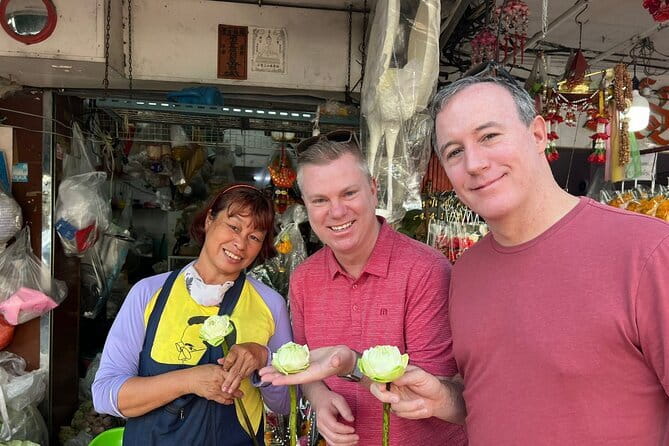
The tour starts at Pak Khlong Talad (Pak Khlong Flower Talat Original). This is Bangkok’s biggest flower market, and yes, it is exactly as colorful as it sounds. But the more interesting part is how the market evolved.
This spot began as a large fish market. Fish were sent from the Tha Chin River area in Samut Sakhon by way of the Chao Phraya River. Over time, the market changed from fish to daily life goods, selling vegetables, fruits, and fresh flowers.
Now the market is organized into four main sections:
- Marketing Organization market
- Yod Pimarn market
- ICP flower market
- Buddha Yotfa market
You get about 30 minutes here, with admission free. That is just enough time to take it in, buy a quick flower bundle if you want, and smell what fresh herbs and blooms actually mean in a humid climate. If you are a photo person, this is the place to shoot first, before you start your temple circuit.
If you are not feeling the market vibe, do not worry. This is also a good place to get your bearings. Bangkok can feel like a blur, and stepping into this local rhythm helps your brain lock onto the city.
Grand Palace area, Sanam Luang, and the Bangkok founding story
Between stops, you are not just hopping from one landmark to another. You get context around the royal core.
You will be introduced to the Grand Palace complex, which has served as the official residence of the kings of Siam and later Thailand since 1782. That date shows up again in what you learn about the City Pillar raising ceremony, which is tied to the founding of Bangkok as Krung Rattanakosin.
You also get to connect the dots near Sanam Luang, the multi-purpose leisure ground near the river, north of the Grand Palace. Sanam Luang used to be called Thung Phra Mane, meaning royal crematorium ground. In other words, this is a place with ceremony in its past, not just grass for today.
Then there is Ananta Samakhom Throne Hall at Dusit Palace. It was commissioned by King Chulalongkorn (Rama V) in 1908 and completed in 1915, after his death. It is still used on state occasions from time to time.
Now, the tour does not describe long time inside these royal buildings, so treat this part as guided orientation. You are learning the story while you pass by, so when you later visit independently, you will know what you are looking at.
Plenty else to do around Bangkok

Wat Benchamabophit, the Marble Temple in real detail
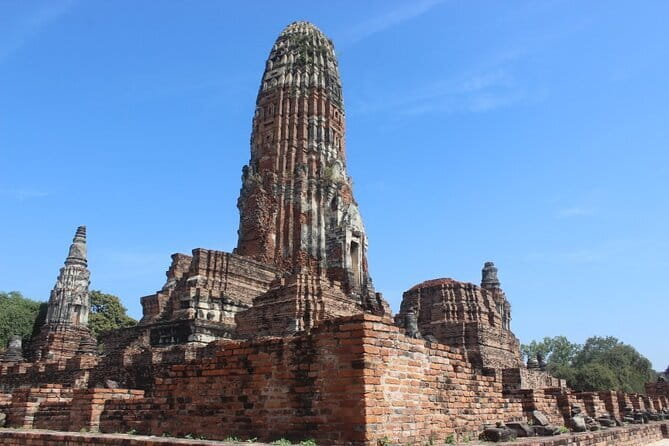
Stop two is Wat Benchamabophit, better known as the Marble Temple. This is where the tour shifts from the street to Thailand’s temple architecture in a very deliberate way.
What I like about this stop is that it is not random. The temple design is credited to Prince Narisara Nuwattiwong, and the materials give you a clear reason for the nickname. The temple was built from marbles imported from Italy, and that detail explains why this temple feels a little different from the typical gold-and-mosaic look.
You get about 1 hour here, and admission is included. That timing matters. You can step back, look at the structure as a whole, then come in close for details, without feeling rushed.
Potential consideration: marble temples can be bright in Bangkok sun. Bring sunscreen and plan your photos for softer light if you can. You will likely do fine, but it is one of those stops where discomfort can compete with your attention.
Loha Prasat (Metal Castle), and the royal reason it was built
Next up is Wat Ratchanatdaram Woravihara, also called Loha Prasat or Metal Castle. This temple is built toward the end of King Rama III’s reign, and it honors a royal granddaughter. Later, that same royal figure became the first consort of King Rama IV and was known as Queen Sommanat Wattanawadi.
The guide’s context here is useful. Temples in Bangkok are not only spiritual places, they are also tied to names, reigns, and generations. A 30-minute stop can feel short, but when you understand the why behind the structure, your time feels better spent.
You get about 30 minutes and admission is included. If you enjoy mixing art with backstory, this is a high-value moment. The temple’s story gives the iron-like symbolism a reason to exist.
Wat Suthat and Sao Chingcha, the quick stop with big clues
Wat Suthat comes next, with a short pass-and-look. The tour notes Wat Suthat is known for superb 19th century murals in the main chapel. You may not have time to see everything in depth, so focus on what you can access comfortably, then let the guide’s explanation do the heavy lifting.
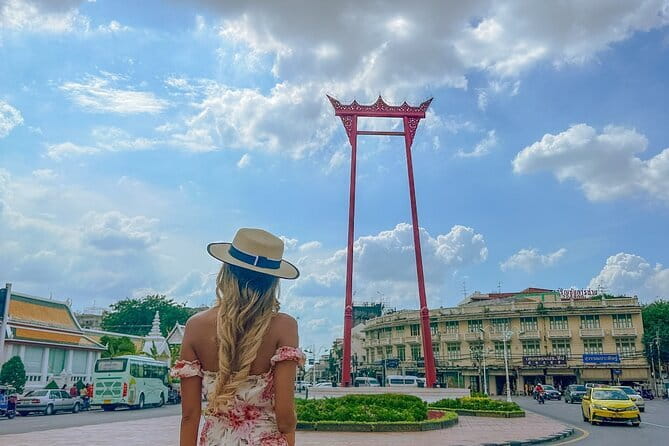
Outside the temple is the Giant Swing (Sao Chingcha) area. This swing was once used in Brahmanic ceremonies, long since discontinued. Even if you only have around 10 minutes, it is still worth it because the swing helps you understand how temple space worked in older ritual life, not just present-day tourism.
Admission for Sao Chingcha is listed as free. Wat Suthat is listed as admission not included, and time is short, so do not expect a long sit-down or extended viewing. This is more about getting the facts and the visual landmarks into your head.
If you are visiting Bangkok in hot season, consider wearing breathable clothes and planning to hydrate. The swing area can be sun-heavy, and your body will feel it before your camera does.
China Gate pass-by, Chinatown context without the chaos
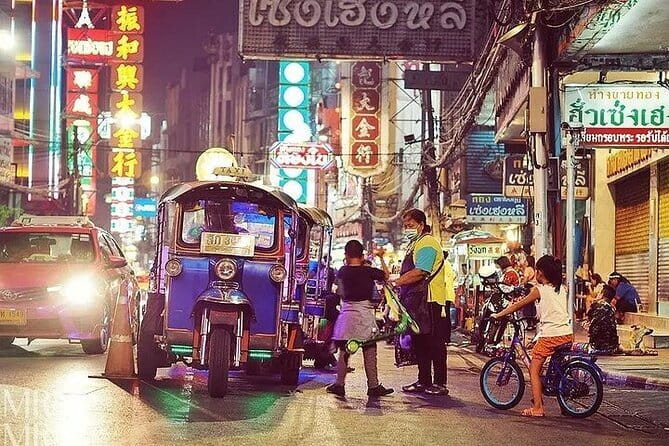
The tour also includes a pass by China Gate, the gateway to Bangkok’s Chinatown. You get an explanation of why the area matters and what the Chinese community’s heritage contributes to the city.
This is one of those “worth it even if it’s brief” stops. Chinatown can be loud and packed, and the experience here gives you a map in your mind before you ever walk into the neighborhood on your own. So if you later want noodles, groceries, or temple visits around that area, you are going to know where you are standing.
Short guidance like this is ideal for a 3-hour window. It turns a city you might otherwise only rush through into something you understand.
Hua Lamphong Railway Station, architectural finish and transit reality
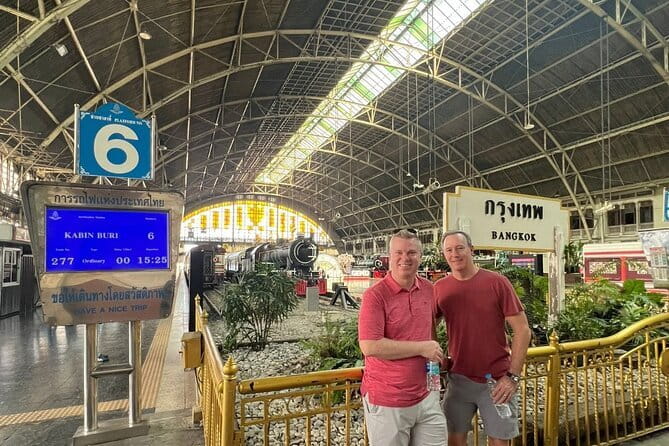
The final stop is Hua Lamphong Railway Station, a historic rail hub in central Bangkok. The tour calls it a stunning example of architectural fusion, and you can see why once you stand in front of the grand facade.
This station was the former central passenger terminal and railway hub, operated by the State Railway of Thailand (SRT). There is also an important update: long distance trains moved to the new central station at Krung Thep Aphiwat Central Terminal in 2023.
What I appreciate about ending here is that it feels like a time stamp on Bangkok. The tour starts with markets and ends with rail architecture. It gives you a sense of how people once moved through the city, and how transportation evolves.
Timing is about 30 minutes. Admission is free. And instead of dropping you randomly, you end at Hua Lamphong Train Station and you are dropped off before MRT Hua Lamphong Station. That matters if you are continuing on to another part of Bangkok after the tour.
Price and value, $81.76 for a tight Bangkok schedule
At $81.76 per person for around 3 hours, this is not the cheapest way to see Bangkok. But it is also not just a ride. You are paying for three things that add up fast:
1) Electric tuk-tuk transport with a local English-speaking guide
2) Ticketed temple time at Wat Benchamabophit and Wat Ratchanatdaram (Loha Prasat)
3) Small comforts that keep momentum high, including a bottle of water and a mini snack
Admission is listed as included for the Marble Temple and Loha Prasat. Meanwhile, Pak Khlong Talad flower market and the Giant Swing are free, plus Hua Lamphong Station is free. So your money mostly supports the guided route plus the temple entries.
If you are in Bangkok for a short window, the value is stronger because you do not waste time figuring out where to go next. If you already know you will visit several of these temples on your own, then you should compare that to how much you would spend on guides and tickets separately.
One more practical value point: this tour uses a mobile ticket, and it offers group discounts. If you have friends joining, it can become easier to justify.
Who this tuk-tuk tour fits best
This tour is a strong match if you want:
- A first Bangkok orientation without doing full-day planning
- Temple highlights in a short time window
- A local English-speaking guide who can connect the dots between sites
- A fun transportation style that is not stuck in the same kind of traffic hassle as other options
It is also a good pick for people who like structure. You get defined stops with clear time ranges, so you do not drift into “one more place” chaos.
It might be less ideal if you hate group settings, or if you want deep, slow time inside each temple. This is set up for efficiency and meaningful snapshots, not long independent exploration at every site.
Should you book this Bangkok electric tuk-tuk tour?
I would book it if you want a 3-hour hit list that includes the flower market, the Marble Temple, Loha Prasat, and an excellent ending at Hua Lamphong. The included tickets at two key temples plus an English guide make it feel like a well-priced package for a short stay.
I would pause before booking if you are the type who needs lots of quiet time inside religious sites, or if you are worried about outdoor walking in heat. The tour needs good weather, and the schedule is tight by design.
If you are trying to get your bearings fast and leave Bangkok with a clear mental map, this is one of the easier ways to do it.
FAQ
What’s the duration of the tour?
The tour lasts about 3 hours.
What does the tour include?
It includes an electric tuk-tuk tour, a local English-speaking guide, a visit to Pak Khlong Talad flower market, entrance tickets to Wat Benchamabophit, admission to Wat Ratchanatdaram (Loha Prasat), a pass by Wat Suthat, a visit to Hua Lamphong Railway Station, plus a bottle of water and a mini snack.
Are meals included?
No. Meal and lunch are not included.
Are tips included?
No. Tips are not included.
Where does the tour start and end?
It starts at Café Amazon 79 Thanon Maha Rat, Krung Thep Maha Nakhon 10200. It ends at Hua Lamphong Railway Station, before being dropped off at MRT Hua Lamphong Station.
Is hotel pick-up included?
No. Hotel pick-up and drop-off are not included.
How much time is spent at the Marble Temple and Loha Prasat?
Wat Benchamabophit is about 1 hour, and Wat Ratchanatdaram (Loha Prasat) is about 30 minutes.
Is admission included for all stops?
Admission is free or not included for some parts. Wat Benchamabophit and Wat Ratchanatdaram have entry included. Wat Suthat is listed as admission not included, while the Giant Swing and Pak Khlong Talad are free.
How many people are on the tour?
The tour has a maximum of 30 travelers.
What if weather is bad?
This experience requires good weather. If it is canceled due to poor weather, you will be offered a different date or a full refund.
What’s the cancellation policy?
You can cancel up to 24 hours in advance for a full refund. If you cancel less than 24 hours before the start time, the amount paid is not refunded.
The newest additions around Bangkok
- Central Thailand Walking Tour and visit Temple at Bangkok
★ 5.0 · 1 review - Private 2-Day Bangkok City Tour and Ayutthaya Tour from Bangkok
★ 5.0 · 1 review - Train Market, Floating Market, and Salt Lake Tour by driver
★ 5.0 · 1 review - Fullday Private Tour Bangkok Temple & City Tour with lunch+Amazing Bangkok Tour
★ 5.0 · 1 review - Bangkok: One Day Thai Costume Rental (Gentleman)
★ 2.0 · 1 review - Laem Chabang Shore Excursion : Shopping, Massage & Food Tasting
★ 5.0 · 1 review - Bangkok Dream World & Snow Town Theme Park Admission Ticket
★ 3.0 · 1 review - Bangkok 4 Hour Cultural & Temples Tour Private with Guide
★ 5.0 · 1 review
Bangkok Tuk-Tuk Tours, compared.
Bangkok by Night: Temples, Markets and Food Tuk-Tuk Tour
Read our review →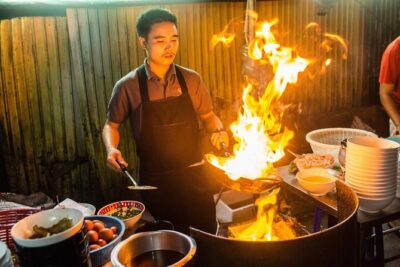
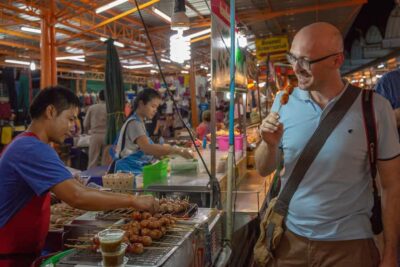
Markets, Temples and Food Night Tour by Tuk Tuk
Read our review →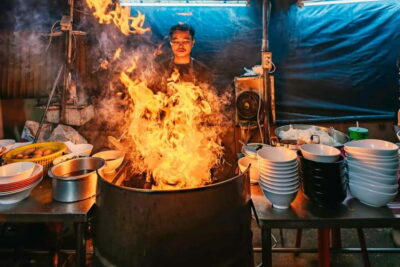
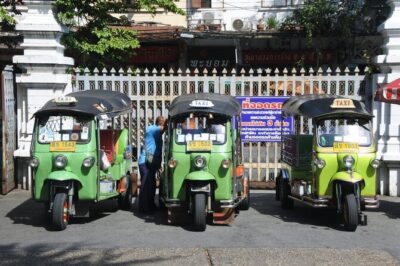
Experience Bangkok with typical Thai tuk-tuk
Read our review →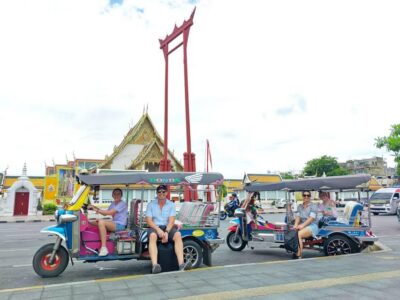
Evening Tour with Wat Arun, Wat Pho & Tuk Tuk Ride
Read our review →Browse the lists this tour appears in