
Reviewed · RIVER KWAI & KANCHANABURI TOURS
Bangkok: Bridge on the River Kwai and Thailand-Burma Railway Tour
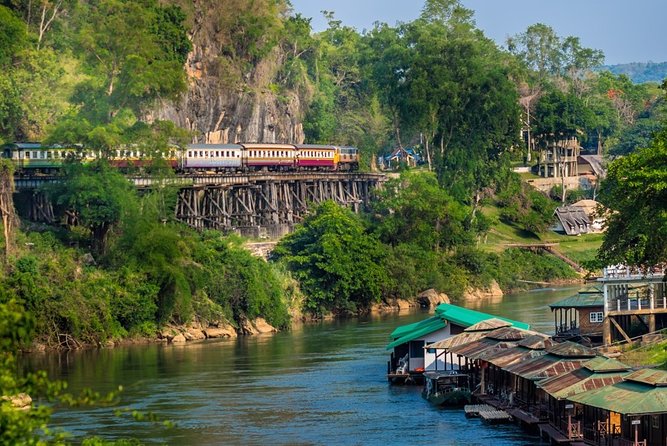
The ride starts with a river, ends with remembrance. This Bangkok day trip strings together a long-tail boat run, a Death Railway train crossing, and two WWII stops that hit hard: the bridge area plus the cemetery and JEATH Museum.
I like the way this tour is built for low-stress travel. You get hotel pickup and drop-off in central Bangkok, plus a lunch buffet in Kanchanaburi that keeps the whole day on track.
One thing to plan for: it is a long day. And there can be an extra train seating fee on the spot, even though the train ride itself is included.
In This Review
- Key points to know before you go
- Why the River Kwai day feels like two worlds at once
- Bangkok pickup at 7:00 am, and why timing matters here
- The Bridge on the River Kwai: movie fame, real weight
- River Khwae + a long-tail boat ride: the scenic intermission
- Kanchanaburi War Cemetery: the stop that lingers
- JEATH War Museum: short visit, heavy content
- Train across the Death Railway: part thrill, part reality
- Lunch in Kanchanaburi: where the day slows down
- How the guiding style shapes the day
- Value check: is $99.40 a fair deal?
- Who this tour fits best
- Should you book this River Kwai and Death Railway tour from Bangkok?
- FAQ
- What time does the tour start?
- Is hotel pickup and drop-off included?
- How long is the tour?
- What does the tour include?
- What is not included?
- How many places do you visit?
- Is the long-tail boat ride required for everyone?
Key points to know before you go
- You get a full WWII-focused route, not just a quick bridge photo stop.
- Long-tail boat ride plus a train crossing make it feel like more than a museum day.
- Kanchanaburi War Cemetery and JEATH Museum are included, and both are emotionally heavy.
- Lunch is included, and it is one of the better breaks in a long schedule.
- Small group size (max 15) usually means smoother pacing and easier questions for your guide.
- A seat on the train can cost extra on the day, and it is paid to the guide at the station.
Cross the bridge, hear the history
Why the River Kwai day feels like two worlds at once
This is one of those trips where your eyes keep changing jobs. In the morning you are taking in river scenery and jungle edges, and then suddenly you are standing in places tied to forced labor and war captivity. The contrast is the point. The day nudges you to hold both ideas at the same time: nature and suffering, romance of travel and reality of history.
I especially like that the tour does not treat the bridge like a movie set. With a good local guide, the bridge becomes a working piece of wartime infrastructure and the people around it become the story. In the reviews I saw names like Rach and Oom praised for exactly this, turning the day into a history lesson you can actually follow.
Just know what kind of day it is. It is not a lazy sightseeing loop. It is a full 11-hour stretch built around remembrance, with moments of scenery that help you catch your breath.
Bangkok pickup at 7:00 am, and why timing matters here
Your start time is 7:00 am from your hotel, and pickup can happen 30 to 60 minutes early depending on where you are in Bangkok. That means you will want a real breakfast, not a snack and wishful thinking. The schedule is long, and the return drive can be slow.
Several people flagged traffic on the way back into Bangkok. That is not shocking for a city like this, so I plan around it: do not stack another big plan for later that night. Think of this as your one big day, not a side quest.
If you are the type who hates being rushed, this tour still might work for you. The reviews repeatedly mention that things ran in an organized way. Still, the best way to enjoy a long route is to accept that the day is moving, and your job is to stay mentally present at each stop.
The Bridge on the River Kwai: movie fame, real weight
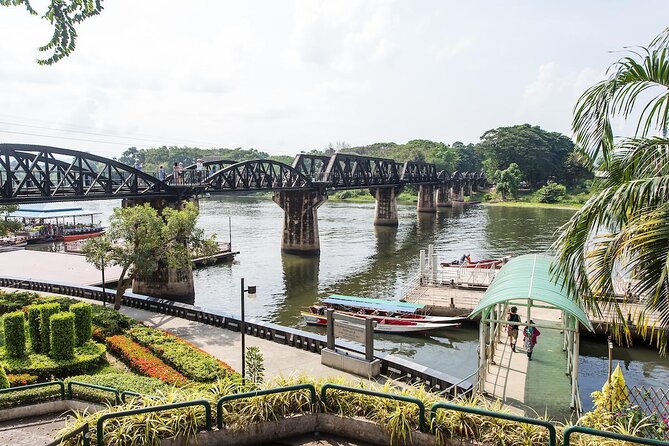
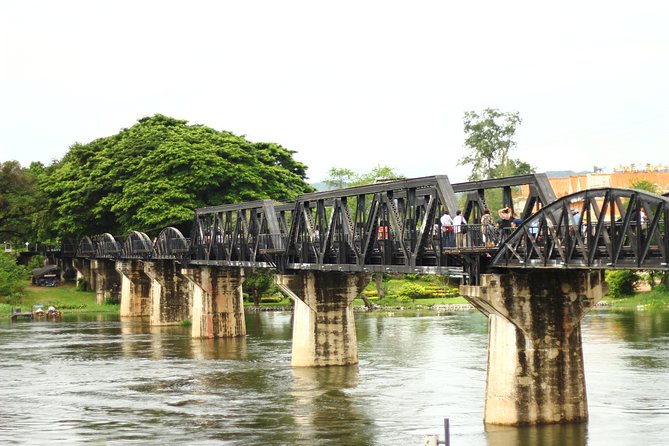
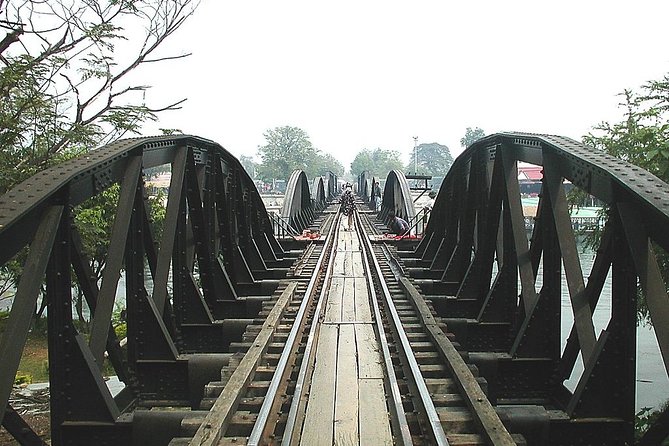
The bridge stop is about an hour, and it is free to access. You get to see the crossing that has been famous since the 1957 movie and the book that helped spread its legend. But the tour framing is what changes the experience. This is tied to the WWII Death Railway built under brutal conditions from 1942 to 1943.
What you should do here is simple. Take photos if you want, but spend time looking at the context your guide gives you. The best versions of this tour help you connect the bridge to the people who were forced to build it, including prisoners of war and enslaved laborers.
One practical note from experience with the site: some parts involve walking on uneven surfaces. Wear shoes you can trust. This is not the place for smooth-soled sneakers.
Also, do not worry if you have seen the movie before. The bridge itself will not feel like a scene from a film once the history lands. That shift is usually what makes people call it moving, sad, and worth the trip.
Ride the rails out of town
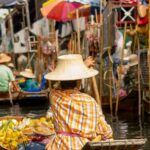
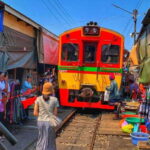
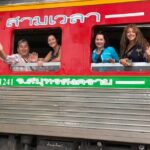
River Khwae + a long-tail boat ride: the scenic intermission
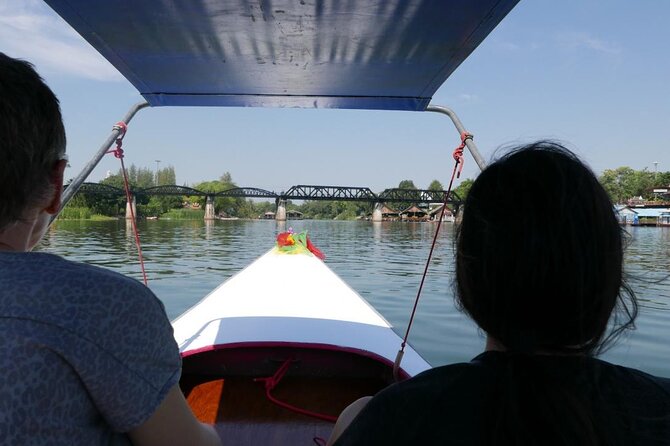
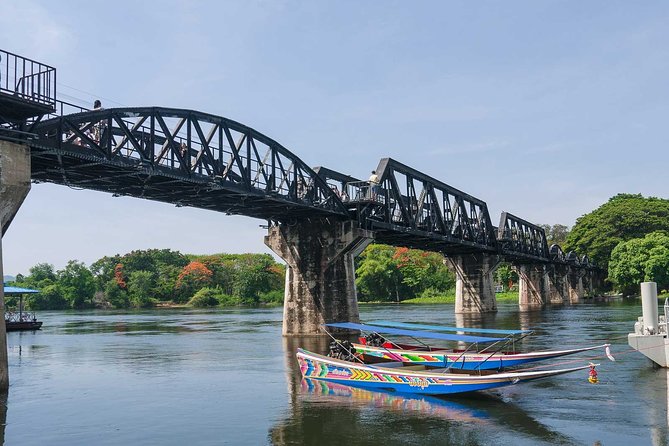
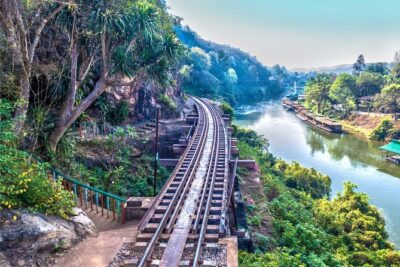
The river portion takes up a big chunk of the day, listed at about 5 hours. The highlight is the long-tailed speedboat ride along the river, with a chance to see jungle edges and water views that make the day feel like an outing instead of a nonstop bus ride.
I like this break for one reason: it gives you a physical pause. After the bridge and before the cemetery and museum, the boat ride lets your brain reset a bit. You still carry the historical context, but you get breathing room in between heavy stops.
There is also a useful detail if you have mobility concerns. If getting in and out of the boat is difficult, the guide can arrange a road option instead. That is exactly the kind of flexibility that matters on a day like this.
If you like photos, this is usually your best window. People mention strong views from lunch too, but the boat is where you feel the river. Dress for sun and splash. Even a small amount of sunburn later in the day can ruin your mood around the cemetery, where you will want to be fully present.
Kanchanaburi War Cemetery: the stop that lingers
The Kanchanaburi War Cemetery is included, and the visit is about 30 minutes. This is described as a main cemetery for victims of Japanese imprisonment tied to the Burma Railway. It is located on the main road through town, so it is easy to reach even with a busy schedule.
This is the part of the day where many people get emotional fast. In reviews, I saw comments about reading epitaphs and being shocked by how young the individuals were. People also talked about the cemetery being meticulously maintained, which matters. A well-kept memorial space helps you focus on the names instead of the condition of the grounds.
One of the most personal moments can happen if you find a connection in the epitaphs. A review mentioned coming across a potential relative, and that is the kind of gut-punch moment you can never plan for, but you can prepare for mentally. Go into this stop expecting it to land.
How to make it work: slow down. Let the guide do the talking, but give yourself time to walk through and read what you can. If you rush, you will feel it later.
JEATH War Museum: short visit, heavy content
Next is the JEATH War Museum, included, around 20 minutes. This small museum, opened in 1977, focuses on the ordeal of POWs who built the Death Railway. What stands out in the description is that it uses original materials like photos, letters, and drawings to show harsh living conditions.
A 20-minute museum stop can feel quick, but it is also part of the pacing. The tour is balancing multiple sites, and the cemetery already uses up emotional bandwidth. This museum gives you more detail without turning the day into a long slog.
If you are a history fan, this is where you start to build “how” and “why” in your head, not just “what happened.” The bridge shows a structure. The museum explains the human cost behind it, in a more direct and personal way than a big textbook.
This is also a good time to ask your guide one question you care about. People in the reviews praised guides like Rach and Oom for answering questions and helping connect facts. If your guide is chatty in a good way, this is where you can steer the conversation.
Train across the Death Railway: part thrill, part reality
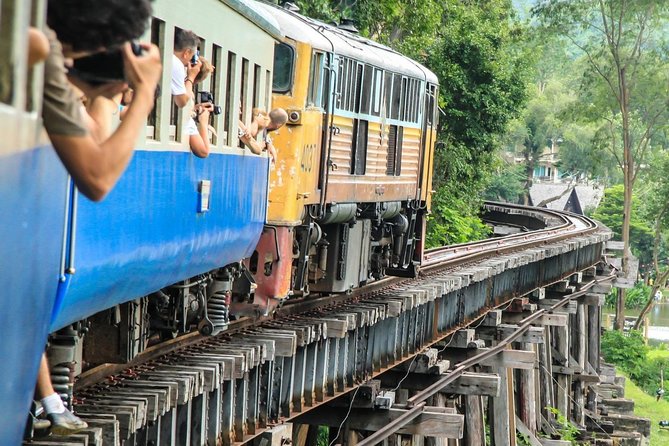
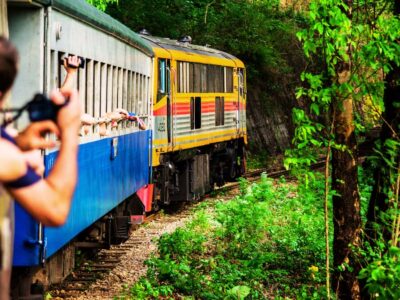
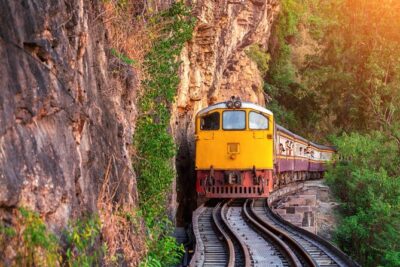
The train ride is one of the most exciting parts of the day because it is hands-on. You are not imagining the route, you are riding it. That said, the tour is clear that there is an extra fee related to train seating.
The information you need to know is this: there is an additional THB 300 per person that you pay to the guide at the train station. It is described as guaranteeing a seat, and it also includes tea or coffee, drinking water, a cold towel, and a certificate.
Some people feel this is an unwelcome surprise. Others are glad they can avoid standing for long stretches. Either way, you should plan for it. Treat it like paying to make the day more comfortable. On a long tour with a heavy itinerary, seat comfort is not a small thing.
Two practical tips to make the train ride better:
- Be ready to pay at the station when the moment comes.
- If you care about comfort, prioritize seating so you can focus on the experience.
If the schedule allows, listen to your guide while you ride. The whole point of the train crossing is that you are traveling over the same kind of route that once shaped the war story.
Lunch in Kanchanaburi: where the day slows down
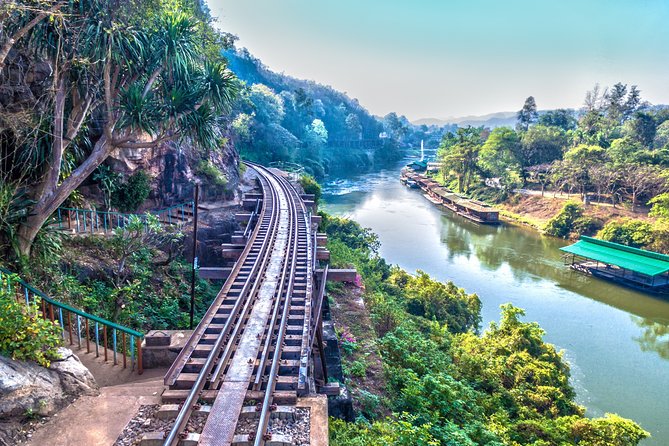
Lunch is included as a buffet in Kanchanaburi. People specifically mention that the lunch has a great view over the River Kwai, which makes it feel less like a generic stop and more like part of the day’s atmosphere.
This is also a practical reset. After several hours of movement, lunch is your time to eat properly, hydrate, and adjust clothing for the next leg. The tour does not include beverages, so if you drink tea, soda, or water beyond what is bundled with the seat fee, plan to buy those separately.
I like the lunch setup on tours like this because it reduces decision fatigue. You do not have to hunt food in a new place while you are already late in the day. You just eat, recharge, and keep going.
How the guiding style shapes the day
The tour includes a professional Thai local guide, and this is where the experience tends to swing between good and unforgettable. In reviews, guides named Rach and Oom were praised for being informative, emotionally respectful, and helpful with questions. One review also mentioned guide humor when appropriate, which helps when you are moving through sad material.
That said, guiding can vary from person to person. One review criticized limited group interaction, which can make a tour feel like a checklist. The good news is that the itinerary still includes time at each site, so even if your guide keeps a faster pace, you can still use the quiet moments to take things in.
For the best experience, come with 1 or 2 questions. Examples:
- How did the Death Railway change life for the people who were forced to build it?
- Why do people remember this bridge even outside Thailand?
If your guide can answer, you will feel the day “click” faster.
Also, the group size cap at 15 travelers can help here. Smaller groups usually mean your guide can spot who needs extra context.
Value check: is $99.40 a fair deal?
The price is listed at $99.40 per person, and the inclusions matter more than the headline number.
You are getting:
- Hotel pickup and drop-off in central Bangkok
- Air-conditioned transport
- Long-tail speedboat ride
- Train ride along the route
- Lunch buffet
- Entrance fees for the included sights
- A professional local Thai guide
- Mobile ticket
What is not included:
- Beverages
- The THB 300 train seating fee paid at the station for guaranteed seating plus extras
So is it good value? For many people, yes, because it bundles transport across a long day plus guided visits plus two big transportation experiences (boat and train). If you tried to DIY this, you would burn time coordinating rides, buying tickets, and figuring out routes. The tour removes that stress.
The only “value risk” is if the train seating fee leaves you irritated. If you are sensitive to extra payments on the day, this could sour the mood. But if you plan for it and prioritize comfort on a long schedule, it starts to feel like a practical add-on.
Who this tour fits best
This is ideal if:
- You want a structured day with transport handled
- You are interested in WWII sites tied to the Burma Railway
- You like mixing movement (boat and train) with reflection (cemetery and museum)
- You want a guide who can explain what matters, and not just point at landmarks
It might not be ideal if:
- You hate long days. Between the early start and the return drive, expect fatigue.
- You strongly dislike extra on-the-spot fees. The train seating charge is clearly part of the experience.
- You have mobility limitations around getting into the long-tail speedboat. The guide can arrange a road alternative, but it is still something you should mention upfront.
Should you book this River Kwai and Death Railway tour from Bangkok?
I’d book it if you want the bridge experience plus the “real story” side of WWII, and you are okay with a packed 11-hour day. The mix of boat, train, cemetery, and JEATH Museum is what makes this more than a quick photo trip.
Before you go, do three small prep things:
- Wear sturdy shoes for walking and uneven surfaces.
- Plan for the THB 300 train seating fee if you want guaranteed comfort.
- Accept that traffic can be rough on the way back, and treat the rest of the day as recovery time.
If you do those, you will get a meaningful, organized day. And when you stand in the cemetery, you will understand why so many people describe the experience as both moving and worth remembering.
FAQ
What time does the tour start?
The tour starts at 7:00 am. Hotel pickup may happen 30 to 60 minutes earlier depending on where your hotel is in Bangkok.
Is hotel pickup and drop-off included?
Yes. The tour includes hotel pick-up and drop-off from centrally located hotels in Bangkok, and pickup can be arranged from a nearby location if needed.
How long is the tour?
It runs for about 11 hours.
What does the tour include?
It includes entrance fees, hotel pickup/drop-off, a long-tailed speedboat ride, a train ride, transport by air-conditioned vehicle, a professional Thai local guide, and a lunch buffet.
What is not included?
Beverages are not included. There is also a mandatory train seating fee of THB 300 per person that is paid at the train station to guarantee a seat.
How many places do you visit?
You visit the Bridge on the River Kwai, have time on the River Khwae area, then go to the Kanchanaburi War Cemetery, and the JEATH War Museum.
Is the long-tail boat ride required for everyone?
If you have mobility problems getting into or out of the long-tailed speedboat, you should tell your guide at the start. The guide can arrange for the driver to take you to the bridge by road instead.
The newest additions around Bangkok
- Dream World & Snow Town in Bangkok with Return Transfer & Lunch
★ 4.5 · 3 reviews - Bangkok: Nong Nooch Garden
★ 5.0 · 3 reviews - Private tour to Ayutthaya and Lopburi Monkey Temple (from Bangkok)
★ 5.0 · 3 reviews - HD-01 Koh Rattanakosin old town cycling with The Giant Swing, and more
★ 5.0 · 3 reviews - Guided Tour of Grand Palace & Emerald Buddha Temple in Bangkok
★ 5.0 · 3 reviews - Half Day DIY Grand Palace and Emerald Buddha Temple
★ 4.5 · 3 reviews - Glittering Ayutthaya Tour to Famous Sights, Market & Sunset Boat
★ 4.5 · 3 reviews - Private Tour: The Best of Bangkok Temples – Half Day
★ 4.0 · 3 reviews
River Kwai & Kanchanaburi Tours, compared.

Erawan Waterfalls and Bridge Over River Kwai Tour from Bangkok
Read our review →
Bridge on the River Kwai and Thailand-Burma Railway Guided Tour
Read our review →
Erawan Waterfall and Elephant Care: Private Tour to Kanchanabur
Read our review →Browse the lists this tour appears in