
Reviewed · BANGKOK
4 Days Expedition From Bangkok to Angkor Wat
Angkor starts with a border crossing. This 4-day private run from Bangkok (also picking up from Pattaya and Ko Chang) is built around one big idea: see Siem Reap without the DIY stress, while a guide and driver handle the moving parts. You also get a private boat on Tonlé Sap with a stop at Chong Kneas floating village, before you go temple-crazy.
What I really like is the mix of set pieces and smart logistics. First, you get three nights in a 4-star hotel with breakfast, plus transfers and licensed guiding, so you’re not burning time figuring things out between Cambodia and Thailand. Second, the temple plan hits the key highlights across multiple areas, including Angkor Wat and the broader Angkor Thom circuit, then a second day that takes you beyond the main drag.
One thing to consider: the day starts early and the schedule is tight. You also need to manage your own Cambodia visa paperwork, and borders can be confusing even with help, so go in patient and prepared.
In This Review
- Key things to know before you go
- Bangkok to Siem Reap in 4 days: the real value is the handholding
- Border day at Poipet: expect the paperwork, not the stress
- Tonlé Sap and Chong Kneas floating village: the kind of break temples can’t replace
- Angkor Wat and Angkor Thom on Day 2: the big icons with real walking time
- Day 3 beyond the headline temples: Banteay Srei and the calmer Angkor corners
- Day 4 back to Thailand: time to trade temples for traffic
- Hotel comfort and guiding: what makes this trip feel smooth
- Price and logistics: is $690 a fair deal?
- Should you book this 4-day Bangkok to Angkor Wat expedition?
- FAQ
- Where is pickup for this tour?
- How many days is the trip?
- How many nights are included in Siem Reap?
- Is Cambodia visa included in the price?
- Can I use an E-Visa?
- What is included in the tour price besides the hotel?
- Is Tonlé Sap and the floating village included?
- Which Angkor sights are included?
- Are temple dress rules strict?
- What is the cancellation policy?
Key things to know before you go
- Private, air-conditioned door-to-door transfers from Bangkok, Pattaya, and Ko Chang options
- Tonlé Sap cruise with Chong Kneas floating village by private boat
- Angkor Wat plus Angkor Thom and Bayon, then Ta Prohm on the main day
- Day 3 adds Banteay Srei and several smaller sites like Preah Khan and Pre Rup
- 3 nights in a 4-star Siem Reap hotel with daily breakfast and temple tickets
Bangkok doesn't stop at one stop, so here's what else is close by.
Bangkok to Siem Reap in 4 days: the real value is the handholding
This is not a light, simple weekend jaunt. It’s a full-on expedition, and the value comes from how much of the hard stuff gets handled for you. Instead of cobbling together local buses, cross-border steps, and then trying to line up guides and tickets in Siem Reap, you roll in with pickup arranged, an air-conditioned vehicle ready, and a licensed guide onboard for the temple days.
That handholding matters even more because the trip depends on two countries. You’re driving to the Cambodia border area at Poipet, doing entry formalities, then continuing by road to Siem Reap. If you’ve ever tried to manage that kind of transition solo, you already know how fast it can turn into a time sink.
The other strong part: you get real downtime built into the flow. After the Tonlé Sap day, you’re back in Siem Reap by early evening, and you’re set up to explore on your own around Pub Street, restaurants, and the night market area. That balance is what keeps a temple-heavy schedule from feeling like one long day after another.
Border day at Poipet: expect the paperwork, not the stress
Day 1 starts with an early pickup, around 6:30 am, depending on where you’re staying (Bangkok, Pattaya, or Ko Chang). You’ll arrive at Poipet around 10:30 am to do Cambodia entry steps at the border area.
Here’s what you should know before you go, because it affects both cost and speed:
- Cambodia visa is not included in the tour price.
- If you use E-Visa, you should print it out two copies.
- If you do visa on arrival at Poipet border, you’ll need to bring one ordinal photo for the visa.
- The operator also flags that some passport holders may need re-entry or multi-visa arrangements when returning to Thailand via land. If that applies to you, the safe move is to plan your return flight instead of relying on a second border crossing.
In the real world, borders can feel chaotic. Even when the process is being expedited, it can still look confusing. One practical tip: keep your documents sorted and easy to grab, and don’t assume everyone at the counter speaks English well. Your guide can help, but your job is to have the paperwork ready.
Also, go in knowing the tour is focused on getting you across and then to Siem Reap. One review detail that’s worth taking seriously is that some people paid an extra amount at the border for assistance related to visa processing. The tour still doesn’t include the visa itself, so treat any potential border assistance fees as a possibility rather than a surprise.
Tonlé Sap and Chong Kneas floating village: the kind of break temples can’t replace
Day 1 doesn’t end with a cramped day of paperwork and driving. You also get one of the most memorable rhythm changes in the whole trip: an afternoon boat outing on Tonlé Sap Lake.
You leave for the lake around 3:30 pm and go to Chong Kneas Floating Village by private boat. It’s a good contrast to Angkor’s stone monuments. Instead of climbing and walking temple grounds, you’re on the water, moving through a living landscape.
The timing is also smart. You’re done by around 5:30 pm, and you’re back at your hotel with evening free. That means you can decide how you want to spend the night. Some people want a relaxed dinner and an early night. Others head straight toward Pub Street for wandering, or the night market area for snack-style browsing.
Practical note: wear sunscreen and bring a hat. You’re on a boat, so you might not feel wind the way you expect.
Keep scrolling, there's usually one more worth booking.




Angkor Wat and Angkor Thom on Day 2: the big icons with real walking time
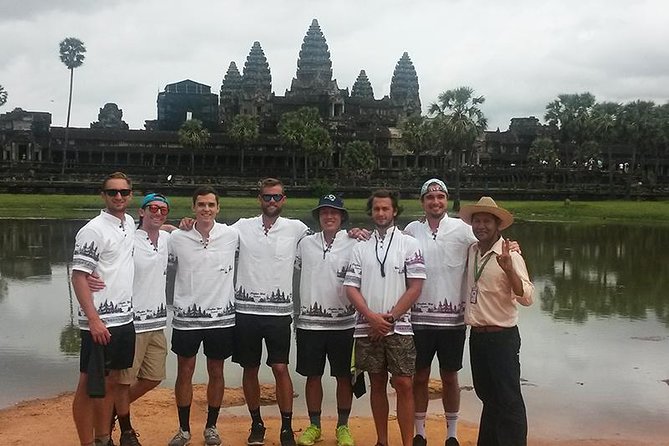
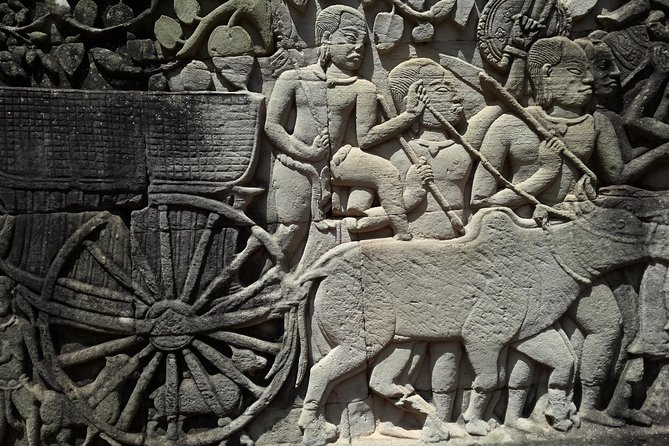
Day 2 is the day most people picture when they say Angkor. You’ll start with Angkor Wat, scheduled for about two hours with admission tickets included. It’s described as the main temple in Angkor city and part of the 1 in 7 wonder of the world set of monuments. Even if you’ve seen photos, the scale still makes you pause.
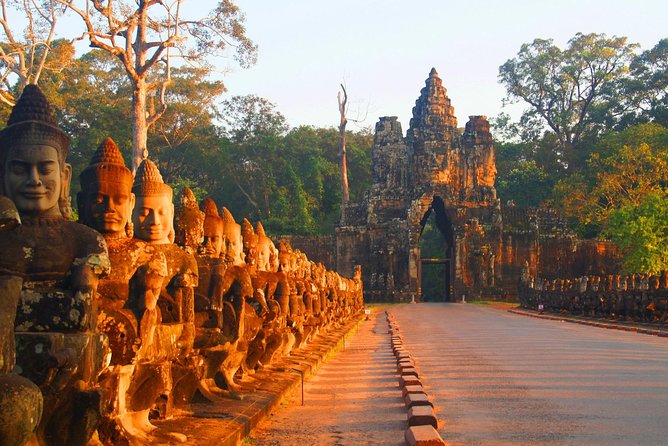
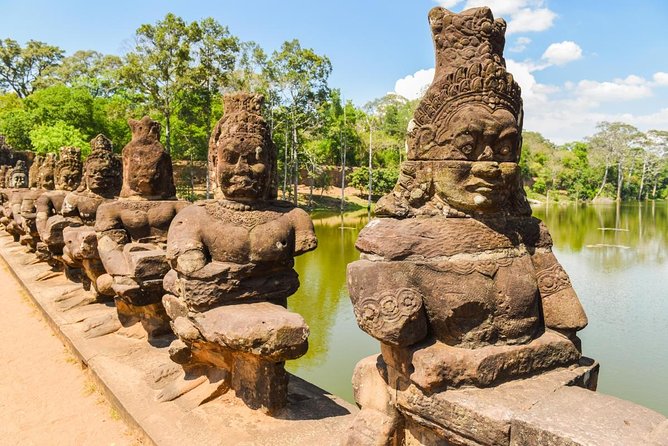
Then you move into Angkor Thom, which is the main walled city area. The key detail here is the fortification: a huge wall and a moat, described as about 3 km big and 3 km long. Your stop there is listed as very short, so think of it as a gateway orientation through the complex rather than a slow, deep exploration.
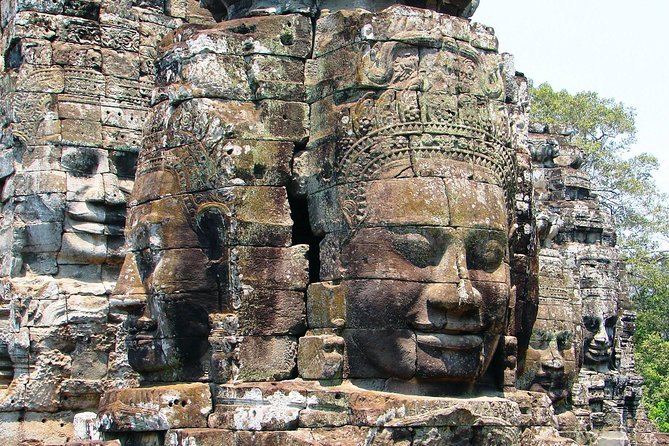
From Angkor Thom you go to Bayon, the temple in the center of Angkor Thom and the biggest temple in that complex, with about one hour allocated.
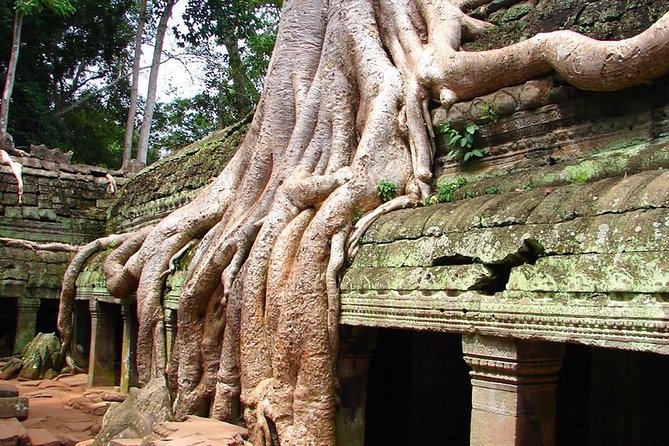
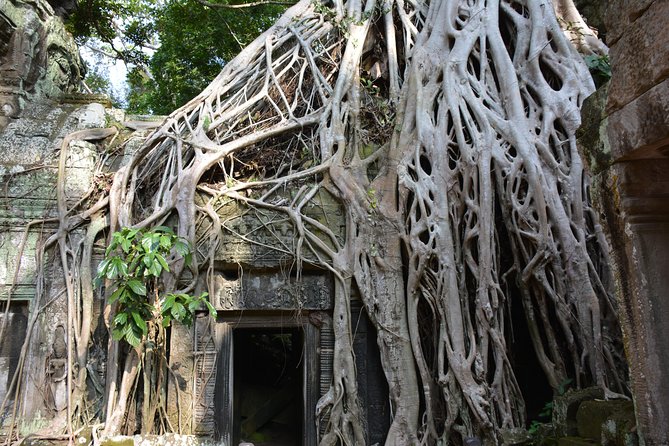
Finally, you wrap Day 2 with Ta Prohm for around one hour. Ta Prohm is described as still covered by forest. It’s also the temple associated with the filming of Tomb Raider, which is why so many people recognize it instantly. When you see it in person, the mix of stone and trees feels like the temple has been left to time on purpose.
The main drawback with Day 2 is the standard one for Angkor: you’re packing major sites into a single day. If you hate rushing, plan to move slowly inside each stop even when the schedule looks tight. Let your guide set the pace, but don’t feel pressured to sprint from photo spot to photo spot.
Day 3 beyond the headline temples: Banteay Srei and the calmer Angkor corners
If Day 2 is the name-brand temples, Day 3 is where the trip starts to feel more personal. You’ll be out across a wider Angkor area, including several temples that are less dominated by tour-group blur.
The star of the day is Banteay Srei. It’s listed as a Shiva temple about 37 km from Siem Reap, and it’s singled out for its beautiful carvings made with pink sandstone. You get around three hours here, which is generous for a site that many visitors treat as a quick stop. This extra time is one of the best signs of value in the whole plan.
After Banteay Srei, you head to Preah Khan, described as one of the biggest temples built in 1191, considered the latest temple in Angkor city, with a note about less crowned. Your time there is about one hour.
Next comes a sequence of smaller stops that are easier to appreciate when you’re not dealing with everything at once:
- Neak Pean (around 40 minutes), a small temple in the center of an ancient water bank, described as a chanting hospital in the 12th century, with a beautiful view.
- Ta Som (about 30 minutes), a peaceful temple and also described as a hospital in the 12th century, with a tree-covered tower at the eastern gate.
- Eastern Mebon (about 30 minutes), a temple in the center of Baray or water bank, described as the main place for the Shiva Ratree ceremony in Hinduism.
- Pre Rup (about one hour), similar to Mebon but taller, described as a crematorium in the 10th century, and a good viewpoint.
What I like about Day 3 is that it’s not only stone for its own sake. These stops are framed around purpose: hospital-like complexes, ceremony locations, and crematorium references. That gives you more to think about than just architecture.
Drawback to expect: this day is still walking-heavy. You’re visiting multiple sites across the broader area, so comfortable shoes matter. If you go with aching feet, this is the day you’ll feel it most.
Day 4 back to Thailand: time to trade temples for traffic
Day 4 is your return day. After breakfast, you check out and transfer back to Thailand with options returning to Bangkok, Pattaya, or Ko Chang.
The transfer is listed as about 7 hours, and admission tickets on this day are not a factor. This is not the day to plan a long, active add-on unless you’re staying in the pickup city and can safely manage time.
One more note: temple rules still apply on the way out and during any last-minute stops. The tour information explicitly says short dress is not allowed at temples. Bring clothing that covers properly, and you’ll feel far less stressed when you reach each entrance.
Hotel comfort and guiding: what makes this trip feel smooth
The package includes three nights in a 4-star hotel in Siem Reap, with daily breakfast, plus licensed guiding and temple tickets. That’s a big chunk of the “you should have budgeted for this” items handled ahead of time.
A standout from one past experience: the group stayed at Tara Angkor Hotel, described as near the Angkor National Museum, and it was rated positively for being clean and having good breakfast, plus a nice pool. You should not treat that as a guarantee of your specific hotel, but it does show the general level of comfort you can expect when a 4-star base is included.
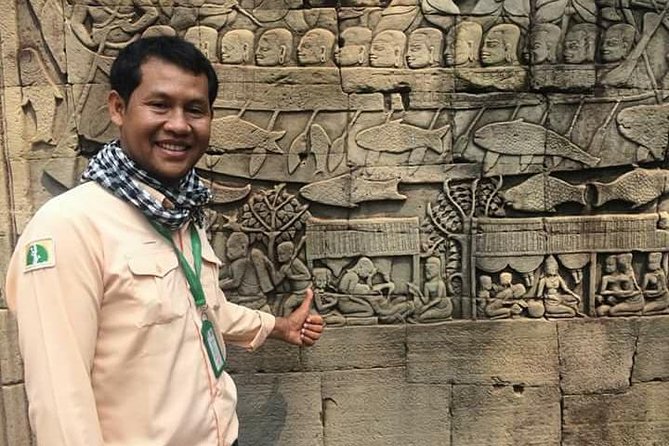
Guides are the other major quality lever. Names that came up include Vithyea, Yuth, and Chhay, and the recurring theme was strong English and real explanations, not just headsets and vague pointing. One review also highlighted that the guide made border steps easier and helped keep the trip moving without you having to constantly chase details.
Still, there can be a gap between driver support and guide support. One person mentioned a driver without English. That doesn’t automatically make the tour bad, but it means communication usually flows through the guide and not through the driver. If you’re the type who likes constant conversation in the car, set expectations ahead of time.
Price and logistics: is $690 a fair deal?
At $690 per person for a private tour, the value hinges on what you’d otherwise pay and how much time you’d lose figuring it out yourself.
Here’s what’s included:
- Hotel pickup and drop-off
- Private tour by air-conditioned vehicle
- 3 nights in a 4-star hotel with daily breakfast
- Licensed tour guide
- Temple tickets
- Transfers tied into border entry and the drive to Siem Reap
Not included:
- Lunch and dinner
- Visa
- Personal expenses
So you’re mostly paying for planning, transportation, guiding, and the temple admissions, plus the hotel base. If you self-organize, you’d likely spend money on multiple tickets, pay a guide separately, and end up paying for transport that is not as comfortable or coordinated. You’d also be on your own for the border paperwork timing and the daily temple sequencing.
The key caution on value is border friction. Visa is not included, and there can be extra border assistance charges depending on how you handle things. That’s not unique to this tour, but it does mean your all-in budget depends on your visa route.
Who should book this tour? I’d say it’s a great fit if:
- you want private guiding and a clear schedule
- you don’t want to spend half your energy on Cambodia-Thailand logistics
- you’re willing to move early and walk a fair amount across several temple stops
- you appreciate a mix of Angkor icons plus a couple of less crowded, more detailed sites like Banteay Srei
Who might want a different approach? If you hate border days and long car rides, or you’re only interested in one single highlight temple, you might find the full 4-day format too heavy.
Should you book this 4-day Bangkok to Angkor Wat expedition?
If your goal is Angkor Wat plus enough extra temples to feel like you truly covered Siem Reap, this is a solid choice. The plan is built around included guiding and tickets, a comfortable hotel base, and a Tonlé Sap boat day that prevents the trip from becoming all stone all the time. It’s also the kind of trip where having a guide through multiple sites makes a noticeable difference.
I’d book it if you’re ready for an early start, can manage a visa process (E-Visa or visa on arrival), and you want a clean, coordinated route rather than DIY problem-solving at Poipet.
I’d hesitate if you’re extremely budget-sensitive and you’re expecting the $690 to cover everything related to entry and border handling. The tour handles transfers and guiding, but visa costs are on you, and borders can add small surprises.
Bottom line: if you want to see Angkor Wat and more, while outsourcing the stressful parts, this 4-day private expedition is a practical way to do it.
FAQ
Where is pickup for this tour?
Pickup is offered from hotels in Bangkok and Pattaya, and the tour overview also mentions pickup options from Ko Chang.
How many days is the trip?
The tour runs for about 4 days.
How many nights are included in Siem Reap?
You get three nights of hotel accommodation in Siem Reap, with daily breakfast.
Is Cambodia visa included in the price?
No. The tour does not include the visa.
Can I use an E-Visa?
Yes. You can apply for an advanced E-Visa online and print it out (two copies are noted). You can also do visa on arrival at Poipet border if you follow the photo requirement.
What is included in the tour price besides the hotel?
Included items are hotel pickup and drop-off, private guided touring by air-conditioned vehicle, a licensed tour guide, and temple tickets.
Is Tonlé Sap and the floating village included?
Yes. You get a private boat cruise on Tonlé Sap Lake, including a visit to Chong Kneas Floating Village.
Which Angkor sights are included?
The tour includes Angkor Wat, Angkor Thom (short stop), Bayon Temple, Ta Prohm, Banteay Srei, Preah Khan, Neak Pean, Ta Som, Eastern Mebon, and Pre Rup.
Are temple dress rules strict?
Yes. The tour notes that short dress is not allowed at temples.
What is the cancellation policy?
You can cancel up to 24 hours in advance of the experience for a full refund.
The newest additions around Bangkok
- Dream World & Snow Town in Bangkok with Return Transfer & Lunch
★ 4.5 · 3 reviews - Bangkok: Nong Nooch Garden
★ 5.0 · 3 reviews - Private tour to Ayutthaya and Lopburi Monkey Temple (from Bangkok)
★ 5.0 · 3 reviews - Guided Tour of Grand Palace & Emerald Buddha Temple in Bangkok
★ 5.0 · 3 reviews - Half Day DIY Grand Palace and Emerald Buddha Temple
★ 4.5 · 3 reviews - HD-01 Koh Rattanakosin old town cycling with The Giant Swing, and more
★ 5.0 · 3 reviews - Glittering Ayutthaya Tour to Famous Sights, Market & Sunset Boat
★ 4.5 · 3 reviews - Private Tour: The Best of Bangkok Temples – Half Day
★ 4.0 · 3 reviews