
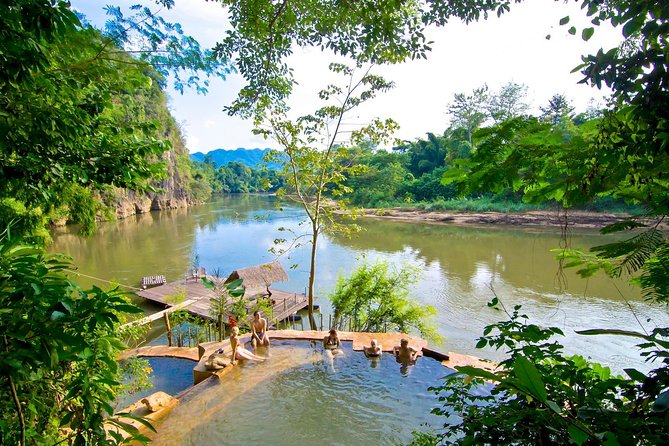
Reviewed · RIVER KWAI & KANCHANABURI TOURS
3-Day Death Railway, Mon Tribal Village, and Kwai River Tour from Bangkok
A bridge ride through history sets the tone. This 3-day Kanchanaburi trip from Bangkok ties together World War II sites, countryside riding near Hellfire Pass, a hands-on morning with monks at Hintok River Camp, and a Mon tribal village visit near the Thai-Myanmar border.
I love the way the Thailand-Burma Railway Center turns heavy history into something you can actually track. I also really like that you spend two nights at Hintok River Camp, where the mornings are active and grounded in real local routines, not just sightseeing.
One consideration: the schedule begins early at 7:00 am, and the Bangkok to Kanchanaburi drive can take longer than you expect because traffic is unpredictable.
In This Review
- Key points worth knowing before you go
- The Death Railway story, in the place it happened
- How the early Bangkok start shapes your day
- Thailand-Burma Railway Center by the River Kwai: your history anchor
- Hintok River Camp and Hellfire Pass: riding, bridges, and a monk morning
- The Mon Tribal Village near the Thai-Myanmar border
- Meals and lodging: what the all-in plan really means
- Group size, guide energy, and why it feels personal
- Price and logistics: is $357.79 a fair value?
- Who should book this tour, and who should think twice
- FAQ
- FAQ
- What is the duration of the 3-day Death Railway, Mon Tribal Village, and Kwai River tour?
- What time does the tour start?
- Is hotel pickup included?
- How many travelers are in the group?
- Does the tour include meals and where are they covered?
- Are tickets and admissions included?
- Is a mobile ticket provided?
- What is the minimum age to join?
- Can vegetarian travelers be accommodated?
- Is this tour refundable if I cancel?
- Should you book this 3-day Death Railway and Mon Village tour?
Key points worth knowing before you go
- Small-group feel (max 8 travelers) keeps the days from feeling rushed.
- Hintok River Camp experience includes a bike ride, a hanging bridge crossing, and a temple stop with daily alms-giving.
- WWII context you can follow at the Thailand-Burma Railway Center by the River Kwai.
- Mon tribal village near the Thai-Myanmar border adds cultural depth beyond the rail story.
- Meals and lodging are bundled for a smoother 3-day pace from Bangkok.
- Vegetarian needs have been handled well based on at least one prior guest experience.
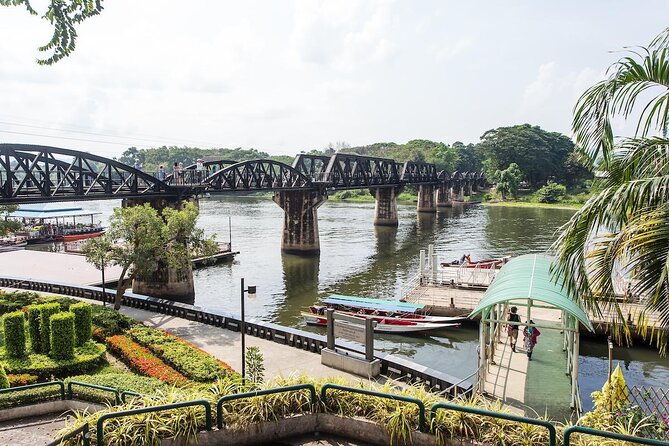
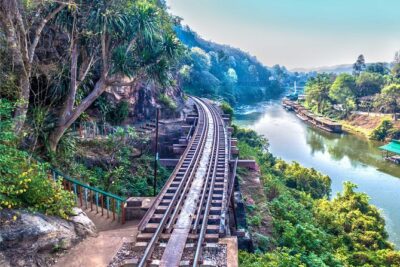
Cross the bridge, hear the history
The Death Railway story, in the place it happened
The Death Railway is one of those travel topics where you want more than a few photos and a quick explanation. What makes this kind of trip valuable is the geography. Kanchanaburi sits by the River Kwai, and the railway history is not theoretical here. You feel the terrain, the distance, and why logistics mattered so much during World War II.
On this 3-day route, you get a structured path through the subject. You start with a museum and research-focused stop built for understanding the Thailand-Burma Railway story. Then you move outward to the camp area connected with Hellfire Pass. Finally, you end on a cultural visit with the Mon community, which helps balance the tone of the rail history with everyday life and heritage.
I also like that the pace is not just clock-chasing. Even when you are riding or walking, the day is spaced enough that you can listen, ask questions, and absorb what you see.
How the early Bangkok start shapes your day
Your tour kickoff is 7:00 am, with pickup offered from major hotels in the Bangkok downtown area. That early start is not a gimmick. Kanchanaburi is a day-trip length on its own, and leaving early gives you a better chance of a calmer rhythm once you are out of the city.
Still, be realistic about transfer time. The exact duration can vary, and the Bangkok to Kanchanaburi leg is specifically noted as traffic-dependent. If you hate uncertainty, you might find this part stressful. If you can handle it, you will appreciate that the tour is planned to work around those real-world travel gaps rather than pretend roads are predictable.
Practical tip: pack a small snack and water, even though meals are included over the two nights. You cannot control traffic, but you can control how comfortable you are during the drive.
Thailand-Burma Railway Center by the River Kwai: your history anchor
The first major stop is the Thailand-Burma Railway Center at River Kwai. This is described as an interactive museum and a information and research facility focused on the Thailand-Burma Railway story. The time window is about 45 minutes, and that matters because it sets expectations. This is not an all-day crawl through exhibits, but it is enough time to get your bearings quickly.
What you are aiming for here is context. The railway is tied to forced labor, extreme conditions, and the broader war environment. A center like this gives you a clearer timeline and a better sense of why certain places were chosen, rather than memorizing facts out of order.
I also like the approach of starting with an organized history stop before you head into the more experiential parts of the tour. It makes the later landscape stops easier to understand. You are not just looking at a pass or a hillside and guessing what you should be noticing.
Ride the rails out of town
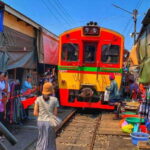
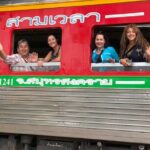
Hintok River Camp and Hellfire Pass: riding, bridges, and a monk morning
This is the centerpiece of the trip. You spend 2 nights at Hintok River Camp at Hellfire Pass, and the camp is built for a more active style of travel. Instead of being dropped at a viewpoint and sent on your way, you take part in morning activities tied to how the area works.
On the morning with the bike ride, the tour includes crossing a hanging bridge and visiting a temple. The big cultural moment in the schedule is joining the daily alms-giving to the local monks. That is a hands-on window into local religious practice, and it also explains why this morning feels different from a standard sightseeing day.
A few practical thoughts for you:
- This is a morning activity, so plan on waking up ready to move.
- If you are sensitive to early starts and small physical efforts, the ride and bridge crossing can be a tougher fit than the museum day.
- Alms-giving is not a casual photo moment. You will get more out of it if you keep a respectful, quiet mindset and follow your guide’s lead.
On top of that, Hintok is where the tour’s tone shifts from “learn about history” to “live near it, in the rhythm of a camp day.” Even if the subject matter is heavy, the camp setting helps you process what you learned earlier without feeling overwhelmed.
The Mon Tribal Village near the Thai-Myanmar border
After checking out on day three, the tour heads to a nearby Mon tribal village near the Thai-Myanmar border. You get about 40 minutes here, which is short, but it is set up for an overview: learning about the ethnic group, their heritage, traditions, and daily life.
This part is valuable because it changes the balance of your itinerary. The Death Railway focus can dominate your attention, and you end up measuring everything against that storyline. The Mon village stop shifts the lens back to people and culture that existed long before the war, and that continue afterward.
What to expect in a short village visit:
- You will likely see explanations of daily life and cultural practices rather than a long performance or staged show.
- You should be ready for a quick, question-friendly window where your guide helps translate meaning.
- You will need to treat this as educational time, not a quick souvenir stop.
If you are the kind of traveler who likes context and human scale, this is a good final note. It gives you something to think about beyond the railway.
Meals and lodging: what the all-in plan really means
The tour includes:
- Breakfast
- Lunch (2 times)
- Dinner (2 times)
- 2 nights accommodation at the camp
That matters because it removes a huge amount of day-to-day decision making. You do not have to hunt for meals between activities, and you avoid the risk of ending up at a random place that is far from what you need. In a 3-day format, that convenience is part of the value.
Here is the detail I found most reassuring from prior guest feedback: vegetarian diners were taken good care of. That is not universal across every tour, so if you have dietary needs, this is a meaningful plus to bring up when you book.
If you have allergies or a strict diet, you should still communicate clearly during booking. The inclusion of meals does not automatically guarantee every dietary variation, but at least there is evidence the team has handled vegetarian requests well.
Group size, guide energy, and why it feels personal
This tour caps at 8 travelers, which is one reason the experience tends to feel more personal than big coach-style tours. A smaller group also makes it easier to ask questions when something clicks or when you want clarification on history details.
Friendly, caring guides are part of the story here, and that is not just pleasant to hear. With a topic like the Death Railway, good guiding matters. You want someone who can explain what you are seeing in a way that makes sense, without turning it into a checklist.
One thing I advise: come with at least one or two questions in mind. For example, ask how Hellfire Pass relates to the broader railway network, or what to look for when you are standing at a viewpoint tied to that history. Your guide can likely tailor answers for the group pace.
Price and logistics: is $357.79 a fair value?
At $357.79 per person for about 3 days, the price is not low. But it is also not just a bus ride and entry tickets. You are paying for bundled logistics: pickup in Bangkok, transportation across the route, 2 nights of accommodation at Hintok River Camp, meals across the days, and insurance.
Here is how I judge value for this kind of tour:
- If you were to do it on your own, you would still need a driver, hotel or camp nights, and meals.
- The museum and cultural stops cost time and coordination, and timing is tight in a 3-day trip.
- Small-group limits and guided explanation usually cost extra, but they help you understand what you are seeing.
The main “price risk” is time and fit. If you hate early mornings, dislike any physical movement like bike rides, or feel uncomfortable with culturally respectful activities, the cost can feel less worth it. If those elements do not bother you, this price can look like solid value because it buys you a full program without daily planning.
Who should book this tour, and who should think twice
This tour suits you if:
- You want a structured way to understand the Thailand-Burma Railway history tied to the River Kwai area.
- You like small groups and guided explanation.
- You are curious about Mon culture and want your trip to end with people and everyday life, not only wartime sites.
- You would appreciate meals being handled for you, including support for vegetarian needs based on previous guest experience.
It might be less ideal if:
- You cannot handle early starts or variable driving times due to traffic.
- You are looking for a purely relaxed, no-effort nature day. The schedule includes biking and a hanging bridge crossing.
- You need a flexible plan you can change last minute, since the booking is described as non-refundable and not changeable for any reason.
FAQ
FAQ
What is the duration of the 3-day Death Railway, Mon Tribal Village, and Kwai River tour?
The tour is listed as 3 days, with timing for transfers and activities running approximately across that period.
What time does the tour start?
The start time is 7:00 am.
Is hotel pickup included?
Yes. Pickup is included from major hotels in the Bangkok downtown area.
How many travelers are in the group?
The tour has a maximum of 8 travelers.
Does the tour include meals and where are they covered?
It includes breakfast, lunch twice, and dinner twice, along with 2 nights accommodation.
Are tickets and admissions included?
The stops listed include admission tickets marked as free for the museum and tour segments shown in the itinerary.
Is a mobile ticket provided?
Yes, mobile tickets are provided.
What is the minimum age to join?
The minimum age is 3 years.
Can vegetarian travelers be accommodated?
One review specifically noted that vegetarian guests were taken good care of, suggesting dietary needs can be handled.
Is this tour refundable if I cancel?
No. This experience is non-refundable and cannot be changed for any reason.
Should you book this 3-day Death Railway and Mon Village tour?
If you want a single, guided 3-day package that combines WWII context near the River Kwai, active time around Hellfire Pass at Hintok River Camp, and a short but meaningful Mon tribal village visit, I think you will like this format. The small group size and the fact that meals and lodging are bundled help keep the trip from turning into daily logistics chaos.
I would only hesitate if you strongly dislike early starts, any biking or bridge walking, or if you need a plan you can change. If those are fine, this is a practical way to see the region with your time in the right places and your questions answered along the way.
The newest additions around Bangkok
- Central Thailand Walking Tour and visit Temple at Bangkok
★ 5.0 · 1 review - Private 2-Day Bangkok City Tour and Ayutthaya Tour from Bangkok
★ 5.0 · 1 review - Train Market, Floating Market, and Salt Lake Tour by driver
★ 5.0 · 1 review - Fullday Private Tour Bangkok Temple & City Tour with lunch+Amazing Bangkok Tour
★ 5.0 · 1 review - Bangkok: One Day Thai Costume Rental (Gentleman)
★ 2.0 · 1 review - Laem Chabang Shore Excursion : Shopping, Massage & Food Tasting
★ 5.0 · 1 review - Bangkok Dream World & Snow Town Theme Park Admission Ticket
★ 3.0 · 1 review - Bangkok 4 Hour Cultural & Temples Tour Private with Guide
★ 5.0 · 1 review
River Kwai & Kanchanaburi Tours, compared.

Erawan Waterfalls and Bridge Over River Kwai Tour from Bangkok
Read our review →
Bridge on the River Kwai and Thailand-Burma Railway Guided Tour
Read our review →
Erawan Waterfall and Elephant Care: Private Tour to Kanchanabur
Read our review →Browse the lists this tour appears in