
Reviewed · BANGKOK
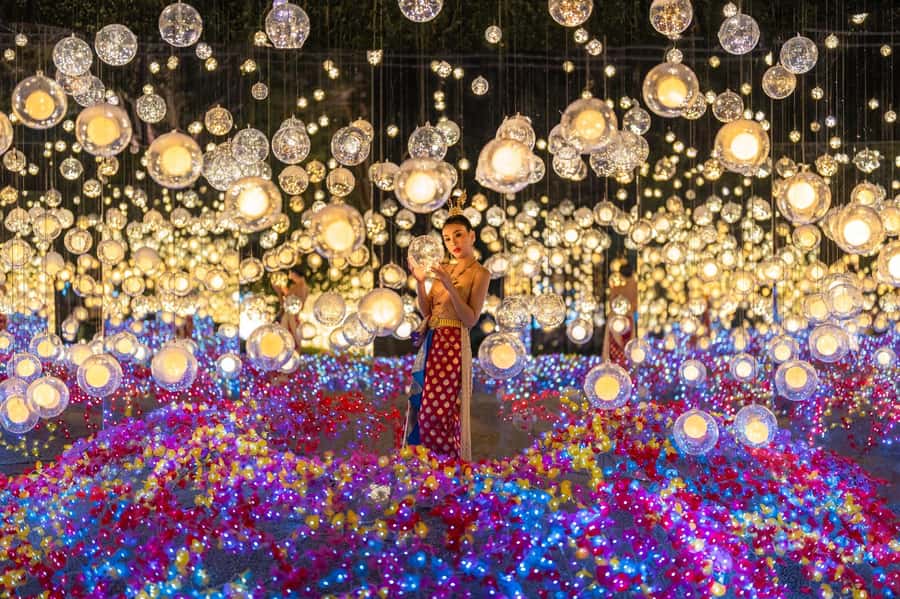
The Lens: Once-a-Year Moment at Na Satta Park Light Festival
Na Satta Park at night is the main event. What makes this day trip special is the mix of temples, markets, and one once-a-year light festival packed into a single 10-hour run, plus the photo-friendly timing that gets you to the best moments. I also love how the day builds toward the big finale, with Maeklong Railway Market giving you that close-up train-and-stalls scene before the lights switch on.
There is one tradeoff: it is a long day with plenty of driving, and you will spend time in crowded, sensory-heavy market areas (especially if you are sensitive to noise and smell around the water).
In This Review
- Key reasons this is worth your camera time
- Riding out of Bangkok and landing in rural rhythm
- Wat Samphran’s dragon pagoda, and why it’s a guaranteed wow shot
- Damnoen Saduak Floating Market: photos from the water, reality on the water
- Maeklong Railway Market: the train moment you must time
- Buffalo Amphawa free time: use it to slow down
- Na Satta Park Light Festival: how to shoot at night without fighting the darkness
- The Secret Cafe and street food stop: a small bonus with big payoff
- Who the day trip really suits (and who should think twice)
- Guides like Yut and Boyd: why the human touch changes the day
- Price and value: is $154 fair for this many moving parts?
- Practical photo tips for the markets and the light festival
- Should you book the Na Satta Light Festival day trip?
- FAQ
- Where is the meeting point?
- How long is the tour?
- What does the tour cost?
- What language is the tour guide?
- Is hotel pickup included?
- What is included in the price?
- What is not included?
- How much time do you spend at Na Satta Park?
- What should I bring?
- Who is the tour not suitable for?
- Are there options for flexible booking?
Key reasons this is worth your camera time
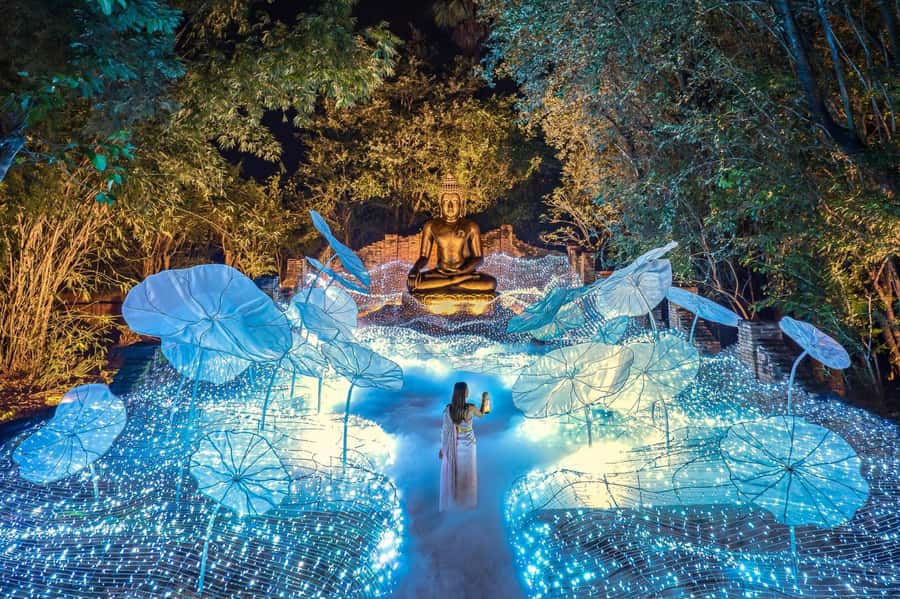
- Na Satta Light Festival delivers night scenes designed for long exposures and color play
- Wat Samphran (Dragon Temple) gives you dramatic wide shots plus close texture detail
- Maeklong Railway Market is a fast, high-attention photo moment where timing matters
- Damnoen Saduak Floating Market adds reflections and lifestyle shots from the water
- Guides who help with photos: guides like Yut, Boyd, and Naresh have a real habit of shooting images and pointing you to the best angles
Bangkok doesn't stop at one stop, so here's what else is close by.
Riding out of Bangkok and landing in rural rhythm
This tour starts at Hug Thai in Central World (ground floor at the Hug Thai gate, near the Centara Grand Hotel entrance). You get a comfortable, air-conditioned van and a late-morning start, which helps you dodge the worst early Bangkok chaos and gives you daylight for the temple and market legs.
Once you leave the city, the feel changes. You trade highways for stretches where you can notice rural life, including agriculture like coconut groves mentioned by people who have done the tour. For me, that countryside shift is part of the value. You get to see a slice of Thailand that is hard to reach in a simple day without planning your own transport and route.
The transport itself seems to be a strong point. The day is paced like a photo itinerary, not like a marathon, and the vehicle quality is highly rated.
Wat Samphran’s dragon pagoda, and why it’s a guaranteed wow shot
Wat Sam Phran, sometimes called the Dragon Temple, is the first major stop. The big draw is the pink and red pagoda wrapped in a massive dragon spiraling up to the top. Even if you are not trying to climb for views, you can frame it from multiple angles for very different looks.
What you will love here:
- Wide compositions: the dragon wrapping the tower turns an ordinary temple into a graphic, story-like image
- Surface detail: you can shoot textures and patterns up close, especially around the dragon body and temple edges
- The “panorama” payoff: from the dragon head area, the view is the kind you remember after the rest of the day fades
One practical note: you’ll be moving from shooting wide frames to looking for detail. Build in a little patience with positioning. This is the sort of place where stepping back, then stepping closer, is the difference between a generic temple shot and one with character.
Damnoen Saduak Floating Market: photos from the water, reality on the water
Damnoen Saduak Floating Market is where the day becomes playful. This is a classic paddle-through scene, so you can capture reflections on the water, colorful food and produce, and the everyday river rhythm around boats and vendors.
This stop tends to work well for:
- Lifestyle photos (people, boats, hands exchanging items)
- Street-style candid framing from the waterline
- Portrait-like shots where the background is layered with activity
But plan for the downside too. One of the most useful bits of advice here is to expect crowds and sensory overload. The floating market can be noisy and smelly because it is right on the water and near cooking areas. If you are going for a relaxed photo session, know that you will still be in the middle of action.
Also consider this food budget reality. People have flagged that food and drinks at the floating market can be pricey. If you want maximum value, keep your meal expectations flexible and consider saving your bigger food spend for other parts of the day. (One food suggestion that came up is pineapple fried rice, which is worth looking for.)
Keep scrolling, there's usually one more worth booking.


Maeklong Railway Market: the train moment you must time
Maeklong Railway Market is the most adrenaline-heavy stop, and it is built for exactly one kind of photo: the train passing so close through the market stalls that it feels unreal.
Here is what makes it special:
- The tracks cut right through the market space, so your frame has “depth” fast
- Stalls fold away and reopen, turning the whole place into a choreography of timing
- The train passing gives you a split-second scene where composition matters
Yes, it can look a bit overhyped in photos. In person, though, it lands because the scale of “near” becomes obvious. You can even interact, and one nice touch from the day is that you can get close enough for high-fives with passengers during the train pass.
One thing to keep in mind: this is not a casual stroll stop. You will want to be ready before the train arrives, and you should keep your movements tight so you are not blocking others or snapping shots at the wrong moment.
Buffalo Amphawa free time: use it to slow down
After the market stops, you get a free hour at The Buffalo Amphawa. This is a useful buffer in an otherwise structured, drive-heavy day. It’s also where you can reset your energy, hydrate, and decide how you want to spend the next stretch of the day.
Even though your schedule is mostly guided, the free time matters because Na Satta is a night event. If you are wiped out, you will feel it later when you want to focus on light and composition.
A practical way to use this hour:
- Grab a simple snack or drink if you feel hungry
- Walk a little, look for a calm angle, and give your eyes a break from screens and bright markets
- Decide whether you want to go into Na Satta with a packed battery plan or a lighter shooting approach
Na Satta Park Light Festival: how to shoot at night without fighting the darkness
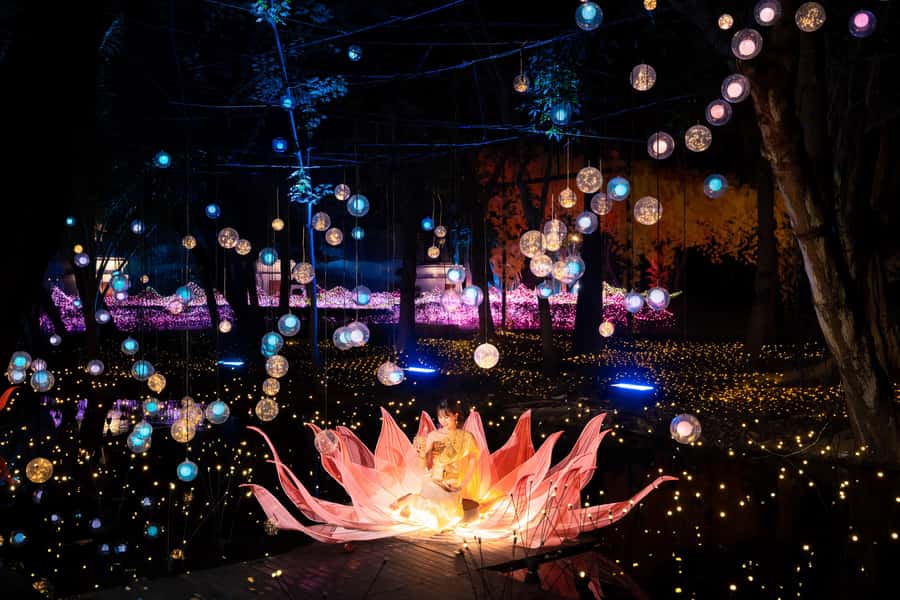
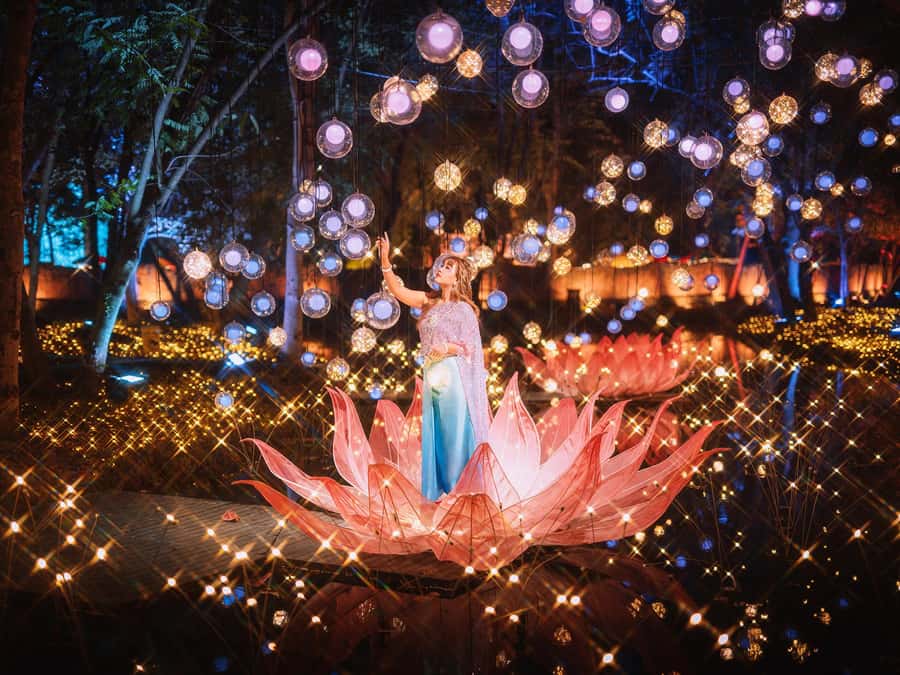
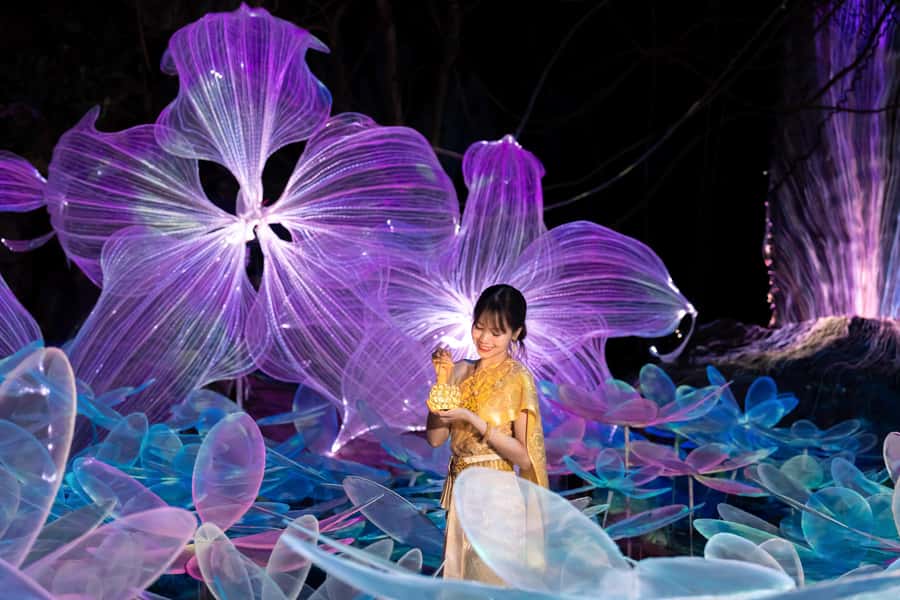
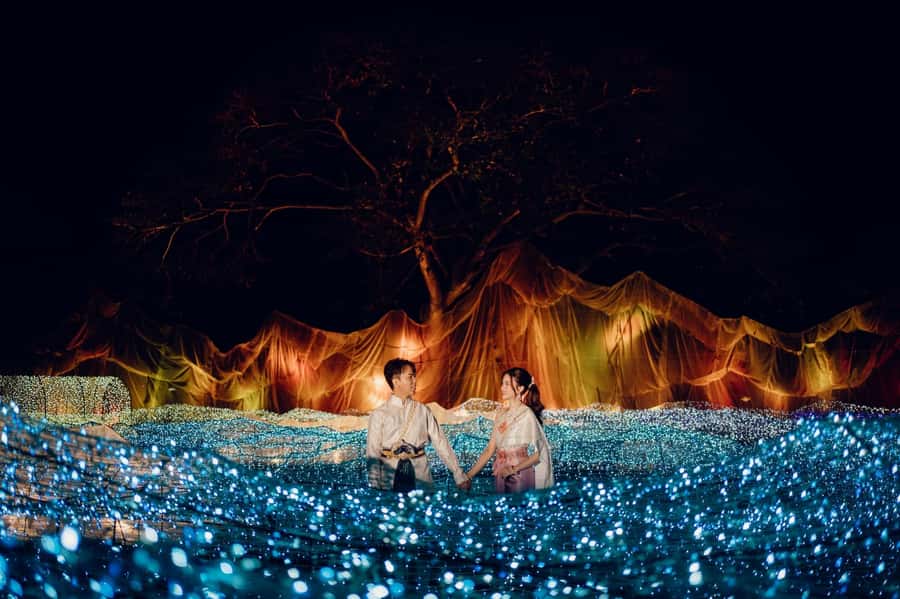
This is the reason to book. As golden hour fades, you head into Na Satta Park Cultural Park for the Na Satta Light Festival. The atmosphere shifts fast from day trip energy to nighttime wonderland.
Expect:
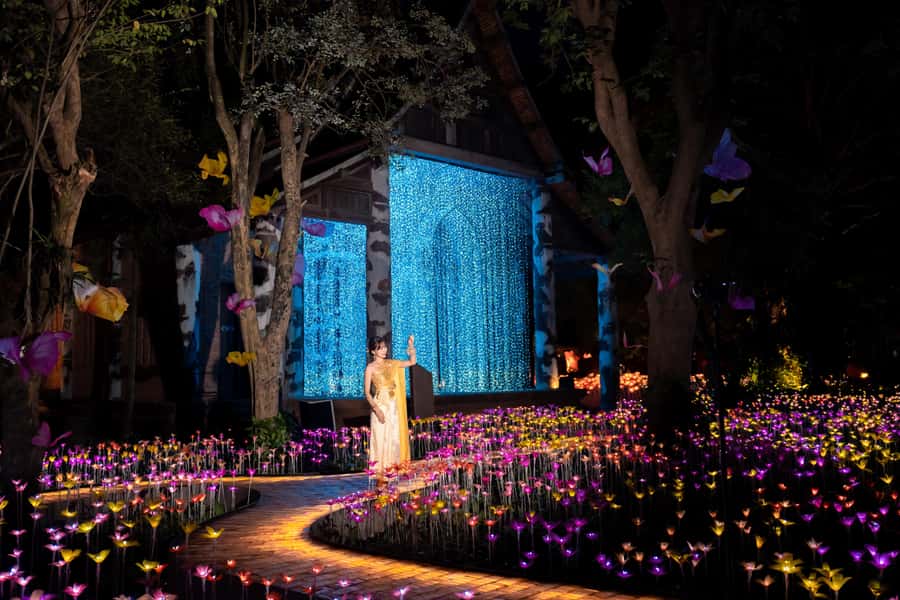
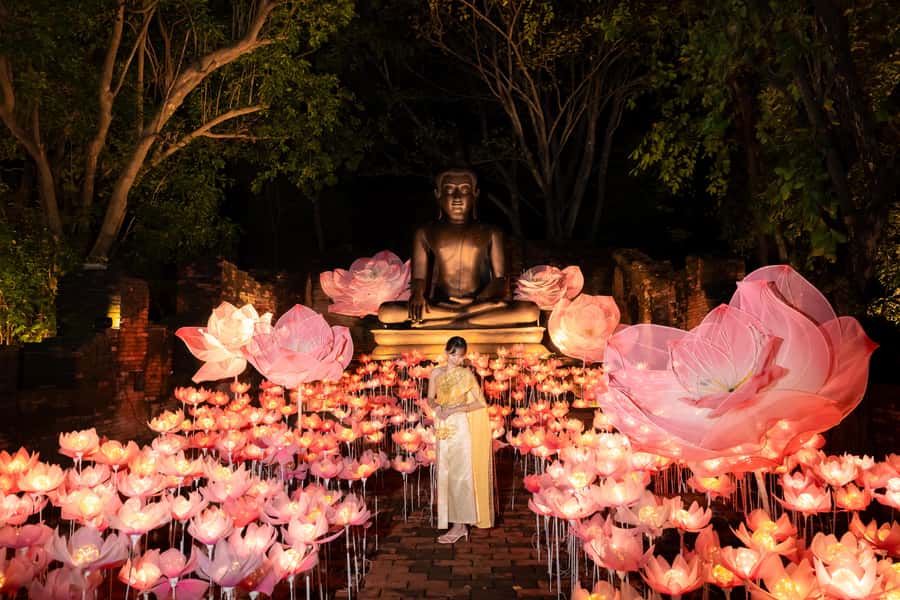
- Illuminated temple replicas bathed in color
- Dreamlike installations and illuminated sculptures
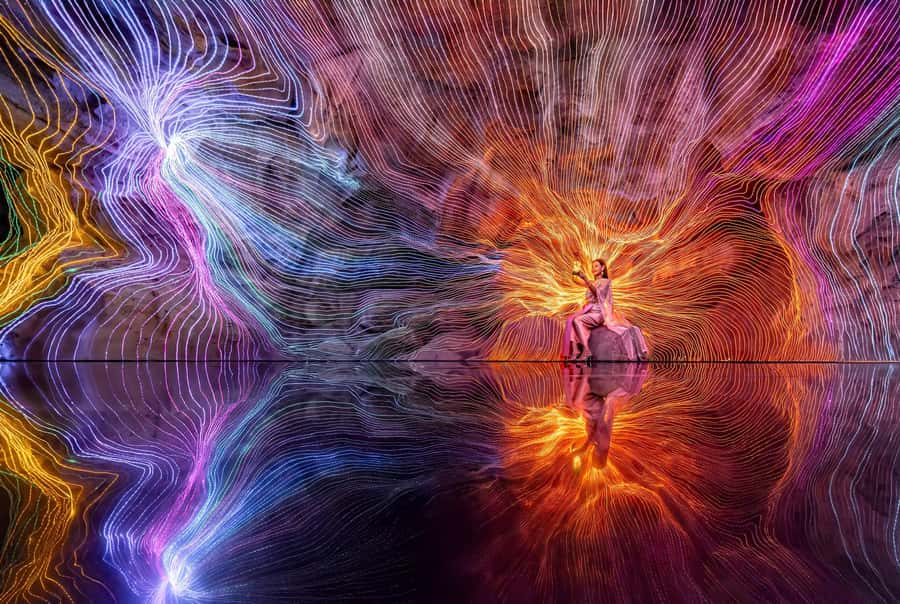
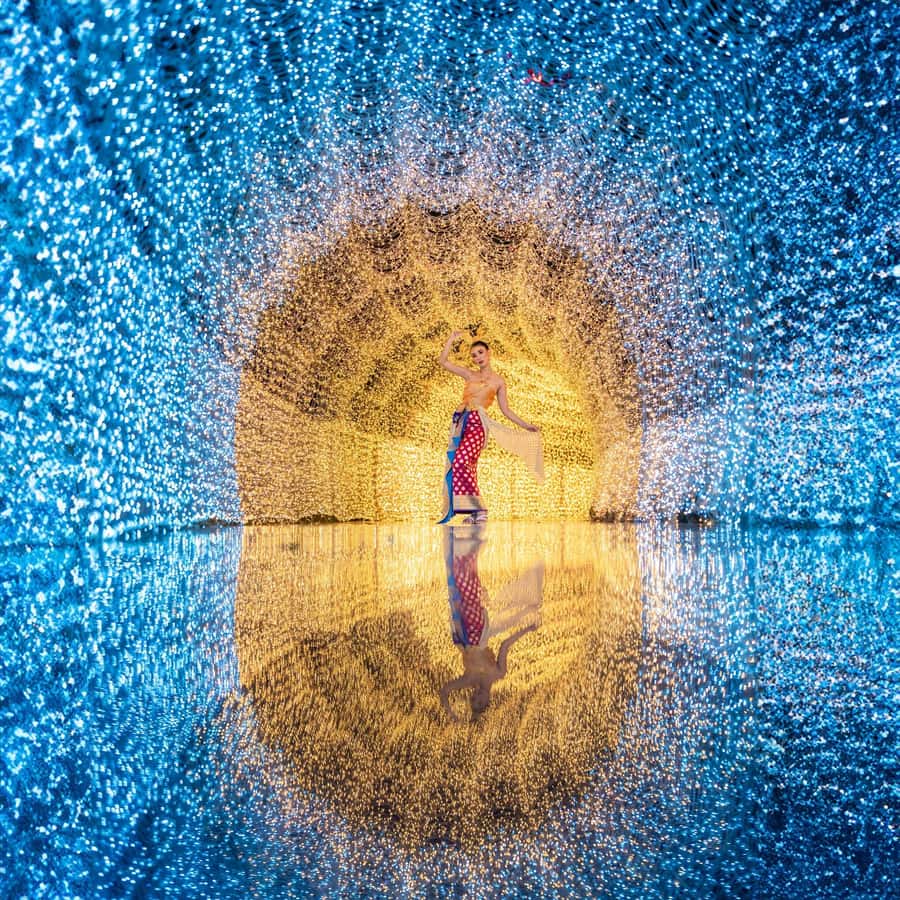
- Set pieces designed for long exposure, so you can play with light trails, glow, and layered scenes
The photography opportunity is real here. You are shooting a mix of bright light points and darker spaces, so you’ll get better results if you plan your settings around stability and light. Bring your camera and be ready to take multiple frames from the same location, because tiny shifts in angle and timing can change how light falls across structures.
What also helps: the guide time here matters. People have shared that guides like Yut do more than just point the way. They help you find good spots and can take photos and videos for you too. That means you can spend more energy on enjoying the festival visuals instead of constantly self-timing shots.
The Secret Cafe and street food stop: a small bonus with big payoff
The tour includes time for a Secret Cafe and a street food market, plus water to keep you comfortable during the day. Because this is part of the “included” plan, you do not have to constantly search for your next snack or drink while you are hopping between markets.
This matters for two reasons:
- You save time, which you need because the day is packed.
- Food breaks help your focus. When you are running between crowded stops, a quick pause can keep you from burning out.
If you are a photographer who also loves food, treat this as a chance to shoot hands, ingredients, and close-up textures. You can get some of your best small-detail images when you slow down for a bite.
Who the day trip really suits (and who should think twice)
This is a strong match if you want a one-day photography plan that covers multiple Thailand styles: temple drama, floating-market water scenes, railway-market action, and a night light festival.
You’ll likely enjoy it most if:
- You like variety and want an itinerary that hits several iconic places
- You are comfortable with crowds and sensory-heavy markets
- You can handle a long day of driving and walking
There are limits. The tour is not suitable for children under 4, babies under 1, and people over 95. If anyone in your group struggles with long sitting and a full schedule, you may want to consider a less packed option.
Also think about your risk tolerance at Maeklong. People are often excited to get close for the high-five moment, but you should still prioritize safe viewing positions.
Guides like Yut and Boyd: why the human touch changes the day
A big theme in the experience is the guide quality. Multiple guides have been named, including Yut, Boyd, and Naresh, and people describe them as energetic, helpful, and strong at translating culture into practical on-the-ground context.
What that changes for you:
- You spend less time confused about what you are looking at
- You get better photo placement because the guide understands how spots work
- You get photo support, including taking lots of images and even sharing photos or videos after the day
It also helps that the day includes commentary and context, not just directions. When you understand why a place looks the way it does, your photos tend to tell a better story.
Price and value: is $154 fair for this many moving parts?
At $154 per person for a roughly 10-hour day, the key question is whether you are buying convenience or buying experiences.
You are buying both. Consider what you get built into the price:
- Round-trip Bangkok transport in an air-conditioned vehicle
- Entry/admission for the evening Na Satta Cultural Park lighting festival
- Guided visits at the main stops
- Included activities like Wat Samphran, the Secret Cafe, and a street food market stop
- Water and insurance
You also avoid the biggest hassle of DIY day trips: coordinating multiple locations in one day, then timing the festival light window. Even if you could copy parts of this route, it would take planning, extra transport costs, and a lot of coordination.
One tradeoff is that food beyond included items is not covered. Lunch and dinner are not included, and alcohol is not included. But the tour gives you built-in breaks and snack opportunities, so you can still eat without turning the day into a food quest.
If you love photography, this price can feel especially fair because the day is structured around the “must shoot” moments, not just generic sightseeing.
Practical photo tips for the markets and the light festival
You will get the best results if you show up ready.
What to bring is clearly stated:
- Sunglasses
- Sun hat
- Camera
- Sunscreen
For shooting strategy, here are the photo moves that matter most for this day:
- At Wat Samphran, shoot both wide and detail. Frame the dragon as a leading line, then return for texture shots once you find your best angle.
- At Damnoen Saduak, prioritize reflections and motion. Your best shots often happen when boats are turning, not when they are stopped.
- At Maeklong, watch for the train timing and set your position first. Then shoot in a tight burst so you capture the stall folding moment and the train pass.
- At Na Satta, plan for low light. Take multiple frames from the same viewpoint, changing angle slightly rather than constantly walking in the dark.
Also, pace yourself. Markets can drain your energy fast. Your battery and your attention span matter as much as your camera settings.
Should you book the Na Satta Light Festival day trip?
I think this is a great booking if you want one day that delivers photos and story from morning to night: dragon-temple spectacle, river-market color, the unforgettable train pass at Maeklong, and then the Na Satta glow when daylight is gone.
Book it if:
- You want a high-impact photography day without doing logistics
- You like structured tours but still want moments to look around
- You care about the light festival enough to plan for night shooting
Skip or rethink it if:
- You dislike long driving days
- You are very sensitive to crowded, noisy, water-adjacent markets
- You need guaranteed food options, since lunch and dinner are not included
If you do book, choose your camera priorities early and give yourself some breathing room during the free hour, so Na Satta feels magical instead of exhausting. And if you get a guide like Yut, Boyd, or Naresh, you are likely in for a day where your photos and your understanding both improve.
FAQ
Where is the meeting point?
You join the tour at Central World. The meeting location is the ground floor at the Hug Thai gate, near the Centara Grand Hotel entrance.
How long is the tour?
The total duration is 10 hours.
What does the tour cost?
The price is $154 per person.
What language is the tour guide?
The tour is guided in English.
Is hotel pickup included?
The meeting point is Central World, but the team will confirm your meeting point or possible hotel pick-up details before the day.
What is included in the price?
Included items are air-conditioned transportation from Bangkok, guided tours, admission fees for Na Satta Cultural Park (evening Lighting Festival), activities such as Wat Samphran plus the Secret Cafe and a street food market stop, water, and insurance.
What is not included?
Personal expenses, hotel transfer, lunch and dinner, and alcohol drinks are not included.
How much time do you spend at Na Satta Park?
You have 1.5 hours at Na Satta Park.
What should I bring?
Bring sunglasses, a sun hat, your camera, and sunscreen.
Who is the tour not suitable for?
It is not suitable for children under 4 years old, babies under 1 year old, and people over 95 years old.
Are there options for flexible booking?
Yes. Free cancellation is available up to 24 hours in advance for a full refund, and you can reserve now and pay later.
The newest additions around Bangkok
- Dream World & Snow Town in Bangkok with Return Transfer & Lunch
★ 4.5 · 3 reviews - Bangkok: Nong Nooch Garden
★ 5.0 · 3 reviews - Private tour to Ayutthaya and Lopburi Monkey Temple (from Bangkok)
★ 5.0 · 3 reviews - HD-01 Koh Rattanakosin old town cycling with The Giant Swing, and more
★ 5.0 · 3 reviews - Guided Tour of Grand Palace & Emerald Buddha Temple in Bangkok
★ 5.0 · 3 reviews - Half Day DIY Grand Palace and Emerald Buddha Temple
★ 4.5 · 3 reviews - Glittering Ayutthaya Tour to Famous Sights, Market & Sunset Boat
★ 4.5 · 3 reviews - Private Tour: The Best of Bangkok Temples – Half Day
★ 4.0 · 3 reviews