
Reviewed · ANCIENT CITY & ERAWAN MUSEUM TOURS
The Erawan Museum: A Cultural Treasure in Bangkok
Three heads. One giant museum.
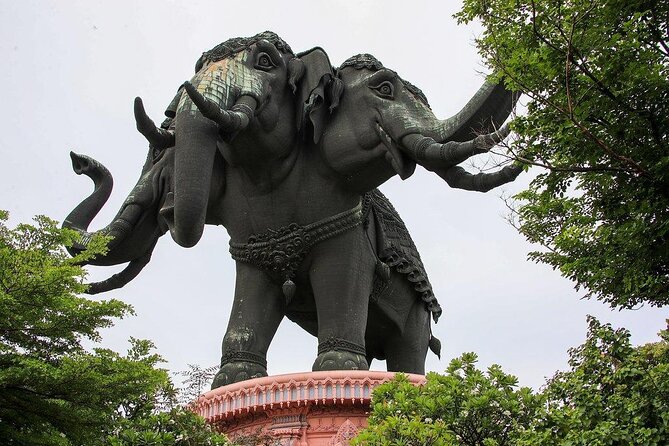
The Erawan Museum in Samut Prakan is built around a three-headed elephant statue on top, then spirals inward with three levels that connect Thai religious themes to sculpture and fine-art displays.
I love the architecture for how it turns a museum visit into a visual walk, starting at the elephant and working your way through the interior spaces. I also like the gardens, where model elephants and calm grounds make the whole place feel less like a warehouse and more like a cultural stop you can actually breathe in.
One thing to consider: crowds can build up, and in busy hours it can be harder to take relaxed photos, especially if you’re aiming for clean, wide shots.
In This Review
- Key highlights you should know
- Three-Headed Elephant and Three Worlds Inside
- Getting to Chang Erawan Station Without Losing Time
- What You Actually See: Underworld, Earth, Heaven
- The underworld level
- The earth level
- The heaven level
- Gardens, Stairs, and Photo Tips That Work
- Audio Guide and Ritual Extras Included
- Price, Value, and How Long You’ll Want to Stay
- Crowds and Comfort: What to Expect on a Real Day
- Who Should Go, and Who Might Want Another Plan
- Should You Book This Erawan Museum Ticket?
- FAQ
- What is the Erawan Museum experience?
- Where is it located and how do I get there?
- How long should I plan to spend?
- What time is the museum open?
- Is a mobile ticket provided?
- Is the audio guide included, and what languages are available?
- What’s included in the ticket price?
- What’s not included?
- Who can buy and use this ticket?
- Can I change or cancel my booking?
Key highlights you should know
- Three-headed elephant exterior: the size really hits you in person, and photos never quite catch it
- Three-level layout: underworld, earth, and heaven themes, marked by art and religious displays
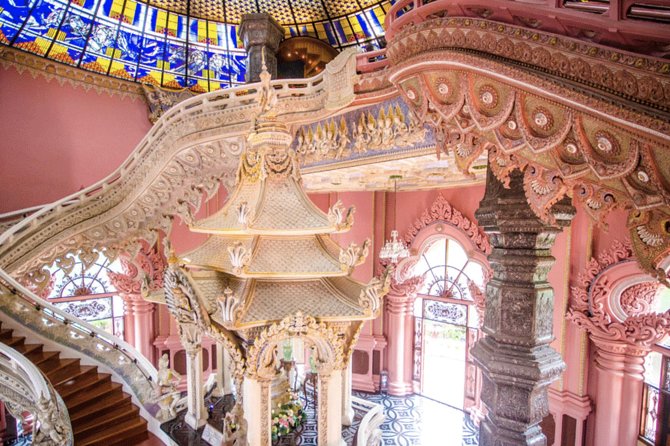
- Fabulous staircase experience: the building’s interior flow makes the climb feel like part of the show
- Lush gardens with elephant models: great for breaks and photo angles without rushing
- Audio guide in multiple languages: help for English speakers and beyond
- In-ticket ritual extras: flower, incense sticks, and lotus for floating in water
Every Thai landmark, built to scale
Three-Headed Elephant and Three Worlds Inside
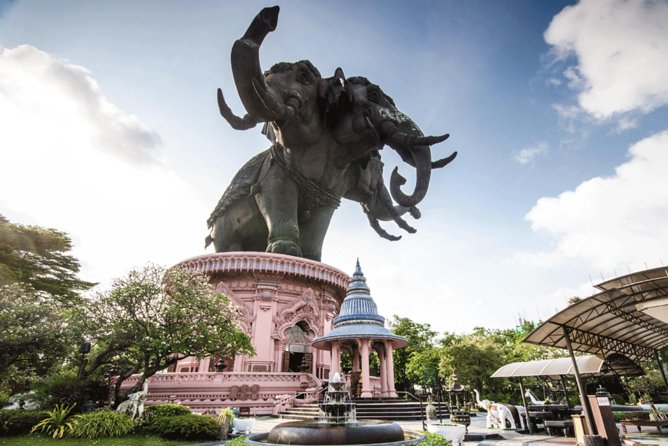
Start with the elephant. Not a small one. This is the star of the show, sitting high above the museum and basically giving you a built-in landmark for your whole afternoon or evening.
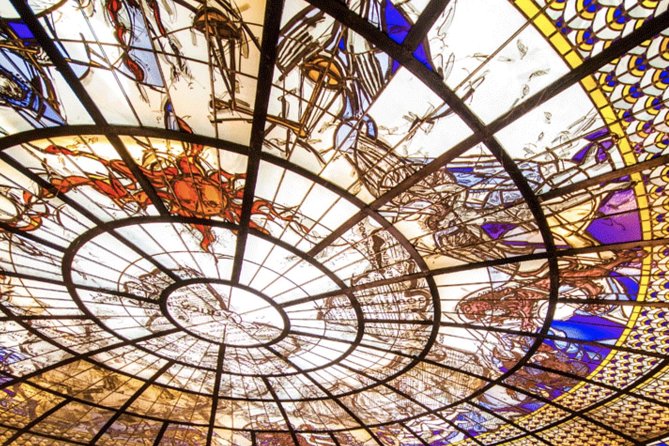
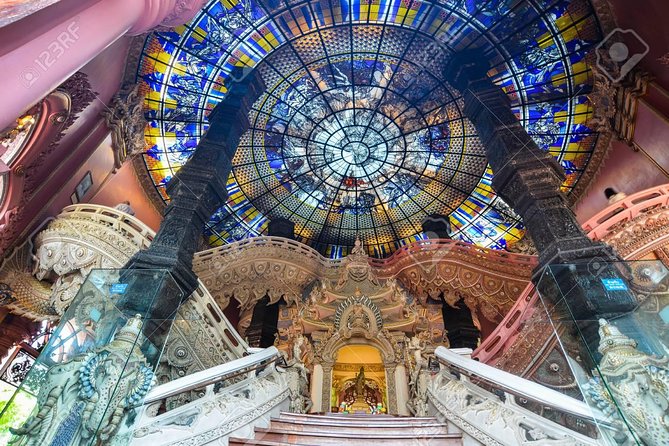
The museum’s interior is where the experience turns from “cool building” into “why does this matter?” It’s organized into three levels tied to a spiritual storyline: the underworld, earth, and heaven. Each level is decorated with Thai-style art and religious relics, plus statues and other antiques that help you connect what you’re seeing to broader Buddhist and Thai cultural themes.
The best part is the way the place encourages walking. Even if you’re short on time, you can still get a clear sense of progression. If you’re the type who likes to look closely, you’ll keep noticing details, from the way the spaces are arranged to the religious artwork and the statue collections.
Getting to Chang Erawan Station Without Losing Time
Yes, Samut Prakan sounds far on a map. In practice, it’s easy if you use the BTS.
Here’s the simple route: take the BTS Skytrain to Chang Erawan Station, then walk about 5 to 10 minutes. That matters because Bangkok traffic can turn a short trip into a long one. Rail plus a short walk keeps your day on track.
You should also know the visit runs daily, 9:00 AM to 7:00 PM. With those hours, you’re not forced into a tight schedule. If you want a calmer vibe, aim for earlier in the afternoon rather than the last hour.
And if you’re planning your day around daylight, remember the museum is mostly indoor, so the “best time” is less about sun and more about crowds and your energy level.
What You Actually See: Underworld, Earth, Heaven
Let’s make the layout practical. When you enter, think of the museum as a guided path through three spiritual settings.
Plenty else to do around Bangkok


The underworld level
This is where the tone can feel more dramatic, with religious relics and art meant to represent the deeper layers of belief. You don’t need to be an expert to enjoy it. What helps is slowing down for a few minutes, because the design expects you to pause and look.
The earth level
This is the bridge space, where you’ll likely spend a good chunk of time absorbing the Thai antiques, ancient artifacts, and revered Buddhist statues. Even if you’re not a “museum person,” this level can be satisfying because it’s visually busy in a structured way. It gives you plenty to look at without feeling random.
The heaven level
The upper setting tends to feel more uplifting, with more ornate religious displays. If you like the feeling of finishing a visit on a high note, this is a strong place to wrap up. Plan a little extra time here if you like to linger, because the staircase and interior design can pull you upward at your own pace.
Across all three floors, the museum’s collections are the backbone. You’re not just looking at one big object. You’re moving through a whole arrangement of Thai religious art, antiques, and statues that create a full cultural picture.
Gardens, Stairs, and Photo Tips That Work
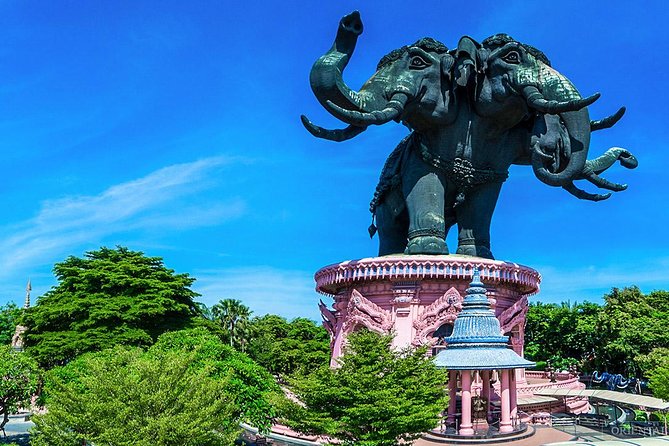
The elephant is the headline. But the museum experience has two other stars.
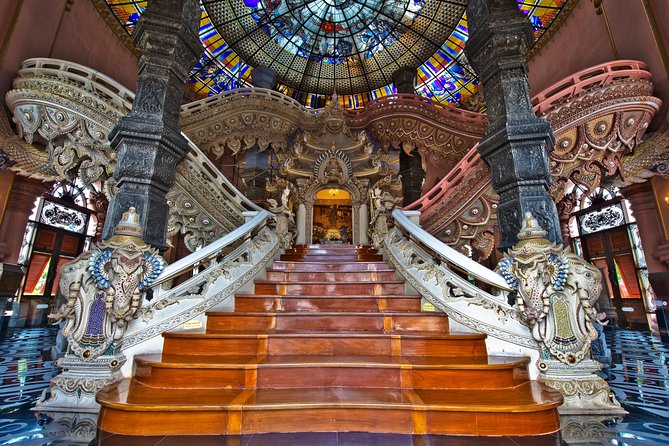
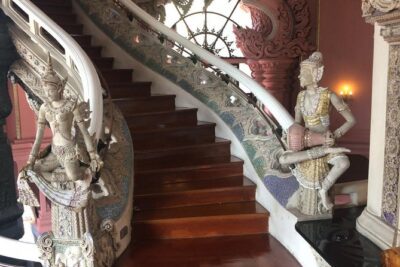
First, the staircase. People often expect an exterior photo and then a quick walk-through. Instead, the staircase becomes a centerpiece. It gives you different angles and helps the building feel like a destination, not just a ticketed room.
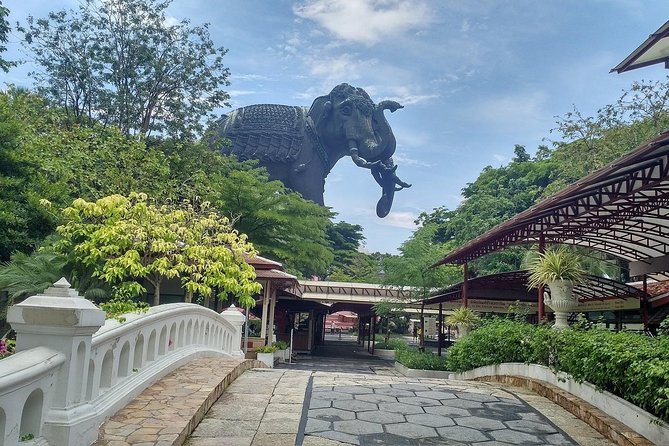
Second, the gardens. After you’ve done the interior floors, the outdoor area helps you reset. The grounds are lush and peaceful, with model elephants scattered around. That makes it easier to take photos in a way that feels light, not forced.
Photo reality check: if it’s crowded, you’ll want to be strategic. Go for:
- Wider shots when there’s less foot traffic
- Close-ups when groups cluster
- Longer pauses at garden spots where movement is naturally slower
If your goal is Instagram-level compositions, busy hours can get in the way. If your goal is “I want to see this place and enjoy it,” you’ll still have a great time.
Audio Guide and Ritual Extras Included
You get an audio guide experience to help you make sense of what you’re seeing. The audio guide is available in English, Chinese, Russian, Thai, and Korean. Your ticket includes the audio guide device service, listed for English and Chinese, so you’ll have support even if you’re not using English all the time.
A smart rule: don’t treat the audio guide like a script. Use it like a flashlight. When you hear a topic connected to what you’re looking at, slow down and match the audio to the details around you.
The museum also includes ritual-style extras: flower, incense sticks, and lotus for floating in water. Even if you’re not following every step, these items add texture to the visit. They turn the museum into a more active cultural moment, not just a viewing experience.
If you’re short on time, focus on the audio guide enough to understand the three-level concept. If you have more time, use the extra items and gardens to round out the visit so it feels like a complete stop, not a quick check-in.
Price, Value, and How Long You’ll Want to Stay
The ticket price is $16.21 per person, and the experience is commonly booked about 19 days in advance. That doesn’t automatically mean you should book early, but it does suggest it stays on people’s radar.
One key value point: this isn’t only “entry.” Your included package covers:
- Entry ticket to the museum (foreigners only)
- Audio guide device service
- Flower, incense sticks, and lotus for floating in water
Transportation is not included, so you’ll handle your own getting there.
Also, there’s a pricing claim worth knowing: the operator indicates this option is 40% cheaper than gate prices. I can’t verify the gate price on the day you go, but it’s a strong reason to consider booking ahead instead of showing up and rolling the dice.
How long should you plan? The museum suggests about 30 minutes when you use the audio guide. That’s a realistic minimum if you want the story and the main visuals without dragging it out. Still, the experience duration on your booking ranges up to 10 hours depending on how you move, which tells me you can turn this into a longer cultural outing if you like to linger in gardens and take your time upstairs.
My practical advice:
- If you’re doing Bangkok with a packed itinerary, plan about 45 to 60 minutes so you’re not rushed.
- If you’re a slower museum walker, plan 1.5 to 2 hours, with extra time for garden breaks.
Crowds and Comfort: What to Expect on a Real Day
This place can attract day-trippers, and you may notice tour groups. That’s not unusual for a famous architectural site. The upside is easy access and a lively atmosphere. The downside is photo friction.
Crowds matter most at:
- The interior photo viewpoints
- The staircase areas
- Tight moments where people naturally pause
You’ll enjoy the museum more if you treat it like a sequence. When you reach a crowded section, move forward instead of fighting for a clear angle. Your best photos might come from garden areas or times when the flow of people shifts.
Comfort-wise, the museum is open until 7:00 PM, which helps you schedule around peak hours. If you can choose, earlier visits usually feel calmer than the last rush.
Who Should Go, and Who Might Want Another Plan
This is a strong match for:
- People who like architecture and want a “wow” building that still has content inside
- Anyone curious about Thai religious themes and how they’re represented through art and statues
- Travelers who want a cultural stop that’s not overly complicated, with an audio guide to keep you oriented
You might rethink it if:
- You dislike crowds and you only travel during the busiest hours
- You’re extremely short on time and need a very fast attraction, since the meaningful experience is tied to the three-level walk and audio guide
Also, foreigners only entry is a key note. If you’re traveling with friends who are Thai nationals, they may not be eligible with this specific ticket type.
Should You Book This Erawan Museum Ticket?
Yes, I think you should book it if you’re doing Bangkok and you want a cultural stop that feels more like a destination than a checklist.
Book ahead because:
- It includes the audio guide and the ritual items
- The operator says it’s 40% cheaper than gate prices
- It’s easy to reach from BTS, so logistics won’t eat your day
Skip or reconsider if:
- You can’t handle crowds and your only available time is peak
- You want a super quick visit with no time for audio or gardens
If you’re on the fence, here’s a simple decision rule: if you want to see a massive three-headed elephant landmark, walk through three meaningful levels, and then take a breather in elephant-filled gardens, this ticket fits.
FAQ
What is the Erawan Museum experience?
It’s a visit to the Erawan Museum in Samut Prakan Province, Bangkok area, centered on a three-headed elephant structure and three interior levels representing underworld, earth, and heaven. The museum also includes Thai antiques, ancient artifacts, and Buddhist statues, plus gardens.
Where is it located and how do I get there?
It’s in Samut Prakan Province. It’s accessible by taking the BTS Skytrain to Chang Erawan Station, then walking about 5 to 10 minutes.
How long should I plan to spend?
A suggested time is about 30 minutes when using the audio guide. Your booking duration is listed as about 30 minutes to 10 hours, depending on how long you stay.
What time is the museum open?
The museum is open daily, Monday through Sunday, from 9:00 AM to 7:00 PM.
Is a mobile ticket provided?
Yes, the experience uses a mobile ticket.
Is the audio guide included, and what languages are available?
An audio guide device service is included. The audio guide is available in English, Chinese, Russian, Thai, and Korean, and the included service is listed for English and Chinese.
What’s included in the ticket price?
Included items are the entry ticket for foreigners, audio guide device service, and flower, incense sticks, and lotus for floating in water.
What’s not included?
Transportation to and from the museum is not included. Donation is optional, and personal expenses are not included.
Who can buy and use this ticket?
The entry ticket listed is for foreigners only.
Can I change or cancel my booking?
This experience is non-refundable and cannot be changed for any reason. If you cancel or ask for an amendment, the amount you paid will not be refunded.
The newest additions around Bangkok
- Dream World & Snow Town in Bangkok with Return Transfer & Lunch
★ 4.5 · 3 reviews - Bangkok: Nong Nooch Garden
★ 5.0 · 3 reviews - Private tour to Ayutthaya and Lopburi Monkey Temple (from Bangkok)
★ 5.0 · 3 reviews - Guided Tour of Grand Palace & Emerald Buddha Temple in Bangkok
★ 5.0 · 3 reviews - Half Day DIY Grand Palace and Emerald Buddha Temple
★ 4.5 · 3 reviews - HD-01 Koh Rattanakosin old town cycling with The Giant Swing, and more
★ 5.0 · 3 reviews - Glittering Ayutthaya Tour to Famous Sights, Market & Sunset Boat
★ 4.5 · 3 reviews - Private Tour: The Best of Bangkok Temples – Half Day
★ 4.0 · 3 reviews
Ancient City & Erawan Museum Tours, compared.
The Ultimate Ancient city of Ayutthaya Private Day Trip
Read our review →
Ancient City Muang Boran and Erawan Museum Tour
Read our review →
Private Guided Day Tour to Erawan Museum & Ancient City
Read our review →
Ancient City (Mueang Boran) Entrance Tickets With Hotel Transfer
Read our review →
Ancient City & Temples of Ayutthaya ( UNESCO ) by River Cruise with Buffet Lunch
Read our review →Browse the lists this tour appears in