Reviewed · PRIVATE
Private Unseen Thailand beyond Bangkok local cultural therapies at Suphanburi
A short drive, then the country mode turns on. This private Suphanburi day is built around temple legends and the Dragon Descendants Museum, with round-trip transfer and an English-speaking guide, so you get local culture without the usual city scramble. The only real catch is the early 7:00 am start plus a full day of sightseeing, and the tour does require good weather.
What makes it feel truly different from a standard Bangkok outing is how quickly the scenery changes. You roll into flat, rural Central Thailand with agriculture, lakes, forests, and cottage industries, the kind of pace where you notice details instead of chasing them.
In This Review
- Key highlights to look for
- Why Suphanburi feels like a different side of Thailand
- The early 7:00 AM start, plus how a 10-hour day stays comfortable
- Wat Pa Lelai Woraviharn, the lane of 20 legends and the Floating Buddha vibe
- Dragon Descendants Museum, inside a giant fiberglass dragon
- Wat Phra Non, a Rattanakosin-era reclining Buddha in granite
- Wat Phra Loi and the legend of the floating Buddha, plus carp feeding
- City Pillar Shrine and Benjarong factory, where souvenirs become craft lessons
- Price and value at $156.89 per person for a private 10-hour day
- Who this tour suits best, and who should reconsider
- Should you book this Suphanburi cultural day?
- FAQ
- What time does the tour start, and how long does it last?
- Is round-trip pickup or transfer included?
- What does the tour include for meals and guiding?
- Are admission tickets included for the sites?
- Is this a private tour?
- What if the weather is poor, or I need to cancel?
Key highlights to look for
- Suphanburi at 102 km from Bangkok, close enough for a day trip, far enough to feel unhurried
- Wat Pa Lelai Woraviharn, a lane of 20 legends with a Floating Buddha theme
- Dragon Descendants Museum, housed inside a giant fiberglass dragon built over two years
- Three temple vibes in one morning, including a reclining granite Buddha and a Naga-protected Buddha
- Wat Phra Loi pond, where you can feed thousands of carp
- Benjarong factory time, learning and picking gifts from Thai five-color porcelain
Plenty else to do around Bangkok
Why Suphanburi feels like a different side of Thailand
Suphanburi is the kind of place that makes you question why you stayed in Bangkok so long. You’re only about 102 km from the city, but the feel shifts fast. Instead of traffic noise and malls, you get rural rhythms, flat landscapes, and community crafts that still look like they serve local life first.
The region also has real depth behind the scenes. Suphanburi played an important role during the Ayutthaya period wars, and the area links back to very old settlement periods, described as Bronze Age and Stone Age. When you spend a day here, it doesn’t feel like you’re reading a textbook. You’re watching history show up through temples, shrines, and local traditions.
This is also one of those tours that works well if you want something genuinely less toured. It’s not trying to be flashy. It’s aiming for meaning, prayer, and learning how Thai culture shows itself outside the main tourist circuits.
The early 7:00 AM start, plus how a 10-hour day stays comfortable
You start at 7:00 am and you’re out for about 10 hours, returning to the same meeting point. That early start matters, because it helps you visit several religious sites before the day gets too heavy. It also keeps the whole outing efficient, instead of feeling rushed at each stop.
The tour includes round-trip transfer and an English-speaking guide, which is the practical difference between stumbling around alone and actually understanding what you’re seeing. You’re also not stuck planning meals. Lunch is included, so you can focus on the places rather than hunting for food between temples and museums.
Because it’s a private tour, you also avoid the annoying parts of group travel. It’s just your group, and you can generally keep your pace. If your group likes quiet time in sacred spaces or prefers extra minutes looking at displays, you won’t get steamrolled by a large bus schedule.
Wat Pa Lelai Woraviharn, the lane of 20 legends and the Floating Buddha vibe
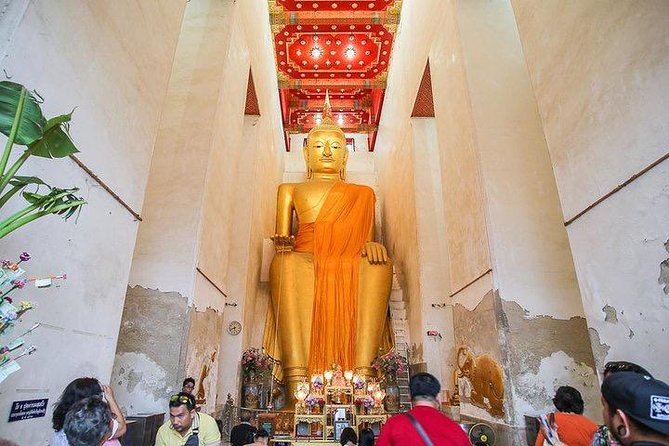
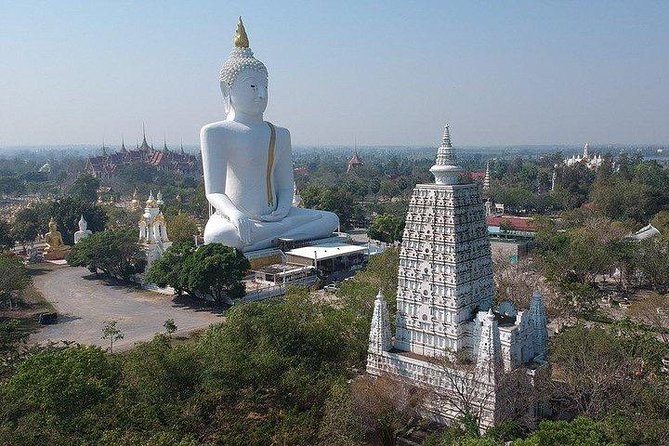
Wat Pa Lelai Woraviharn is the kind of temple that makes you look around differently. The standout idea is the lane of 20 legends, where visitors pray and make wishes along one connected route. Even if you’re not super religious, the layout turns the visit into a guided story. You’re moving through a sequence, not just walking past buildings.
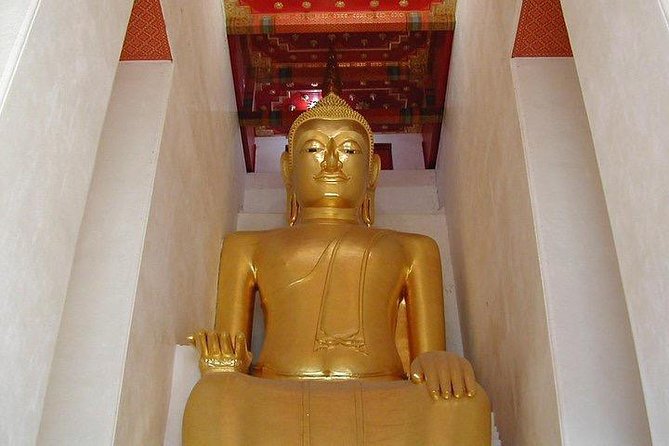
The temple sits on the banks of the Tha Chi River, which gives the place a calmer feel. And then there’s the main attraction people notice right away: Luang Pho To, a statue listed at 23.46 meters tall. It’s the sort of scale that changes how you take in the temple grounds. Instead of small details fighting for attention, your eyes keep getting pulled upward.
One drawback to know: temple visits can mean some walking and stopping. The lane concept is great for photos and structure, but it can also mean more steps than you might expect. If your group is sensitive to long stretches of walking, plan to take breaks when you feel your energy dip.
Admission is included, so you can focus on time and atmosphere rather than counting small ticket costs.
Keep scrolling, there's usually one more worth booking.

Dragon Descendants Museum, inside a giant fiberglass dragon
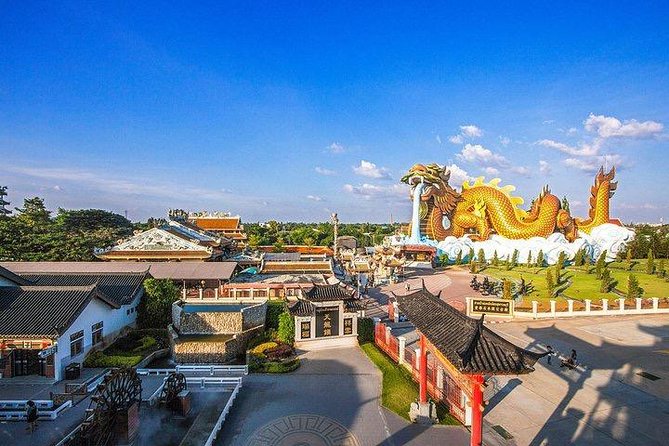
After temples, you get a very different setting, and that contrast is a big part of the tour’s value. The Dragon Descendants Museum sits at the Dragon Descendants Village, a place that looks like a giant dragon made of fiberglass. The exterior is listed at 135 meters long, 35 meters high, and 18 meters wide. The scale is hard to process until you’re standing near it.
The structure took two years to build, and that fact helps you understand why the museum feels so intentional. It’s not just a “cool building.” It’s a landmark designed to hold a long explanation about identity and heritage.
Inside, you move through a 20-room journey that’s described as spanning about 5,000 years of Thai history. The storyline stretches across dynasties, then includes the period when Thai-Chinese merged, and later becomes what the tour describes as the people of Thailand. If your interest is cultural history, you’ll like how it compresses a huge timeline into a walk-through format.
What might not land for everyone: it’s less of a quiet spiritual stop and more of a museum experience. If your group wants strictly sacred spaces all day, you may find this chapter more active and structured.
Admission is included, and in practice that makes this an easy “yes” stop, since you’re paying for both transportation and access in one package.
Wat Phra Non, a Rattanakosin-era reclining Buddha in granite
Wat Phra Non brings you back to religion, but with a very specific visual element. The temple is described as being built during the Rattanakosin Period. That detail matters because it signals the style and era of the artwork you’re seeing, not just a generic temple visit.
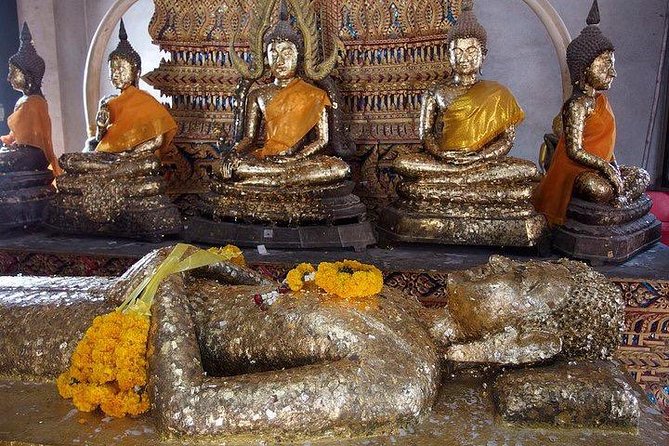
The key feature is the image hall (wihan), which houses a special reclining Buddha image carved from granite, listed at about 2 meters long. The interesting detail here is positioning. The tour notes that while many reclining Buddha images lie on one side, this one is described as lying supine, which in Thai is referenced by the name “Non.” The temple’s name is tied to that placement, so the image and the wording are connected.
If you like when a place has one clear idea you can grasp quickly, this stop delivers. You’re not trying to decode everything at once. You’re focusing on a single sculptural choice and the meaning behind it.
A practical consideration: temples often require a bit of patience while you wait for access points, and you may notice people doing prayers in their own rhythm. The good part is that these spaces are usually set up for standing quietly and looking slowly.
Admission is included, so you get a focused, low-friction stop.
Wat Phra Loi and the legend of the floating Buddha, plus carp feeding
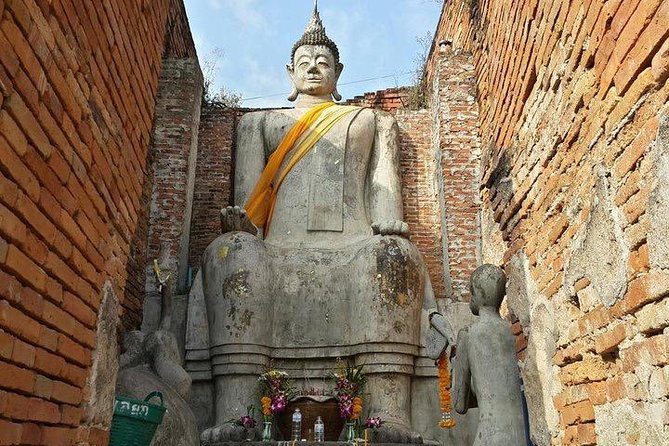
Wat Phra Loi is built around a legend that immediately gives the temple a storybook feeling. It’s revered because it houses a Buddha image called Phra Phutthanawaramongkhorn. The tale states that the Buddha floated down the Tha Chin River and washed ashore here, so the temple was built to honor it.
The depiction adds another layer. The Buddha is described as seated under a Naga, a mythic serpent whose hood protects the Buddha. That Naga element is a great example of Thai sacred art mixing spirituality and symbolism in a way that feels practical, not abstract. You can see the intention in the design: protection, shelter, and blessing made visible.
Then there’s the everyday, human moment that turns the visit into something memorable. In front of the temple, there’s a large pond where you can feed thousands of carp. Watching the carp gather is one of those simple experiences that doesn’t require you to “understand” anything first. You just participate, and the site becomes more than a statue and a legend.
One caution: feeding animals around temples can be messy in a real-life way. If you’re traveling with light clothing or you care about keeping things spotless, you’ll want to manage expectations. It’s still worth it, because the carp pond gives you a living feeling that most museums and temples can’t replicate.
Admission is included, so you can treat this as a high-impact stop without extra costs.
City Pillar Shrine and Benjarong factory, where souvenirs become craft lessons
The final stretch ties spirituality and everyday culture together. You start with the City Pillar Shrine, Suphanburi, which fits the “local center of meaning” role that shrines play in Thai towns. Even if you’re not deep into shrine symbolism, these places often give you a snapshot of how communities anchor themselves.
Then comes a practical, hands-on culture angle at the Benjarong Factory. Benjarong is described as Thai premium ceramics, with painting in five colors. The name literally means five colors, and the visit is your chance to learn how the craft is made and to select a gift.
This is the part of the day where I like to pay attention to details, because Benjarong pieces only make sense when you see the care behind them. If your group likes taking home something that feels tied to the place rather than a mass-produced keychain, this stop can pay off.
The factory visit is listed as free in the stop details, which makes it a strong value add. You’re not paying extra just to browse. You’re also not forced into a purchase. The real win is the learning and the ability to pick thoughtfully if something catches your eye.
Price and value at $156.89 per person for a private 10-hour day
At $156.89 per person, this tour isn’t a “cheap and cheerful” option. It’s priced like a real day with planning behind it, and honestly that’s what you’re buying.
You’re getting:
- Round-trip transfer (so you’re not figuring out transport between five separate stops)
- A private format where it’s just your group
- An English-speaking guide
- Lunch
- Included admissions at the main temple and museum stops (as listed for the four first sites)
If you compare that to piecing it together yourself, the math often improves when you account for time. Suphanburi is close, but it’s far enough that doing everything in one day can become logistics-heavy. The guide also helps you connect the dots across legends, art styles, and museum displays, which is hard to do solo unless you’re already a serious Thailand-history person.
Booking pace also matters. The tour is described as commonly booked about 40 days in advance, which suggests it fills. If you have a tight Bangkok schedule, booking earlier helps you get the day you want without stress.
Who should strongly consider this tour? People who want a structured cultural day with a mix of temples, a big themed museum, and a craft factory. If your group wants constant city energy or theme park pacing, this one may feel calmer than expected.
Who this tour suits best, and who should reconsider
This tour is a good match if you like:
- Religious art and the stories behind temples
- Cultural education that doesn’t feel like homework
- A rural change of scenery from Bangkok without needing an overnight plan
- A day that includes real activities, like carp feeding and a museum walk-through
It may be less ideal if:
- You hate early mornings and long sit-down gaps between sites
- Your group only wants one type of attraction all day
- You’re traveling during a period where weather can get sketchy and you don’t have much flexibility
The tour does require good weather, so plan around rainy conditions if you can. If weather turns, you’ll be offered a different date or a full refund, which is reassuring.
Should you book this Suphanburi cultural day?
Yes, if you want an Unseen-leaning Thailand experience that feels real and local, not just another checklist from Bangkok. The combination is strong: legend-based temple storytelling, a very dramatic museum stop with a long historical timeline, and a craft workshop style visit through Benjarong.
Book it especially if your group likes learning through place. The day is built around understanding what each site is trying to communicate, whether it’s a floating Buddha legend, Naga protection symbolism, or a five-color ceramics craft lesson.
Skip it if you’re trying to keep a super relaxed schedule with no early start, or if your group isn’t interested in religious sites and cultural history. This is a cultural day, and it works best when that is what you want.
FAQ
What time does the tour start, and how long does it last?
The tour starts at 7:00 am and runs for about 10 hours. It ends back at the meeting point.
Is round-trip pickup or transfer included?
Yes. Round trip transfer is included, and pickup is offered.
What does the tour include for meals and guiding?
Lunch is included, and there is an English speaking guide.
Are admission tickets included for the sites?
Admission tickets are included for Wat Pa Lelai Woraviharn, Dragon Descendants Museum, Wat Phra Non, and Wat Phra Loi. The Benjarong factory visit is listed as free.
Is this a private tour?
Yes. It is private, and only your group participates.
What if the weather is poor, or I need to cancel?
The experience requires good weather. If it is canceled due to poor weather, you are offered a different date or a full refund. You can cancel up to 24 hours in advance for a full refund.
The newest additions around Bangkok
- Central Thailand Walking Tour and visit Temple at Bangkok
★ 5.0 · 1 review - Private 2-Day Bangkok City Tour and Ayutthaya Tour from Bangkok
★ 5.0 · 1 review - Train Market, Floating Market, and Salt Lake Tour by driver
★ 5.0 · 1 review - Fullday Private Tour Bangkok Temple & City Tour with lunch+Amazing Bangkok Tour
★ 5.0 · 1 review - Bangkok: One Day Thai Costume Rental (Gentleman)
★ 2.0 · 1 review - Laem Chabang Shore Excursion : Shopping, Massage & Food Tasting
★ 5.0 · 1 review - Bangkok Dream World & Snow Town Theme Park Admission Ticket
★ 3.0 · 1 review - Bangkok 4 Hour Cultural & Temples Tour Private with Guide
★ 5.0 · 1 review
Private, compared.

Bangkok by Private Guide: Full Day Tour In and Around
Read our review →
Grand Palace, Wat Pho, and Wat Arun Private Tour
Read our review →
Private Excursion to Maeklong Railway and Floating Markets
Read our review →
Floating and Railway Market (Optional Waterfall): Private Tour
Read our review →
Private Excursion to Floating Market and Ayutthaya World Heritage
Read our review →