Reviewed · GUIDED
Private & Guided: Bangkok Top 7 Wonders Tour
Seven sights, one smooth Bangkok day. I like the hotel pickup setup, and I like that an English-speaking guide helps connect the dots between the Big Sights like Wat Traimit, Wat Pho, and Wat Arun. One possible drawback: this is a tightly packed day, so if you want slow, long temple lounging, you may feel a bit rushed before the final stop.
At $124 per person for about 8 hours, you’re paying for a private format plus entrance fees at key temples and landmarks. Food and drinks are on you, and you’ll still want your own time for shopping in areas like Chinatown and Pak Khlong Talat.
In This Review
- Key highlights you’ll actually feel during the tour
- A well-paced 8-hour loop through Bangkok’s big icons
- Wat Traimit (Temple of the Golden Buddha): 5.5 tonnes of gold
- Chinatown on Yaowarat Road: shopping, temples, and street-food vibes
- Pak Khlong Talat flower market: orchids and arrangement tools
- Wat Pho (Wat Phra Chetuphon): Rama I, royal monastery status, and key relic details
- Wat Arun (Temple of Dawn): Aruṇa and the river-temple feel
- The Grand Palace: official residence since 1782
- Democracy Monument: a final city-center anchor
- Why the guide makes this tour worth it
- Price value at $124: what you get for your money
- Logistics that help you enjoy the day
- Who this tour is best for, and who may prefer something else
- Should you book this Bangkok Top 7 Wonders private tour?
- FAQ
- How long is the Bangkok Top 7 Wonders private tour?
- Is hotel pickup and drop-off included?
- What’s the tour price per person?
- Are entrance tickets included for the temples?
- Which stops are included in the itinerary?
- Is food or drinks included?
- Can I cancel for a full refund?
Key highlights you’ll actually feel during the tour
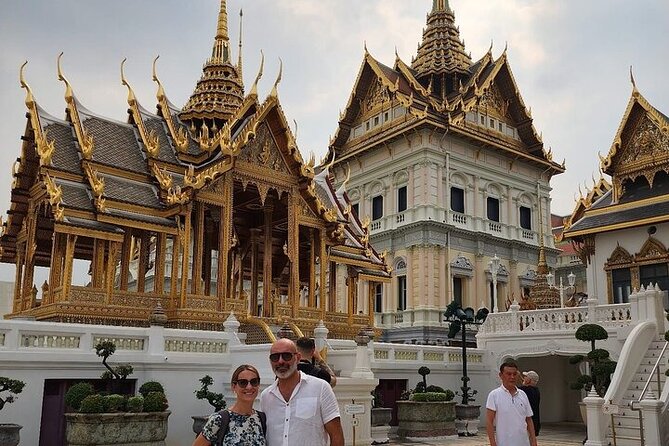
- A true private tour: only your group, with pickup and drop-off
- Air-conditioned comfort during the travel time between sights
- Included tickets for Wat Traimit, Wat Pho, Wat Arun, and the Grand Palace
- A smart lineup of Bangkok icons: gold Buddha, river temples, royal palace
- Market time that isn’t a token stop at Pak Khlong Talat flower market
- Built-in free time for Chinatown shopping and street-food browsing (at your pace)
Plenty else to do around Bangkok
A well-paced 8-hour loop through Bangkok’s big icons
This tour is designed as one long but organized circuit through some of Bangkok’s most recognizable sights. With an air-conditioned vehicle, hotel pickup, and an English-speaking guide, the day feels smoother than doing multiple areas on your own, especially when Bangkok traffic can turn a simple hop into a long delay.
The schedule gives each major temple its own chunk of time. You get focused visits like 30 minutes at Wat Traimit and about an hour each at Wat Pho, Wat Arun, and the Grand Palace. Chinatown and Pak Khlong Talat are also given real breathing room, so you can shift from temple mode to market and street-life mode without feeling like you’re only stopping to take a photo and leaving.
Because it’s private, you’ll be able to move together as a group. That also means the pace is set for efficiency. If you like reading every sign and sitting for a long rest, plan on shorter stops and keep an eye on how you’re feeling.
Wat Traimit (Temple of the Golden Buddha): 5.5 tonnes of gold
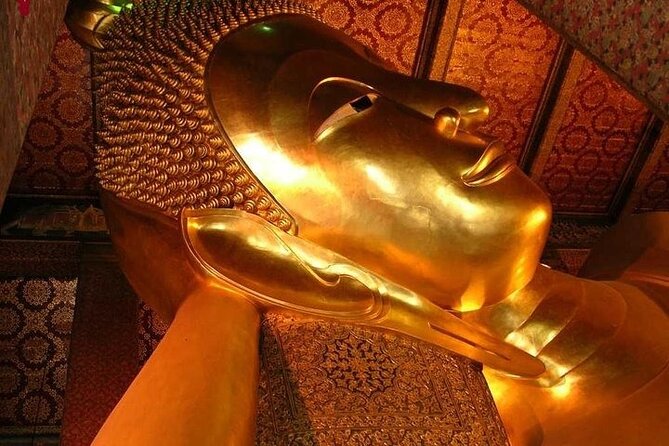
Wat Traimit is the opening hit, and it’s a good one. The star is the Golden Buddha, officially Phra Phuttha Maha Suwana Patimakon. This statue is an enormous seated figure, weighing about 5.5 tonnes, and it’s made in the Sukhothai Dynasty style from the 13th to 14th centuries (with the note that it could also have been made later).
I love how this stop gives you a clear, memorable anchor for the day. You go from the hype of Bangkok temples into something very specific and physical, an actual golden Buddha that feels like a centerpiece instead of just another facade.
The visit is about 30 minutes and includes the admission ticket. That time is usually enough to take in the statue from the key viewpoints, look for details in the gold work, and listen to your guide’s explanation of what you’re seeing and why it matters.
If you’re the type who wants to linger, you can still do it, but you’ll be balancing time against the rest of the itinerary. Since the tour is structured, you’ll want to keep your energy up for the bigger complexes later.
Chinatown on Yaowarat Road: shopping, temples, and street-food vibes
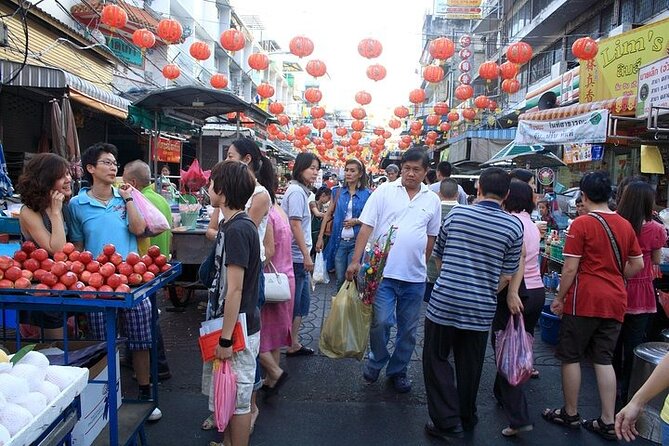
Then the day swings into Chinatown. The focus here is Yaowarat Road, a major Chinese cultural and commercial hub. It’s known for the street-food scene, with lots of places to eat both along the road and inside buildings. You’ll also find Buddhist temples and traditional wooden shops selling Chinese goods.
This is one of those Bangkok experiences where you don’t need a grand plan. You can browse, snack, and shop at your own speed, and your guide helps you understand what you’re seeing in plain terms. The tour keeps this stop at about one hour, which is enough time to get oriented and decide what you want to do next.
Because admission is free for the stop, you can use the time flexibly. Want souvenirs, snacks, or just photos of the street life? This is the place to do it. Want to keep it light and avoid the busiest sections? You can.
One practical consideration: Chinatown is a shopping-and-food zone, so wear shoes that handle standing and walking. Even within an hour, you might cover more ground than you expect.
Keep scrolling, there's usually one more worth booking.
Pak Khlong Talat flower market: orchids and arrangement tools
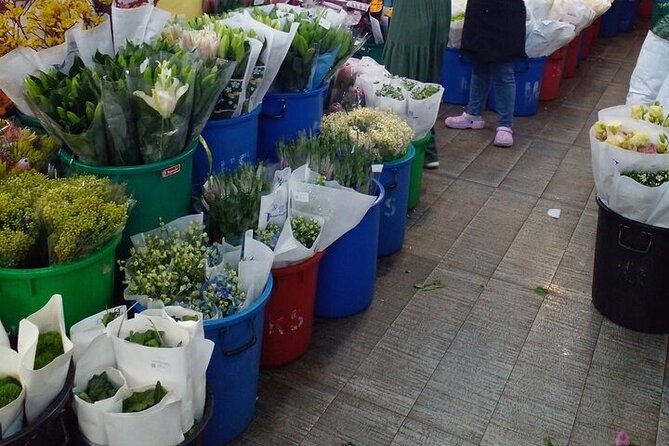
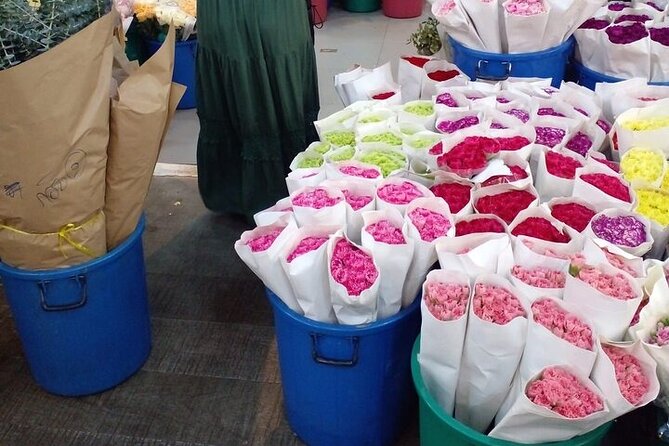
Next up is Pak Khlong Talat Flower Market. This one feels different from the temples, because it’s all about commerce and color. The market is ranked fourth among the top ten flower markets in the world, and it’s also described as the third biggest orchid flower market in the world.
I like that the tour doesn’t treat it as a quick photo stop. You’ll spend about 30 minutes, and there’s plenty to look at, including flower arrangement services and even flower arrangement equipment for sale. You’ll also see the smaller ornamental flowers used for vases and bouquets, plus colorful papers and bows.
What’s valuable here is context. Your guide can help you understand that this is not just a market for tourists. It’s a place where flowers are sold in both retail and wholesale. That’s the sort of detail that makes a colorful stop feel real and not staged.
If you’re buying gifts, this is the moment to think practical. Flowers may not be easy to transport depending on your plans, but market browsing is still a great experience even if you don’t buy much. If you love crafts or want a souvenir that’s not a generic keychain, you may find something in the arrangement supplies and paper goods.
Wat Pho (Wat Phra Chetuphon): Rama I, royal monastery status, and key relic details
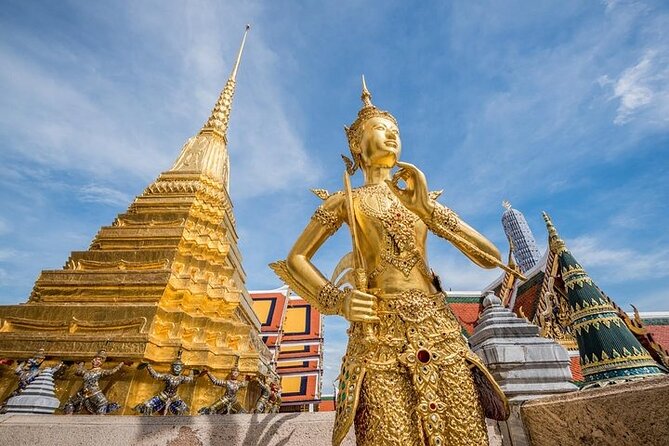
Wat Pho is one of Bangkok’s most important temple sites, and this tour gives it proper time, about one hour with admission included. The official name is Wat Phra Chetuphon Wimon Mangkhalaram Rajwaramahawihan, and it’s described as the first grade royal monastery. It’s regarded as especially important during the reign of King Rama I of the Chakri Dynasty.
Here’s a detail I really like because it’s specific: King Rama I managed the restoration of Wat Phodharam, an older monastery from the Ayudhya period. The restoration re-established it as a royal monastery located near the Grand Palace. The tour notes that some of Rama I’s ashes were kept under the pedestal of the principal Buddha image, named Phra Buddha DevaPatimakorn, in the main chapel.
That kind of info changes how you look at a temple. Instead of seeing a pretty complex, you start to see the layers of royal decisions and historical continuity.
You’ll likely also connect Wat Pho to what comes next, because it sits in the Ko Rattanakosin area and is closely tied to the Grand Palace zone in the way it was restored and used. Even if you’re not a deep-terms person, your guide can translate the meaning so it clicks.
Possible drawback: Wat Pho can be a longer-feeling stop because it’s such a major site. You might want to avoid going in with a tight attention span, and let the guide’s pacing do some of the work.
Wat Arun (Temple of Dawn): Aruṇa and the river-temple feel
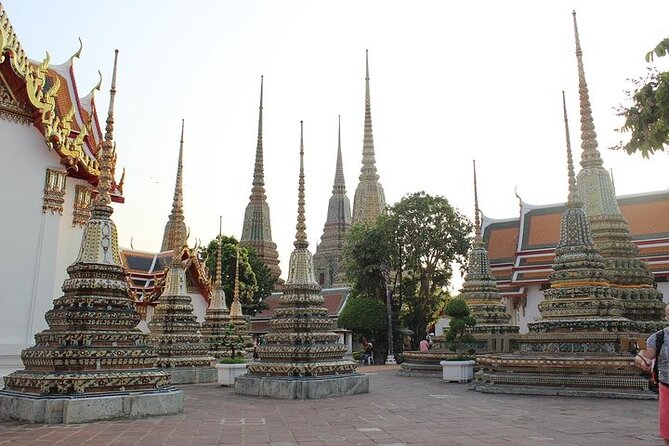
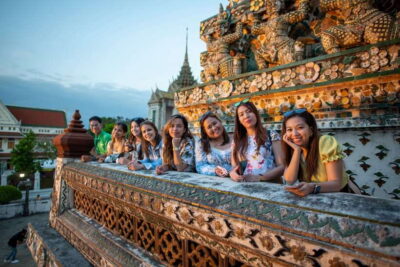
Wat Arun is next, about one hour with admission included. The tour calls it Temple of Dawn, and it also gives the full name: Wat Arun Ratchawararam Ratchawaramahawihan. It sits in the Bangkok Yai district on the Thonburi west bank of the Chao Phraya River.
The naming story is one of the more interesting bits provided. Wat Arun’s name comes from Aruṇa, the Hindu god associated with radiations of the rising sun. That little myth link can make the visit more memorable, because you’re not just looking at architecture, you’re also hearing why this particular temple got its identity as the dawn temple.
Why this stop is valuable in an itinerary like this: after Chinatown and Pak Khlong’s market energy, Wat Arun brings you back to a calmer, more structured experience. The contrast helps the day feel like a real cross-section of Bangkok, not only temples in a row.
One practical thought: since you’re doing a full circuit and you’re not told about extended breaks, bring a plan for hydration. Food and drinks are not included, so if you tend to get tired by the end, you’ll want to manage water on your own.
The Grand Palace: official residence since 1782
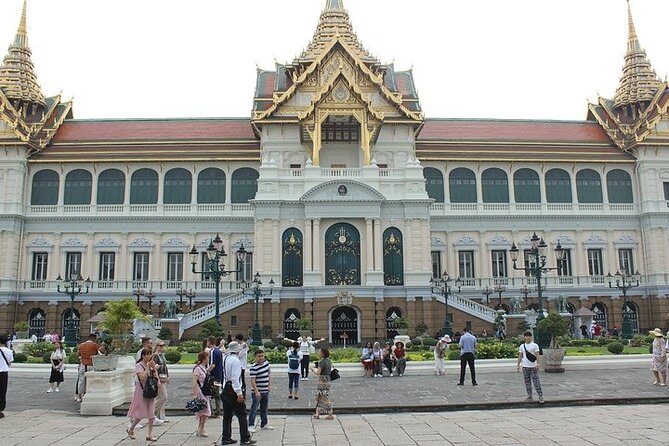
The Grand Palace is the big royal centerpiece, and this tour gives it about one hour with admission included. It’s described as a complex of buildings at the heart of Bangkok and the official residence of the Kings of Siam, and later Thailand, since 1782. Royal governance and the court were based there until 1925.
What makes this stop feel more than just historical sightseeing is the detail that it’s still used for official events. The tour notes that royal ceremonies and state functions happen within the walls every year, even though it’s one of the most popular tourist attractions in Thailand.
I like how the itinerary makes the Grand Palace feel earned. You’ve seen the Golden Buddha’s unique weight and style, you’ve learned the royal restoration story behind Wat Pho, and you’ve visited the river temple at Wat Arun. Then the Grand Palace arrives as the scale-up, the place where that royal meaning becomes visible in architecture and space.
As with many major landmarks, one hour can feel both long and short. Long enough for an overview and key highlights, short enough that you might want to skip anything that slows the group down. Let your guide help you focus on what matters most.
Democracy Monument: a final city-center anchor
The final stop is the Democracy Monument. It’s described as a public monument in Bangkok’s city center, inside a traffic circle on the wide east-west Ratchadamnoen Avenue, at the intersection with Dinso Road.
Even though it’s not a temple, it works well as a bookend. After a day of religious and royal sites, you end with a landmark that represents civic identity. It also helps with logistics, since you finish in the city core area rather than out in the far edges.
Because the tour description doesn’t list a specific time length here, treat it as a wrap-up moment. It’s smart to keep your camera ready, and to let your guide tell you what to notice when you get there.
Why the guide makes this tour worth it
The strongest praise tied to this experience is about the guide. One guest described the tour as beautiful and said the guide was wonderful, very energetic, and explained interesting things they did not know. That matches the structure of this day, because so much of what you see only becomes meaningful when someone puts it into words.
This tour explicitly includes an English-speaking guide for the full day, and that matters in Bangkok. Temples, royal spaces, and Chinese cultural neighborhoods have lots of context embedded in details. When your guide can point those out clearly, you don’t just collect photos, you collect understanding.
If you’re deciding between a self-guided day and a guided day, the difference is simple. On your own, you’ll still see the sights. With a guide, you’re also learning the specific stories tied to what makes each place important, like the Sukhothai style background of the Golden Buddha and the Rama I restoration and ashes detail at Wat Pho.
Price value at $124: what you get for your money
At $124 per person, this is not a cheap half-day activity, but it also isn’t only paying for “a car and a driver.” You’re paying for a private format, hotel pickup and drop-off, an air-conditioned vehicle, an English-speaking guide, and admission included for several major sites.
Included admissions are: Wat Traimit (Golden Buddha), Wat Pho, Wat Arun, and the Grand Palace. Chinatown and Pak Khlong Talat are listed as free-entry stops within the itinerary, which helps keep the overall day from becoming an add-on cost pile.
You should factor in what’s not included: personal expenses and food and drinks. That means you’ll want to plan a meal or snack strategy. But if you’re the type who likes to stop and eat when you’re hungry, this tour’s structure is still workable, because you can handle food on your own during the market and street-food areas.
One more practical value point: the tour includes a mobile ticket and is said to be booked on average 110 days in advance. That suggests it’s popular, so it’s often smarter to book earlier rather than waiting until the last minute.
Logistics that help you enjoy the day
A few details make a real difference to how pleasant this becomes in practice.
First, you get hotel pickup and drop-off, which cuts down on time wasted on transit planning. The tour also uses an air-conditioned vehicle, a lifesaver on a hot Bangkok day. The itinerary is built with clear stop order, so you’re less likely to zigzag across town.
Second, this is described as a private tour/activity. Only your group participates. That matters when you want to move together, stay with one set of instructions, and not get split across different language needs.
Third, the tour is near public transportation, which can be a comfort if plans change and you need to re-orient. Still, since pickup is included, you probably won’t need to rely on that.
Who this tour is best for, and who may prefer something else
You’ll likely love this tour if you want a single day that hits major Bangkok landmarks without you doing route homework. It’s ideal if you value a guide who can explain what you’re looking at, especially at Wat Pho and the Grand Palace, where the context is the real payoff.
It also fits well for first-time visitors who want the “top hits” in one organized run. With private touring and included admissions at several big sites, you’re getting a lot of scheduled value in roughly 8 hours.
You might reconsider if you’re the slow-travel type. This itinerary is compact, with around an hour at each major temple and only short market and street stops between. If you want extended browsing, long sits, and lots of free wandering without a set pace, this structure might feel like it moves too fast.
Should you book this Bangkok Top 7 Wonders private tour?
Yes, if you want maximum Bangkok highlights in one day with hotel pickup, air-conditioned comfort, and a guide who does more than point. The standout strength is the guide experience, including energetic explanations that make the sights feel more alive.
Book it if you’re planning a first visit, or if you want a high-efficiency day that still includes free time for Chinatown and Pak Khlong Talat. Avoid it if your ideal day is slow, flexible, and spending lots of extra time inside each complex without a schedule pushing you forward.
If your dates are firm, start early since it’s commonly booked well ahead. And keep your budget ready for food and personal spending, because those parts are on you.
FAQ
How long is the Bangkok Top 7 Wonders private tour?
It’s listed as about 8 hours.
Is hotel pickup and drop-off included?
Yes. Hotel pickup and drop-off are included.
What’s the tour price per person?
The price is $124.00 per person.
Are entrance tickets included for the temples?
Yes. Entry tickets are included for the Temple of the Golden Buddha, Wat Pho, Wat Arun, and the Grand Palace.
Which stops are included in the itinerary?
The tour includes Wat Traimit (Golden Buddha), Chinatown on Yaowarat Road, Pak Khlong Talat flower market, Wat Pho, Wat Arun, the Grand Palace, and ends with the Democracy Monument.
Is food or drinks included?
No. Personal expenses and food and drinks are not included.
Can I cancel for a full refund?
Yes, you can cancel up to 24 hours in advance for a full refund. If you cancel less than 24 hours before the start time, the amount paid is not refunded.
The newest additions around Bangkok
- Central Thailand Walking Tour and visit Temple at Bangkok
★ 5.0 · 1 review - Private 2-Day Bangkok City Tour and Ayutthaya Tour from Bangkok
★ 5.0 · 1 review - Train Market, Floating Market, and Salt Lake Tour by driver
★ 5.0 · 1 review - Fullday Private Tour Bangkok Temple & City Tour with lunch+Amazing Bangkok Tour
★ 5.0 · 1 review - Bangkok: One Day Thai Costume Rental (Gentleman)
★ 2.0 · 1 review - Laem Chabang Shore Excursion : Shopping, Massage & Food Tasting
★ 5.0 · 1 review - Bangkok Dream World & Snow Town Theme Park Admission Ticket
★ 3.0 · 1 review - Bangkok 4 Hour Cultural & Temples Tour Private with Guide
★ 5.0 · 1 review
Guided, compared.
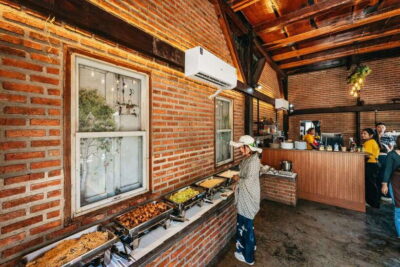

Bangkok by Private Guide: Full Day Tour In and Around
Read our review →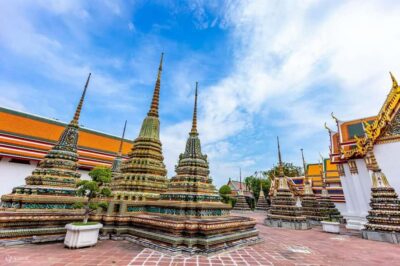
Grand Palace, Wat Pho, and Wat Arun Guided Tour
Read our review →
Grand Palace and Wat Phra Kaew Guided Walking Tour
Read our review →