
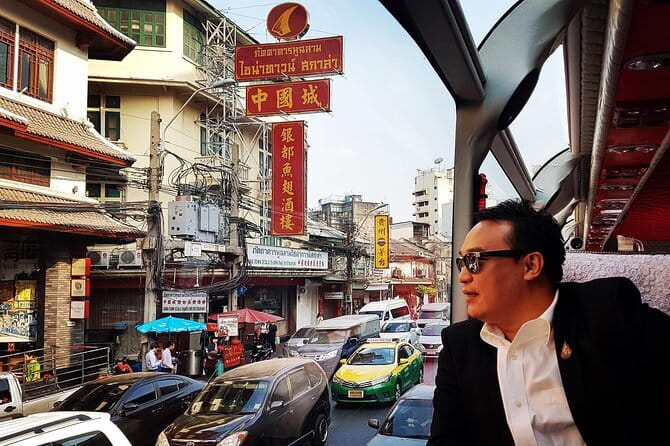
Reviewed · BANGKOK STREET FOOD TOURS
Bangkok Thai Bus Food Tour
Bangkok from a bus, plus serious street food. The Bangkok Thai Bus Food Tour strings together major sights around Rattanakosin Island while you eat on a Thai Bus Food Tour vehicle that they market as a first food truck in Thailand.
I like the combo of a guided city loop and a real meal included, not just snacks. I also like the on-board setup, with audio and an LCD screen, so the commentary and directions land clearly as you move between temples and landmarks.
One watch-out: this is not recommended for people with motion sickness, since you are on a moving bus for much of the 90 minutes.
In This Review
- Key highlights worth your time
- A Michelin-style meal wrapped in old-city sightseeing
- River City Bangkok start point and how the ride works
- Food and service: what to expect beyond the meal
- Wat Traimit: starting with gold and Chinatown context
- Chinatown Gate at Odeon Circle: a street-level marker
- Wat Saket: the temple with a royal origin story
- Wat Ratchanatdaram, Loha Prasat: the iron palace stop
- Democracy Monument: a civic landmark in the middle of it all
- The Grand Palace: big scale, official Bangkok, tight scheduling
- Wat Arun across the river: the landmark look you came for
- Wat Pho and the old-city monastery connection
- The Sao Chingcha area stop by Wat Suthat
- What makes this tour a good value in 90 minutes
- Who this Bangkok Thai Bus Food Tour suits best
- Practical tips so you enjoy the ride more
- Should you book this Bangkok Thai Bus Food Tour?
- FAQ
- What is the duration of the Bangkok Thai Bus Food Tour?
- Where is the meeting point?
- What food is included?
- Is transportation provided?
- Does the tour include Wi-Fi and audio?
- How many people are on the tour?
- Is the tour suitable for people with motion sickness?
- Can I cancel and get a refund?
Key highlights worth your time
- A compact 90-minute route that covers a lot of the old-city core without you mapping it yourself
- Meal included (lunch or dinner depending on your departure time) plus soft drinks
- Friendly, high-service energy paired with strong commentary to connect the dots
- Double-decker views that make the skyline and road life easier to take in
- Small group size with a max of 20 people, which helps the pace feel calmer
Eat where the locals actually eat
A Michelin-style meal wrapped in old-city sightseeing
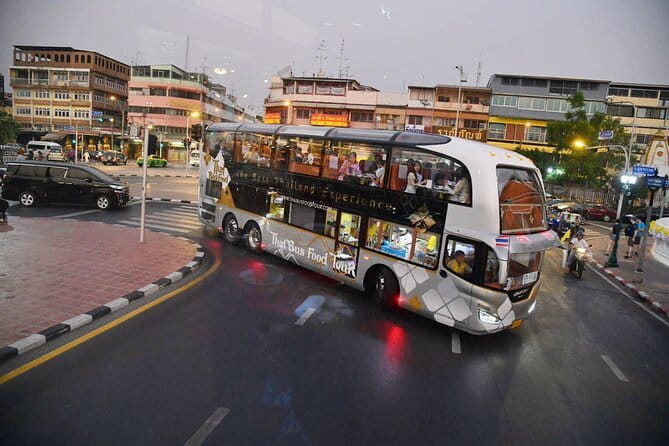
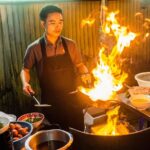
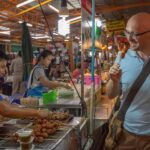
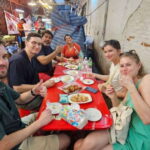
This tour is built around an idea that works well in Bangkok: you keep moving, but you also get one main anchor point, a meal. The food experience is promoted as a Michelin star dining experience, and the practical value is simple. You are not wandering hungry, guessing where to eat, or deciding on the fly after a long day in the heat.
You also get a guided sight loop through the Rattanakosin area. That matters because Bangkok’s best-known landmarks are close enough to link, but not always easy to do in a single, stress-free plan. From the way the route is organized, the tour is designed to help you see big highlights while still keeping the day from turning into a logistics puzzle.
And yes, it is also just a fun format. The double-decker bus plus the food component means the tour feels like an event, not a lecture.
River City Bangkok start point and how the ride works
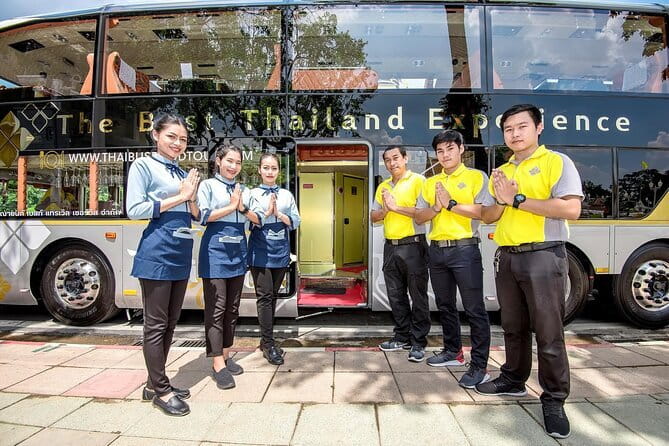
The meeting point is River City Bangkok, Building No. 23, room 163, Soi Charoen Krung 24, Khwaeng Talat Noi, Khet Samphanthawong, Krung Thep Maha Nakhon 10110. The tour ends back at the same place.
That round-trip matters because it removes one of the biggest annoyances in Bangkok sightseeing. You do not have to figure out what to do afterward, where to catch a taxi, or how to get back efficiently. You are also near public transportation, which is useful if you want to combine this with other plans.
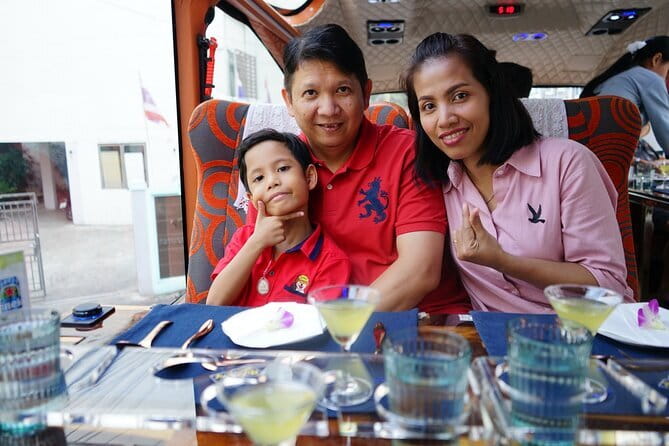
Once you are aboard, expect a bus setup geared for comfort and guidance. The package includes air-conditioned vehicle service, plus free Wi-Fi, CCTV, and an LCD screen, along with audio for the commentary. In plain terms, you get fewer moments of confusion, and you get a little mental break from the loud street.
Food and service: what to expect beyond the meal
The tour includes lunch or dinner depending on the time of day, and it includes dishes plus soft drinks in the selected package.
Here is why that matters for value. A lot of Bangkok food tours give you small portions and ask you to pay extra for anything filling. This format folds in a full included meal component, so you can budget less and eat more confidently. It also reduces decision fatigue. When you are trying to see temples and streets, having food handled for you is a win.
The service tone is also a standout part of the experience. The staff is described as friendly, and the overall vibe is high-service without feeling stiff. In addition, the guide’s commentary is praised for being clear and helpful, which is what you want when you are moving through dense areas like Chinatown and the Grand Palace zone.
If you are doing an afternoon slot, the food experience can feel more like an afternoon-tea style moment than a heavy late meal. Either way, you should plan for a real eating break that fits into the route.
Plenty else to do around Bangkok
Wat Traimit: starting with gold and Chinatown context
The first stop is Wat Traimit in Samphanthawong district, the Chinatown area. This is the temple connected with the Golden Buddha statue, and it is also known to house the Yaowarat Chinatown Heritage Center.
What makes this stop more than a quick photo stop is the way it anchors you in the story of Bangkok’s old-city Chinatown blend. The temple has roots in the early Rattanakosin period, and it was previously known as Wat Sam Chin before receiving its current name in 1940. Even if you only absorb a slice of that context, it helps you understand why Chinatown looks and feels the way it does.
Practical tip: this area can be active and busy. If you want calmer photos, go in with the mindset of quick glances. You are on a scheduled loop, so keep your timing flexible.
Chinatown Gate at Odeon Circle: a street-level marker
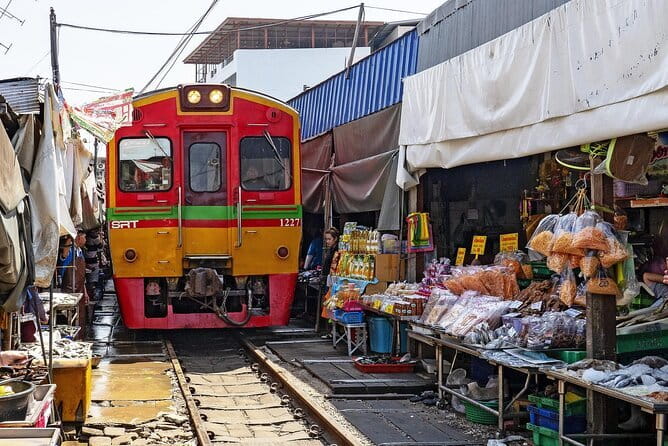
Next up is the Chinatown Gate at the Odeon Circle. This sits at the intersection of Yaowarat, Charoen Krung, and Tri Mit or Mittaphap Thai-China roads in Samphanthawong.
There is a red paifang at the center of the circle, built by Thai Chinese descendants as part of celebrations for King Bhumibol’s 72nd anniversary in 1999. The gate is a symbolic marker for Chinatown’s entrance, with Yaowarat functioning like the main artery.
This stop works well because it gives you a visual way to orient yourself. After this, the rest of the day’s landmarks make more sense spatially. You also get a real sense of how Bangkok’s religious and civic sites sit right next to commercial streets.
If you are sensitive to heat, keep hydration close. Chinatown walking and photos can add up fast.
Wat Saket: the temple with a royal origin story
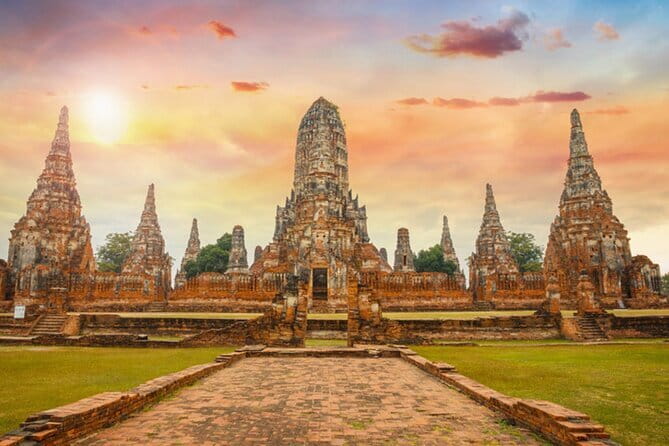
The route then moves to Wat Saket, a Buddhist temple in Pom Prap Sattru Phai district.
The historical point here is that Wat Saket dates back to the Ayutthaya era, where it was known as Wat Sakae. When Bangkok became the capital, King Rama I renovated the temple and gave it its present name, which roughly translates as wash hair. The legend says the king washed his hair here after returning from war.
That story is exactly the kind of thing a good city-guide setup turns into something you remember. It is not just a temple. It is a named moment tied to royal routine and rebuilding.
One practical consideration: temple areas can involve stairs and uneven surfaces. If you have mobility limitations, or you want to avoid extra climbing, pace yourself.
Wat Ratchanatdaram, Loha Prasat: the iron palace stop
Next is Wat Ratchanatdaram, located at the intersection between Ratchadamnoen Klang and Maha Chai Road in Phra Nakhon district. The meaning is Temple of the Royal Niece, built by order of King Nangklao (Rama III) for his granddaughter in 1846.
It is popularly known as Loha Prasat, literally meaning iron palace.
This is a strong stop because the name itself gives you a hook. When you connect the architecture nickname to the king’s family story, it becomes easier to track what you are looking at and why it is famous.
If you like architecture, this is likely the type of place where you will want a few extra minutes. Still, the tour is designed for flow, so do not plan to linger too long.
Democracy Monument: a civic landmark in the middle of it all
Then you hit Democracy Monument, a public monument in Bangkok’s city center. It occupies a traffic circle on Ratchadamnoen Avenue at the intersection of Dinso Road.
The positioning is part of the point. It is roughly halfway between Sanam Luang, in front of Wat Phra Kaew, and the temple of the Golden Mount (Phu Kao Thong). In other words, it acts like a central marker in the city’s ceremonial geography.
This stop helps you widen the frame. You are not only seeing temples. You are seeing how Bangkok organizes civic identity too.
Practical note: traffic circles can be noisy and bright. Keep an eye on where you stand for photos, and keep sunglasses handy.
The Grand Palace: big scale, official Bangkok, tight scheduling
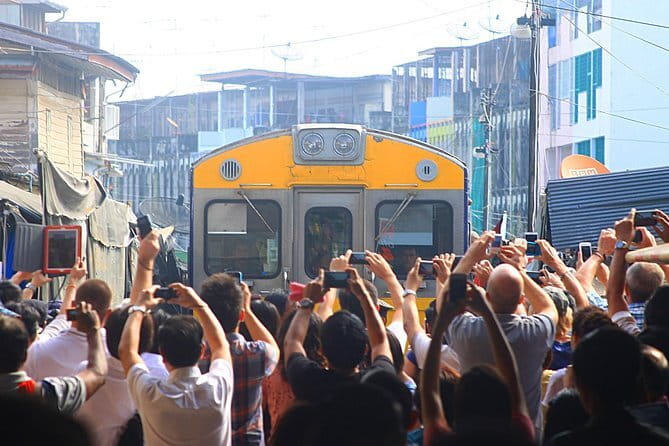
The next major landmark is the Grand Palace, the core complex of buildings in Bangkok. The palace has been the official residence of the Kings of Siam and later Thailand since 1782, and the royal court and government were based there until 1925.
The current role is different, but still important. Several royal ceremonies and state functions happen within the walls each year, and it remains one of Thailand’s top attractions, with over eight million visitors each year.
How this fits your day: you are not doing it alone. The tour structure helps you avoid the most common problem with the Grand Palace area, wasting time trying to understand what matters and where you should focus. You also benefit from the bus loop, which gives you a sense of scale, even if you are not spending the whole day inside.
Possible consideration: this is a popular site, so plan for crowds and keep your energy for walking segments as needed.
Wat Arun across the river: the landmark look you came for
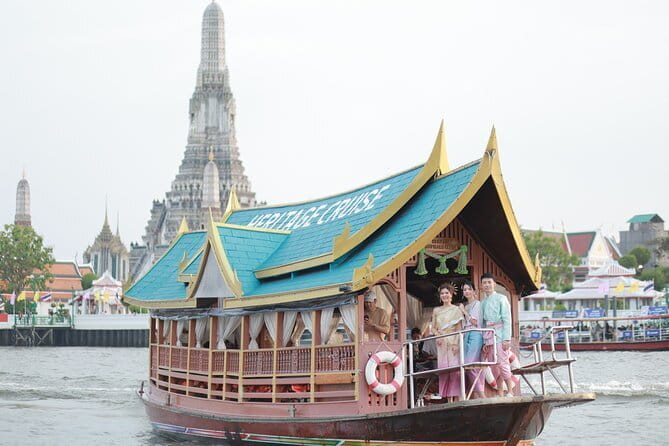
After the Grand Palace area, you move to Wat Arun, a Buddhist temple in Bangkok Yai district on Thonburi on the west bank of the Chao Phraya River.
Wat Arun’s name comes from the Hindu god Aruṇa, tied to the rising sun. The temple dates back to at least the 17th century, but the distinctive prang, the tall spires, was built in the early 19th century during the reigns of Rama II and Rama III.
This stop is the payoff for many people. Wat Arun is one of those Bangkok landmarks that photographs well, and seeing it from the right angles makes the whole day feel like it has a climax.
Practical tip: river-area light can be intense. Plan on quick photos and then focus on absorbing details.
Also, if you are sensitive to bus movement, remember this tour is not recommended for motion sickness. The best move is to sit where the ride feels the smoothest for you.
Wat Pho and the old-city monastery connection
The next stop is Wat Phra Chetuphon, better known as Wat Pho. It is one of Bangkok’s oldest temples and existed before Bangkok became the capital under King Rama I.
It was originally named Wat Photaram or Podharam, which is the origin of the Wat Pho name. The name is connected to the monastery of the Bodhi tree in Bodh Gaya, India where Buddha is believed to have attained enlightenment.
The southern section once held part of a French Star fort that was demolished by King Phetracha after the 1688 Siege of Bangkok.
Even without memorizing everything, this stop gives you a layered sense of how Bangkok stacks influences, Indian religious tradition, Thai royal updates, and European-era fort history in one place.
Possible drawback: temples often mean uneven stone and stairs. If you want to keep things easy, wear shoes with grip and take it slow.
The Sao Chingcha area stop by Wat Suthat
One more stop is described as a religious structure in Sao Chingcha Subdistrict, Phra Nakhon District, located in front of Wat Suthat. The note says it was formerly used in an old Brahmin ceremony, and it is listed as a tourist attraction.
Even with the name missing in the information you have, the value of this stop is clear: it places you at another ceremony-related site tied to older Brahmin ritual traditions. It also helps your route feel like more than a checklist. You get the sense that the Bangkok center is shaped by different religious traditions and historic ceremony use.
This is also a good place to reset mentally. By now you have done Chinatown context, royal temple legends, civic monuments, and river landmarks. That last push feels more rewarding when the final stop connects the dots.
What makes this tour a good value in 90 minutes
Price is listed as $0.00 in the information you have. That is unusual enough that I would treat it as a promo or specific package offer and double-check at booking. Even if you find your final cost differs, the value logic still holds.
You are getting:
- An air-conditioned double-decker bus ride
- Audio and an LCD screen to help you follow what you are seeing
- Free Wi-Fi, plus CCTV for a calmer ride
- A built-in meal component, lunch or dinner, with soft drinks
- A route that hits several of Bangkok’s big-name landmarks and religious sites in about 1 hour 30 minutes
So the real value is time. In Bangkok, a short window is common, especially if you are also doing a museum or a rooftop view later. A tight loop with food included can be cheaper than buying separate meals and paying for extra transport between scattered stops.
Small-group size also plays into value. With a maximum of 20 people, the pace tends to feel more controlled, and you spend less time waiting around.
Who this Bangkok Thai Bus Food Tour suits best
This tour fits well if you want a structured way to see key sights without building your own route. It also suits you if you prefer a guide to explain what you are looking at, instead of just reading a sign.
It also works for couples and families, since the setup is designed for a range of participants, and the bus format reduces the amount of constant navigation.
It is less ideal if:
- You get carsick easily, since it is not recommended for motion sickness
- You want long, slow temple time, since this is a compact loop
- You need fully customized pacing, because the format is built around scheduled stops
Practical tips so you enjoy the ride more
A few things will make this experience go smoother:
- Dress for heat and sun. Even with AC on the bus, temple stops still mean outdoor light.
- Bring something simple for humidity and sweat, since you will be moving on and off the bus.
- Keep your photo expectations realistic. You are covering many highlights, so you will get great shots, not a single endless wandering session.
- Wear grippy shoes. Temples can have uneven surfaces and stairs.
Should you book this Bangkok Thai Bus Food Tour?
If you want Bangkok old-city highlights plus a real meal in about 90 minutes, this is an easy yes. The strongest reasons to book are the combination of included food, a friendly, service-minded staff, and clear commentary that helps the sights make sense.
I would pass or swap plans if you know motion sickness will ruin a bus ride, or if you want to spend hours inside the biggest sites. For everyone else who wants a smart, structured Bangkok introduction, this tour can be a great use of your time.
FAQ
What is the duration of the Bangkok Thai Bus Food Tour?
The tour is listed as about 1 hour 30 minutes.
Where is the meeting point?
Meet at Thai Bus Food Tour River City Bangkok, Building No. 23 room 163, Soi Charoen Krung 24, Khwaeng Talat Noi, Khet Samphanthawong, Krung Thep Maha Nakhon 10110, Thailand.
What food is included?
The package includes lunch or dinner depending on the time of the tour, plus dishes and soft drinks.
Is transportation provided?
Yes. You ride in an air-conditioned vehicle.
Does the tour include Wi-Fi and audio?
Yes. It includes free Wi-Fi, along with audio, CCTV, and an LCD screen.
How many people are on the tour?
The maximum group size is 20 travelers.
Is the tour suitable for people with motion sickness?
It is not recommended for travelers with motion sickness.
Can I cancel and get a refund?
No. This experience is non-refundable and cannot be changed for any reason.
More Food & Drink in Bangkok
- Bangkok: White Orchid Chao Phraya Dinner Cruise free Beer★ 4.4 · 4,573 reviews
- Bangkok: Luxury White Dinner Cruise Free Flow Beer and Wine★ 4.0 · 748 reviews
- Bangkok Tuk-Tuk Tour by Night with Chinatown Street Food Meal★ 5.0 · 635 reviews
- Bangkok: Must-Try Hidden Bike & Food Experience★ 4.9 · 613 reviews
The newest additions around Bangkok
- Central Thailand Walking Tour and visit Temple at Bangkok
★ 5.0 · 1 review - Private 2-Day Bangkok City Tour and Ayutthaya Tour from Bangkok
★ 5.0 · 1 review - Train Market, Floating Market, and Salt Lake Tour by driver
★ 5.0 · 1 review - Fullday Private Tour Bangkok Temple & City Tour with lunch+Amazing Bangkok Tour
★ 5.0 · 1 review - Bangkok: One Day Thai Costume Rental (Gentleman)
★ 2.0 · 1 review - Laem Chabang Shore Excursion : Shopping, Massage & Food Tasting
★ 5.0 · 1 review - Bangkok Dream World & Snow Town Theme Park Admission Ticket
★ 3.0 · 1 review - Bangkok 4 Hour Cultural & Temples Tour Private with Guide
★ 5.0 · 1 review
Bangkok Street Food Tours, compared.
Bangkok Backstreets Food Tour with 15+ Tastings
Read our review →
Bangkok Authentic Tasting Thai-Chinatown Walking Food Tour
Read our review →
Bangkok Tuk-Tuk Tour by Night with Chinatown Street Food Meal
Read our review →
Browse the lists this tour appears in