
Reviewed · BANGKOK BICYCLE TOURS
Bangkok Classical Bicycle Tour
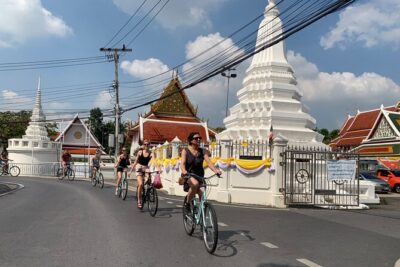
Bangkok shifts gear fast, and this bike tour follows it. You start right in Bangkok Chinatown and then move into quieter Thonburi backstreets, including a ferry crossing that gives you real skyline context. Two things I especially like are the chance to see shop houses, spirit houses, and hidden temples up close, and the way the route pairs chaotic market energy with calmer local life. The main drawback to plan for is simple but real: you need bike confidence, since narrow lanes in busy Chinatown can feel tight with pedestrians.
I also like that the ride is built for your senses, not just sightseeing. You’ll get drinks and snacks en route, plus a scheduled break at a market where you can sample local fruit and treats, which turns the tour into something you can taste, not only see. Go in knowing it is short and fun, not a workout, but you still have to stay alert while the guides keep things moving through crowds.
In This Review
- Key Highlights You’ll Feel Fast
- Entering Chinatown, River City Start, and the Ride That Gets Your Bearings
- What You’ll See in Chinatown’s Narrow Lanes, Temples, and Shop Houses
- A note on comfort and safety in crowded streets
- The Thonburi Switch, Ferry Crossing, and Why the River Matters
- Why Thonburi’s “third capital” context clicks
- Thonburi’s Monastery Stop, Quiet Breaks, and Local Rhythm
- The Flower Market Break, Snacks, and the Food Stop That Adds Real Value
- Cycling the “Few Tourists Ever See” Bangkok, Without Turning It Into a Stress Test
- Dress and gear that keep things comfortable
- Price and Value: Is $40 for 3 Hours Worth It?
- Who This Tour Suits Best, and Who Should Skip It
- Should You Book the Bangkok Classical Bicycle Tour?
- FAQ
- Where does the tour start?
- How long is the Bangkok Classical Bicycle Tour?
- What is included with the price?
- Is there a live guide, and what language do they speak?
- Do I need to bring a helmet or special gear?
- Can I wear a sleeveless shirt?
- Is the tour suitable for people with mobility impairments?
- Do I need to know how to ride a bicycle?
- What about infants and children?
- What is the cancellation policy?
- Is there a reserve now and pay later option?
Key Highlights You’ll Feel Fast
- Largest Chinatown outside China, so the streets stay packed with real commerce, not set dressing
- Thonburi, Thailand’s historic third capital, giving you a different Bangkok rhythm across the river
- Chao Phraya ferry crossing, a quick change of pace with skyline views behind you
- Hidden backstreets and neighborhood stops, including a monastery visit and local breaks
- Snack and fruit moments that make the tour feel local, practical, and memorable
- English live guiding with active street support, so you are not just following a map
Pedal past what the traffic misses
Entering Chinatown, River City Start, and the Ride That Gets Your Bearings
This tour begins at the office near River City Shopping Center, about 30 meters to the right of a 7-Eleven, look for the yellow sign. The tour start point is listed as 23 Soi Charoen Krung 24, and in practice you will roll out from that same central area soon after meeting the team in yellow shirts. If you are nervous about navigating Bangkok traffic on your own, this is the point where the tour earns its value fast, because someone else handles the route.
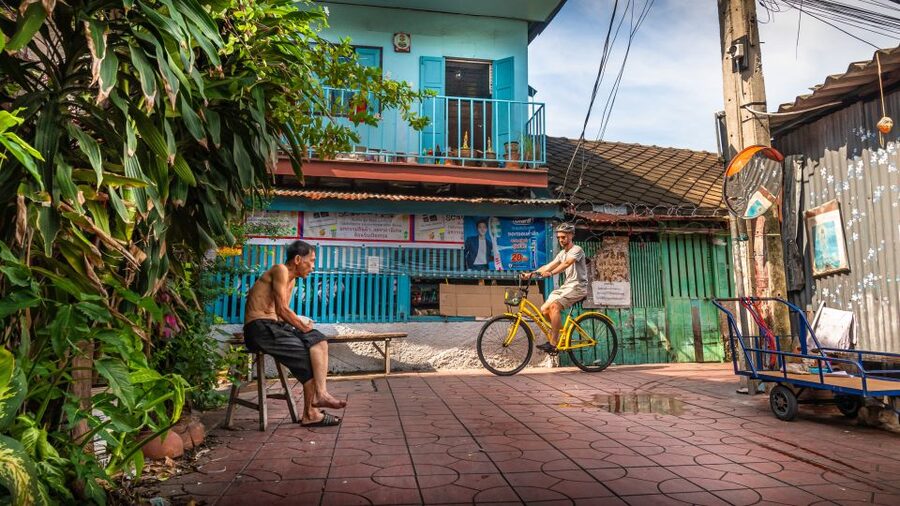
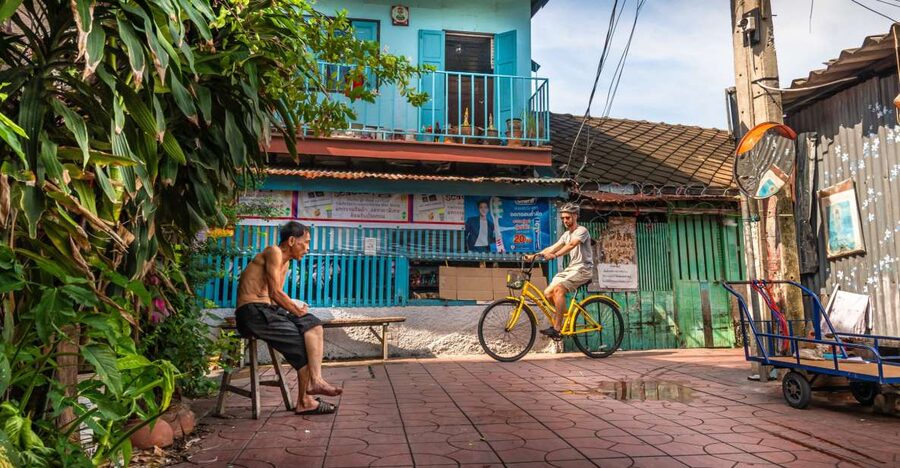
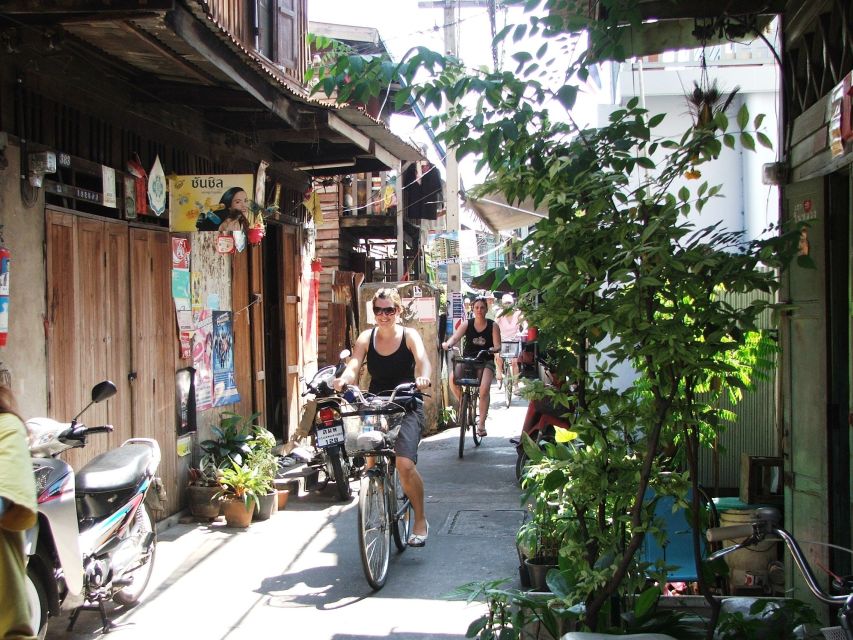
Once you head into Chinatown, you are not stuck at big-photo spots. You ride through narrow lanes where shop fronts spill into the sidewalk life and where the details are the story, from Buddhist amulets and small altars to ritual offerings you might otherwise miss. It feels like moving with the neighborhood rather than watching it from behind glass.
What You’ll See in Chinatown’s Narrow Lanes, Temples, and Shop Houses
This is the part of the tour where the senses get turned up. Expect tight alleys, fast changes in scenery, and constant activity, because Chinatown here is one of the largest outside China. You will pass shop houses that sell everything from religious items to very practical goods, including recycled or repurposed industrial parts.
The guide time in this section is a real education window, roughly 50 minutes, and it is structured around small stops, short explanations, and enough riding to keep momentum. One of the biggest wins is learning how Bangkok’s street spirituality shows up in everyday spaces, like spirit houses and hidden temple corners that are not on standard visitor itineraries.
A note on comfort and safety in crowded streets
This is also where you should be honest with yourself. The paths can be narrow, and in crowded Chinatown lanes you need to stay balanced, slow when the group slows, and keep your line. The good news is that the guide team actively manages the crossings and keeps everyone together, so you are not left to figure it out solo. Still, if you cannot handle tight spacing on a bike, you will feel it here.
Keep scrolling, there's usually one more worth booking.
The Thonburi Switch, Ferry Crossing, and Why the River Matters
After the Chinatown section, the route changes tone. You get time that is more guided viewing than riding, and then you roll into the Thonburi side where the pace often feels calmer, even when the city is still clearly alive.
The Chao Phraya ferry crossing is short, around 10 minutes, but it is one of the most useful parts of the whole trip. You trade the intensity of alleys for open river air and you get views of the skyline behind you, which helps you understand where all these neighborhoods sit relative to the river. It is also the psychological reset moment, the one that makes the third capital theme feel tangible rather than abstract.
Why Thonburi’s “third capital” context clicks
Thonburi is Thailand’s historic third capital, and the tour uses that idea to steer you toward less touristy local life. You spend long enough here to notice contrasts, not just capture a temple photo and move on. The route aims to show you the Bangkok most visitors never see, which is exactly why this tour is worth choosing over a standard monument loop.
Thonburi’s Monastery Stop, Quiet Breaks, and Local Rhythm
In Thonburi you will visit a monastery for about 30 minutes. This is not presented as a checklist stop. Instead, it is paired with the riding so you feel the shift from busy markets to more everyday routines. You get time to slow down, look carefully, and absorb how people use sacred space as part of normal life rather than only as a destination.
There is also a structured break time of around 30 minutes during the Thonburi block. That matters because riding in Bangkok can be mentally tiring, even when it is not physically hard. Use this pause to hydrate, check your photos, and reset your eyes before you get back on the bike for the final stretch.
Then you ride again in Thonburi for roughly 40 minutes. This segment helps you connect the dots between the guided points, the quieter residential feel, and the way the neighborhood network works on foot and by bike.
The Flower Market Break, Snacks, and the Food Stop That Adds Real Value
One of the most repeated highlights is the market stop, often described as a flower market with fruit and snack tasting. You will have drinks and snacks included en route, and this break is where that inclusion really shows up. The tasting helps you understand what locals snack on, not only what tourists order after a walk.
This is also the part where the tour turns into an experience you can remember with your taste buds. Local fruits and sweets are part of the moment, and at least one rider also mentioned spotting a water monitor lizard during the outing. You should not count on that exact sighting, but it does reflect the reality that these market and street pauses can surprise you.
Practical tip: keep your camera ready during the stop, but also plan to eat slowly. Market foods can be sweet, tangy, or both, and the guides usually time things so you do not feel rushed.
Cycling the “Few Tourists Ever See” Bangkok, Without Turning It Into a Stress Test
This tour is not about speed. Multiple riders highlight that the tempo stays manageable and the ride is not physically demanding. Still, it is active in a classic Bangkok way: you are handling a bike through mixed pedestrian and street conditions, sometimes in narrow lanes, with short guided pauses sprinkled in.
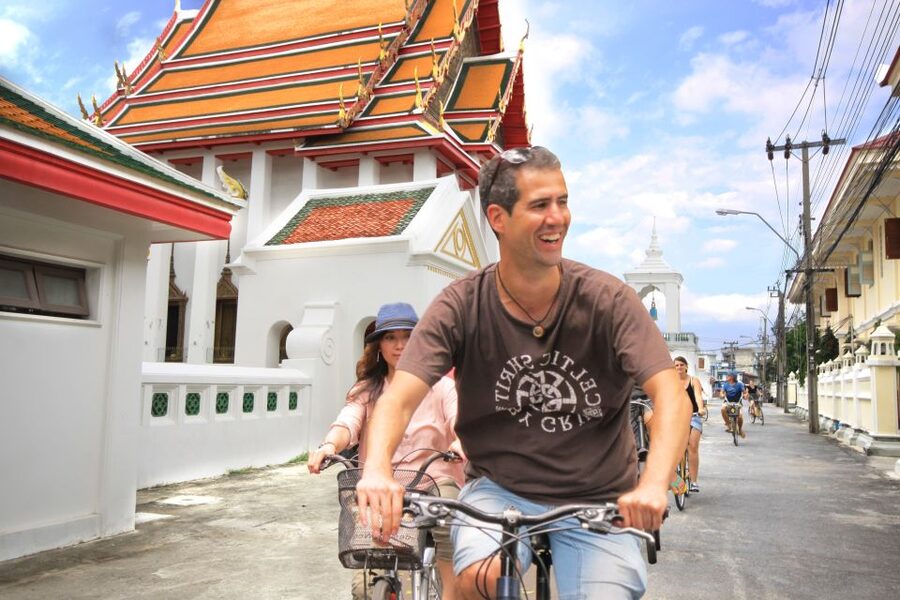
What makes this work is the guide support. On past runs you may ride with guides like Mike, Emma, Daisy, Bob, Lia, or Ling ling, and across those different names there is a common thread: friendly English explanations plus active attention to safety. The guides know where it gets crowded and how to keep the group moving, which is the difference between feeling like a parade and feeling like you can actually enjoy the neighborhood.
Dress and gear that keep things comfortable
The tour includes bicycle hire, and you should bring comfortable shoes, sunglasses, and a camera. Sleeveless shirts are not allowed, so plan a lightweight top with sleeves even if it is hot. Also, you do not need to treat this like a long-distance ride, but you should still ride like a responsible cyclist, eyes up and hands steady.
Price and Value: Is $40 for 3 Hours Worth It?
At $40 per person for a 3-hour experience, the value comes from what is wrapped into that time, not just the bike. You get bicycle hire, local guide(s), a ferry crossing, and drinks and snacks en route. You are also paying for access and interpretation: the route is designed to reach places most people do not stumble into, especially in Thonburi and the hidden corners of Chinatown.
The best value angle is that you get multiple “Bangkok layers” in one block of time. You are not choosing between Chinatown-only chaos or river-only views, because the tour connects them. And you are not stuck staring at temples from a distance, because you are moving through the everyday texture of neighborhoods.
The only reason the price might feel steep is if you are uncomfortable biking in crowds. If tight lanes make you nervous, you might spend the whole ride focused on staying balanced instead of enjoying it.
Who This Tour Suits Best, and Who Should Skip It
This is ideal for enthusiastic adventurers who like local markets, temples, and the behind-the-scenes Bangkok feeling. It also suits people who want a structured way to explore Chinatown and Thonburi without getting lost, because the guide handles route and timing.
You should skip it if you have mobility impairments, or if you cannot ride a bike. It is also not ideal if you hate the sensation of riding close to pedestrians in busy streets, since that can be part of the Chinatown experience.
If you are bringing kids, infants age 0 to 5 must ride on the back of the bikes. Children age 6 to 11 are free when they cannot ride on their own and ride on the back of the bike, but they still need to be handled within the tour’s bike setup.
Should You Book the Bangkok Classical Bicycle Tour?
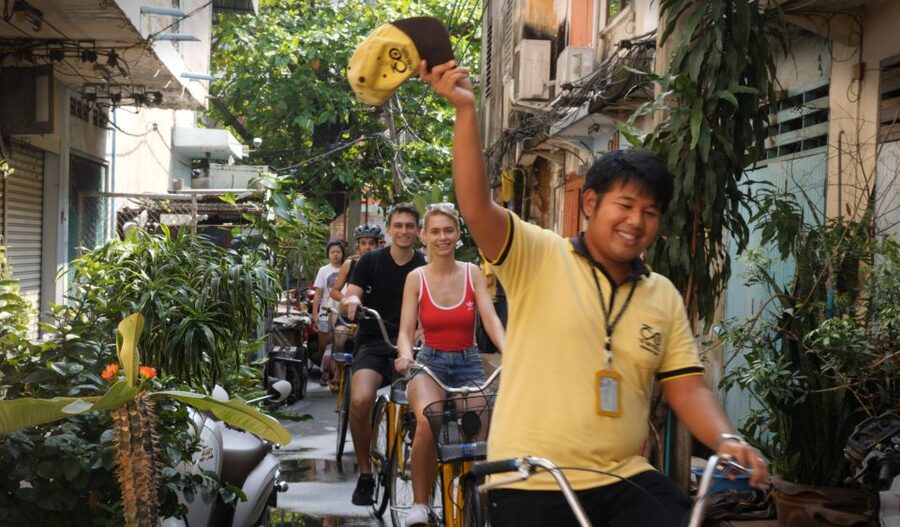
Book it if you want a short, high-reward way to understand Bangkok beyond the usual postcard loop. The route gives you Chinatown streets, Thonburi’s historic third-capital area, a real Chao Phraya ferry crossing, and market time with included snacks, all in about 3 hours.
Skip it if you are not comfortable biking through narrow, crowded lanes, or if biking would make you anxious. If you can ride confidently, this tour is one of the simplest ways to get that you are actually moving through real Bangkok feeling, not just consuming landmarks.
FAQ
Where does the tour start?
The tour start point is listed as 23 Soi Charoen Krung 24. The meeting office is about 30 meters to the right of a 7-Eleven at River City Shopping Center, look for a yellow sign.
How long is the Bangkok Classical Bicycle Tour?
It runs for 3 hours.
What is included with the price?
The tour includes bicycle hire, local guide(s), a ferry crossing, and drinks and snacks en route.
Is there a live guide, and what language do they speak?
Yes, there is a live tour guide in English.
Do I need to bring a helmet or special gear?
The information provided lists comfortable shoes, sunglasses, and a camera to bring. Helmet requirements are not mentioned in the tour details you provided.
Can I wear a sleeveless shirt?
No. Sleeveless shirts are not allowed.
Is the tour suitable for people with mobility impairments?
No, it is not suitable for people with mobility impairments.
Do I need to know how to ride a bicycle?
Yes. People who cannot ride a bike are not suitable for this tour.
What about infants and children?
Infants age 0-5 must ride on the back of the bikes. There is no charge for children age 6-11 who cannot ride a bike on their own and ride on the back of the bike.
What is the cancellation policy?
Free cancellation is available up to 24 hours in advance for a full refund.
Is there a reserve now and pay later option?
Yes, you can reserve now and pay later, so you can book your spot and pay nothing today.
The newest additions around Bangkok
- Dream World & Snow Town in Bangkok with Return Transfer & Lunch
★ 4.5 · 3 reviews - Bangkok: Nong Nooch Garden
★ 5.0 · 3 reviews - Private tour to Ayutthaya and Lopburi Monkey Temple (from Bangkok)
★ 5.0 · 3 reviews - Guided Tour of Grand Palace & Emerald Buddha Temple in Bangkok
★ 5.0 · 3 reviews - Half Day DIY Grand Palace and Emerald Buddha Temple
★ 4.5 · 3 reviews - HD-01 Koh Rattanakosin old town cycling with The Giant Swing, and more
★ 5.0 · 3 reviews - Glittering Ayutthaya Tour to Famous Sights, Market & Sunset Boat
★ 4.5 · 3 reviews - Private Tour: The Best of Bangkok Temples – Half Day
★ 4.0 · 3 reviews
Bangkok Bicycle Tours, compared.
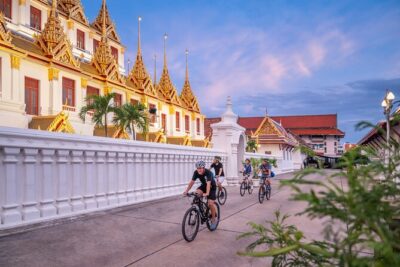
Night Bike Tour with Temples & Flower Market Visit
Read our review →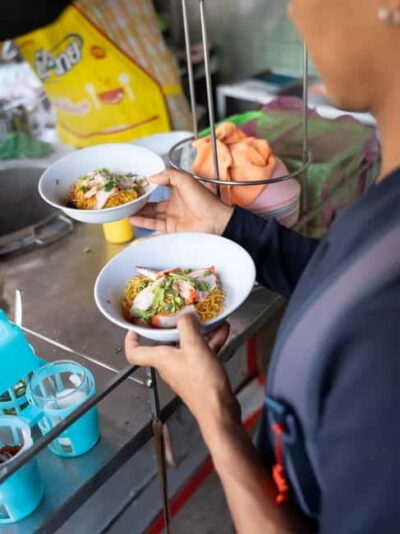
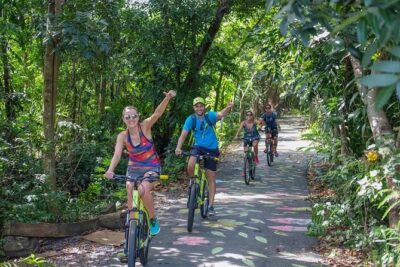
Bangkok Jungle Bike Tour – Hotel-pickup & Lunch
Read our review →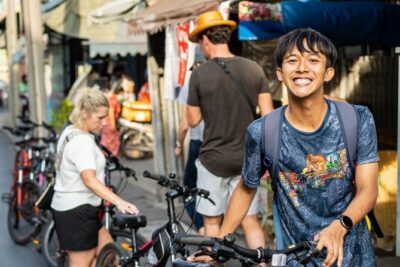
Bangkok Experiences Bike Tours-Backstreets and Hidden Gems
Read our review →Browse the lists this tour appears in