
Reviewed · BANGKOK STREET FOOD TOURS
Bangkok Chinatown: Self-Guided Mystery Puzzle Quest
A phone quest turns Chinatown into your map. You follow a Questo app through Bangkok’s Chinatown, hunting for clues that point you to the next spot and reveal stories as you go, no guide required. The route is built around real landmarks, including Wat Traimit and several longtime neighborhood places.
What I really like is how self-guided it feels. You can start at any hour, take breaks, and resume later, and the game runs with a mobile ticket on your phone.
The other big plus is the offline-friendly setup. You do not need internet while exploring, and the experience is designed to keep human contact out of the picture. One possible drawback: if app directions or nearby Google Maps pins do not line up perfectly, it can turn into an exhausting scavenger hunt, so bring patience.
In This Review
- Key things to know before you start
- What this Chinatown puzzle quest really is (and isn’t)
- Price and time: what $6.99 buys you
- Getting started at Rong Muang, then finding the first clue
- Stop 1: Kan Kee Nam Tao Thong and the herbal-drink clue
- Wat Traimit: the 5.5-tonne Golden Buddha that grounds the route
- Eiah-Sae coffee shop: a near-century-old pause mid-quest
- Wat Lokanukroh in Sampeng Market: small temple, active devotion
- Leng Buai Ia Shrine: old Tae Chew shrine from 1658
- Wat Leng Noei Yi, renamed by King Chulalongkorn, and its decorative dragons
- Food and drink pacing, so the quest stays fun
- How to handle the biggest risk: confusing directions
- Offline, privacy, and the no-guide style
- Who this puzzle quest suits best
- Should you book this Chinatown mystery puzzle quest?
- FAQ
- How long does the Bangkok Chinatown puzzle quest take?
- What does it cost?
- Do I need an internet connection to play?
- Is there a guide with me during the experience?
- Can I start at any time, and can I pause and resume?
- Where do I start and where does the experience end?
- Can one person buy tickets for a whole group?
- Which stops are included?
- Is it a private activity, and are service animals allowed?
- What is the cancellation policy?
Key things to know before you start
- Offline puzzle play so you can keep exploring even if data is spotty.
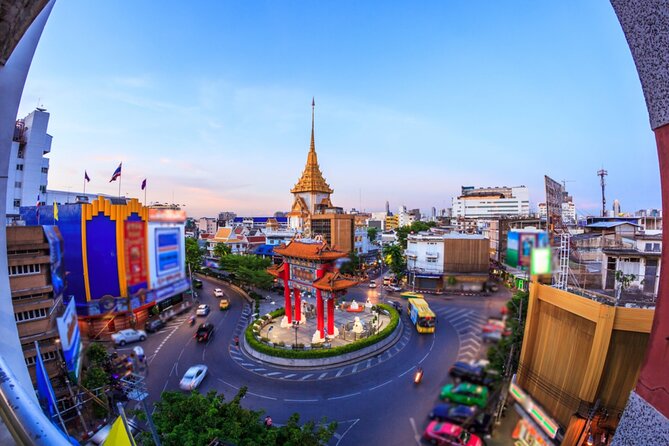
- Wat Traimit at the center with a 5.5-tonne seated Golden Buddha tied to the 13th century.
- Old-school Chinatown stops like Kan Kee Nam Tao Thong herbal drinks and the near-century-old Eiah-Sae coffee shop.
- Multiple sacred sites in one loop including Wat Lokanukroh, Leng Buai Ia Shrine, and Wat Leng Noei Yi.
- Flexible timing and pacing start anytime, pause anytime, and keep going when you want.
- Group-friendly ticketing one person can buy access for the whole group, each member plays on their smartphone.
Eat where the locals actually eat
What this Chinatown puzzle quest really is (and isn’t)
This is not a classic guided walking tour where someone talks for the whole time. It is closer to an outdoor escape game that uses real places as the “set.” You use your phone, follow step-by-step instructions on screen, answer a challenge by looking around, and then move to the next location.
In practice, that means you experience Chinatown at street level instead of from a bus window or a museum panel. You are forced to notice details, like architectural motifs on temple walls or clues tied to long-running neighborhood businesses. And because you can start whenever you want, it works like a choose-your-own-adventure that fits around other plans.
What it is not: you are not going to get a human expert explaining culture or history in depth. The story pieces are delivered through the app as you solve each step.
Price and time: what $6.99 buys you
At $6.99 per person for about 1 hour 30 minutes, this is priced like an activity, not a full-day tour. The value comes from two things: you get a planned route with multiple stops, and you get a structure that keeps you moving through the neighborhood rather than wandering randomly.
You also pay for convenience. The game is permanently available, and you can start at basically any time, take a break, and resume later. That flexibility is a big deal in Bangkok, where heat and crowds can change fast.
Where value can slip: if you run into confusing directions or wrong-feeling map locations, you may spend extra time re-checking where you are. In that case, the same 90-minute plan can stretch into longer frustration. If you like puzzles and you keep your expectations realistic, it tends to feel worth it.
Getting started at Rong Muang, then finding the first clue
The start point is Rong Muang, Pathum Wan, Bangkok 10330, Thailand. Your app guides you step by step to the next spot, and it directs you to the Wedding store as your end location.
Opening hours are listed as Monday through Sunday, 12:00 AM to 11:30 PM, and the experience is available 24/7. So if your day falls apart, you are not stuck. You can come back later, start again, or fit this between other Chinatown plans.
Before you begin, you will want a quick practical checklist. Make sure your phone battery is healthy, you have your mobile ticket ready, and you are comfortable using directions on screen while walking. Since play is designed for offline use, it helps to load whatever you need before you enter the densest parts of the streets.
Plenty else to do around Bangkok


Stop 1: Kan Kee Nam Tao Thong and the herbal-drink clue
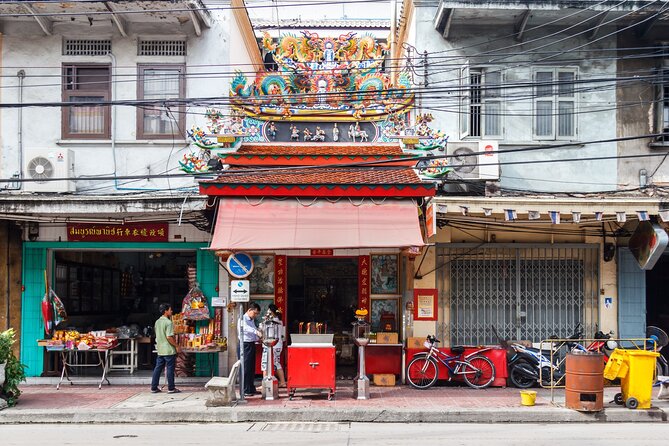
One of the first locations is Kan Kee Nam Tao Thong, a Chinese herbal drink place that is famous for its long run, about 100 years old. This is the kind of stop that sets the tone for the whole quest. You are not just looking at famous temples, you are also looking at the neighborhood’s living storefront history.
How the challenge works here: you look around to find the answer to the puzzle, then the game advances you to the next location and provides the story for that place. That looking-around instruction matters. It nudges you to notice signage, details, and how the shop sits within the flow of Chinatown.
Potential drawback at this stage: old shops can have lots of visual clutter. If your app hint is vague, it can feel like you are searching without a clear target. If that happens, slow down. Stand back, scan the storefront, and use the phone guidance to narrow what you should be looking for.
Wat Traimit: the 5.5-tonne Golden Buddha that grounds the route
Wat Traimit is one of the star stops on the quest. This is the temple of the Golden Buddha, known for housing a seated Buddha statue that weighs 5.5 tonnes. The gold sculpture dates to the 13th century and measures nearly 5 meters high.
You are also given a useful orientation detail: Wat Traimit is about 450 meters west of Hualampong Railway Station. Even if you do not want to map it exactly, it helps you understand you are in the right area.
The puzzle at Wat Traimit follows the same rule. Look around for the answer, then advance and learn the story tied to that location. For me, this kind of stop is perfect for a puzzle format because there are many visual cues and obvious things to examine closely. You get a proper temple moment, not just a quick photo stop.
Practical consideration: temples have their own pace. If the area is busy or you are pressed for time, the puzzle can make the visit feel longer than a normal quick look. On the bright side, that extra time is what turns the temple into something you actually pay attention to.
Eiah-Sae coffee shop: a near-century-old pause mid-quest

Next you come to the Eiah-Sae coffee shop, described as almost a century old. It has passed down through generations, and it is known for keeping a homey, noisy atmosphere.
This stop is valuable because it breaks up the sacred-site rhythm. Your brain gets a small reset in a place that feels like Chinatown’s everyday life, not a staged attraction.
The app still uses a look-around puzzle here. But the benefit is that the environment is more casual, so it can be easier to solve than a more formal temple setting. If you want to sample local drinks or food, this is the kind of moment where you might actually enjoy doing it, because you are not just “passing through” between landmarks.
One caution: coffee shop spaces can be loud. If you are trying to hear instructions or think harder while solving, take a breath and focus on the challenge visuals rather than trying to interpret noise cues.
Wat Lokanukroh in Sampeng Market: small temple, active devotion
Wat Lokanukroh is called one of Bangkok’s smallest temples. The interesting part is that no monks live here, but people still come to pray and offer ceremonies, even though it is in the middle of Sampeng Market.
That combination, a tiny temple inside a market zone, is exactly the kind of contrast I like when I want the city to feel real. The app puzzle here makes you slow down long enough to notice why people stop in this exact place. You are not just scanning for famous structures, you are looking for religious meaning in an everyday commercial street.
How you move through it: again, you look around to find the answer for the next step and the story gets revealed in the app. The drawback is that market-area locations can be crowded and visually messy. If you want to solve without rushing, pick a time when you are not already stressed by heat or shopping crowds.
Leng Buai Ia Shrine: old Tae Chew shrine from 1658
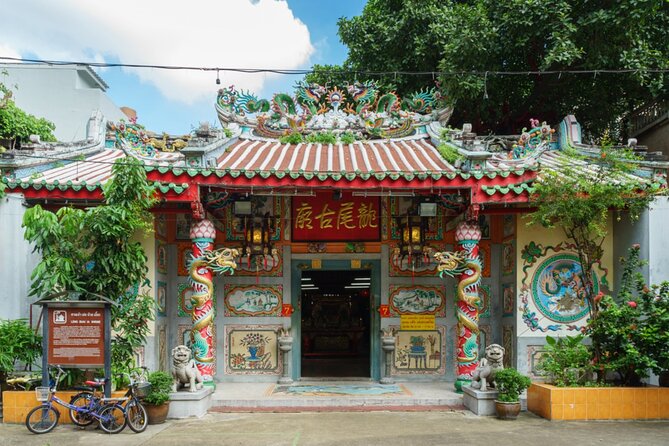
The Leng Buai Ia Shrine is described as an ancient Tae Chew shrine. It is the oldest Chinese shrine in Thailand, built in 1658 during the Central Ayutthaya period.
The game tells a neat human reason people came here. Chinese businessmen would come to find refuge and pray for prosperity for their business. The architecture is also noted as traditional Chinese style, which is a big clue for how to approach the puzzle. You should expect the details on the shrine to matter.
If you are the type who likes connecting dates to place, this is one of the most meaningful stops in the route because it gives you a time anchor, 1658, and also a reason people used the space.
Practical tip for solving: when an app tells you to look around, you usually get better results by scanning for distinctive patterns and inscriptions rather than trying to read everything at street level. Take a slow sweep across the shrine features, then come back to the most likely “answer area.”
Wat Leng Noei Yi, renamed by King Chulalongkorn, and its decorative dragons
The quest also includes a temple area that started as Wat Leng Noei Yi in the 1870s. It served as an introduction of Mahayana Buddhism in Bangkok, and later King Chulalongkorn renamed it to its present title.
This temple is decorated with plenty of animal, floral, and Chinese dragon motifs. Inside, the ordination hall houses the temple’s gold colored Buddha.
This stop feels built for the puzzle format. Dragons and ornate decorative patterns create lots of visual anchors, so the app’s look-around challenge has a better chance of being solvable without guesswork.
If you like symbolism, this is a strong segment. The game does not just take you to a big name site, it points you toward the kinds of details that help you understand why Chinese and Thai religious culture intertwine in Chinatown.
Potential drawback: decorative detail can also overwhelm. If you rush, you can miss what the puzzle expects you to notice. Give yourself the small luxury of time, even if it means you solve a little slower than you planned.
Food and drink pacing, so the quest stays fun
The overall concept encourages you to sample local drinks and food at shops popular with locals. Since your stops include an herbal drink shop and an old coffee shop, you have built-in opportunities to pause without turning the quest into a formal meal.
I suggest you plan for small tastes instead of a full sit-down. The game runs about 1 hour 30 minutes, and you do not want long meal breaks to throw off your pacing.
If you hit hot weather, use the app as permission to slow down. Step into shop doorways to cool off while you scan for clues, then step back out when you are ready to move.
How to handle the biggest risk: confusing directions
There is one caution worth taking seriously. One experience raised the problem of confusing instructions and location inaccuracies on Google Maps. In other words, the area you see and the pin you get from mapping tools might not match your expectations perfectly.
My practical advice is simple:
- Use the Questo app directions as the “source of truth,” not your usual map pin.
- When you arrive at a location, scan the immediate area rather than walking past it looking for the exact same landmark in a map view.
- If you get stuck, slow down and re-read the on-screen instruction before you move again.
If you run into a real problem, you can contact Questo support at [email protected]. That email is listed for follow-up, and it is a good fallback if something seems genuinely wrong.
Offline, privacy, and the no-guide style
This is marketed as the safest kind of experience to book, with no human contact. You only need your phone, and there is no physical tour guide. For some people, that is a huge win. You get structured sightseeing without feeling watched or rushed.
It also avoids some of the friction of group tours. You do not have to match someone else’s walking speed or answer to a schedule. You can pause, resume, and wander at your own pace.
Because play is designed for offline use, it can also be helpful in Bangkok where connections can be patchy depending on where you are standing. You can keep moving and not stop every time your phone struggles with data.
Who this puzzle quest suits best
I think this works best if you like:
- walking and noticing details
- puzzle solving, even if you do not want to be hardcore about it
- self-paced sightseeing with a clear path
- mixing temple visits with everyday Chinatown storefront life
It may be less ideal if:
- you get frustrated easily when directions are unclear
- you prefer a live guide to explain what you are seeing
- you want a slow, fully guided cultural experience with lots of conversation
If you are traveling with a group, it is also practical. One person can purchase access for everybody, and each group member plays on their smartphone.
Should you book this Chinatown mystery puzzle quest?
Book it if you want a low-cost, app-guided way to experience Bangkok’s Chinatown with real stops, offline play, and the freedom to pause when you need to. The combination of Wat Traimit’s huge Golden Buddha, plus smaller temple sites like Wat Lokanukroh and the long-running Chinese shrines and storefronts, makes the route feel grounded in actual neighborhood life.
Skip or go in with extra patience if you know you dislike wayfinding stress. This format depends on directions and on-site matching. If you are the type who hates hunting around, consider doing this on a day when you have time to troubleshoot for a few extra minutes.
If you do book, charge your phone, keep the app open, and treat the “look around” prompts as part of the fun. When it clicks, Chinatown feels less like a maze and more like a story you can solve step by step.
FAQ
How long does the Bangkok Chinatown puzzle quest take?
It lasts about 1 hour 30 minutes (approx.).
What does it cost?
The price is $6.99 per person.
Do I need an internet connection to play?
No. You can play offline, and you do not need internet connection while exploring.
Is there a guide with me during the experience?
No. There is no physical tour guide. You follow the app step by step.
Can I start at any time, and can I pause and resume?
Yes. You can start at any hour, take a break at any time, and resume later.
Where do I start and where does the experience end?
You start at Rong Muang, Pathum Wan, Bangkok 10330, Thailand. The experience ends at 586 ถ. เจริญกรุง Khwaeng Pom Prap, Khet Pom Prap Sattru Phai, Krung Thep Maha Nakhon 10100, Thailand.
Can one person buy tickets for a whole group?
Yes. If you are part of a group, one person can purchase access for everyone by selecting the total number of people, and all members can play on their smartphones.
Which stops are included?
The quest includes Kan Kee Nam Tao Thong, Wat Traimit, the Eiah-Sae coffee shop, Wat Lokanukroh, Leng Buai Ia Shrine, and Wat Leng Noei Yi.
Is it a private activity, and are service animals allowed?
It is private, so only your group participates. Service animals are allowed.
What is the cancellation policy?
Free cancellation is available. You can cancel up to 24 hours in advance for a full refund.
The newest additions around Bangkok
- Dream World & Snow Town in Bangkok with Return Transfer & Lunch
★ 4.5 · 3 reviews - Bangkok: Nong Nooch Garden
★ 5.0 · 3 reviews - Private tour to Ayutthaya and Lopburi Monkey Temple (from Bangkok)
★ 5.0 · 3 reviews - HD-01 Koh Rattanakosin old town cycling with The Giant Swing, and more
★ 5.0 · 3 reviews - Guided Tour of Grand Palace & Emerald Buddha Temple in Bangkok
★ 5.0 · 3 reviews - Half Day DIY Grand Palace and Emerald Buddha Temple
★ 4.5 · 3 reviews - Glittering Ayutthaya Tour to Famous Sights, Market & Sunset Boat
★ 4.5 · 3 reviews - Private Tour: The Best of Bangkok Temples – Half Day
★ 4.0 · 3 reviews
Bangkok Street Food Tours, compared.

Bangkok Backstreets Food Tour with 15+ Tastings
Read our review →
Bangkok Authentic Tasting Thai-Chinatown Walking Food Tour
Read our review →
Bangkok Tuk-Tuk Tour by Night with Chinatown Street Food Meal
Read our review →
Browse the lists this tour appears in