
Reviewed · BANGKOK STREET FOOD TOURS
Bangkok: Chinatown By Night Walking Tour
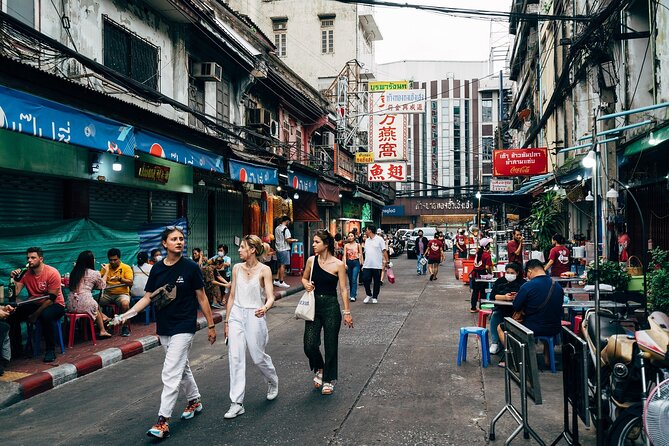
Chinatown gets a second life after dark. This night walk in Bangkok connects Thai-Chinese stories, shopfront details, and temple sightings into one easy route, starting at 6:30 pm and running about 2 hours. I love the street-food tastings and how the guide makes the food and places feel tied to real life, not just sightseeing trivia.
You will mostly be on sidewalks, so bring comfortable shoes and expect crowds around the market streets. One practical caution, entrance fees are not included, and headphones are not provided, so do not plan on extra listening gear.
In This Review
- Key things that make this tour worth your time
- Chinatown by Night: the point of going after dark
- Your meeting point and timing: start at Hua Lamphong, not too late
- Stop 1, the Chareon Chai community museum: how neighborhoods remember themselves
- Stop 2, an old mosque in European villa style: a surprising mix you can actually see
- Stop 3, Talat Kao old market alley off Yaowarat: the food street becomes a map
- Riverside temple near the Marine Department orange express area: spotting places from the water line
- Stop 5, So Heng Tai Mansion in Talat Noi: courtyard life in a 19th-century shell
- Stop 6, an Ayutthaya-era royal monastery: when the past still sets the rhythm
- Stop 7, Zhou Si Kong Shrine, 200 years by the river: luck and strength at the edge of the water
- The guide effect: why Nam, Jimmy, Tony, Bobby, Kim, Bass, Dan, and Den are mentioned
- Street food taste expectations: plan your evening around it
- Vox City app add-on: use it as a follow-up plan
- Price and value: $15 for 2 hours of guided street context
- Who should book this Chinatown by Night walk
- Should you book this Bangkok Chinatown By Night tour?
- FAQ
- How long is the Bangkok Chinatown by Night walking tour?
- What time does the tour start?
- Where is the meeting point?
- Is street food included in the tour?
- Are entry tickets to attractions included?
- Do I need headphones?
- How large is the group?
- What is the cancellation policy?
Key things that make this tour worth your time
- Expert storytelling that stays focused on daily life, from the gold trade to how Chinatown neighborhoods evolved
- Thai street-food tastes along the way, with dish talk that helps you order with confidence later
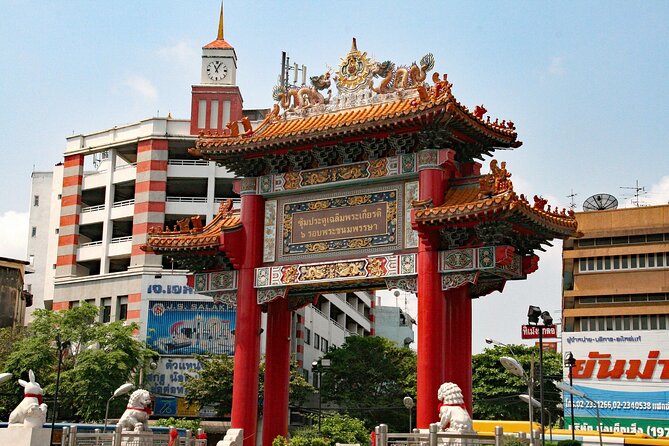
- Classic Talat Noi and Talat Kao sights, including the old market alley off Yaowarat Road
- River-adjacent temples and shrines, including a 200-year-old shrine along the Chao Phraya River area
- Smallish group feel, with a stated maximum of 99 people and a route that keeps moving
Eat where the locals actually eat
Chinatown by Night: the point of going after dark
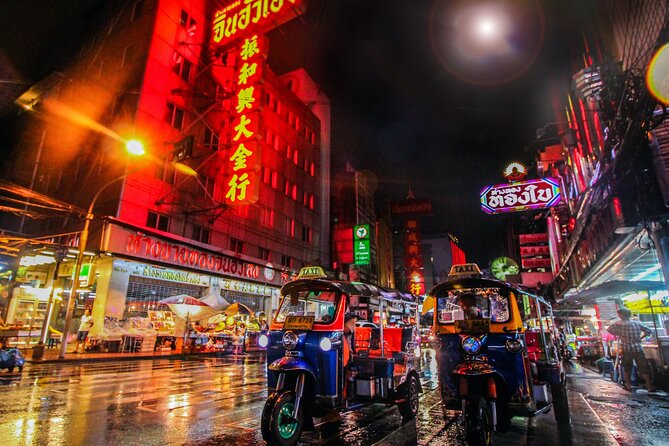
If you only see Chinatown in daylight, you miss half the story. At night, Yaowarat and the side lanes turn into a working neighborhood where lights, smells, and conversation lead the way. This tour is built for that exact feeling. You walk with a local expert who ties the sights to what people actually buy, pray about, and eat.
I like that the tour is not just temple photos and then goodbye. It is also about the trade and community story behind the streets, including the gold trade history and how traditional shopfronts sit next to modern street food spots. And you get to sample popular dishes along the route, so you leave with more than memories. You leave knowing what to look for when you come back on your own.
Your meeting point and timing: start at Hua Lamphong, not too late
The tour starts at 6:30 pm and ends back at the meeting point. Your start is near Hua Lamphong Rong Muang, in Bangkok’s Pathum Wan area. Since it is a walking tour at night, arriving a few minutes early helps you get your bearings before the group settles.
This time of day is a smart choice. Early evening usually means you can still handle some outdoor walking without the day’s peak heat, while night energy starts to build. The tour also runs about 2 hours, which is short enough to keep your evening open for more food after.
One more practical note: it uses a mobile ticket, and the day-of vibe depends on the group size. The max is listed as 99 travelers, so you are not dealing with a tiny crew, but the pacing is still designed as a walk-and-learn experience.
Stop 1, the Chareon Chai community museum: how neighborhoods remember themselves
Your first featured stop is an old house converted into a community museum for the Chareon Chai Community. This is the kind of place that makes Chinatown feel personal. Instead of only seeing big landmarks, you start with how people preserved their own history, culture, and everyday way of life.
What I like here is the context. When you learn how communities organize and remember, later stops like markets and shrines land better. You are not just checking off names. You understand why certain parts of Chinatown feel the way they do, even when the street looks like it has changed around them.
A small consideration: as with many community museums, you may find it quieter and more reflective compared with the street scenes. If you are hoping for a nonstop neon sprint, this first stop slows the pace on purpose.
Old Bangkok, block by block
Stop 2, an old mosque in European villa style: a surprising mix you can actually see
Next you visit an old mosque built in a style described as European villa-like. It is a reminder that Bangkok is a port city story. Styles, people, and influences have always moved through, and Chinatown’s streets carry more than one kind of history.
This stop works because it gives you a visual contrast. You are walking a mostly Thai-Chinese neighborhood route, then you hit a structure whose design feels unexpected. When your guide explains the why behind it, it adds texture to the entire walk.
If you care about architecture and cultural crossovers, you will probably enjoy this part more than you expect. If you only want food and crowds, still stick with it, because it helps you read the neighborhood instead of just passing through it.
Stop 3, Talat Kao old market alley off Yaowarat: the food street becomes a map
Then you reach Chinatown’s old market, called Talat Kao, set in a long narrow alley off Yaowarat Road. This is where Chinatown stops feeling like a story and starts feeling like a place with real routines.
What makes this stop special is the layout. Narrow alleys force you to slow down and pay attention to signage, shopfronts, and how people move in and out. It is also a natural place for street food tasting because markets are where ingredients, herbs, and quick bites all meet.
A key advantage of taking this with a guide: dish talk. You do not just taste. You learn what you are tasting and why it shows up here. That is especially useful later when you try to order confidently from stalls that do not explain themselves.
Riverside temple near the Marine Department orange express area: spotting places from the water line
You also get a temple near the Marine Department station on the Chao Phraya orange express line, and it is visible from the riverside. This is a smart inclusion because it anchors your Chinatown walk to the river, which is one of Bangkok’s biggest organizing features.
Even if you do not plan to take the orange line yourself, it helps you understand how Bangkok’s neighborhoods connect. The river is not just scenery here. It is part of how people historically traveled, traded, and built communities.
Drawback to know: this is a sight you can see from the general riverside area, so you should not expect a long sit-down visit. It is more about spotting, noticing, and learning.
Stop 5, So Heng Tai Mansion in Talat Noi: courtyard life in a 19th-century shell
In the Talat Noi historic neighborhood, you visit the So Heng Tai Mansion, described as a nineteenth-century Chinese courtyard house. Courtyard houses matter because they show how families and businesses balanced privacy with community activity.
If you like learning how space reflects culture, this is a great stop. Courtyards are functional, not just decorative. They control light and airflow, and they shape how people gather. Even if you only see part of the layout, the idea helps you interpret why buildings look the way they do along the streets you will later walk on your own.
A small planning tip: do not expect this to feel like a museum where you can linger for hours. The tour keeps you moving, and the value is in the guide’s explanation as you pass key architectural cues.
Stop 6, an Ayutthaya-era royal monastery: when the past still sets the rhythm
Another highlight is an old royal monastery established during the Ayutthaya era. This kind of stop can easily become a quick photo. Here, the point is more practical. You see how older Thai power and religious traditions shaped later Bangkok communities.
Even on a Chinatown-focused route, including an Ayutthaya-era monastery makes sense. Bangkok is not a single-thread story. It is layered. Your guide’s storytelling helps you connect the religious life you see at night to the historical timeline behind it.
If you are sensitive to religious spaces, keep your posture respectful. This is a place people may use for prayer and ceremony, so stay aware of that.
Stop 7, Zhou Si Kong Shrine, 200 years by the river: luck and strength at the edge of the water
The final featured stop is the Zhou Si Kong Shrine, described as an old shrine along the Chao Phraya River, aged about 200 years. It is suitable for worshiping and praying for good luck, good health, no illness, and strength throughout the year.
What I like about a shrine stop is the intent. It is not abstract. People come with specific wishes, and that gives the shrine a real purpose in the community. It also rounds out the tour theme. You started with community memory, moved through markets and architecture, and end with a place where people still ask for well-being.
One consideration: shrines often involve small rituals or rules. Your guide should help you understand what is appropriate. Keep it calm, observe first, and follow their cues.
The guide effect: why Nam, Jimmy, Tony, Bobby, Kim, Bass, Dan, and Den are mentioned
The biggest reason this tour earns a strong rating is not the route. It is the people leading it. The tour runs on storytelling, and the guides named in shared experiences have a pattern: they keep things engaging, and they focus on the food and culture link.
For example, one guide named Nam is described as passionate and very engaging, and Jimmy is praised for teaching about food in a way that expands your food awareness, not just your photo album. Tony is mentioned as insightful and kind, especially in caring moments like noticing when someone needed help with heat. Bobby and Bass are both highlighted for showing great places to eat and explaining Thai culture through the kitchen. Guides Kim, Dan, and Den are described as excellent at guiding you through Chinatown streets and calling out details that you might otherwise miss.
You can use this information to set your expectations. When you show up, you get more than directions. You get interpretation. That is the value of a guided night walk in Chinatown, where signs are dense and cultural context is everything.
Street food taste expectations: plan your evening around it
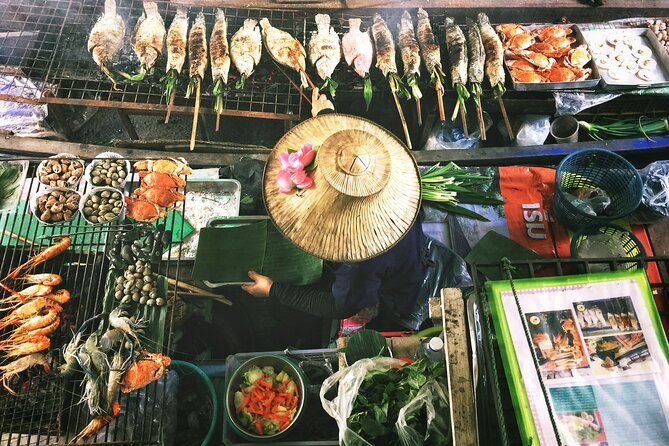
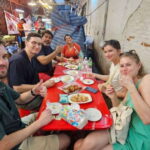
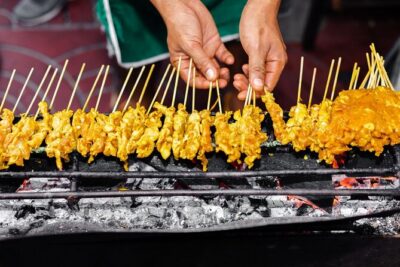
The tour includes tasting popular Thai street food, and the overall flow is built around that. This is not just one bite at the end. The stops are arranged so food culture makes sense while you walk.
Because entrance fees are not included, think of this as a food and street-culture experience, not a ticket to inside attractions. If you are the type who likes to keep things light at night, you can treat this as your dinner plan for part of the meal.
One smart move: come hungry enough to taste, but do not stuff yourself before the tour. You want to taste several dishes, not just one. Also, if you have dietary restrictions, you should ask before booking, since the available items and stalls are not listed in detail here.
Vox City app add-on: use it as a follow-up plan
Besides the walk, you get access to 3 free self-guided tour options in the Vox City app. I see this as a practical bonus. A guided tour is great for orientation, then the app helps you keep exploring without needing another organized group session.
Use it to extend your evening or to plan one follow-up day. Chinatown is the kind of area where small detours make a big difference. A self-guided add-on can help you do those detours with more confidence.
Price and value: $15 for 2 hours of guided street context
At $15 per person, this is priced like a budget-friendly evening activity. The value comes from three things:
- Expert storytelling during a focused 2-hour route
- Street-food tastings tied to the culture you are seeing
- The extra Vox City app benefit with 3 self-guided tours
Also, it is booked on average about 9 days in advance, which tells me it is popular and not something I would ignore if you are on a tight schedule. If your trip dates are fixed, booking early can save you from last-minute availability issues.
What you should not expect for this price: headphones included, or entrance fees covered. You are paying for guide-led walking, not packaged admission tickets.
Who should book this Chinatown by Night walk
This tour is a great fit if you want:
- A short, high-impact night walk in Chinatown
- Food learning, not just food eating
- Temples, shrines, markets, and Chinese courtyard architecture in one evening
- A guide to translate street signs, dish choices, and cultural context
It also suits families, since the tour notes that most travelers can participate and at least one family experience included a teen and still worked well with heat sensitivity handled by the guide.
If you hate walking or need lots of rest stops, this might feel like too much outdoor time at night. The plan is still paced as a walk tour.
Should you book this Bangkok Chinatown By Night tour?
If you are spending limited time in Bangkok or you want your first taste of Chinatown to come with context, I would book it. The combination of street-food tastings, temple and shrine stops, and community and architecture storytelling makes this more useful than a generic night stroll.
Skip or consider alternatives if you are only interested in major interior attractions, since entry to attractions is not included. Also, if you rely on headphones to catch details in crowded outdoor areas, plan to bring your own, since headphones are not included.
FAQ
How long is the Bangkok Chinatown by Night walking tour?
It runs for about 2 hours.
What time does the tour start?
The start time is 6:30 pm.
Where is the meeting point?
The tour starts at Hua Lamphong Rong Muang, Pathum Wan, Bangkok 10330, Thailand, and ends back at the meeting point.
Is street food included in the tour?
Yes, the tour description says you will taste some of the popular Thai street food along the way.
Are entry tickets to attractions included?
No, entry to attractions is not included.
Do I need headphones?
Headphones are not included, so plan accordingly.
How large is the group?
The maximum group size is 99 travelers.
What is the cancellation policy?
You can cancel for a full refund up to 24 hours in advance. If you cancel within 24 hours of the start time, the amount paid is not refunded.
Bangkok Comes Alive at Night
- Bangkok by Night: Temples, Markets and Food Tuk-Tuk Tour★ 5.0 · 3,752 reviews
- Bangkok: Markets, Temples and Food Night Tour by Tuk Tuk★ 4.9 · 2,371 reviews
- Bangkok:The Planet Sunset&Dinner Cruise on Chao Phraya River★ 4.3 · 812 reviews
- Bangkok: Night Bike Tour with Temples & Flower Market Visit★ 4.8 · 751 reviews
The newest additions around Bangkok
- Dream World & Snow Town in Bangkok with Return Transfer & Lunch
★ 4.5 · 3 reviews - Bangkok: Nong Nooch Garden
★ 5.0 · 3 reviews - Private tour to Ayutthaya and Lopburi Monkey Temple (from Bangkok)
★ 5.0 · 3 reviews - HD-01 Koh Rattanakosin old town cycling with The Giant Swing, and more
★ 5.0 · 3 reviews - Guided Tour of Grand Palace & Emerald Buddha Temple in Bangkok
★ 5.0 · 3 reviews - Half Day DIY Grand Palace and Emerald Buddha Temple
★ 4.5 · 3 reviews - Glittering Ayutthaya Tour to Famous Sights, Market & Sunset Boat
★ 4.5 · 3 reviews - Private Tour: The Best of Bangkok Temples – Half Day
★ 4.0 · 3 reviews
Bangkok Street Food Tours, compared.
Bangkok Backstreets Food Tour with 15+ Tastings
Read our review →
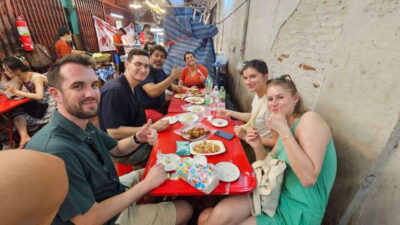
Bangkok Authentic Tasting Thai-Chinatown Walking Food Tour
Read our review →
Bangkok Tuk-Tuk Tour by Night with Chinatown Street Food Meal
Read our review →
Browse the lists this tour appears in