
Reviewed · AYUTTHAYA TEMPLE DAY TRIPS
6-Day Northern Thailand Tour: Ayutthaya, Sukhothai, Chiang Mai and Chiang Rai from Bangkok
Temple ruins meet hill tribe roads.
This 6-day northern Thailand circuit blends temple ruins with real rural life, then lands you at the Golden Triangle for river-and-border views. I also like how early planning turns big distances into a smooth route, with a guide who keeps the day moving and makes the stops easier to understand.
Two things I really liked: the Bang Pa-In to Ayutthaya day, where you see the Royal Summer Palace’s Thai and European mix before walking through Ayutthaya’s ruined kingdom. And later, you get a hands-on day at Elephant Nature Park, plus Chiang Mai craft time in Sankampaeng, so it is not only temples and photo stops.
One possible drawback: expect long drive days and early starts, and you may find the meal rhythm more Thai-local than Bangkok-standard. If you want lots of downtime, this tour runs closer to a pack-optimized itinerary.
In This Review
- Key takeaways before you go
- Bang Pa-In to Ayutthaya, the Siam Ruins Starter Pack
- Lopburi and Phitsanulok: smaller stops that add depth
- Sukhothai and Sri Satchanalai: ruins you can actually picture
- Chiang Rai by way of Doi Mae Salong, Akha and Yao villages
- Mae Sai border bridge and the Golden Triangle view
- Chiang Saen calm and moving onward to Chiang Mai
- Wat Phrathat Doi Suthep and Kantoke dinner night in Chiang Mai
- Elephant Nature Park and Sankampaeng craft village: the day with real skills
- The practicalities that shape your experience
- Price and value: what you get for US$1,914.66
- Who should book this Northern Thailand circuit from Bangkok?
- Should you book this 6-day Northern Thailand tour?
- FAQ
- What time does the tour start in Bangkok?
- Is pickup included?
- Which parts of the Thailand-Myanmar border experience are included?
- Is the Golden Triangle included?
- Can you get to Wat Phrathat Doi Suthep without climbing all the steps?
- What elephant experience is included?
- Is the Mekong boat ride to Laos included?
- What is the cancellation window for a full refund?
Key takeaways before you go
- Small group energy: up to 3 travelers, so it can feel close to private.
- Ancient capitals with context: Ayutthaya and Sukhothai get explained in a way that helps ruins make sense.
- Golden Triangle views and an optional border walk: you can see the Ruak and Mekong junction, and try a Myanmar crossing if conditions allow.
- Real-world elephant ethics: a half-day at Elephant Nature Park, focused on rescued animals.
- Chiang Mai culture in an evening format: Kantoke dinner with folk performances.
- Hands-on craft watching in Sankampaeng: silk weaving, umbrella painting, celadon pottery, and woodcarving.
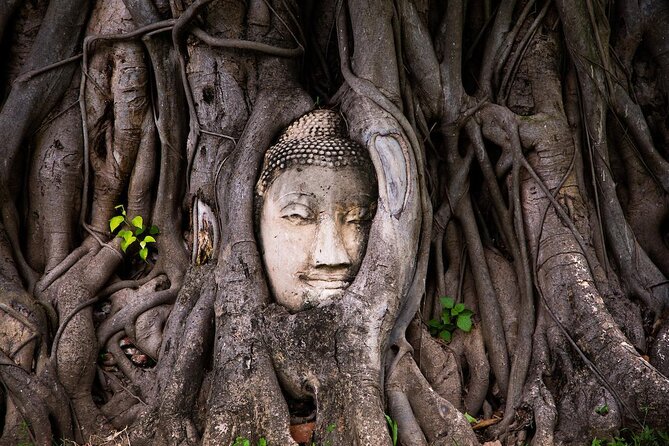
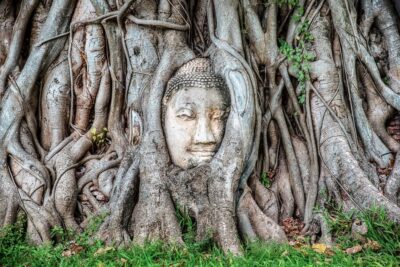
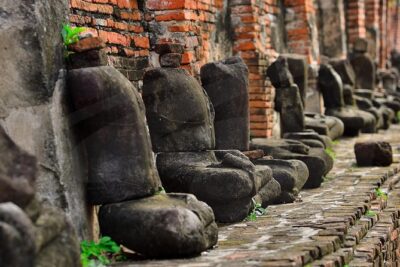
Headless Buddhas tangled in tree roots
Bang Pa-In to Ayutthaya, the Siam Ruins Starter Pack
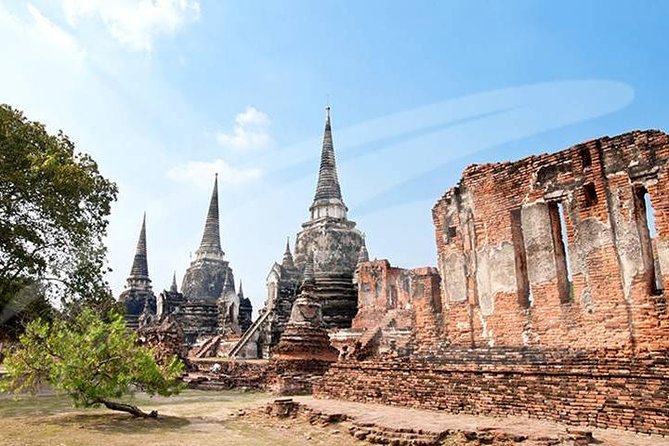
Your day begins in Bangkok and heads north early, which matters because Ayutthaya looks best when the heat is still negotiating with you. First stop is Bang Pa-In Royal Summer Palace, a standout because it is not just pretty. You get a clear look at how Thai royal architecture can mix styles, including that Thai and European blend.
Then it is on to Ayutthaya, the former Siam capital. Even after centuries of damage, the scale is what gets you. I like that you are guided through the ruined palaces and temples with an eye on why this city mattered, plus you get a sense of how canals and rivers helped it thrive. You also have time for local stalls selling traditional Thai handicrafts, which is a nice moment to slow down.
What to consider here: this is a “walk and look” day. Comfortable shoes help more than you think, especially if your group pace leans toward exploring rather than snapping-and-sprinting.
Lopburi and Phitsanulok: smaller stops that add depth
After Ayutthaya, the route pushes further north with a countryside feel, and the stops get more “layers of time” than big-ticket monuments.
Lopburi is quick but meaningful. You get key sights like Phra Prang Sam Yod, a laterite shrine with three spires, and the Kala shrine of Sarn Prakarn. The point is not just architecture, it is that Lopburi has evidence stretching back to the Neolithic and Bronze Ages, then flowing through the Dvaravati period. It is a good reminder that Siam’s story was never isolated to one city.
Then you reach Phitsanulok on the Nan River. The vibe shifts to calmer water and temple architecture. The highlight here is Wat Mahathat, which gives you a look at older Thai religious styles. The temple is revered, and the visit works well as a “breather” before the big ancient-city day in Sukhothai.
Practical tip: these stops are shorter, so if you are the type who loves reading every sign, you might want to pace yourself and pick what you want most.
Sukhothai and Sri Satchanalai: ruins you can actually picture
Day 2 is where the trip really leans into Thailand’s early-kingdom artistry. Sukhothai is laid out like a lesson in planning and protection, with three layers of earthen ramparts and two moats. Once you understand the layout, the standing Buddha statues and temple ruins feel less random and more like a living city plan.
I especially like that you do not just see one monument. You explore a network of temples and monasteries, with enough time to connect the dots between what you are seeing and what Sukhothai represented.
Next comes Sri Satchanalai, about 55 kilometers north. It is the twin city of Sukhothai, so the reward is a chance to compare another set of ruins and get a fuller sense of the era. Lunch comes at a local restaurant, then you drive through rural Thailand on a route that includes jungle-covered hills. If you enjoy watching how life changes outside the main tourist zones, this transfer day does real work.
One thing to note: you arrive further north in the afternoon and then you spend the night in Chiang Rai. That means you are packing a lot into a single day, so keep your energy up and your expectations realistic.
Keep scrolling, there's usually one more worth booking.
Chiang Rai by way of Doi Mae Salong, Akha and Yao villages
Chiang Rai is where the northern Thailand story starts to feel personal and human scale.
Today is a mountain drive in “pickup” style vans, which means curvy roads and frequent scenery shifts. The highlight stop is Doi Mae Salong, a Chinese settlement created by Kuomintang soldiers who fled China after Mao Zedong’s 1949 victory. You get panoramic mountain views and the chance to see Chinese herbal medicines sold locally. Even if you are not buying anything, it is a fascinating snapshot of how history can land in one hillside community.
Then the tour moves through Akha and Yao hill tribe villages. You get a look at traditional costumes and day-to-day customs. The key here is approach: watch, listen, and ask respectful questions rather than turning it into a quick photo mission.
For some travelers, this day is the highlight. For others, it can feel like “too many villages in a short time.” If you tend to get overloaded by back-to-back cultural stops, pace your own attention. Focus on one or two things you want to remember, like clothing patterns or house materials, instead of trying to absorb everything at once.
Mae Sai border bridge and the Golden Triangle view
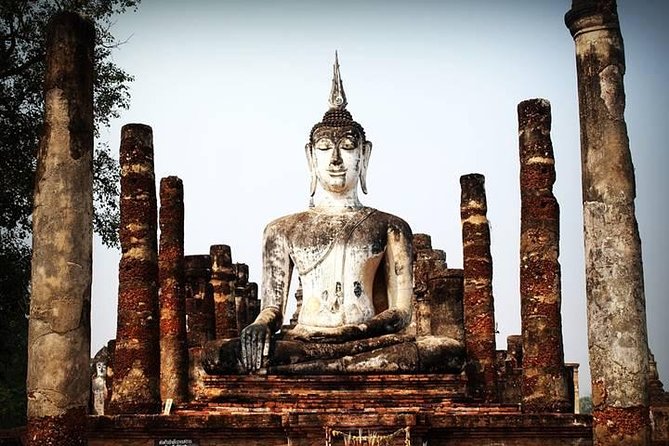
After lunch, the trip heads to Mae Sai, Thailand’s northernmost town along the Burma (Myanmar) border. The bridge between the two countries is the star. The markets here are also a major draw, with Burmese handicrafts often sold at tempting prices.
There is also an optional Burma border crossing, conditions permitting. If your group gets the green light, you walk for about an hour on the bridge with your guide to explore. You need two passport photocopies and a border pass fee for this. I suggest you treat this as a bonus, not a guaranteed plan, because border access can change.
After Mae Sai, you get the Golden Triangle at a hilltop viewpoint where the Ruak and Mekong Rivers meet. This is the kind of sight that does not need explanation, even though it helps. You see the geography that connects three countries, and it is easier to understand the region’s trade and movement over time.
Optional add-on: an on-the-river boat ride on the Mekong to Laos is available for about US$17. If you hate waiting and love calm water moments, it can be a nice contrast to temple days.
Chiang Saen calm and moving onward to Chiang Mai
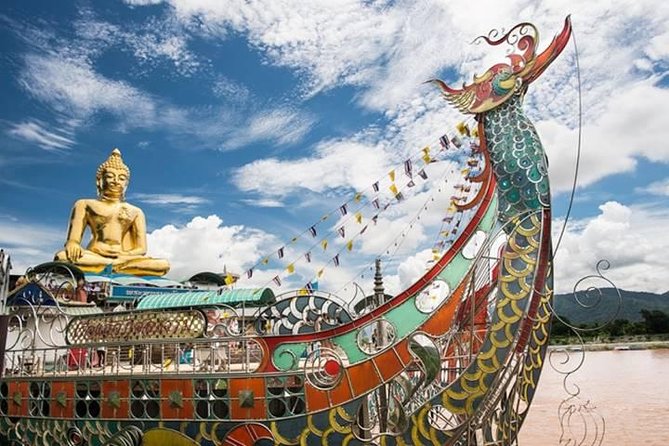
Chiang Saen adds a quieter northern chapter. It is a riverside town tied to a historic 13th-century city, and you can walk among temples and areas with intricately carved figures. Compared to Mae Sai’s border energy, this feels slower and more reflective.
Then you head back toward Chiang Rai for the night, and the next day starts the shift from mountain-edge provinces into Chiang Mai life.
On the way from Chiang Rai to Chiang Mai, you stop at Mae Ka Chan hot springs. People use the baths for therapeutic reasons, which is part of why locals go. It is a practical stop too because it breaks up the drive with a chance to stretch your legs.
You also get mountain roads and thick jungle along the route. When you arrive in Chiang Mai, the city is ready for you, but you will likely feel it in your body. This tour is meant to be experienced actively, not to be “one day of rest disguised as sightseeing.”
Wat Phrathat Doi Suthep and Kantoke dinner night in Chiang Mai
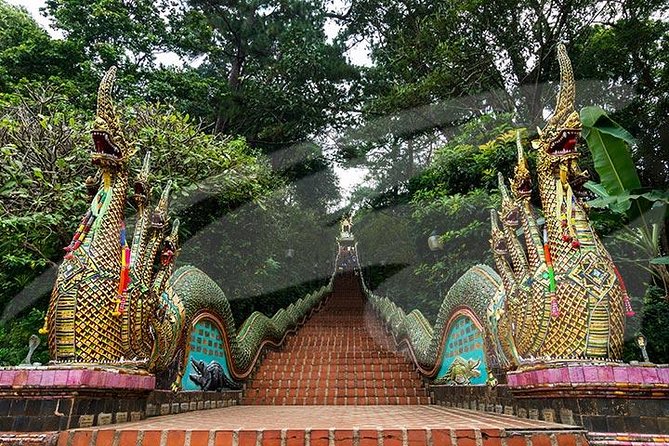
Chiang Mai is where the tour turns the dial from history to views and performance.
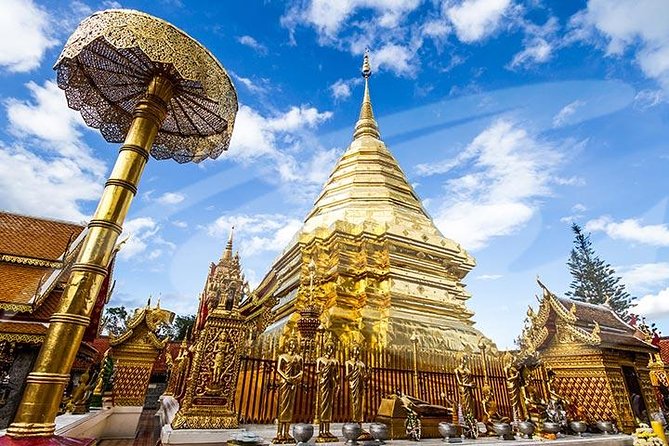
First, you tackle Wat Phrathat Doi Suthep, one of Chiang Mai’s most iconic hilltop temples. There are 290 steps. If stairs are not your thing, there is a cable car option to get you closer to the summit. Either way, the payoff is the panoramic view over the Chiang Mai region.
In the evening, you switch gears with Kantoke dinner. This is one of my favorite parts of the itinerary conceptually because it groups culture into a single night. You eat northern Thai food while dancers perform folk tales, and hill tribe groups appear in their traditional attire with performances.
This night works best if you go with the right mindset: it is not a museum lecture, it is an evening show that ties together food, dance, and storytelling. If you are sensitive to loud music or tight seating, you might want to position yourself carefully and take breaks between segments.
Overnight is at The Empress Chiang Mai.
Elephant Nature Park and Sankampaeng craft village: the day with real skills
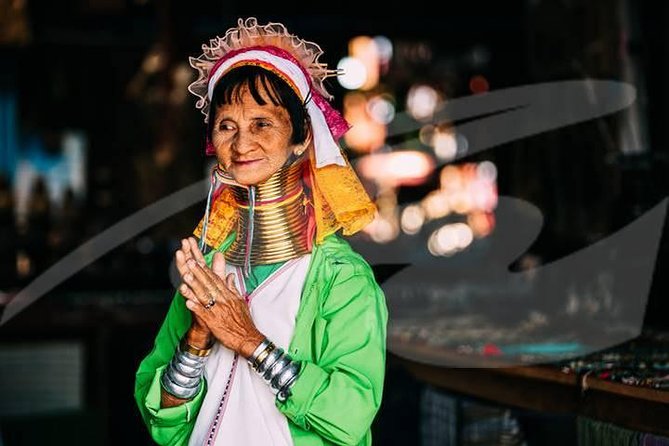
Day 5 is where you get a more grounded, “what humans do with their hands” kind of day.
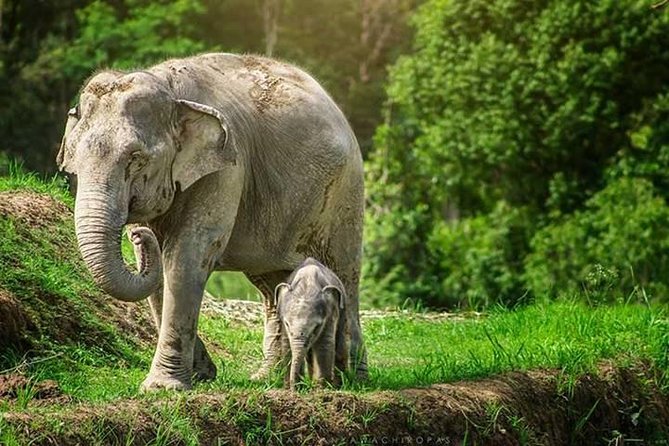
You are picked up from central Chiang Mai and driven to Mae Taeng District. At Elephant Nature Park, you join a half-day visit focused on rescued and rehabilitated elephants and other animals. You arrive at 9:30 a.m., which is smart because mornings tend to be calmer. The stories you hear about the elephants are part of the emotional impact, especially when you understand that rescue is often the only route out of former exploitation.
After time at the sanctuary, you enjoy a vegetarian buffet lunch at the park. This is included, and it is a nice way to keep the day simple after you get up close with animals.
Then you head to Sankampaeng, Chiang Mai’s famous handicraft village. This is the practical highlight for people who love craft processes rather than just finished souvenirs. You watch silk production, from silkworms to handloom weaving. You see how bamboo, silk, and paper become hand-painted umbrellas. You can spot potters working on Thai celadon, and woodcarvers shaping teak into furniture ornaments.
What to consider: craft days can tempt you to buy a lot. Set a budget before you arrive, and consider buying one “process” item you truly care about, like a small piece of celadon or an umbrella, rather than getting pulled by every shop display.
The practicalities that shape your experience
Here’s what tends to make this tour feel easy or exhausting, depending on your travel style.
Your pace and energy. The meeting start time is 6:00 a.m. on the first day, and the route links several provinces fast. That is great for value if you want to see a lot without planning. It can be tough if you like slow mornings and long lunch breaks.
Group size. The tour has a maximum of 3 travelers. On some departures, that can mean a near-private feel. That also helps with questions and pace, especially with a guide who speaks excellent English.
Guide quality matters. In past departures, guides such as Vanda, Shannon, and Phurin have been praised for helpfulness and clear explanations. That is a big deal on a tour like this, because temples and ruins are more rewarding when you understand what you are looking at. Even if you are not a history person, good guide talk turns “old stone” into “why it mattered.”
Meals can vary. Meals are served daily at typical Thai restaurants, and one included meal is a vegetarian buffet at Elephant Nature Park. One past review flagged food as sometimes monotonous and not at the same level as Bangkok dining. I’d plan around that by bringing a snack you like and staying flexible. You will still get plenty of northern and Thai flavors.
Accommodation nights. The itinerary explicitly lists Teak Garden Spa Resort in Chiang Rai and The Empress Chiang Mai in Chiang Mai. Rooms are private double basis with two twin beds or one queen bed. If you are traveling as a group of three, triple rooms include a rollaway bed. One past review noted the first night accommodation needing refurbishing, so if hotel quality matters a lot to you, this is worth keeping in mind.
Optional extras. The Laos Mekong boat ride is about US$17. The Myanmar border crossing depends on conditions and involves border pass fees and passport photocopies. Treat these as bonuses, not guaranteed inclusions.
Price and value: what you get for US$1,914.66
At about $1,914.66 per person for roughly 6 days, this is not a cheap getaway. But for the itinerary you get, the price starts to make sense.
You are paying for:
- A route that covers Ayutthaya, Lopburi, Sukhothai, Chiang Rai, Mae Sai, Golden Triangle, Chiang Mai, and back to airport transfer on day 6.
- A guide who makes ruins, temples, and border regions easier to understand.
- Pickup offered and small-group routing.
- Daily meals at Thai restaurants and included lunches at set points.
- Hotels on the ground, in private double room configurations.
- Admission tickets marked free for the listed sights.
What could lower the value for you:
- If you already know Thailand well and want more free time, the schedule might feel tight.
- If you expect five-star food every meal, restaurant quality can vary.
- Optional activities like the Laos boat ride and any Myanmar border pass add cost.
My take: this is good value for people who want a structured northern Thailand “best hits” tour without building an itinerary from scratch.
Who should book this Northern Thailand circuit from Bangkok?
This tour is a strong fit if you:
- Want to cover big-name regions fast, including both Chiang Rai and Chiang Mai.
- Prefer guided interpretation over wandering ruins with no context.
- Like seeing crafts in action, not just buying souvenirs.
- Feel good about animal interactions that are framed as rescue and sanctuary care.
It may feel less perfect if you:
- Want lots of downtime built in every day.
- Are sensitive to long road time and early starts.
- Are extremely picky about hotel and meal quality, since experiences can vary by departure.
If you love history and also want at least one day that feels more real-world and hands-on, this itinerary hits that balance.
Should you book this 6-day Northern Thailand tour?
If your goal is a well-packed northern Thailand sampler, I think this is a smart buy. You get the major ancient-capital backbone (Ayutthaya and Sukhothai), then you shift into border geography and hill tribe villages, and you end with Chiang Mai temple views, Kantoke culture night, elephants at a sanctuary, and crafts at Sankampaeng. That mix is exactly what makes this route appealing.
Book it if you are happy with early starts and guided pacing. Consider it carefully if you want more freedom and slower days, or if food and hotel polish are your top priorities.
FAQ
What time does the tour start in Bangkok?
The meeting start time is 6:00 am.
Is pickup included?
Pickup is offered as part of the tour.
Which parts of the Thailand-Myanmar border experience are included?
The itinerary includes a stop at Mae Sai and an optional border crossing into Myanmar, depending on conditions. If it happens, it is an approximate one-hour exploratory walk with your guide, and it requires two passport photocopies plus a border pass fee.
Is the Golden Triangle included?
Yes. You visit the Golden Triangle viewpoint where the Ruak and Mekong Rivers meet.
Can you get to Wat Phrathat Doi Suthep without climbing all the steps?
Yes. You can climb 290 steps, or you can use the cable car option to reach the summit.
What elephant experience is included?
You visit Elephant Nature Park for a half-day visit. You also have a vegetarian buffet lunch at the park.
Is the Mekong boat ride to Laos included?
The boat ride is optional, and it costs approximately US$17.
What is the cancellation window for a full refund?
You can cancel up to 6 days in advance for a full refund. You must cancel at least 6 full days before the experience start time.
The newest additions around Bangkok
- Dream World & Snow Town in Bangkok with Return Transfer & Lunch
★ 4.5 · 3 reviews - Bangkok: Nong Nooch Garden
★ 5.0 · 3 reviews - Private tour to Ayutthaya and Lopburi Monkey Temple (from Bangkok)
★ 5.0 · 3 reviews - HD-01 Koh Rattanakosin old town cycling with The Giant Swing, and more
★ 5.0 · 3 reviews - Guided Tour of Grand Palace & Emerald Buddha Temple in Bangkok
★ 5.0 · 3 reviews - Half Day DIY Grand Palace and Emerald Buddha Temple
★ 4.5 · 3 reviews - Glittering Ayutthaya Tour to Famous Sights, Market & Sunset Boat
★ 4.5 · 3 reviews - Private Tour: The Best of Bangkok Temples – Half Day
★ 4.0 · 3 reviews
Ayutthaya Temple Day Trips, compared.
Ayutthaya & Ayothaya Floating Market Day Trip
Read our review →
Ayutthaya Temples and River Cruise from Bangkok
Read our review →
UNESCO’s Ayutthaya Historical Park: Full-Day Tour from Bangkok
Read our review →
Floating Market and Ayutthaya Guided Day Tour
Read our review →
Ayutthaya, Railway & Floating Markets Full-Day Tour
Read our review →Browse the lists this tour appears in