
Reviewed · BANGKOK
21 Days Across Southeast Asia
Four countries, one organized plan. This 21-day small-group trip strings together Thailand, Laos, Vietnam, and Cambodia with built-in transport and guided time. I like the hands-on Daydream vibe of Damnoen Saduak by long-tail speedboat, and I like that you get an English-speaking guide plus key entrance fees so you are not stuck figuring things out.
One thing to think about is the pace. You will start early more than once, and you will move by plane, train, and road in a way that feels efficient, but not slow.
If you care about smooth coordination, I also noticed the name Reinself Wei coming up in feedback for other Odynovo Tours planning efforts, which is a good sign when your route includes multiple flight legs.
In This Review
- Key highlights to know before you go
- How this cross-country tour keeps Southeast Asia from feeling like chaos
- Bangkok start to Chiang Mai: floating market energy, then a real overnight train
- Chiang Mai temples and the Doi Suthep viewpoint day
- Luang Prabang at dawn: monks’ alms, Kuang Si waterfall, and palace temples
- Pak Ou Caves on the Mekong and a full day of breathing room in Laos
- Vietnam jump: Halong Bay cruise with limestone karsts, then south to Hoi An
- Hoi An by bike and cooking: Tra Que village and My Son Sanctuary
- Ho Chi Minh City and the Mekong Delta: boat rides, honey tea, canals, and coconut candy
- Cu Chi Tunnels and the sprint to Siem Reap
- Angkor sunrise and Angkor Thom: what your morning and route will feel like
- Price and value: what you get for $3,103 per person
- Who this tour fits well, and who may want a slower plan
- Should you book this 21-day Thailand, Laos, Vietnam, and Cambodia tour?
- FAQ
- What is the tour price and duration?
- Where does the tour start and end?
- What does the tour include?
- What is not included in the price?
- How many people are in the group?
- Do I get English-speaking guidance?
- Does it include flights and a train?
- Is the booking refundable?
Key highlights to know before you go
- Small group size (max 15) helps days feel organized without feeling like a herd
- English-speaking guides throughout most main sights, which matters a lot in temples and UNESCO sites
- Air-conditioned transport and set hotels take the stress out of crossing countries
- Big-moment days: Halong Bay, Luang Prabang at dawn, and Angkor sunrise
- A train berth in Thailand gives you a different travel flavor than just planes and buses
Bangkok doesn't stop at one stop, so here's what else is close by.
How this cross-country tour keeps Southeast Asia from feeling like chaos
You are covering four countries in 21 days. That can sound like a speedrun, and it is, but the point here is that the hard parts are handled for you. Your hotels, transfers, entrance fees, and the main guided sightseeing are packaged so you can spend your energy on places, not paperwork.
The small-group size helps a lot. When there are fewer people, your guide can actually manage timing at crowded stops, and you usually get clearer answers when questions pop up in temples, markets, or on boat days.
Also, you are not doing everything solo. In many places you get guided temple time, a scheduled activity window, and then some breathing room. That rhythm matters when you are jumping from Bangkok to mountain temples, then across borders and into coastal Vietnam.
Bangkok start to Chiang Mai: floating market energy, then a real overnight train
Your trip starts with pickup at Suvarnabhumi International Airport, then transfer to a Bangkok hotel. From there, the next move is north.
On the Chiang Mai side, one of the most memorable early activities is Damnoen Saduak Floating Market. You do it by long-tail speedboat, so you are not just watching from the shore. Your guide shares the canal story tied to King Rama IV and the way trade and daily life moved through the waterways. You will see vendors selling produce, handmade sweets, and souvenirs from boats that feel close enough to smell the fruit.
Then the pace shifts again with an overnight train transfer back into motion. You travel on a train with a sleeping soft berth, shared cabin. That is a useful option on a long route, but it also means you should treat sleep as partial. Bring what you need for comfort, like earplugs and something to help you settle faster in close quarters.
This Thailand stretch is a good example of the tour’s style: iconic experiences, then logistics taken care of so you can keep moving.
Chiang Mai temples and the Doi Suthep viewpoint day
After you arrive early in Chiang Mai, the tour sets you up with a temple tour that hits three key stops. Wat Phra Singh is known for its northern Thai architecture and its Viharn, Wat Chedi Luang is home to Chiang Mai’s largest stupa, and Wat Chiang Man is the oldest temple in the city, dating back to the founding period.
What I like about this kind of routing is that you get variety in one block of time. You are not bouncing randomly between sites. Your guide can connect the religious meaning, the architecture, and the city’s timeline so it feels less like checking boxes.
Then you head to Doi Suthep-Pui National Park for Wat Phra That Doi Suthep. The temple sits high at about 5,300 feet (1,615 meters), and the whole day is built around views plus golden stupa details. After the guided visit, you get free time in the afternoon to explore at your own pace, which is where you can chase a market, grab coffee, or simply slow down.
Consideration: Doi Suthep is outdoors and altitude is real. If you get winded easily, plan to take breaks and hydrate.
Keep scrolling, there's usually one more worth booking.




Luang Prabang at dawn: monks’ alms, Kuang Si waterfall, and palace temples
Luang Prabang is where the tour shifts from busy city energy into something calmer and more ritual-focused. You fly from Chiang Mai to Luang Prabang, then settle into your hotel.
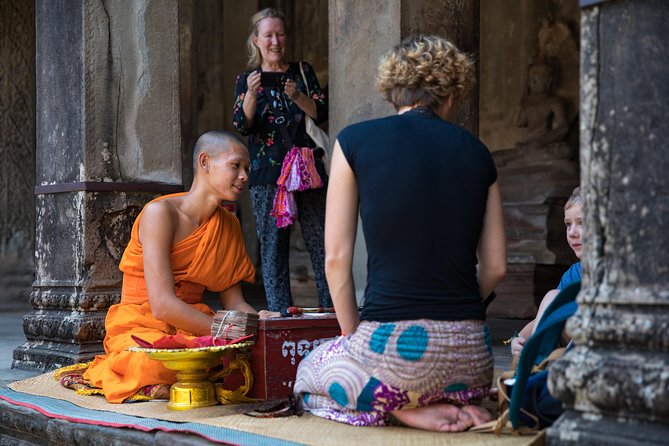
One of the optional early-morning highlights is almsgiving. If you wake up before dawn around 5:30 am, you can observe the saffron-robed monks receiving offerings. The schedule is part of the experience, and the atmosphere is usually the kind you remember because it feels grounded and real rather than staged.
After breakfast, you drive to Kuang Si waterfall. You take a leisurely hike through the national park toward the falls. If you want extra effort, you can continue toward the top of the main waterfall where swimming in a larger pool may be an option.
Later in the day, you visit the Royal Palace area (now a national museum) and then several major Buddhist temples, including Wat Visoun, Wat Aham, and Wat Xiengthong. You also have the chance to interact with monks at Wat Mai, then you climb 328 steps to reach Phousi.
This temple-and-water mix is smart. It keeps you from thinking of Luang Prabang as one type of activity. You get ceremony, scenery, and architecture in the same overall pattern.
Pak Ou Caves on the Mekong and a full day of breathing room in Laos
Another day that stands out in Laos is the Pak Ou Caves visit. You do a two-hour long-tail boat cruise on the Mekong River, passing villages and seeing fish traps and canoes by the shore.
When you reach Pak Ou, you explore two large caves filled with thousands of Buddha images, ranging from small to life-size scale. It is the kind of place that makes you think about how faith travels and changes across time.
After that, you return to Luang Prabang by car, then you get free time in the afternoon. The tour later gives you a full day of free time too, which is your chance to wander, shop for small crafts, or add an optional tour with Hoi An Express if it fits your interests.
That free-time spacing is not an afterthought. It is how you avoid Laos feeling like a constant checklist.
Vietnam jump: Halong Bay cruise with limestone karsts, then south to Hoi An
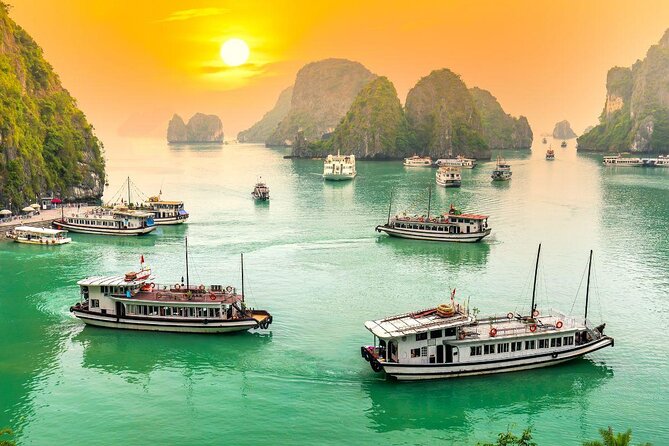
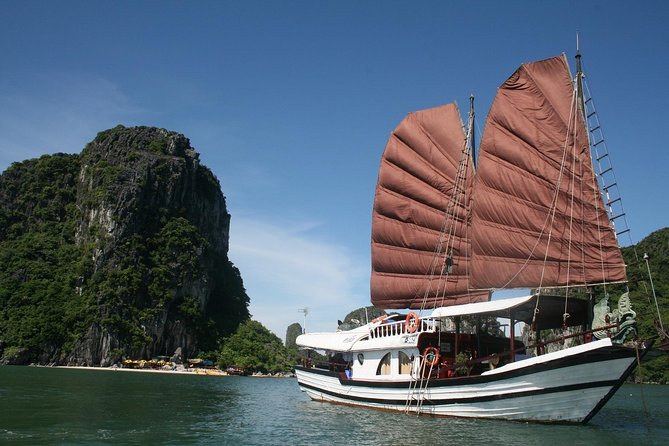
Flying takes you from Laos into Hanoi, where your first major Vietnam highlight is Halong Bay. You head out of town and get a boat day among limestone karsts rising out of emerald-colored water. You will see beaches, grottoes, and caves, and you anchor for a swim in a secluded cove. There is also time for a hidden grotto visit beneath tall cliffs.
If you like photos, this is one of your best opportunities. If you do not, it is still worth it because the scale of the karsts feels like a physical thing, not just a view on a screen.
You spend the night on the cruise, then return to Hanoi for another overnight.
After that, you take flights down the coast to Hoi An. That shift keeps the trip from feeling like an endless bus ride, which is important when you are also dealing with temple days and boat days earlier.
Hoi An by bike and cooking: Tra Que village and My Son Sanctuary
Hoi An is where the tour leans into hands-on culture. In the morning, you ride bicycles through the countryside around Tra Que Village, passing vegetable fields and rural scenery. The activity includes a cooking experience with a local family where you make white rose dumplings, and you learn how to prepare the region’s famous Cao Lau noodle dish.
You also taste local treats like Banh Dap and Che Bap. Even if you are not a cook at home, this kind of class is a fast way to understand what makes the local flavors distinct.
In the afternoon, you go to My Son Sanctuary, a UNESCO World Heritage site tied to the Champa Kingdom from about the 4th to the 13th centuries. The temples sit in a lush valley, and the visit focuses on the blend of Hindu influences with regional political and spiritual history.
Later you get time in Hoi An to explore on your own before you move on. That open window matters because Hoi An can be a slow wander kind of place.
Ho Chi Minh City and the Mekong Delta: boat rides, honey tea, canals, and coconut candy
You fly from Da Nang to Ho Chi Minh City and check in, then the tour quickly shifts you into southern Vietnam with a Mekong Delta day.
You start with a relaxing cruise from the My Tho area to an island, with traditional music while you sip tea sweetened with bee honey and enjoy seasonal fruit. Then you switch to a paddle boat for the narrow canal navigation. The tour explicitly leans into why boats are central here because the canal network is part of how people move day to day.
During the paddle boat ride, you also get a look at cottage industry, including coconut candy making. Afterward, you enjoy lunch featuring Elephant-Ear Fish and other Vietnamese dishes.
You end the day at Vinh Trang Pagoda, described as a national historical and cultural relic with distinctive architecture and spiritual significance.
This is a long day, but it gives you variety: slow water cruising, tight canal views, then a stop with architectural and cultural context.
Cu Chi Tunnels and the sprint to Siem Reap
After a morning free in Ho Chi Minh City, you take the Cu Chi Tunnels tour in the afternoon. The tunnels are described as a network stretching over 250 kilometers and connected to underground life during the Vietnam War era. You learn that people could live for years underground, including family life, and you also hear about heavy attacks and bombings in the area. Visitor-access sections opened in 1988, and the tour includes moving parts, which helps the explanation feel less abstract.
Then you fly to Siem Reap, where you check in and relax. The next day is another full free day in Siem Reap, with an optional tour offered with Hoi An Express.
I like how this portion of the schedule gives you time to reset. After Cu Chi, your brain needs space before Angkor.
Angkor sunrise and Angkor Thom: what your morning and route will feel like
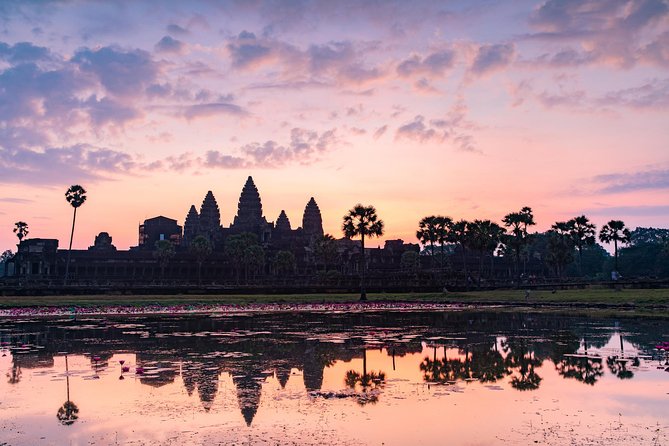
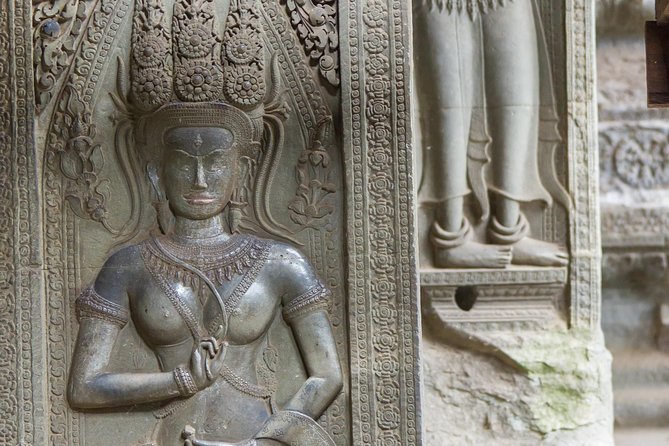
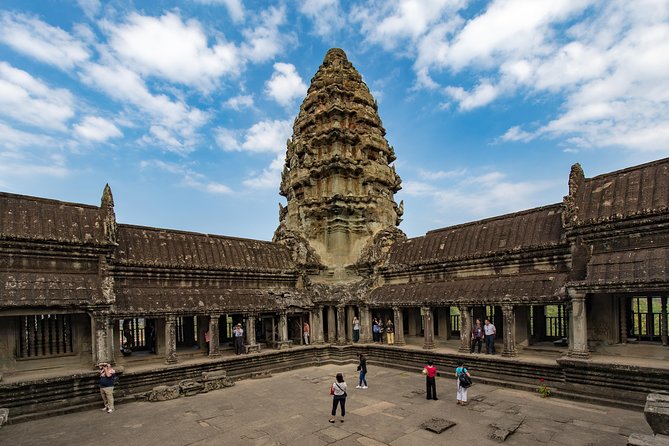
Angkor is the grand finale, and your schedule is built around sunrise. You wake up early, around 05:00 am, for sunrise at Angkor Wat or Ta Prohm, with Ta Prohm noted as one of the most photographed temples in the complex.
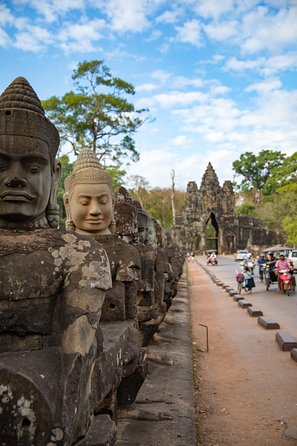
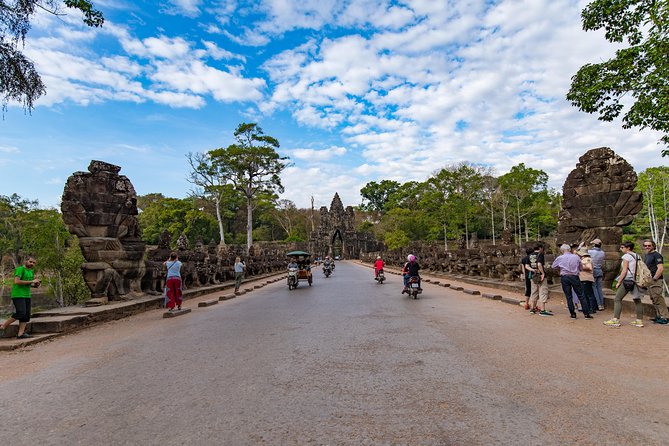
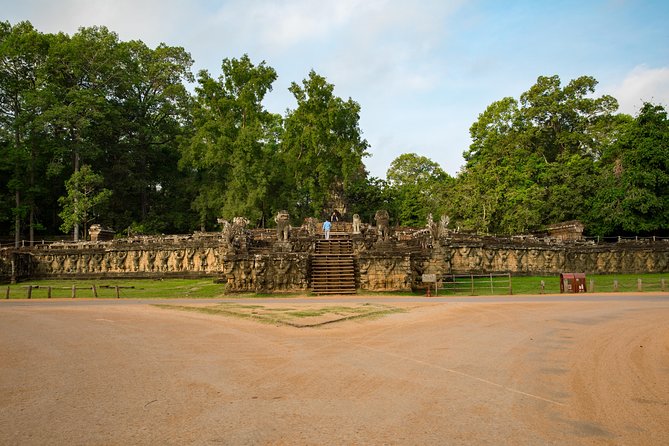
Then you head back for breakfast, and the tour continues to Angkor Thom, which translates to Great City. You cover the South Gate, the Victory Gate, and the East Gate, which the tour notes as the Gate of Death. You also visit the Terrace of the Elephants, a 300 meter long terrace with multiple platforms, and the Terrace of Leper King, said to date to the 12th century.
This is a lot of standing and walking, even if the route is well organized. If you plan for early hours, bring practical footwear and plan to take breaks.
Also, this day is not just about seeing impressive stone. It is about understanding the layout and how each gate and terrace fits into the bigger city plan.
Price and value: what you get for $3,103 per person
At $3,103 per person, the value mostly comes from logistics. Your inclusions list a lot of the heavy lifting: accommodations with twin, double, or triple sharing, air-conditioned transportation, hotel transfers for arrival and departure, entrance fees, mineral water, and selected meals.
You also get flights that matter for time. International flights cover Chiang Mai to Luang Prabang to Hanoi, and Ho Chi Minh City to Siem Reap. Domestic flights include Hanoi to Da Nang to Ho Chi Minh City. You also get a train ticket from Bangkok to Chiang Mai with a sleeping soft berth, shared cabin.
That is a big chunk of the budget, and it is why the price feels more reasonable than trying to DIY the whole route with the same level of organization.
What is not included is equally important. Visa fees are not included, and tips and gratuities are your responsibility. Travel insurance is also not included, and personal expenses like shopping and extra drinks are on you. If you travel around December 24 or December 31, there can be a compulsory dinner surcharge depending on hotel policy.
Bottom line: this price is paying for time, planning, and fewer moving parts, not for luxury extras.
Who this tour fits well, and who may want a slower plan
This tour fits best if you want structure and you like seeing major sights without turning every day into a decision. You will likely enjoy it if you appreciate guided temple context, boat days, and experiences that cover a lot of ground efficiently.
You might want to think twice if you hate early mornings. Sunrise in Siem Reap is at 05:00 am, and almsgiving in Luang Prabang can require waking around 5:30 am. You also travel by train, several flights, and long road segments, so it is not ideal for anyone hoping to “settle in” for a long stretch.
Group travel can also be a personality match question. This one caps at 15 people, which is manageable, but it still means your day has a rhythm set by the itinerary and the guide.
Should you book this 21-day Thailand, Laos, Vietnam, and Cambodia tour?
I would book it if your priority is maximum variety with minimal hassle. The mix of Damnoen Saduak by long-tail speedboat, Luang Prabang at dawn, a proper Halong Bay cruise, hands-on Hoi An cooking, Mekong Delta canal time, and Angkor sunrise creates a strong arc.
I would hesitate if you want a relaxed pace with lots of unscheduled downtime between cities. This trip is structured, and the payoff is that you cover four countries without drowning in logistics.
If you are excited by iconic stops plus guided context, this is a solid value for how much it packs into 21 days.
FAQ
What is the tour price and duration?
The price is $3,103.00 per person and the tour runs for 21 days (approximately).
Where does the tour start and end?
It starts in Bangkok, Thailand and ends in Krong Siem Reap, Cambodia.
What does the tour include?
It includes accommodation on a twin/double/triple sharing basis, hotel transfers for arrival and departure, air-conditioned transportation, entrance fees, mineral water and meals as specified, English-speaking guides, and selected international and domestic flights plus a train ticket.
What is not included in the price?
Visa fees, tips and gratuities, travel insurance, personal expenses (like shopping and beverages), and any air tickets not specifically mentioned as included are not included. Optional holiday dinner surcharge may apply on December 24 and December 31 depending on hotel policy.
How many people are in the group?
The tour has a maximum of 15 travelers.
Do I get English-speaking guidance?
Yes. The tour includes English-speaking guides, with other languages available upon request with a surcharge.
Does it include flights and a train?
Yes. You get international flights for Chiang Mai to Luang Prabang to Ha Noi, and Ho Chi Minh City to Siem Reap. You also get domestic flights for Ha Noi to Da Nang to Ho Chi Minh City, plus a train from Bangkok to Chiang Mai with a sleeping soft berth shared cabin.
Is the booking refundable?
No. The experience is non-refundable and cannot be changed for any reason.
The newest additions around Bangkok
- Central Thailand Walking Tour and visit Temple at Bangkok
★ 5.0 · 1 review - Private 2-Day Bangkok City Tour and Ayutthaya Tour from Bangkok
★ 5.0 · 1 review - Train Market, Floating Market, and Salt Lake Tour by driver
★ 5.0 · 1 review - Fullday Private Tour Bangkok Temple & City Tour with lunch+Amazing Bangkok Tour
★ 5.0 · 1 review - Bangkok: One Day Thai Costume Rental (Gentleman)
★ 2.0 · 1 review - Laem Chabang Shore Excursion : Shopping, Massage & Food Tasting
★ 5.0 · 1 review - Bangkok Dream World & Snow Town Theme Park Admission Ticket
★ 3.0 · 1 review - Bangkok 4 Hour Cultural & Temples Tour Private with Guide
★ 5.0 · 1 review